
Flag
Flag unavailable
Data: CIA World Factbook (public domain). Preserved and rebuilt by PRIA Technologies.
Antarctica • AQ
Flag
Flag unavailable
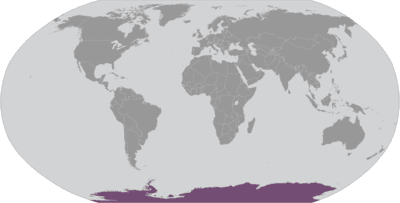
Locator map
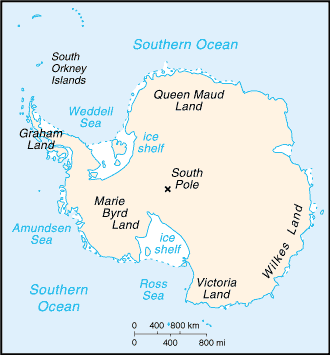
Regional map
Population
no permanent inhabitants, but staff is present at year-round and summer-only research stations note: 56 countries have signed the 1959 Antarctic Treaty; 30 of those operate a number of seasonal-only (summer) and year-round research stations on the continent and its nearby islands; the population varies from approximately 5,000 in summer to 1,100 in winter, with about 1,000 support personnel on ships nearby as of 2024, peak summer (December-February) maximum capacity in scientific stations - 4,713 total; Argentina 425, Australia 238, Belarus 15, Belgium 55, Brazil 64, Bulgaria 25, Chile 375, China 164, Czechia 32, Ecuador 35, Finland 16, France 136, France and Italy jointly 70, Germany 60, India 72, Italy 150, Japan 130, South Korea 158, New Zealand 85, Norway 60, Peru 30, Poland 41, Russia 211, South Africa 80, Spain 79, Sweden 16, Ukraine 15, United Kingdom 315, United States 1,495 , Uruguay 66 (2024) winter (June-August) maximum capacity in scientific stations - 1,056 total; Argentina 221, Australia 52, Brazil 15, Chile 114, China 32, France 24, France and Italy jointly 13, Germany 9, India 48, Japan 40, Netherlands 10, South Korea 25, NZ 11, Norway 7, Poland 16, Russia 125, South Africa 15, Ukraine 12, UK 44, US 215, Uruguay 8 (2024)
GDP
N/A
Area
14.2 million sq km
Capital
N/A
Government type
the Antarctic Treaty and its follow-on agreements govern the use of Antarctica, ensuring it is used only for peaceful purposes and scientific research; signed in 1959 and in force since 1961, the original Treaty bans military activity, weapons testing, and nuclear waste disposal, while allowing military personnel to assist with research or other peaceful efforts; it promotes international cooperation in science, guarantees the free exchange of research, and freezes territorial claims; the Treaty covers all land and ice south of 60° south latitude, and allows Treaty nations to inspect any station or facility decisions are made by consensus at annual meetings, and member countries implement these decisions through their national laws (see “Legal system”); additional agreements have strengthened the Treaty system, including conventions to protect seals (1972) and other marine life (1980), as well as an environmental protocol (1991, took effect in 1998); the protocol bans mining and includes strict rules on environmental impact, waste, pollution, wildlife, and protected areas; as of December 2024, there are 58 member nations : 29 consultative members , including the 7 claimant countries (Argentina, Australia, Chile, France, New Zealand, Norway, and the UK), and 29 non-consultative members ; a permanent Antarctic Treaty Secretariat, established in 2004 in Buenos Aires, supports the system
Jump to section