Country exposure · AS

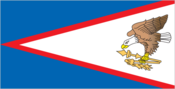
Flag of American Samoa

American Samoa

Australia Oceania · Pago Pago · unincorporated, unorganized Territory of the US with local self-government; republican form of territorial government with separate executive, legislative, and judicial branches

What American Samoa means for your money — the prices you pay, the tariffs in motion, and where U.S. policy could change both.
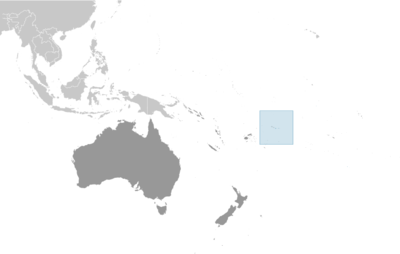
Map showing the location of American Samoa

43K

Population

$871M

GDP

U.S. exposure

Minimal direct economic exposure

American Samoa is not a significant U.S. goods-trade partner and has no tracked tariff actions. Policy changes here are unlikely to reach American prices directly.

Reference

The country itself

Australia Oceania · Geography, people, economy, and government — public-domain data from the CIA World Factbook.

Tutuila -- the largest island in American Samoa -- was settled by 1000 B.C., and the island served as a refuge for exiled chiefs and defeated warriors from the other Samoan islands. The Manu’a Islands, which are also now part of American Samoa, developed a traditional chiefdom that maintained autonomy by controlling oceanic trade. In 1722, Dutch explorer Jacob ROGGEVEEN was the first European to sail through the Manu’a Islands, and he was followed by French explorer Louis Antoine DE BOUGAINVILLE in 1768. Whalers and missionaries arrived in American Samoa in the 1830s, but American and European traders tended to favor the port in Apia -- now in independent Samoa -- over the smaller and less-developed Pago Pago on Tutuila. In the mid-1800s, a dispute arose in Samoa over control of the Samoan archipelago, with different chiefs gaining support from Germany, the UK, and the US. In 1872, the high chief of Tutuila offered the US exclusive rights to Pago Pago in return for US protection, but the US rejected this offer. As fighting resumed, the US agreed to the chief’s request in 1878 and set up a coaling station at Pago Pago. In 1899, with continued disputes over succession, Germany and the US agreed to divide the Samoan islands, while the UK withdrew its claims in exchange for parts of the Solomon Islands. Local chiefs on Tutuila formally ceded their land to the US in 1900, followed by the chief of Manu’a in 1904. The territory was officially named “American Samoa” in 1911. The US administered the territory through the Department of the Navy. In 1949, there was an attempt to organize the territory, granting it formal self-government, but local chiefs helped defeat the measure in the US Congress. Administration was transferred to the Department of the Interior in 1951, and in 1967, American Samoa adopted a constitution that provides significant protections for traditional Samoan land-tenure rules, language, and culture. In 1977, after four attempts, voters approved a measure to directly elect their governor. Nevertheless, American Samoa officially remains an unorganized territory, and people born in American Samoa are US nationals rather than US citizens.
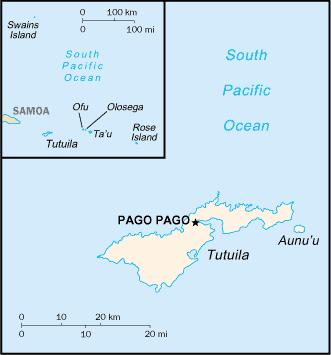
Regional map of American Samoa

Geography

Location
Oceania, group of islands in the South Pacific Ocean, about halfway between Hawaii and New Zealand
Area
224 sq km
Climate
tropical marine, moderated by southeast trade winds; annual rainfall averages about 3 m; rainy season (November to April), dry season (May to October); little seasonal temperature variation
Terrain
five volcanic islands with rugged peaks and limited coastal plains, two coral atolls (Rose Atoll, Swains Island)
Natural resources
pumice, pumicite
Coastline
116 km
Natural hazards
cyclones common from December to March volcanism: limited volcanic activity on the Ofu and Olosega Islands; neither has erupted since the 19th century

People & society

Population
43,268 (2025 est.)
Nationality
American Samoan(s) (US nationals)
Ethnic groups
Pacific Islander 88.7% (includes Samoan 83.2%, Tongan 2.2%, other 3.3%), Asian 5.8% (includes Filipino 3.4%, other 2.4%), mixed 4.4%, other 1.1% (2020 est.)
Languages
Samoan 87.9% (closely related to Hawaiian and other Polynesian languages), English 3.3%, Tongan 2.1%, other Pacific Islander 4.1%, Asian languages 2.1%, other 0.5% (2020 est.)
Religions
Christian 98.3%, other <1%, unaffiliated <1% (2020 est.)
Median age
30.6 years (2025 est.)
Life expectancy at birth
75.8 years (2024 est.)

Economy

Economic overview
tourism, tuna, and government services-based territorial economy; sustained economic decline; vulnerable tuna canning industry; large territorial government presence; minimum wage increases to rise to federal standards by 2036
Industries
tuna canneries (largely supplied by foreign fishing vessels), handicrafts
Agricultural products
bananas, coconuts, vegetables, taro, breadfruit, yams, copra, pineapples, papayas; dairy products, livestock
Exports - partners
Australia 31%, UK 18%, Tanzania 9%, UAE 7%, Senegal 6% (2023)
Imports - partners
Singapore 28%, NZ 15%, Fiji 14%, Taiwan 11%, Malaysia 11% (2023)

Government

Government type
unincorporated, unorganized Territory of the US with local self-government; republican form of territorial government with separate executive, legislative, and judicial branches
Capital
Pago Pago
Independence
none (territory of the US)
Constitution
adopted 17 October 1960; revised 1 July 1967
Executive branch
President Donald J. TRUMP (since 20 January 2025)
Legislative branch
note: American Samoa elects 1 member by simple majority popular vote to serve a 2-year term as a delegate to the US House of Representatives; the delegate can vote when serving on a committee and when the House meets as the Committee of the Whole House, but not when legislation is submitted for a “full floor” House vote

Full reference data

Every field, by section — CIA World Factbook. Open a topic to expand it.

Introduction
Background
Tutuila -- the largest island in American Samoa -- was settled by 1000 B.C., and the island served as a refuge for exiled chiefs and defeated warriors from the other Samoan islands. The Manu’a Islands, which are also now part of American Samoa, developed a traditional chiefdom that maintained autonomy by controlling oceanic trade. In 1722, Dutch explorer Jacob ROGGEVEEN was the first European to sail through the Manu’a Islands, and he was followed by French explorer Louis Antoine DE BOUGAINVILLE in 1768. Whalers and missionaries arrived in American Samoa in the 1830s, but American and European traders tended to favor the port in Apia -- now in independent Samoa -- over the smaller and less-developed Pago Pago on Tutuila. In the mid-1800s, a dispute arose in Samoa over control of the Samoan archipelago, with different chiefs gaining support from Germany, the UK, and the US. In 1872, the high chief of Tutuila offered the US exclusive rights to Pago Pago in return for US protection, but the US rejected this offer. As fighting resumed, the US agreed to the chief’s request in 1878 and set up a coaling station at Pago Pago. In 1899, with continued disputes over succession, Germany and the US agreed to divide the Samoan islands, while the UK withdrew its claims in exchange for parts of the Solomon Islands. Local chiefs on Tutuila formally ceded their land to the US in 1900, followed by the chief of Manu’a in 1904. The territory was officially named “American Samoa” in 1911. The US administered the territory through the Department of the Navy. In 1949, there was an attempt to organize the territory, granting it formal self-government, but local chiefs helped defeat the measure in the US Congress. Administration was transferred to the Department of the Interior in 1951, and in 1967, American Samoa adopted a constitution that provides significant protections for traditional Samoan land-tenure rules, language, and culture. In 1977, after four attempts, voters approved a measure to directly elect their governor. Nevertheless, American Samoa officially remains an unorganized territory, and people born in American Samoa are US nationals rather than US citizens.
Travel Facts
US State Dept Travel Advisory
For the latest travel advisories for this country, please consult the U.S. State Department's website, available through the link below. https://travel.state.gov/content/travel/en/traveladvisories/traveladvisories.html
Passport/Visa Requirements
For the latest passport and visa requirements for this country, please consult the U.S. State Department’s “Learn About Your Destination” search tool, available through the link below. https://travel.state.gov/content/travel/en/international-travel/International-Travel-Country-Information-Pages.html
US Embassy/Consulate
U.S. Embassy Apia, 5th Floor, ACC Building,Matafele Apia, Samoa Phone: +685 21436+685 21436 / 21631 / 21452 or 22696
LGBTQIA+, Women, and Special Needs Travelers
Additional travel considerations can be found on the US State Department's International Travel page. https://travel.state.gov/content/travel/en/international-travel/before-you-go/travelers-with-special-considerations.html
Telephone Code
684
Local Emergency Phone
911 (USA)
Vaccinations
For the latest information on required or recommended vaccines, please visit the CDC's website, available through the link below. https://wwwnc.cdc.gov/travel/destinations/list
Climate
Tropical marine, moderated by southeast trade winds; annual rainfall averages about 3 m (10 feet); rainy season (November to April), dry season (May to October); little seasonal temperature variation; the temperature typically varies from 25°C - 31°C (77°F to 88°F) and is rarely below 23°C (74°F)
Currency (Code)
US $ (USD)
Electricity/Voltage/Plug Type(s)
120 V / 60 Hz / plug types(s): A, B, F, I
Major Languages
Samoan, English, Tongan, other Pacific islander
Time Difference
UTC-11 (6 hours behind Washington, DC, during Standard Time)
Potable Water
Yes
International Driving Permit
Suggested for non-US citizens.
Road Driving Side
Right
Souvenirs
Tapa bark cloth, traditional clothing, shell purses and handicrafts, wood carvings, woven mats
Traditional Cuisine
Panipopo — a dessert consisting of buns baked in a sweet and sticky coconut cream sauce
CIA source last updated
Wednesday, June 19, 2024
Travel resources

Please visit the following links to find further information about your desired destination.

CDC - To learn what vaccines and health precautions to take while visiting your destination.

US State Dept Travel Information - Overall information about foreign travel for US citizens.

To obtain an international driving permit (IDP). Only two organizations in the US issue IDPs: American Automobile Association (AAA) and American Automobile Touring Alliance (AATA)

How to get help in an emergency? Contact the nearest US embassy or consulate, or call one of these numbers: from the US or Canada - 1-888-407-4747 or from Overseas - +1 202-501-4444

Page last updated: Wednesday, June 19, 2024

Geography
Location
Oceania, group of islands in the South Pacific Ocean, about halfway between Hawaii and New Zealand
Geographic coordinates
14 20 S, 170 00 W
Map references
Oceania
Area - total
224 sq km
Area - land
224 sq km
Area - water
0 sq km
Area - note
note: includes Rose Atoll and Swains Island
Area - comparative
slightly larger than Washington, D.C.
Land boundaries - total
0 km
Coastline
116 km
Maritime claims - territorial sea
12 nm
Maritime claims - exclusive economic zone
200 nm
Climate
tropical marine, moderated by southeast trade winds; annual rainfall averages about 3 m; rainy season (November to April), dry season (May to October); little seasonal temperature variation
Terrain
five volcanic islands with rugged peaks and limited coastal plains, two coral atolls (Rose Atoll, Swains Island)
Elevation - highest point
Lata Mountain 964 m
Elevation - lowest point
Pacific Ocean 0 m
Natural resources
pumice, pumicite
Land use - agricultural land
14.8% (2023 est.)
Land use - agricultural land: arable land
arable land: 5.2% (2023 est.)
Land use - agricultural land: permanent crops
permanent crops: 9.6% (2023 est.)
Land use - agricultural land: permanent pasture
permanent pasture: 0% (2023 est.)
Land use - forest
79.2% (2023 est.)
Land use - other
6% (2023 est.)
Irrigated land
0 sq km (2022)
Natural hazards
cyclones common from December to March volcanism: limited volcanic activity on the Ofu and Olosega Islands; neither has erupted since the 19th century
Geography - note
Pago Pago has one of the best natural deepwater harbors in the South Pacific Ocean, sheltered by shape from rough seas and protected by peripheral mountains from high winds; strategic location in the South Pacific Ocean
People and Society
Population - total
43,268 (2025 est.)
Population - male
21,478
Population - female
21,790
Nationality - noun
American Samoan(s) (US nationals)
Nationality - adjective
American Samoan
Ethnic groups
Pacific Islander 88.7% (includes Samoan 83.2%, Tongan 2.2%, other 3.3%), Asian 5.8% (includes Filipino 3.4%, other 2.4%), mixed 4.4%, other 1.1% (2020 est.)
Ethnic groups - note
note: data represent population by ethnic origin or race
Languages
Samoan 87.9% (closely related to Hawaiian and other Polynesian languages), English 3.3%, Tongan 2.1%, other Pacific Islander 4.1%, Asian languages 2.1%, other 0.5% (2020 est.)
Languages - note
note: most people are bilingual
Religions
Christian 98.3%, other <1%, unaffiliated <1% (2020 est.)
Age structure - 0-14 years
25.3% (male 5,738/female 5,387)
Age structure - 15-64 years
66% (male 14,291/female 14,679)
Age structure - 65 years and over
8.7% (2024 est.) (male 1,775/female 2,025)
Dependency ratios - total dependency ratio
51.3 (2025 est.)
Dependency ratios - youth dependency ratio
37.5 (2025 est.)
Dependency ratios - elderly dependency ratio
13.8 (2025 est.)
Dependency ratios - potential support ratio
7.2 (2025 est.)
Median age - total
30.6 years (2025 est.)
Median age - male
29.4 years
Median age - female
30.6 years
Population growth rate
-1.33% (2025 est.)
Birth rate
15.3 births/1,000 population (2025 est.)
Death rate
6.4 deaths/1,000 population (2025 est.)
Net migration rate
-22.23 migrant(s)/1,000 population (2025 est.)
Urbanization - urban population
87.2% of total population (2023)
Urbanization - rate of urbanization
0.26% annual rate of change (2020-25 est.)
Major urban areas - population
49,000 PAGO PAGO (capital) (2018)
Sex ratio - at birth
1.06 male(s)/female
Sex ratio - 0-14 years
1.07 male(s)/female
Sex ratio - 15-64 years
0.97 male(s)/female
Sex ratio - 65 years and over
0.88 male(s)/female
Sex ratio - total population
0.99 male(s)/female (2024 est.)
Infant mortality rate - total
9.5 deaths/1,000 live births (2025 est.)
Infant mortality rate - male
11.7 deaths/1,000 live births
Infant mortality rate - female
7.6 deaths/1,000 live births
Life expectancy at birth - total population
75.8 years (2024 est.)
Life expectancy at birth - male
73.4 years
Life expectancy at birth - female
78.5 years
Total fertility rate
1.99 children born/woman (2025 est.)
Gross reproduction rate
0.96 (2025 est.)
Drinking water source - improved: total
total: 99.8% of population
Drinking water source - unimproved: total
total: 0.2% of population (2020 est.)
Sanitation facility access - improved: total
total: 98.5% of population (2022 est.)
Sanitation facility access - unimproved: total
total: 1.5% of population (2022 est.)
Currently married women (ages 15-49)
47.4% (2020 est.)
Government
Country name - conventional long form
American Samoa
Country name - conventional short form
American Samoa
Country name - former
Eastern Samoa
Country name - abbreviation
AS
Country name - etymology
the name's meaning is disputed; according to one theory, sa means "sacred" and moa means "center," so the name can mean "Holy Center"; alternatively, some assert that the name can mean "place of the sacred moa bird" of Polynesian mythology; however, the name may pre-date the Polynesian era (before 1000 B.C.), with sa'a meaning "tribe or people" and moa meaning "deep sea," or "people of the deep sea"
Government type
unincorporated, unorganized Territory of the US with local self-government; republican form of territorial government with separate executive, legislative, and judicial branches
Dependency status
unincorporated, unorganized Territory of the US; administered by the Office of Insular Affairs, US Department of the Interior
Capital - name
Pago Pago
Capital - geographic coordinates
14 16 S, 170 42 W
Capital - time difference
UTC-11 (6 hours behind Washington, DC, during Standard Time)
Capital - note
note: pronounced PAHN-go PAHN-go
Administrative divisions
no first-order administrative divisions as defined by the US government, but 3 districts and 2 islands* are considered second-order; Eastern, Manu'a, Rose Island*, Swains Island*, Western
Legal system
mixed legal system of US common law and customary law
Constitution - history
adopted 17 October 1960; revised 1 July 1967
Constitution - amendment process
proposed by either house of the Legislative Assembly; passage requires three-fifths majority vote by the membership of each house, approval by simple majority vote in a referendum, approval by the US Secretary of the Interior, and only by an act of the US Congress
Citizenship
see United States note: in accordance with US Code Title 8, Section 1408, persons born in American Samoa are US nationals but not US citizens
Suffrage
18 years of age; universal
Executive branch - chief of state
President Donald J. TRUMP (since 20 January 2025)
Executive branch - head of government
Governor Nikolao PULA (since 3 January 2025)
Executive branch - cabinet
Cabinet consists of 12 department directors appointed by the governor with the consent of the Legislature or Fono
Executive branch - election/appointment process
president and vice president indirectly elected on the same ballot by an Electoral College of 'electors' chosen from each state to serve a 4-year term (eligible for a second term); under the US Constitution, residents of unincorporated territories such as American Samoa do not vote in elections for US president and vice president; however, they may vote in Democratic and Republican presidential primary elections; governor and lieutenant governor directly elected on the same ballot by absolute-majority popular vote in 2 rounds, if needed, for a 4-year term (eligible for a second term)
Executive branch - most recent election date
19 November 2024
Executive branch - election results
Lemanu Peleti MAUGA elected governor in first round; percent of vote - Lemanu Peleti MAUGA (independent) 60.3%, Gaoteote Palaie TOFAU (independent) 21.9%, I'aulualo Fa'afetai TALIA (independent) 12.3%
Executive branch - expected date of next election
November 2028
Legislative branch - note
note: American Samoa elects 1 member by simple majority popular vote to serve a 2-year term as a delegate to the US House of Representatives; the delegate can vote when serving on a committee and when the House meets as the Committee of the Whole House, but not when legislation is submitted for a “full floor” House vote
Judicial branch - highest court(s)
High Court of American Samoa (consists of the chief justice, associate chief justice, and 6 Samoan associate judges and organized into trial, family, drug, and appellate divisions)
Judicial branch - judge selection and term of office
chief justice and associate chief justice appointed by the US Secretary of the Interior to serve for life; Samoan associate judges appointed by the governor to serve for life
Judicial branch - subordinate courts
district and village courts
Judicial branch - note
note: American Samoa has no US federal courts
Political parties
Democratic Party Republican Party
Diplomatic representation in the US
none (territory of the US)
Diplomatic representation from the US - embassy
none (territory of the US)
International organization participation
AOSIS (observer), Interpol (subbureau), IOC, PIF (observer), SPC
Independence
none (territory of the US)
National holiday
Flag Day, 17 April (1900)
Flag
description: a large white triangle edged in red is based on the right side and extends to the left side, and it is on a dark blue field; a bald eagle holding a Samoan war club ( fa'alaufa'i ) and a coconut-fiber fly whisk ( fue ) sits on the right side of the flag meaning: the war club and fly whisk are traditional Samoan symbols of authority; the eagle carrying two objects echoes the US Great Seal and reflects the relationship between the United States and American Samoa; the red, white, and blue colors are traditionally used by both countries
National symbol(s)
a fue (coconut fiber fly whisk that represents wisdom) crossed with a to'oto'o (staff that represents authority)
National color(s)
red, white, blue
National anthem(s) - title
"The Star-Spangled Banner"
National anthem(s) - lyrics/music
Francis Scott KEY/John Stafford SMITH
National anthem(s) - history
official anthem, as a US territory
Economy
Economic overview
tourism, tuna, and government services-based territorial economy; sustained economic decline; vulnerable tuna canning industry; large territorial government presence; minimum wage increases to rise to federal standards by 2036
Real GDP (purchasing power parity) - Real GDP (purchasing power parity) 2016
$658 million (2016 est.)
Real GDP (purchasing power parity) - Real GDP (purchasing power parity) 2015
$674.9 million (2015 est.)
Real GDP (purchasing power parity) - Real GDP (purchasing power parity) 2014
$666.9 billion (2014 est.)
Real GDP (purchasing power parity) - note
note: data are in 2016 dollars
Real GDP growth rate - Real GDP growth rate 2022
1.7% (2022 est.)
Real GDP growth rate - Real GDP growth rate 2021
-0.8% (2021 est.)
Real GDP growth rate - Real GDP growth rate 2020
4.4% (2020 est.)
Real GDP growth rate - note
note: annual GDP % growth based on constant local currency
GDP (official exchange rate)
$871 million (2022 est.)
GDP (official exchange rate) - note
note: data in current dollars at official exchange rate
Agricultural products
bananas, coconuts, vegetables, taro, breadfruit, yams, copra, pineapples, papayas; dairy products, livestock
Industries
tuna canneries (largely supplied by foreign fishing vessels), handicrafts
Budget - revenues
$249 million (2016 est.)
Budget - expenditures
$262.5 million (2016 est.)
Exports - Exports 2022
$409 million (2022 est.)
Exports - Exports 2021
$332 million (2021 est.)
Exports - Exports 2020
$427 million (2020 est.)
Exports - note
note: GDP expenditure basis - exports of goods and services in current dollars
Exports - partners
Australia 31%, UK 18%, Tanzania 9%, UAE 7%, Senegal 6% (2023)
Exports - partners - note
note: top five export partners based on percentage share of exports
Exports - commodities
animal meal, aluminum, refined petroleum, gas turbines, broadcasting equipment (2023)
Exports - commodities - note
note: top five export commodities based on value in dollars
Imports - Imports 2022
$677 million (2022 est.)
Imports - Imports 2021
$694 million (2021 est.)
Imports - Imports 2020
$686 million (2020 est.)
Imports - note
note: GDP expenditure basis - imports of goods and services in current dollars
Imports - partners
Singapore 28%, NZ 15%, Fiji 14%, Taiwan 11%, Malaysia 11% (2023)
Imports - partners - note
note: top five import partners based on percentage share of imports
Imports - commodities
refined petroleum, fish, paper containers, wood, construction vehicles (2023)
Imports - commodities - note
note: top five import commodities based on value in dollars
Exchange rates
the US dollar is used
Energy
Electricity - installed generating capacity
50,000 kW (2023 est.)
Electricity - consumption
157.697 million kWh (2023 est.)
Electricity - transmission/distribution losses
13.975 million kWh (2023 est.)
Electricity generation sources - fossil fuels
97.1% of total installed capacity (2023 est.)
Electricity generation sources - solar
2.9% of total installed capacity (2023 est.)
Petroleum - refined petroleum consumption
3,000 bbl/day (2023 est.)
Energy consumption per capita - Total energy consumption per capita 2019
89.105 million Btu/person (2019 est.)
Communications
Telephones - fixed lines - total subscriptions
9,690 (2022 est.)
Telephones - fixed lines - subscriptions per 100 inhabitants
20 (2022 est.)
Telephones - mobile cellular - total subscriptions
2,250 (2004 est.)
Telephones - mobile cellular - subscriptions per 100 inhabitants
4 (2004 est.)
Broadcast media
3 TV stations; multi-channel pay TV services are available; about a dozen radio stations, some of which are repeater stations
Internet country code
.as
Internet users - percent of population
40.3% (1990 est.)
Transportation
Airports
3 (2025)
Ports - total ports
1 (2024)
Ports - large
0
Ports - medium
0
Ports - small
1
Ports - very small
0
Ports - ports with oil terminals
1
Ports - key ports
Pago Pago Harbor
Military and Security
Military - note
defense is the responsibility of the US
Environment
Environmental issues
limited supply of drinking water; pollution; waste disposal; coastal and stream alteration; soil erosion
Climate
tropical marine, moderated by southeast trade winds; annual rainfall averages about 3 m; rainy season (November to April), dry season (May to October); little seasonal temperature variation
Land use - agricultural land
14.8% (2023 est.)
Land use - agricultural land: arable land
arable land: 5.2% (2023 est.)
Land use - agricultural land: permanent crops
permanent crops: 9.6% (2023 est.)
Land use - agricultural land: permanent pasture
permanent pasture: 0% (2023 est.)
Land use - forest
79.2% (2023 est.)
Land use - other
6% (2023 est.)
Urbanization - urban population
87.2% of total population (2023)
Urbanization - rate of urbanization
0.26% annual rate of change (2020-25 est.)
Carbon dioxide emissions - total emissions
389,000 metric tonnes of CO2 (2023 est.)
Carbon dioxide emissions - from petroleum and other liquids
389,000 metric tonnes of CO2 (2023 est.)
Waste and recycling - municipal solid waste generated annually
19,000 tons (2024 est.)