Country exposure · BQ

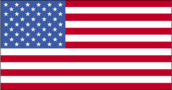
Flag of Navassa Island

Navassa Island

Central America N Caribbean

What Navassa Island means for your money — the prices you pay, the tariffs in motion, and where U.S. policy could change both.
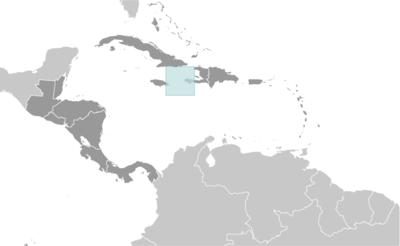
Map showing the location of Navassa Island

U.S. exposure

Minimal direct economic exposure

Navassa Island is not a significant U.S. goods-trade partner and has no tracked tariff actions. Policy changes here are unlikely to reach American prices directly.

Reference

The country itself

Central America N Caribbean · Geography, people, economy, and government — public-domain data from the CIA World Factbook.

The US claimed uninhabited Navassa Island in 1857 for its guano. Mining took place between 1865 and 1898. The lighthouse, built in 1917, was shut down in 1996, and administration of Navassa Island was transferred from the US Coast Guard to the Department of the Interior, Office of Insular Affairs. A 1998 scientific expedition to the island described it as a "unique preserve of Caribbean biodiversity." The following year it became a National Wildlife Refuge, and annual scientific expeditions have continued.
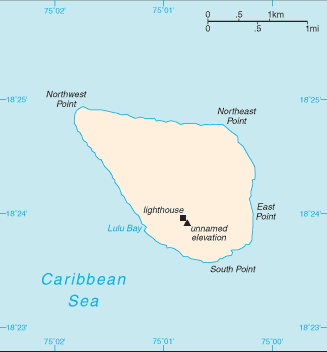
Regional map of Navassa Island

Geography

Location
Caribbean, island in the Caribbean Sea, 30 nm west of Tiburon Peninsula of Haiti
Area
5 sq km
Climate
marine, tropical
Terrain
raised flat to undulating coral and limestone plateau; ringed by vertical white cliffs (9 to 15 m high)
Natural resources
guano (mining discontinued in 1898)
Coastline
8 km
Natural hazards
hurricanes

People & society

Population
uninhabited

Full reference data

Every field, by section — CIA World Factbook. Open a topic to expand it.

Introduction
Background
The US claimed uninhabited Navassa Island in 1857 for its guano. Mining took place between 1865 and 1898. The lighthouse, built in 1917, was shut down in 1996, and administration of Navassa Island was transferred from the US Coast Guard to the Department of the Interior, Office of Insular Affairs. A 1998 scientific expedition to the island described it as a "unique preserve of Caribbean biodiversity." The following year it became a National Wildlife Refuge, and annual scientific expeditions have continued.
Geography
Location
Caribbean, island in the Caribbean Sea, 30 nm west of Tiburon Peninsula of Haiti
Geographic coordinates
18 25 N, 75 02 W
Map references
Central America and the Caribbean
Area - total
5 sq km
Area - land
5.4 sq km
Area - water
0 sq km
Area - comparative
about nine times the size of the National Mall in Washington, D.C.
Land boundaries - total
0 km
Coastline
8 km
Maritime claims - territorial sea
12 nm
Maritime claims - exclusive economic zone
200 nm
Climate
marine, tropical
Terrain
raised flat to undulating coral and limestone plateau; ringed by vertical white cliffs (9 to 15 m high)
Elevation - highest point
200 m NNW of lighthouse 85 m
Elevation - lowest point
Caribbean Sea 0 m
Natural resources
guano (mining discontinued in 1898)
Land use - other
100% (2018 est.)
Natural hazards
hurricanes
Geography - note
strategic location 160 km south of the US Naval Base at Guantanamo Bay, Cuba; mostly exposed rock with numerous solution holes (limestone sinkholes) but with enough grassland to support goat herds; dense stands of fig trees, scattered cactus
People and Society
Population - total
uninhabited
Government
Country name - conventional long form
none
Country name - conventional short form
Navassa Island
Country name - etymology
the flat island was named "Navaza" by sailors with the Christopher COLUMBUS expedition in 1504; the name derives from the Spanish word nava , meaning "flat land or level ground"
Dependency status
unorganized, unincorporated territory of the US; administered by the Fish and Wildlife Service, US Department of the Interior, from the Caribbean Islands National Wildlife Refuge in Boqueron, Puerto Rico; Haiti has claimed the island since the 19th century
Legal system
the laws of the US apply
Diplomatic representation from the US - embassy
none (territory of the US)
Flag
the flag of the US is used
Military and Security
Military - note
defense is the responsibility of the US
Environment
Environmental issues
some coral bleaching
Climate
marine, tropical
Land use - other
100% (2018 est.)