
Country exposure · CG
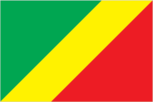
Congo, Republic of the Congo
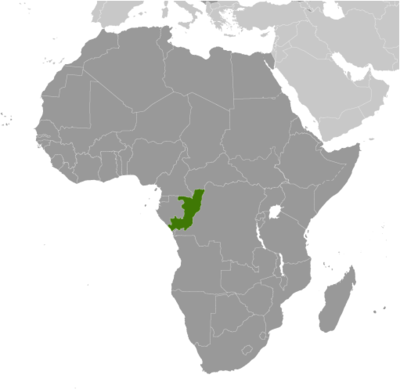
Africa · Brazzaville · presidential republic
What Congo, Republic of the Congo means for your money, the prices you pay, the tariffs in motion, and where U.S. policy could change both.
$104M
U.S. imports, 2025
+159.4%
change in one year
$170M
U.S. exports, 2025
6M
Population
$15.7B
GDP
In your house
What you buy that Congo, Republic of the Congo makes
America bought $104M in goods from Congo, Republic of the Congo in 2025, up 159.4% in a single year. Of every $100 of it, here's where the money went.
Fuel oil
fuel oil
Copper
copper for wiring
Lumber
lumber for homebuilding
Tin
U.s. goods returned, and reimports
Tobacco, waxes, etc.
Cell phones and other household goods, n.e.c.
cell phones and home electronics
Green coffee
green coffee for roasters
Minimum value shipments
Telecommunications equipment
phones, routers, networking gear
2026 so far (through July): $17M in imports. Source: U.S. Census Bureau, International Trade in Goods (customs basis).
The other direction
What America sells to Congo, Republic of the Congo
$170M in 2025, a trade rupture cuts both ways, for American producers as well as American prices.
Meat, poultry, etc.
$48MLaboratory testing instruments
$10MDrilling & oilfield equipment
$9MIndustrial machines, other
$9MMeasuring, testing, control instruments
$9MIndustrial engines
$8MChemicals-other
$8MPlastic materials
$7Mplastics for packaging and goods
Electric apparatus
$6MWhere you stand
U.S. tariff posture toward Congo, Republic of the Congo
No U.S. tariff action singles this country out. Its goods face the universal 10% temporary import surcharge under Section 122 of the Trade Act (which replaced the IEEPA reciprocal baseline in February 2026) plus the sectoral Section 232 duties — steel and aluminum at 50% — that apply to all countries. The Section 122 surcharge is statutorily temporary — scheduled to lapse on or about July 23, 2026 (a 150-day cap) unless extended or replaced.
Reciprocal tariff (universal baseline)
10%
The universal 10% floor, a Section 122 import surcharge since February 2026, previously the EO 14257 reciprocal baseline, applies to nearly all U.S. imports. This country has no higher assigned rate of its own.
Policy in motion
Tariff status: a moving target
No U.S. tariff action names Congo, Republic of the Congo. These are the universal measures, applied to every country without a country-specific arrangement, that set its treatment.
2026-04-06
Section 232 metals coverage expanded
In effectThe April 2026 proclamation strengthening Section 232 actions on aluminum, steel, and copper expanded derivative-product coverage for all countries, keeping the general metals rate at 50%.
91 FR 18201 →2026-02-24
IEEPA reciprocal tariffs terminated — replaced by 10% Section 122 surcharge
In effectExecutive Order 14389 (Ending Certain Tariff Actions) terminated the IEEPA tariff duties — including the EO 14257 reciprocal baseline — effective February 24, 2026. A flat 10% Section 122 temporary import surcharge (Proclamation 11012 of February 20, 2026) replaced them, leaving the universal rate unchanged at 10% on a different statutory basis. Section 122 caps such surcharges at 150 days, so this 10% surcharge is scheduled to lapse on or about July 23, 2026 absent further action (the administration has signaled it could raise the rate toward the 15% statutory maximum).
91 FR 9437 →2025-11-13
Agricultural products exempted from reciprocal tariffs
In effectExecutive Order 14360 of November 14, 2025 removed reciprocal duties from certain agricultural products listed in its annexes (coffee, cocoa, bananas, and other goods the U.S. does not produce in sufficient quantity), retroactive to November 13, 2025 — for all countries subject to the reciprocal tariff.
90 FR 54091 →2025-06-04
Section 232 steel and aluminum duties doubled to 50%
In effectThe June 3, 2025 proclamation raised Section 232 duties on steel and aluminum articles and derivatives from 25% to 50% for all countries, effective June 4, 2025.
90 FR 24199 →2025-04-05
Universal 10% reciprocal baseline takes effect
In effectExecutive Order 14257 (signed April 2, 2025) imposed a 10% ad valorem reciprocal duty on imports from all trading partners, effective April 5, 2025. Countries without a higher Annex I rate remain at this baseline.
Federal Register · 2025-06063 →2025-03-12
Section 232 steel and aluminum duties set at 25% for all countries
In effectProclamations of February 10, 2025 terminated all country exemptions and quota arrangements and applied 25% Section 232 duties to steel and aluminum imports from every country, effective March 12, 2025.
90 FR 9817 →
Made for America
What Congo, Republic of the Congo makes for America
Congo, Republic of the Congo is a direct U.S. source of 2 essential goods Americans rely on, the items themselves, shipped finished off the line.
Reference
The country itself
Africa · Geography, people, economy, and government, public-domain data from the CIA World Factbook.
Upon independence in 1960, the former French region of Middle Congo became the Republic of the Congo. From 1968 to 1992, the country was named the People’s Republic of the Congo. A quarter-century of experimentation with Marxism was abandoned in 1990, and a democratically elected government took office in 1992, at which time the country reverted to "the Republic of the Congo" name. A two-year civil war that ended in 1999 restored to power former President Denis SASSOU-Nguesso, who had ruled from 1979 to 1992. A new constitution adopted three years later provided for a multi-party system and a seven-year presidential term, and the next elections retained SASSOU-Nguesso. After a year of renewed fighting, SASSOU-Nguesso and southern-based rebel groups agreed to a final peace accord in 2003. SASSOU-Nguesso was reelected in 2009 and, after passing a constitutional referendum allowing him to run for additional terms, was reelected again in 2016 and 2021. The Republic of the Congo is one of Africa's largest petroleum producers.
Geography
- Location
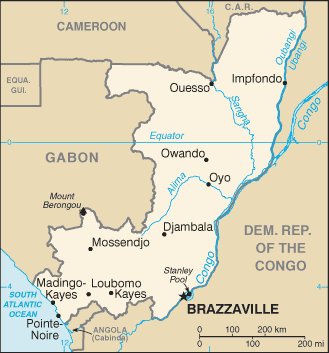
- Central Africa, bordering the South Atlantic Ocean, between Angola and Gabon
- Area
- 342,000 sq km
- Climate
- tropical; rainy season (March to June); dry season (June to October); persistent high temperatures and humidity; particularly enervating climate astride the Equator
- Terrain
- coastal plain, southern basin, central plateau, northern basin
- Natural resources
- petroleum, timber, potash, lead, zinc, uranium, copper, phosphates, gold, magnesium, natural gas, hydropower
- Coastline
- 169 km
- Natural hazards
- seasonal flooding
People & society
- Population
- 6,097,665 (2024 est.)
- Nationality
- Congolese (singular and plural)
- Ethnic groups
- Kongo (Bakongo) 40.5%, Teke 16.9%, Mbochi 13.1%, foreigner 8.2%, Sangha 5.6%, Mbere/Mbeti/Kele 4.4%, Punu 4.3%, Pygmy 1.6%, Oubanguiens 1.6%, Duma 1.5%, Makaa 1.3%, other and unspecified 1% (2014-15 est.)
- Languages
- French (official), French Lingala and Monokutuba (trade languages), many local languages and dialects (of which Kikongo is the most widespread)
- Religions
- Roman Catholic 33.1%, Awakening Churches/Christian Revival 22.3%, Protestant 19.9%, Salutiste 2.2%, Muslim 1.6%, Kimbanguist 1.5%, other 8.1%, none 11.3% (2007 est.)
- Median age
- 20.9 years (2025 est.)
- Life expectancy at birth
- 72.9 years (2024 est.)
Economy
- Economic overview
- primarily an oil- and natural resources-based economy; recovery from mid-2010s oil devaluation has been slow and curtailed by COVID-19; extreme poverty increasing, particularly in southern rural regions; attempting to implement recommended CEMAC reforms; increasing likelihood of debt default
- Industries
- petroleum extraction, cement, lumber, brewing, sugar, palm oil, soap, flour, cigarettes
- Agricultural products
- cassava, sugarcane, oil palm fruit, bananas, plantains, root vegetables, game meat, vegetables, mangoes/guavas, fruits (2023)
- Exports - partners
- China 46%, UAE 23%, India 6%, Saudi Arabia 5%, Portugal 3% (2023)
- Imports - partners
- China 24%, Angola 20%, Gabon 9%, France 6%, UAE 5% (2023)
Government
- Government type
- presidential republic
- Capital
- Brazzaville
- Independence
- 15 August 1960 (from France)
- Constitution
- several previous; latest approved by referendum 25 October 2015
- Executive branch
- President Denis SASSOU-Nguesso (since 1997)
- Legislative branch
- Parliament (Parlement)
Full reference data
Every field, by section, CIA World Factbook. Open a topic to expand it.
Introduction
Travel Facts
Please visit the following links to find further information about your desired destination.
World Health Organization (WHO) - To learn what vaccines and health precautions to take while visiting your destination.
US State Dept Travel Information - Overall information about foreign travel for US citizens.
To obtain an international driving permit (IDP). Only two organizations in the US issue IDPs: American Automobile Association (AAA) and American Automobile Touring Alliance (AATA)
How to get help in an emergency? Contact the nearest US embassy or consulate, or call one of these numbers: from the US or Canada - 1-888-407-4747 or from Overseas - +1 202-501-4444
Page last updated: Wednesday, July 20, 2022