
Country exposure · CW
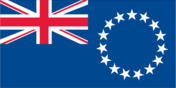
Curacao
Australia Oceania · Avarua · parliamentary democracy
What Curacao means for your money, the prices you pay, the tariffs in motion, and where U.S. policy could change both.
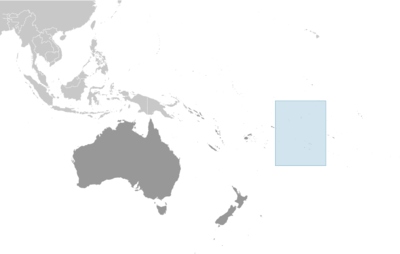
$54M
U.S. imports, 2025
+69.9%
change in one year
$1.1B
U.S. exports, 2025
8K
Population
$409M
GDP
In your house
What you buy that Curacao makes
America bought $54M in goods from Curacao in 2025, up 69.9% in a single year. Of every $100 of it, here's where the money went.
U.s. goods returned, and reimports
Petroleum products, other
gasoline and petroleum products
Fuel oil
fuel oil
Nonmonetary gold
Electric apparatus
Generators, accessories
Minimum value shipments
Copper
copper for wiring
Industrial machines, other
Measuring, testing, control instruments
2026 so far (through August): $31M in imports. Source: U.S. Census Bureau, International Trade in Goods (customs basis).
The other direction
What America sells to Curacao
$1.1B in 2025, a trade rupture cuts both ways, for American producers as well as American prices.
Telecommunications equipment
$281Mphones, routers, networking gear
Petroleum products, other
$206MFuel oil
$184MMinimum value shipments
$65MIndustrial machines, other
$27MOther foods
$23MPassenger cars, new and used
$22Mnew and used cars
Meat, poultry, etc.
$21MCivilian aircraft, engines, equipment, and parts
$19MWhere you stand
U.S. tariff posture toward Curacao
No U.S. tariff action singles this country out. Its goods face the universal 10% temporary import surcharge under Section 122 of the Trade Act (which replaced the IEEPA reciprocal baseline in February 2026) plus the sectoral Section 232 duties — steel and aluminum at 50% — that apply to all countries. The Section 122 surcharge is statutorily temporary — scheduled to lapse on or about July 23, 2026 (a 150-day cap) unless extended or replaced.
Reciprocal tariff (universal baseline)
10%
The universal 10% floor, a Section 122 import surcharge since February 2026, previously the EO 14257 reciprocal baseline, applies to nearly all U.S. imports. This country has no higher assigned rate of its own.
Policy in motion
Tariff status: a moving target
No U.S. tariff action names Curacao. These are the universal measures, applied to every country without a country-specific arrangement, that set its treatment.
2026-04-06
Section 232 metals coverage expanded
In effectThe April 2026 proclamation strengthening Section 232 actions on aluminum, steel, and copper expanded derivative-product coverage for all countries, keeping the general metals rate at 50%.
91 FR 18201 →2026-02-24
IEEPA reciprocal tariffs terminated — replaced by 10% Section 122 surcharge
In effectExecutive Order 14389 (Ending Certain Tariff Actions) terminated the IEEPA tariff duties — including the EO 14257 reciprocal baseline — effective February 24, 2026. A flat 10% Section 122 temporary import surcharge (Proclamation 11012 of February 20, 2026) replaced them, leaving the universal rate unchanged at 10% on a different statutory basis. Section 122 caps such surcharges at 150 days, so this 10% surcharge is scheduled to lapse on or about July 23, 2026 absent further action (the administration has signaled it could raise the rate toward the 15% statutory maximum).
91 FR 9437 →2025-11-13
Agricultural products exempted from reciprocal tariffs
In effectExecutive Order 14360 of November 14, 2025 removed reciprocal duties from certain agricultural products listed in its annexes (coffee, cocoa, bananas, and other goods the U.S. does not produce in sufficient quantity), retroactive to November 13, 2025 — for all countries subject to the reciprocal tariff.
90 FR 54091 →2025-06-04
Section 232 steel and aluminum duties doubled to 50%
In effectThe June 3, 2025 proclamation raised Section 232 duties on steel and aluminum articles and derivatives from 25% to 50% for all countries, effective June 4, 2025.
90 FR 24199 →2025-04-05
Universal 10% reciprocal baseline takes effect
In effectExecutive Order 14257 (signed April 2, 2025) imposed a 10% ad valorem reciprocal duty on imports from all trading partners, effective April 5, 2025. Countries without a higher Annex I rate remain at this baseline.
Federal Register · 2025-06063 →2025-03-12
Section 232 steel and aluminum duties set at 25% for all countries
In effectProclamations of February 10, 2025 terminated all country exemptions and quota arrangements and applied 25% Section 232 duties to steel and aluminum imports from every country, effective March 12, 2025.
90 FR 9817 →
Made for America
What Curacao makes for America
Curacao is a direct U.S. source of 2 essential goods Americans rely on, the items themselves, shipped finished off the line.
Reference
The country itself
Australia Oceania · Geography, people, economy, and government, public-domain data from the CIA World Factbook.
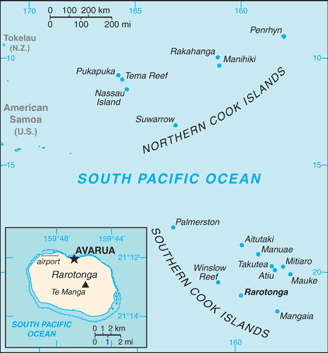
Polynesians from Tahiti were probably the first people to settle Rarotonga -- the largest of the Cook Islands -- around A.D. 900. Over time, Samoans and Tongans also settled in Rarotonga, and Rarotongans voyaged to the northern Cook Islands, settling Manihiki and Rakahanga. Pukapuka and Penrhyn in the northern Cook Islands were settled directly from Samoa. Prior to European contact, there was considerable travel and trade between inhabitants of the different islands and atolls, but they were not united in a single political entity. Spanish navigators were the first Europeans to spot the northern Cook Islands in 1595, followed by the first landing in 1606, but no further European contact occurred until the 1760s. In 1773, British explorer James COOK spotted Manuae in the southern Cook Islands, and Russian mapmakers named the islands after COOK in the 1820s. Fearing France would militarily occupy the islands as it did in Tahiti, Rarotongans asked the UK for protectorate status in the 1840s and 1860s, a request the UK ignored. In 1888, Queen MAKEA TAKAU of Rarotonga formally petitioned for protectorate status, to which the UK reluctantly agreed. In 1901, the UK placed Rarotonga and the rest of the islands in the New Zealand Colony, and in 1915, the Cook Islands Act organized the islands into one political entity. It remained a protectorate until 1965, when New Zealand granted the Cook Islands self-governing status. The Cook Islands has a great deal of local autonomy and is an independent member of international organizations, but it is in free association with New Zealand, which is responsible for its defense and foreign affairs. In September 2023, the US recognized the Cook Islands as a sovereign and independent state.
Geography
- Location
- Oceania, group of islands in the South Pacific Ocean, about halfway between Hawaii and New Zealand
- Area
- 236 sq km
- Climate
- tropical oceanic; moderated by trade winds; a dry season from April to November and a more humid season from December to March
- Terrain
- low coral atolls in north; volcanic, hilly islands in south
- Natural resources
- coconuts (copra)
- Coastline
- 120 km
- Natural hazards
- tropical cyclones (November to March)
People & society
- Population
- 7,592 (2025 est.)
- Nationality
- Cook Islander(s)
- Ethnic groups
- Cook Island Maori 77.4%, part Cook Island Maori 8.3%, Fijian 3.6%, New Zealand Maori/European 3.4%, Filipino 2.9%, other Pacific Islands 1.8%, other 2.6% (2021 est.)
- Languages
- English (official) 86.4%, Cook Islands Maori (Rarotongan) (official) 76.2%, other 8.3% (2011 est.)
- Religions
- Protestant 55% (Cook Islands Christian Church 43.1%, Seventh Day Adventist 8.3%, Assemblies of God 3.6%), Roman Catholic 16.7%, Church of Jesus Christ 3.9%, Jehovah's Witness 2.2%, Apostolic Church 2.1%, other 4.5%, none/unspecified 15.6% (2021 est.)
- Median age
- 41.5 years (2025 est.)
- Life expectancy at birth
- 77.6 years (2024 est.)
Economy
- Economic overview
- high-income self-governing New Zealand territorial economy; tourism-based activity but diversifying; severely curtailed by COVID-19 pandemic; copra and tropical fruit exporter; Asian Development Bank aid recipient
- Industries
- fishing, fruit processing, tourism, clothing, handicrafts
- Agricultural products
- coconuts, vegetables, papayas, pork, sweet potatoes, tomatoes, fruits, mangoes/guavas, watermelons, chicken (2023)
- Exports - partners
- Japan 33%, Thailand 15%, Greece 15%, France 11%, China 8% (2023)
- Imports - partners
- NZ 44%, Italy 26%, Fiji 9%, China 7%, Australia 3% (2023)
Government
- Government type
- parliamentary democracy
- Capital
- Avarua
- Independence
- 4 August 1965 (Cook Islands became self-governing state in free association with New Zealand)
- Constitution
- 4 August 1965 (Cook Islands Constitution Act 1964)
- Executive branch
- King CHARLES III (since 8 September 2022); represented by Sir Tom J. MARSTERS (since 9 August 2013); New Zealand High Commissioner Catherine GRAHAM (since 8 September 2024)
- Legislative branch
- Parliament
Full reference data
Every field, by section, CIA World Factbook. Open a topic to expand it.
Introduction
Travel Facts
Please visit the following links to find further information about your desired destination.
World Health Organization (WHO) - To learn what vaccines and health precautions to take while visiting your destination.
US State Dept Travel Information - Overall information about foreign travel for US citizens.
To obtain an international driving permit (IDP). Only two organizations in the US issue IDPs: American Automobile Association (AAA) and American Automobile Touring Alliance (AATA)
How to get help in an emergency? Contact the nearest US embassy or consulate, or call one of these numbers: from the US or Canada - 1-888-407-4747 or from Overseas - +1 202-501-4444
Page last updated: Wednesday, July 20, 2022