Country exposure · CX

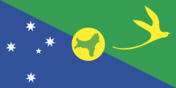
Flag of Christmas Island (in the Indian Ocean)

Christmas Island (in the Indian Ocean)

Australia Oceania · The Settlement (Flying Fish Cove) · non-self-governing overseas territory of Australia

What Christmas Island (in the Indian Ocean) means for your money — the prices you pay, the tariffs in motion, and where U.S. policy could change both.
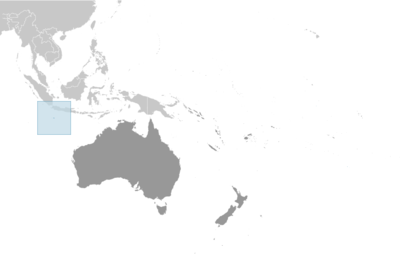
Map showing the location of Christmas Island (in the Indian Ocean)

$68K

U.S. imports, 2025

-96.1%

change in one year

$632K

U.S. exports, 2025

2K

Population

In your house

What you buy that Christmas Island (in the Indian Ocean) makes

America bought $68K in goods from Christmas Island (in the Indian Ocean) in 2025 — down 96.1% in a single year. Of every $100 of it, here's where the money went.

Electric apparatus

$25K36.6%

Minimum value shipments

$23K33%

Industrial machines, other

$8K12.3%

Photo, service industry machinery

$4K5.9%

Industrial engines

$3K4.4%

Excavating machinery

$3K4%

Other (movies, miscellaneous imports, and special transactions)

$3K3.9%

2026 so far (through April): $10K in imports. Source: U.S. Census Bureau, International Trade in Goods (customs basis).

The other direction

What America sells to Christmas Island (in the Indian Ocean)

$632K in 2025 — a trade rupture cuts both ways, for American producers as well as American prices.

Generators, accessories

$163K

Measuring, testing, control instruments

$98K

Synthetic rubber-primary

$63K

Pulpwood and woodpulp

$60K

Aluminum and alumina

$36K

Photo, service industry machinery

$30K

Minimum value shipments

$29K

Copper

$28K

Electric apparatus

$24K

Where you stand

U.S. tariff posture toward Christmas Island (in the Indian Ocean)

No U.S. tariff action singles this country out. Its goods face the universal 10% temporary import surcharge under Section 122 of the Trade Act (which replaced the IEEPA reciprocal baseline in February 2026) plus the sectoral Section 232 duties — steel and aluminum at 50% — that apply to all countries. The Section 122 surcharge is statutorily temporary — scheduled to lapse on or about July 23, 2026 (a 150-day cap) unless extended or replaced.

Reciprocal tariff (universal baseline)

10%

The universal 10% floor — a Section 122 import surcharge since February 2026, previously the EO 14257 reciprocal baseline — applies to nearly all U.S. imports. This country has no higher assigned rate of its own.

Policy in motion

Tariff status: a moving target

No U.S. tariff action names Christmas Island (in the Indian Ocean). These are the universal measures — applied to every country without a country-specific arrangement — that set its treatment.

  1. 2026-04-06

    Section 232 metals coverage expanded

    In effect

    The April 2026 proclamation strengthening Section 232 actions on aluminum, steel, and copper expanded derivative-product coverage for all countries, keeping the general metals rate at 50%.

    91 FR 18201
  2. 2026-02-24

    IEEPA reciprocal tariffs terminated — replaced by 10% Section 122 surcharge

    In effect

    Executive Order 14389 (Ending Certain Tariff Actions) terminated the IEEPA tariff duties — including the EO 14257 reciprocal baseline — effective February 24, 2026. A flat 10% Section 122 temporary import surcharge (Proclamation 11012 of February 20, 2026) replaced them, leaving the universal rate unchanged at 10% on a different statutory basis. Section 122 caps such surcharges at 150 days, so this 10% surcharge is scheduled to lapse on or about July 23, 2026 absent further action (the administration has signaled it could raise the rate toward the 15% statutory maximum).

    91 FR 9437
  3. 2025-11-13

    Agricultural products exempted from reciprocal tariffs

    In effect

    Executive Order 14360 of November 14, 2025 removed reciprocal duties from certain agricultural products listed in its annexes (coffee, cocoa, bananas, and other goods the U.S. does not produce in sufficient quantity), retroactive to November 13, 2025 — for all countries subject to the reciprocal tariff.

    90 FR 54091
  4. 2025-06-04

    Section 232 steel and aluminum duties doubled to 50%

    In effect

    The June 3, 2025 proclamation raised Section 232 duties on steel and aluminum articles and derivatives from 25% to 50% for all countries, effective June 4, 2025.

    90 FR 24199
  5. 2025-04-05

    Universal 10% reciprocal baseline takes effect

    In effect

    Executive Order 14257 (signed April 2, 2025) imposed a 10% ad valorem reciprocal duty on imports from all trading partners, effective April 5, 2025. Countries without a higher Annex I rate remain at this baseline.

    Federal Register · 2025-06063
  6. 2025-03-12

    Section 232 steel and aluminum duties set at 25% for all countries

    In effect

    Proclamations of February 10, 2025 terminated all country exemptions and quota arrangements and applied 25% Section 232 duties to steel and aluminum imports from every country, effective March 12, 2025.

    90 FR 9817

Reference

The country itself

Australia Oceania · Geography, people, economy, and government — public-domain data from the CIA World Factbook.

Although Europeans sighted Christmas Island in 1615, it was named for the day of its rediscovery in 1643. Steep cliffs and dense jungle hampered attempts to explore the island over the next two centuries. The discovery of phosphate on the island in 1887 led to the UK annexing it the following year. In 1898, 200 Chinese indentured servants were brought in to work the mines, along with Malays, Sikhs, and a small number of Europeans. The UK administered Christmas Island from Singapore. Japan invaded the island in 1942, but islanders sabotaged Japanese mining operations, making the mines relatively unproductive. After World War II, Australia and New Zealand bought the company mining the phosphate, and in 1958, the UK transferred sovereignty from Singapore to Australia in exchange for $20 million to compensate for the loss of future phosphate income. In 1980, Australia set up the Christmas Island National Park and expanded its boundaries throughout the 1980s until it covered more than 60% of the island’s territory. The phosphate mine was closed in 1987 because of environmental concerns, and Australia has rejected several efforts to reopen it. In the 1980s, boats of asylum seekers started landing on Christmas Island, and the migrants claimed refugee status because they were on Australian territory. In 2001, Australia declared Christmas Island to be outside the Australian migration zone and built an immigration detention center on the island. Completed in 2008, the controversial detention center was closed in 2018 but then reopened in 2019. In 2020, the center served as a coronavirus quarantine facility for Australian citizens evacuated from China.
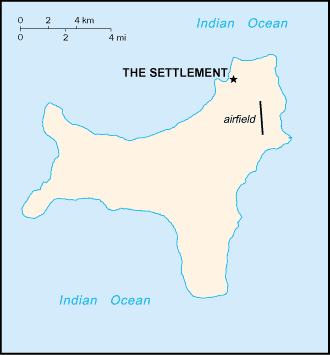
Regional map of Christmas Island (in the Indian Ocean)

Geography

Location
Southeastern Asia, island in the Indian Ocean, south of Indonesia
Area
135 sq km
Climate
tropical with a wet season (December to April) and dry season; heat and humidity moderated by trade winds
Terrain
steep cliffs along coast rise abruptly to central plateau
Natural resources
phosphate, beaches
Coastline
138.9 km
Natural hazards
the narrow fringing reef surrounding the island can be a maritime hazard

People & society

Population
1,692 (2021 est.)
Nationality
Christmas Islander(s)
Ethnic groups
Chinese 70%, European 20%, Malay 10% (2001)
Languages
English (official) 27.6%, Mandarin 17.2%, Malay 17.1%, Cantonese 3.9%, Min Nan 1.6%, Tagalog 1%, other 4.5%, unspecified 27.1% (2016 est.)
Religions
Muslim 19.4%, Buddhist 18.3%, Roman Catholic 8.8%, Protestant 6.5% (includes Anglican 3.6%, Uniting Church 1.2%, other 1.7%), other Christian 3.3%, other 0.6%, none 15.3%, unspecified 27.7% (2016 est.)
Median age
38 years (2021 est.)

Economy

Economic overview
high-income Australian territorial economy; development through government services and phosphate mining; operates Australia’s Immigration Detention Centre; increasing tourism and government investments; sustained environmental protections
Industries
tourism, phosphate extraction (near depletion)
Exports - partners
Indonesia 30%, USA 26%, Malaysia 12%, Ireland 8%, UK 7% (2023)
Imports - partners
USA 58%, Australia 40%, Malaysia 1%, Fiji 0%, Singapore 0% (2023)

Government

Government type
non-self-governing overseas territory of Australia
Capital
The Settlement (Flying Fish Cove)
Independence
none (territory of Australia)
Constitution
1 October 1958 (Christmas Island Act 1958)
Executive branch
King CHARLES III (since 8 September 2022); represented by Governor-General of the Commonwealth of Australia General Sam MOSTYN (since 1 July 2024)
Legislative branch
Christmas Island Shire Council

Full reference data

Every field, by section — CIA World Factbook. Open a topic to expand it.

Introduction
Background
Although Europeans sighted Christmas Island in 1615, it was named for the day of its rediscovery in 1643. Steep cliffs and dense jungle hampered attempts to explore the island over the next two centuries. The discovery of phosphate on the island in 1887 led to the UK annexing it the following year. In 1898, 200 Chinese indentured servants were brought in to work the mines, along with Malays, Sikhs, and a small number of Europeans. The UK administered Christmas Island from Singapore. Japan invaded the island in 1942, but islanders sabotaged Japanese mining operations, making the mines relatively unproductive. After World War II, Australia and New Zealand bought the company mining the phosphate, and in 1958, the UK transferred sovereignty from Singapore to Australia in exchange for $20 million to compensate for the loss of future phosphate income. In 1980, Australia set up the Christmas Island National Park and expanded its boundaries throughout the 1980s until it covered more than 60% of the island’s territory. The phosphate mine was closed in 1987 because of environmental concerns, and Australia has rejected several efforts to reopen it. In the 1980s, boats of asylum seekers started landing on Christmas Island, and the migrants claimed refugee status because they were on Australian territory. In 2001, Australia declared Christmas Island to be outside the Australian migration zone and built an immigration detention center on the island. Completed in 2008, the controversial detention center was closed in 2018 but then reopened in 2019. In 2020, the center served as a coronavirus quarantine facility for Australian citizens evacuated from China.
Geography
Location
Southeastern Asia, island in the Indian Ocean, south of Indonesia
Geographic coordinates
10 30 S, 105 40 E
Map references
Southeast Asia
Area - total
135 sq km
Area - land
135 sq km
Area - water
0 sq km
Area - comparative
about three-quarters the size of Washington, D.C.
Land boundaries - total
0 km
Coastline
138.9 km
Maritime claims - territorial sea
12 nm
Maritime claims - contiguous zone
12 nm
Maritime claims - exclusive fishing zone
200 nm
Climate
tropical with a wet season (December to April) and dry season; heat and humidity moderated by trade winds
Terrain
steep cliffs along coast rise abruptly to central plateau
Elevation - highest point
Murray Hill 361 m
Elevation - lowest point
Indian Ocean 0 m
Natural resources
phosphate, beaches
Land use - agricultural land
0% (2018 est.)
Land use - other
100% (2018 est.)
Irrigated land
NA
Population distribution
majority of the population lives on the northern tip of the island
Natural hazards
the narrow fringing reef surrounding the island can be a maritime hazard
Geography - note
located along major sea lanes of the Indian Ocean
People and Society
Population - total
1,692 (2021 est.)
Population - male
1,007
Population - female
685
Nationality - noun
Christmas Islander(s)
Nationality - adjective
Christmas Island
Ethnic groups
Chinese 70%, European 20%, Malay 10% (2001)
Ethnic groups - note
note: no indigenous population
Languages
English (official) 27.6%, Mandarin 17.2%, Malay 17.1%, Cantonese 3.9%, Min Nan 1.6%, Tagalog 1%, other 4.5%, unspecified 27.1% (2016 est.)
Languages - note
note: data represent language spoken at home
Religions
Muslim 19.4%, Buddhist 18.3%, Roman Catholic 8.8%, Protestant 6.5% (includes Anglican 3.6%, Uniting Church 1.2%, other 1.7%), other Christian 3.3%, other 0.6%, none 15.3%, unspecified 27.7% (2016 est.)
Age structure - 0-14 years
16.6%
Age structure - 15-64 years
70.4%
Age structure - 65 years and over
13% (2021)
Median age - total
38 years (2021 est.)
Population growth rate
1.11% (2014 est.)
Population distribution
majority of the population lives on the northern tip of the island
Government
Country name - conventional long form
Territory of Christmas Island
Country name - conventional short form
Christmas Island
Country name - etymology
named by English Captain William MYNORS for the day of its rediscovery, Christmas Day (25 December 1643); Europeans had sighted the island as early as 1615
Government type
non-self-governing overseas territory of Australia
Dependency status
non-self-governing territory of Australia; administered from Canberra by the Department of Infrastructure, Transport, Cities & Regional Development
Capital - name
The Settlement (Flying Fish Cove)
Capital - geographic coordinates
10 25 S, 105 43 E
Capital - time difference
UTC+7 (12 hours ahead of Washington, DC, during Standard Time)
Capital - etymology
Flying Fish Cove was named after a British explorer's ship in 1886
Legal system
system is under the authority of the governor general of Australia and Australian law
Constitution - history
1 October 1958 (Christmas Island Act 1958)
Citizenship
see Australia
Suffrage
18 years of age
Executive branch - chief of state
King CHARLES III (since 8 September 2022); represented by Governor-General of the Commonwealth of Australia General Sam MOSTYN (since 1 July 2024)
Executive branch - head of government
Administrator Farzian ZAINAL (since 11 May 2023)
Executive branch - cabinet
NA
Executive branch - election/appointment process
the monarchy is hereditary; governor general appointed by the monarch on the recommendation of the Australian prime minister; administrator appointed by the governor-general of Australia for a 2-year term and represents the monarch and Australia
Legislative branch - legislature name
Christmas Island Shire Council
Legislative branch - legislative structure
unicameral
Legislative branch - number of seats
9 (directly elected)
Legislative branch - electoral system
plurality/majority
Legislative branch - scope of elections
partial renewal
Legislative branch - term in office
4 years
Legislative branch - most recent election date
10/2023
Legislative branch - parties elected and seats per party
independent (9)
Legislative branch - percentage of women in chamber
13%
Legislative branch - expected date of next election
October 2025
Judicial branch - highest court(s)
under the terms of the Territorial Law Reform Act 1992, Western Australia provides court services as needed for the island, including the Supreme Court and subordinate courts (District Court, Magistrate Court, Family Court, Children's Court, and Coroners' Court)
Political parties
none
Diplomatic representation in the US
none (territory of Australia)
Diplomatic representation from the US - embassy
none (territory of Australia)
International organization participation
none
Independence
none (territory of Australia)
National holiday
Australia Day (commemorates the arrival of the First Fleet of Australian settlers), 26 January (1788)
Flag
description: territorial flag; divided diagonally from upper left to lower right; the upper triangle is green with a yellow silhouette of the golden bosun bird; the lower triangle is blue and shows the Southern Cross constellation, representing Australia; a centered yellow disk displays a green outline of the island
Flag - note
note: the flag of Australia is used for official purposes
National symbol(s)
golden bosun bird
National anthem(s) - title
"God Save the King"
National anthem(s) - lyrics/music
unknown
National anthem(s) - history
royal anthem, as an Australian territory
Economy
Economic overview
high-income Australian territorial economy; development through government services and phosphate mining; operates Australia’s Immigration Detention Centre; increasing tourism and government investments; sustained environmental protections
Industries
tourism, phosphate extraction (near depletion)
Exports - partners
Indonesia 30%, USA 26%, Malaysia 12%, Ireland 8%, UK 7% (2023)
Exports - partners - note
note: top five export partners based on percentage share of exports
Exports - commodities
fertilizers, paintings, amine compounds (2023)
Exports - commodities - note
note: top export commodities based on value in dollars over $500,000
Imports - partners
USA 58%, Australia 40%, Malaysia 1%, Fiji 0%, Singapore 0% (2023)
Imports - partners - note
note: top five import partners based on percentage share of imports
Imports - commodities
aircraft, refined petroleum, cars, air conditioners, plastic products (2023)
Imports - commodities - note
note: top five import commodities based on value in dollars
Exchange rates - Currency
Australian dollars (AUD) per US dollar -
Exchange rates - Exchange rates 2024
1.515 (2024 est.)
Exchange rates - Exchange rates 2023
1.505 (2023 est.)
Exchange rates - Exchange rates 2022
1.442 (2022 est.)
Exchange rates - Exchange rates 2021
1.331 (2021 est.)
Exchange rates - Exchange rates 2020
1.453 (2020 est.)
Communications
Broadcast media
1 community radio station; satellite broadcasts of several Australian radio and TV stations (2017)
Internet country code
.cx
Internet users - percent of population
78.6% (2016 est.)
Transportation
Airports
1 (2025)
Railways - total
18 km (2017)
Railways - standard gauge
18 km (2017) 1.435-m (not in operation)
Railways - note
note: the 18-km Christmas Island Phosphate Company Railway between Flying Fish Cove and South Point was decommissioned in 1987; some tracks and scrap remain in place
Ports - total ports
1 (2024)
Ports - large
0
Ports - medium
1
Ports - small
0
Ports - very small
0
Ports - ports with oil terminals
0
Ports - key ports
Flying Fish Cove
Military and Security
Military - note
defense is the responsibility of Australia
Environment
Environmental issues
loss of rainforest; impact of phosphate mining
Climate
tropical with a wet season (December to April) and dry season; heat and humidity moderated by trade winds
Land use - agricultural land
0% (2018 est.)
Land use - other
100% (2018 est.)