
Country exposure · FM

Micronesia, Federated States of
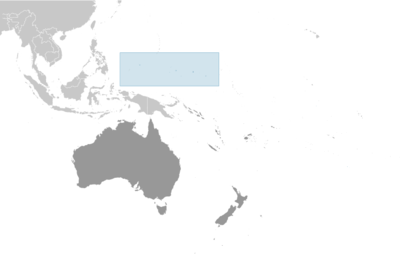
Australia Oceania · Palikir · federal republic in free association with the US
What Micronesia, Federated States of means for your money, the prices you pay, the tariffs in motion, and where U.S. policy could change both.
$675K
U.S. imports, 2025
-72.4%
change in one year
$48M
U.S. exports, 2025
100K
Population
$471M
GDP
In your house
What you buy that Micronesia, Federated States of makes
America bought $675K in goods from Micronesia, Federated States of in 2025, down 72.4% in a single year. Of every $100 of it, here's where the money went.
U.s. goods returned, and reimports
Cookware, cutlery, tools
cookware, cutlery, hand tools
Minimum value shipments
Other (movies, miscellaneous imports, and special transactions)
Fish and shellfish
fish, shrimp, shellfish
Materials, excluding chemicals
Electric apparatus
Fruits, frozen juices
fruit and frozen juices
Agricultural machinery, equipment
Vegetables
vegetables
2026 so far (through July): $138K in imports. Source: U.S. Census Bureau, International Trade in Goods (customs basis).
The other direction
What America sells to Micronesia, Federated States of
$48M in 2025, a trade rupture cuts both ways, for American producers as well as American prices.
Meat, poultry, etc.
$14MMinimum value shipments
$7MOther foods
$3MDairy products and eggs
$3MTelecommunications equipment
$2Mphones, routers, networking gear
Logs and lumber
$1MFruits, frozen juices
$1MAnimal feeds, n.e.c.
$996KGenerators, accessories
$974KWhere you stand
U.S. tariff posture toward Micronesia, Federated States of
No U.S. tariff action singles this country out. Its goods face the universal 10% temporary import surcharge under Section 122 of the Trade Act (which replaced the IEEPA reciprocal baseline in February 2026) plus the sectoral Section 232 duties — steel and aluminum at 50% — that apply to all countries. The Section 122 surcharge is statutorily temporary — scheduled to lapse on or about July 23, 2026 (a 150-day cap) unless extended or replaced.
Reciprocal tariff (universal baseline)
10%
The universal 10% floor, a Section 122 import surcharge since February 2026, previously the EO 14257 reciprocal baseline, applies to nearly all U.S. imports. This country has no higher assigned rate of its own.
Policy in motion
Tariff status: a moving target
No U.S. tariff action names Micronesia, Federated States of. These are the universal measures, applied to every country without a country-specific arrangement, that set its treatment.
2026-04-06
Section 232 metals coverage expanded
In effectThe April 2026 proclamation strengthening Section 232 actions on aluminum, steel, and copper expanded derivative-product coverage for all countries, keeping the general metals rate at 50%.
91 FR 18201 →2026-02-24
IEEPA reciprocal tariffs terminated — replaced by 10% Section 122 surcharge
In effectExecutive Order 14389 (Ending Certain Tariff Actions) terminated the IEEPA tariff duties — including the EO 14257 reciprocal baseline — effective February 24, 2026. A flat 10% Section 122 temporary import surcharge (Proclamation 11012 of February 20, 2026) replaced them, leaving the universal rate unchanged at 10% on a different statutory basis. Section 122 caps such surcharges at 150 days, so this 10% surcharge is scheduled to lapse on or about July 23, 2026 absent further action (the administration has signaled it could raise the rate toward the 15% statutory maximum).
91 FR 9437 →2025-11-13
Agricultural products exempted from reciprocal tariffs
In effectExecutive Order 14360 of November 14, 2025 removed reciprocal duties from certain agricultural products listed in its annexes (coffee, cocoa, bananas, and other goods the U.S. does not produce in sufficient quantity), retroactive to November 13, 2025 — for all countries subject to the reciprocal tariff.
90 FR 54091 →2025-06-04
Section 232 steel and aluminum duties doubled to 50%
In effectThe June 3, 2025 proclamation raised Section 232 duties on steel and aluminum articles and derivatives from 25% to 50% for all countries, effective June 4, 2025.
90 FR 24199 →2025-04-05
Universal 10% reciprocal baseline takes effect
In effectExecutive Order 14257 (signed April 2, 2025) imposed a 10% ad valorem reciprocal duty on imports from all trading partners, effective April 5, 2025. Countries without a higher Annex I rate remain at this baseline.
Federal Register · 2025-06063 →2025-03-12
Section 232 steel and aluminum duties set at 25% for all countries
In effectProclamations of February 10, 2025 terminated all country exemptions and quota arrangements and applied 25% Section 232 duties to steel and aluminum imports from every country, effective March 12, 2025.
90 FR 9817 →
Reference
The country itself
Australia Oceania · Geography, people, economy, and government, public-domain data from the CIA World Factbook.
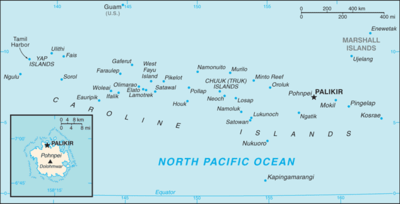
Each of the four states that compose the Federated States of Micronesia (FSM) -- Chuuk, Kosrae, Pohnpei, and Yap -- has its own unique history and cultural traditions. The first humans arrived in what is now the FSM in the second millennium B.C. In the 800s A.D., construction of the artificial islets at the Nan Madol complex in Pohnpei began, with the main architecture being built around 1200. At its height, Nan Madol united the approximately 25,000 people of Pohnpei under the Saudeleur Dynasty. By 1250, Kosrae was united in a kingdom centered in Leluh. Yap’s society became strictly hierarchical, with chiefs receiving tributes from islands up to 1,100 km (700 mi) away. Widespread human settlement in Chuuk began in the 1300s, and the different islands in the Chuuk Lagoon were frequently at war with one another. Portuguese and Spanish explorers visited a few of the islands in the 1500s, and Spain began exerting nominal, but not day-to-day, control over some of the islands -- which they named the Caroline Islands -- in the 1600s. In 1899, Spain sold all of the FSM to Germany. Japan seized the islands in 1914 and was granted a League of Nations mandate to administer them in 1920. During WWII, Japan built military bases across most of the islands and headquartered their Pacific naval operations in Chuuk. The US bombed Chuuk in 1944 but largely bypassed the other islands in its leapfrog campaign across the Pacific. In 1947, the FSM came under US administration as part of the Trust Territory of the Pacific Islands, which comprised six districts: Chuuk, the Marshall Islands, the Northern Mariana Islands, Palau, Pohnpei, and Yap; Kosrae was separated from Pohnpei into a separate district in 1977. In 1979, Chuuk, Kosrae, Pohnpei, and Yap ratified the FSM Constitution and declared independence while the other three districts opted to pursue separate political status. There are significant inter-island rivalries stemming from their different histories and cultures. Chuuk, the most populous but poorest state, has pushed for secession, but an independence referendum has been repeatedly postponed.
Geography
- Location
- Oceania, island group in the North Pacific Ocean, about three-quarters of the way from Hawaii to Indonesia
- Area
- 702 sq km
- Climate
- tropical; heavy year-round rainfall, especially in the eastern islands; located on southern edge of the typhoon belt with occasionally severe damage
- Terrain
- islands vary geologically from high mountainous islands to low, coral atolls; volcanic outcroppings on Pohnpei, Kosrae, and Chuuk
- Natural resources
- timber, marine products, deep-seabed minerals, phosphate
- Coastline
- 6,112 km
- Natural hazards
- typhoons (June to December)
People & society
- Population
- 99,603 (2024 est.)
- Nationality
- Micronesian(s)
- Ethnic groups
- Chuukese/Mortlockese 49.3%, Pohnpeian 29.8%, Kosraean 6.3%, Yapese 5.7%, Yap outer islanders 5.1%, Polynesian 1.6%, Asian 1.4%, other 0.8% (2010 est.)
- Languages
- English (official and common language), Chuukese, Kosrean, Pohnpeian, Yapese, Ulithian, Woleaian, Nukuoro, Kapingamarangi
- Religions
- Roman Catholic 54.7%, Protestant 41.1% (includes Congregational 38.5%, Baptist 1.1%, Seventh Day Adventist 0.8%, Assembly of God 0.7%), Church of Jesus Christ 1.5%, other 1.9%, none 0.7%, unspecified 0.1% (2010 est.)
- Median age
- 28.7 years (2025 est.)
- Life expectancy at birth
- 75 years (2024 est.)
Economy
- Economic overview
- lower middle-income Pacific island economy; US aid reliance, sunsetting in 2024; low entrepreneurship; mostly fishing and farming; US dollar user; no patent laws; tourism remains underdeveloped; significant corruption
- Industries
- tourism, construction; specialized aquaculture, craft items (shell and wood)
- Agricultural products
- coconuts, cassava, vegetables, sweet potatoes, bananas, pork, plantains, fruits, beef, eggs (2023)
- Exports - partners
- Thailand 64%, China 16%, Philippines 11%, Japan 5%, Ecuador 1% (2023)
- Imports - partners
- USA 35%, China 20%, Japan 13%, Taiwan 6%, Philippines 4% (2023)
Government
- Government type
- federal republic in free association with the US
- Capital
- Palikir
- Independence
- 3 November 1986 (from the US-administered UN trusteeship)
- Constitution
- drafted June 1975, ratified 1 October 1978, entered into force 10 May 1979
- Executive branch
- President Wesley W. SIMINA (since 12 May 2023)
- Legislative branch
- Congress
Full reference data
Every field, by section, CIA World Factbook. Open a topic to expand it.
Introduction
Travel Facts
Please visit the following links to find further information about your desired destination.
CDC - To learn what vaccines and health precautions to take while visiting your destination.
US State Dept Travel Information - Overall information about foreign travel for US citizens.
To obtain an international driving permit (IDP). Only two organizations in the US issue IDPs: American Automobile Association (AAA) and American Automobile Touring Alliance (AATA)
How to get help in an emergency? Contact the nearest US embassy or consulate, or call one of these numbers: from the US or Canada - 1-888-407-4747 or from Overseas - +1 202-501-4444
Page last updated: Saturday, January 25, 2025