Country exposure · IR

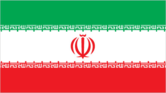
Flag of Iran

Iran

Middle East · Tehran · theocratic republic

What Iran means for your money — the prices you pay, the tariffs in motion, and where U.S. policy could change both.
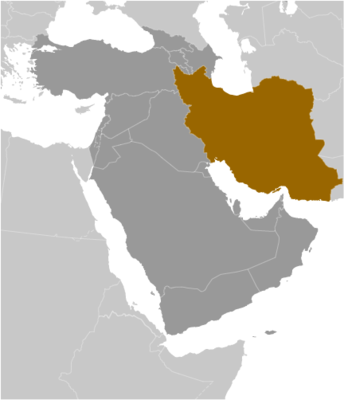
Map showing the location of Iran

$1M

U.S. imports, 2025

-77.7%

change in one year

$59M

U.S. exports, 2025

89M

Population

$436.9B

GDP

In your house

What you buy that Iran makes

America bought $1M in goods from Iran in 2025 — down 77.7% in a single year. Of every $100 of it, here's where the money went.

Artwork, antiques, stamps, etc.

$772K55.8%

Books, printed matter

books and printed materials

$343K24.8%

U.s. goods returned, and reimports

$204K14.7%

Alcoholic beverages, excluding wine

spirits and liquor

$53K3.8%

Rugs

rugs

$9K0.7%

Apparel, textiles, nonwool or cotton

synthetic and performance apparel

$2K0.1%

Cell phones and other household goods, n.e.c.

cell phones and home electronics

$0K0%

2026 so far (through April): $438K in imports. Source: U.S. Census Bureau, International Trade in Goods (customs basis).

The other direction

What America sells to Iran

$59M in 2025 — a trade rupture cuts both ways, for American producers as well as American prices.

Pharmaceutical preparations

$26M

medicines and pharmacy items

Medicinal equipment

$12M

medical devices and equipment

Laboratory testing instruments

$6M

Cell phones and other household goods, n.e.c.

$5M

cell phones and home electronics

Chemicals-other

$3M

Agric. farming-unmanufactured

$2M

Other industrial supplies

$1M

Toiletries and cosmetics

$1M

toiletries and cosmetics

Hides and skins

$781K

Where you stand

U.S. tariff posture toward Iran

No U.S. tariff action singles this country out. Its goods face the universal 10% temporary import surcharge under Section 122 of the Trade Act (which replaced the IEEPA reciprocal baseline in February 2026) plus the sectoral Section 232 duties — steel and aluminum at 50% — that apply to all countries. The Section 122 surcharge is statutorily temporary — scheduled to lapse on or about July 23, 2026 (a 150-day cap) unless extended or replaced.

Reciprocal tariff (universal baseline)

10%

The universal 10% floor — a Section 122 import surcharge since February 2026, previously the EO 14257 reciprocal baseline — applies to nearly all U.S. imports. This country has no higher assigned rate of its own.

Policy in motion

Tariff status: a moving target

No U.S. tariff action names Iran. These are the universal measures — applied to every country without a country-specific arrangement — that set its treatment.

  1. 2026-04-06

    Section 232 metals coverage expanded

    In effect

    The April 2026 proclamation strengthening Section 232 actions on aluminum, steel, and copper expanded derivative-product coverage for all countries, keeping the general metals rate at 50%.

    91 FR 18201
  2. 2026-02-24

    IEEPA reciprocal tariffs terminated — replaced by 10% Section 122 surcharge

    In effect

    Executive Order 14389 (Ending Certain Tariff Actions) terminated the IEEPA tariff duties — including the EO 14257 reciprocal baseline — effective February 24, 2026. A flat 10% Section 122 temporary import surcharge (Proclamation 11012 of February 20, 2026) replaced them, leaving the universal rate unchanged at 10% on a different statutory basis. Section 122 caps such surcharges at 150 days, so this 10% surcharge is scheduled to lapse on or about July 23, 2026 absent further action (the administration has signaled it could raise the rate toward the 15% statutory maximum).

    91 FR 9437
  3. 2025-11-13

    Agricultural products exempted from reciprocal tariffs

    In effect

    Executive Order 14360 of November 14, 2025 removed reciprocal duties from certain agricultural products listed in its annexes (coffee, cocoa, bananas, and other goods the U.S. does not produce in sufficient quantity), retroactive to November 13, 2025 — for all countries subject to the reciprocal tariff.

    90 FR 54091
  4. 2025-06-04

    Section 232 steel and aluminum duties doubled to 50%

    In effect

    The June 3, 2025 proclamation raised Section 232 duties on steel and aluminum articles and derivatives from 25% to 50% for all countries, effective June 4, 2025.

    90 FR 24199
  5. 2025-04-05

    Universal 10% reciprocal baseline takes effect

    In effect

    Executive Order 14257 (signed April 2, 2025) imposed a 10% ad valorem reciprocal duty on imports from all trading partners, effective April 5, 2025. Countries without a higher Annex I rate remain at this baseline.

    Federal Register · 2025-06063
  6. 2025-03-12

    Section 232 steel and aluminum duties set at 25% for all countries

    In effect

    Proclamations of February 10, 2025 terminated all country exemptions and quota arrangements and applied 25% Section 232 duties to steel and aluminum imports from every country, effective March 12, 2025.

    90 FR 9817

Reference

The country itself

Middle East · Geography, people, economy, and government — public-domain data from the CIA World Factbook.

Known as Persia until 1935, Iran became an Islamic republic in 1979 after the ruling monarchy was overthrown and Shah Mohammad Reza PAHLAVI was forced into exile. Conservative clerical forces led by Ayatollah Ruhollah KHOMEINI established a theocratic system of government with ultimate political authority vested in a religious scholar known as the Supreme Leader, who is accountable only to the Assembly of Experts -- an elected 88-member body of clerics. US-Iran relations became strained when Iranian students seized the US Embassy in Tehran in November 1979 and held embassy personnel hostage until mid-January 1981. The US cut off diplomatic relations with Iran in April 1980. From 1980 to 1988, Iran fought a bloody, indecisive war with Iraq that eventually expanded into the Persian Gulf and led to clashes between US Navy and Iranian military forces. Iran has been designated a state sponsor of terrorism since 1984. After the election of reformer Hojjat ol-Eslam Mohammad KHATAMI as president in 1997 and a reformist Majles (legislature) in 2000, a political reform campaign in response to popular dissatisfaction was initiated, but conservative politicians blocked reform measures while increasing repression. Municipal and legislative elections in 2003 and 2004 saw conservatives reestablish control over Iran's elected government institutions, culminating in the 2005 inauguration of hardliner Mahmud AHMADI-NEJAD as president. His reelection in 2009 sparked nationwide protests over allegations of electoral fraud, and the protests persisted until 2011. In 2013, Iranians elected to the presidency centrist cleric Dr. Hasan Fereidun RUHANI, a longtime senior regime member who promised to reform society and foreign policy. In 2019, Tehran's sudden decision to increase the gasoline price sparked nationwide protests, which the regime violently suppressed. Conservatives won the majority in Majles elections in 2020, and hardline cleric Ebrahim RAISI was elected president in 2021, resulting in a conservative monopoly across the regime's elected and unelected institutions. Iran continues to be subject to a range of international sanctions and export controls because of its involvement in terrorism, weapons proliferation, human rights abuses, and concerns over the nature of its nuclear program. Iran received nuclear-related sanctions relief in exchange for nuclear concessions under the Joint Comprehensive Plan of Action's (JCPOA) Implementation Day beginning in 2016. However, the US reimposed nuclear-related sanctions on Iran after it unilaterally terminated its JCPOA participation in 2018. In October 2023, the EU and the UK also decided to maintain nuclear-proliferation-related measures on Iran, as well as arms and missile embargoes, in response to Iran's non-compliance with its JCPOA commitments. As president, RAISI has concentrated on deepening Iran's foreign relations with anti-US states -- particularly China and Russia -- to weather US sanctions and diplomatic pressure, while supporting negotiations to restore a nuclear deal that began in 2021. RAISI contended with nationwide protests that began in September 2022 and persisted for over three months after the death of a Kurdish Iranian woman, Mahsa AMINI, in morality police custody. Young people and women led the protests, and demands focused on regime change.
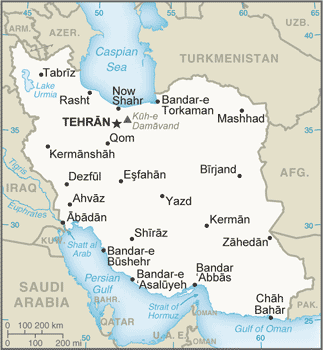
Regional map of Iran

Geography

Location
Middle East, bordering the Gulf of Oman, the Persian Gulf, and the Caspian Sea, between Iraq and Pakistan
Area
1,648,195 sq km
Climate
mostly arid or semiarid, subtropical along Caspian coast
Terrain
rugged, mountainous rim; high, central basin with deserts, mountains; small, discontinuous plains along both coasts
Natural resources
petroleum, natural gas, coal, chromium, copper, iron ore, lead, manganese, zinc, sulfur
Coastline
2,440 km
Natural hazards
periodic droughts, floods; dust storms, sandstorms; earthquakes

People & society

Population
89,177,357 (2025 est.)
Nationality
Iranian(s)
Ethnic groups
Persian, Azeri, Kurd, Lur, Baloch, Arab, Turkmen, and Turkic tribes
Languages
Persian Farsi (official), Azeri and other Turkic dialects, Kurdish, Gilaki and Mazandarani, Luri, Balochi, Arabic
Religions
Muslim (official) 98.5%, Christian 0.7%, Baha'i 0.3%, agnostic 0.3%, other (includes Zoroastrian, Jewish, Hindu) 0.2% (2020 est.)
Median age
35.2 years (2025 est.)
Life expectancy at birth
75.6 years (2024 est.)
Literacy
86% (2016 est.)

Economy

Economic overview
traditionally state-controlled economy but reforming state-owned financial entities; strong oil/gas, agricultural, and service sectors; recent massive inflation due to exchange rate depreciation, international sanctions, and investor uncertainty; increasing poverty
Industries
petroleum, petrochemicals, gas, fertilizer, caustic soda, textiles, cement and other construction materials, food processing (particularly sugar refining and vegetable oil production), ferrous and nonferrous metal fabrication, armaments
Agricultural products
wheat, sugarcane, milk, sugar beets, rice, tomatoes, barley, potatoes, oranges, apples (2023)
Exports - partners
China 35%, Turkey 16%, India 8%, Pakistan 7%, Armenia 5% (2023)
Imports - partners
China 34%, UAE 20%, Turkey 11%, Brazil 8%, Germany 4% (2023)

Government

Government type
theocratic republic
Capital
Tehran
Independence
1 April 1979 (Islamic Republic of Iran proclaimed); notable earlier dates: ca. 550 B.C. (Achaemenid or Persian Empire established); A.D. 1501 (Iran reunified under the Safavid dynasty); 1794 (beginning of Qajar dynasty); 12 December 1925 (modern Iran established under the PAHLAVI dynasty)
Constitution
previous 1906; latest adopted 24 October 1979, effective 3 December 1979
Executive branch
Supreme Leader Ali Hoseini-KHAMENEI (since 4 June 1989)
Legislative branch
Islamic Parliament of Iran (Majles Shoraye Eslami)

Full reference data

Every field, by section — CIA World Factbook. Open a topic to expand it.

Introduction
Background
Known as Persia until 1935, Iran became an Islamic republic in 1979 after the ruling monarchy was overthrown and Shah Mohammad Reza PAHLAVI was forced into exile. Conservative clerical forces led by Ayatollah Ruhollah KHOMEINI established a theocratic system of government with ultimate political authority vested in a religious scholar known as the Supreme Leader, who is accountable only to the Assembly of Experts -- an elected 88-member body of clerics. US-Iran relations became strained when Iranian students seized the US Embassy in Tehran in November 1979 and held embassy personnel hostage until mid-January 1981. The US cut off diplomatic relations with Iran in April 1980. From 1980 to 1988, Iran fought a bloody, indecisive war with Iraq that eventually expanded into the Persian Gulf and led to clashes between US Navy and Iranian military forces. Iran has been designated a state sponsor of terrorism since 1984. After the election of reformer Hojjat ol-Eslam Mohammad KHATAMI as president in 1997 and a reformist Majles (legislature) in 2000, a political reform campaign in response to popular dissatisfaction was initiated, but conservative politicians blocked reform measures while increasing repression. Municipal and legislative elections in 2003 and 2004 saw conservatives reestablish control over Iran's elected government institutions, culminating in the 2005 inauguration of hardliner Mahmud AHMADI-NEJAD as president. His reelection in 2009 sparked nationwide protests over allegations of electoral fraud, and the protests persisted until 2011. In 2013, Iranians elected to the presidency centrist cleric Dr. Hasan Fereidun RUHANI, a longtime senior regime member who promised to reform society and foreign policy. In 2019, Tehran's sudden decision to increase the gasoline price sparked nationwide protests, which the regime violently suppressed. Conservatives won the majority in Majles elections in 2020, and hardline cleric Ebrahim RAISI was elected president in 2021, resulting in a conservative monopoly across the regime's elected and unelected institutions. Iran continues to be subject to a range of international sanctions and export controls because of its involvement in terrorism, weapons proliferation, human rights abuses, and concerns over the nature of its nuclear program. Iran received nuclear-related sanctions relief in exchange for nuclear concessions under the Joint Comprehensive Plan of Action's (JCPOA) Implementation Day beginning in 2016. However, the US reimposed nuclear-related sanctions on Iran after it unilaterally terminated its JCPOA participation in 2018. In October 2023, the EU and the UK also decided to maintain nuclear-proliferation-related measures on Iran, as well as arms and missile embargoes, in response to Iran's non-compliance with its JCPOA commitments. As president, RAISI has concentrated on deepening Iran's foreign relations with anti-US states -- particularly China and Russia -- to weather US sanctions and diplomatic pressure, while supporting negotiations to restore a nuclear deal that began in 2021. RAISI contended with nationwide protests that began in September 2022 and persisted for over three months after the death of a Kurdish Iranian woman, Mahsa AMINI, in morality police custody. Young people and women led the protests, and demands focused on regime change.
Travel Facts
US State Dept Travel Advisory
The US Department of State currently recommends US citizens DO NOT TRAVEL to Iran due to the risk of kidnapping and the arbitrary arrest and detention of U.S. citizens. Exercise increased caution due to wrongful detentions. Consult its website via the link below for updates to travel advisories and statements on safety, security, local laws, and special circumstances in this country. https://travel.state.gov/content/travel/en/traveladvisories/traveladvisories.html
Passport/Visa Requirements
US citizens should make sure their passport will not expire for at least 6 months after they enter the country even if they do not intend to stay that long. They should also make sure they have at least 1 blank page in their passport for any entry stamp and or visa that will be required. A visa is required. US citizens will need to get in touch with the country’s embassy or nearest consulate to obtain a visa prior to visiting the country.
US Embassy/Consulate
None; the US Interests Section is located in the Embassy of Switzerland; US citizens may call US Dept of State (202)-501-4444; EMER: (202) 485-7600; Embassy of Switzerland, US Foreign Interests Section No. 39, Shahid Mousavi (Golestan 5th), Pasdaran Ave., Tehran, Iran
Telephone Code
98
Local Emergency Phone
Ambulance: 115; Fire: 123; Police: 110
Vaccinations
An International Certificate of Vaccination for yellow fever is required for travelers arriving from countries with a risk of yellow fever transmission and for travelers having transited through the airport of a country with risk of yellow fever transmission. See WHO recommendations. http://www.who.int/
Climate
Mostly arid or semiarid, subtropical along Caspian coast
Currency (Code)
Iranian rials (IRR)
Electricity/Voltage/Plug Type(s)
230 V / 50 Hz / plug types(s): C, F
Major Languages
Persian Farsi, Azeri and other Turkic dialects, Kurdish, Gilaki and Mazandarani, Luri, Balochi, Arabic
Major Religions
Muslim 99.4% (Shia 90-95%, Sunni 5-10%), other (includes Zoroastrian, Jewish, and Christian) 0.3%
Time Difference
UTC+3.5 (8.5 hours ahead of Washington, DC, during Standard Time); daylight saving time: +1hr, begins fourth Wednesday in March, ends fourth Friday in September
Potable Water
Yes, but some opt for bottled water
International Driving Permit
Suggested
Road Driving Side
Right
Tourist Destinations
Persepolis; Chogha Zanbil; Anzali Lagoon; Chalus Road; Naqsh-e Jahan Square; Shushtar Historical Hydraulic System; Naqsh-e Rostam
Major Sports
Varzesh-e-Bastani (martial art), wrestling, polo
Cultural Practices
In Iran, it is customary to decline food or other offerings even when you want them. The provider will most often insist, whereupon one should humbly accept.
Tipping Guidelines
Tipping is not common. Offer the bellhop a little something for carrying bags to your room.
Souvenirs
Hand-carved inlaid wood items, woven carpets and rugs, silks, silver and gold jewelry, ceramics, hand-lettered calligraphy, embroidered slippers
Traditional Cuisine
Chelo Kebab — skewered ground meat (lamb or beef) kebabs served with saffron rice and grilled tomatoes
CIA source last updated
Monday, January 30, 2023
Travel resources

Please visit the following links to find further information about your desired destination.

World Health Organization (WHO) - To learn what vaccines and health precautions to take while visiting your destination.

US State Dept Travel Information - Overall information about foreign travel for US citizens.

To obtain an international driving permit (IDP). Only two organizations in the US issue IDPs: American Automobile Association (AAA) and American Automobile Touring Alliance (AATA)

How to get help in an emergency? Contact the nearest US embassy or consulate, or call one of these numbers: from the US or Canada - 1-888-407-4747 or from Overseas - +1 202-501-4444

Page last updated: Monday, January 30, 2023

Geography
Location
Middle East, bordering the Gulf of Oman, the Persian Gulf, and the Caspian Sea, between Iraq and Pakistan
Geographic coordinates
32 00 N, 53 00 E
Map references
Middle East
Area - total
1,648,195 sq km
Area - land
1,531,595 sq km
Area - water
116,600 sq km
Area - comparative
almost 2.5 times the size of Texas; slightly smaller than Alaska
Land boundaries - total
5,894 km
Land boundaries - border countries
Afghanistan 921 km; Armenia 44 km; Azerbaijan 689 km; Iraq 1,599 km; Pakistan 959 km; Turkey 534 km; Turkmenistan 1,148 km
Coastline
2,440 km
Coastline - note
note: Iran also borders the Caspian Sea (740 km)
Maritime claims - territorial sea
12 nm
Maritime claims - contiguous zone
24 nm
Maritime claims - exclusive economic zone
bilateral agreements or median lines in the Persian Gulf
Maritime claims - continental shelf
natural prolongation
Climate
mostly arid or semiarid, subtropical along Caspian coast
Terrain
rugged, mountainous rim; high, central basin with deserts, mountains; small, discontinuous plains along both coasts
Elevation - highest point
Kuh-e Damavand 5,625 m
Elevation - lowest point
Caspian Sea -28 m
Elevation - mean elevation
1,305 m
Natural resources
petroleum, natural gas, coal, chromium, copper, iron ore, lead, manganese, zinc, sulfur
Land use - agricultural land
29% (2023 est.)
Land use - agricultural land: arable land
arable land: 9.7% (2023 est.)
Land use - agricultural land: permanent crops
permanent crops: 1.2% (2023 est.)
Land use - agricultural land: permanent pasture
permanent pasture: 18.2% (2023 est.)
Land use - forest
6.6% (2023 est.)
Land use - other
64.4% (2023 est.)
Irrigated land
79,721 sq km (2020)
Major lakes (area sq km) - salt water lake(s)
Caspian Sea (shared with Russia, Azerbaijan, Turkmenistan, and Kazakhstan) - 374,000 sq km; Lake Urmia - 5,200 sq km; Lake Namak - 750 sq km
Major rivers (by length in km)
Euphrates (shared with Turkey [s], Syria, and Iraq [m]) - 3,596 km; Tigris (shared with Turkey, Syria, and Iraq [m]) - 1,950 km; Helmand (shared with Afghanistan [s]) - 1,130 km note: [s] after country name indicates river source; [m] after country name indicates river mouth
Major watersheds (area sq km) - Indian Ocean drainage
(Persian Gulf) Tigris and Euphrates (918,044 sq km)
Population distribution
population is concentrated in the north, northwest, and west, reflecting the position of the Zagros and Elburz Mountains; the vast, dry areas in the center and eastern parts of the country, around the deserts of the Dasht-e Kavir and Dasht-e Lut, have a much lower population density
Natural hazards
periodic droughts, floods; dust storms, sandstorms; earthquakes
Geography - note
strategic location on the Persian Gulf and Strait of Hormuz
People and Society
Population - total
89,177,357 (2025 est.)
Population - male
45,098,223
Population - female
44,079,134
Nationality - noun
Iranian(s)
Nationality - adjective
Iranian
Ethnic groups
Persian, Azeri, Kurd, Lur, Baloch, Arab, Turkmen, and Turkic tribes
Languages - Languages
Persian Farsi (official), Azeri and other Turkic dialects, Kurdish, Gilaki and Mazandarani, Luri, Balochi, Arabic
Languages - major-language sample(s)
چکیده نامه جهان، منبعی ضروری برای کسب اطلاعات کلی جهان (Persian) The World Factbook, the indispensable source for basic information.
Religions
Muslim (official) 98.5%, Christian 0.7%, Baha'i 0.3%, agnostic 0.3%, other (includes Zoroastrian, Jewish, Hindu) 0.2% (2020 est.)
Age structure - 0-14 years
23.3% (male 10,512,797/female 10,040,282)
Age structure - 15-64 years
69.8% (male 31,413,125/female 30,267,241)
Age structure - 65 years and over
7% (2024 est.) (male 2,869,617/female 3,283,875)
Dependency ratios - total dependency ratio
42.8 (2025 est.)
Dependency ratios - youth dependency ratio
30.4 (2025 est.)
Dependency ratios - elderly dependency ratio
12.4 (2025 est.)
Dependency ratios - potential support ratio
8.1 (2025 est.)
Median age - total
35.2 years (2025 est.)
Median age - male
33.6 years
Median age - female
34.1 years
Population growth rate
-0.87% (2025 est.)
Birth rate
11.24 births/1,000 population (2025 est.)
Death rate
4.42 deaths/1,000 population (2025 est.)
Net migration rate
-15.52 migrant(s)/1,000 population (2025 est.)
Population distribution
population is concentrated in the north, northwest, and west, reflecting the position of the Zagros and Elburz Mountains; the vast, dry areas in the center and eastern parts of the country, around the deserts of the Dasht-e Kavir and Dasht-e Lut, have a much lower population density
Urbanization - urban population
77.3% of total population (2023)
Urbanization - rate of urbanization
1.32% annual rate of change (2020-25 est.)
Major urban areas - population
9.500 million TEHRAN (capital), 3.368 million Mashhad, 2.258 million Esfahan, 1.721 million Shiraz, 1.661 million Tabriz, 1.594 million Karaj (2023)
Sex ratio - at birth
1.05 male(s)/female
Sex ratio - 0-14 years
1.05 male(s)/female
Sex ratio - 15-64 years
1.04 male(s)/female
Sex ratio - 65 years and over
0.87 male(s)/female
Sex ratio - total population
1.03 male(s)/female (2024 est.)
Maternal mortality ratio
16 deaths/100,000 live births (2023 est.)
Infant mortality rate - total
9.7 deaths/1,000 live births (2025 est.)
Infant mortality rate - male
15.4 deaths/1,000 live births
Infant mortality rate - female
13.2 deaths/1,000 live births
Life expectancy at birth - total population
75.6 years (2024 est.)
Life expectancy at birth - male
74.3 years
Life expectancy at birth - female
77.1 years
Total fertility rate
1.53 children born/woman (2025 est.)
Gross reproduction rate
0.74 (2025 est.)
Drinking water source - improved: urban
urban: 98.7% of population (2022 est.)
Drinking water source - improved: rural
rural: 94.4% of population (2022 est.)
Drinking water source - improved: total
total: 97.7% of population (2022 est.)
Drinking water source - unimproved: urban
urban: 1.3% of population (2022 est.)
Drinking water source - unimproved: rural
rural: 5.6% of population (2022 est.)
Drinking water source - unimproved: total
total: 2.3% of population (2022 est.)
Health expenditure - Health expenditure (as % of GDP)
5.8% of GDP (2021)
Health expenditure - Health expenditure (as % of national budget)
19% of national budget (2022 est.)
Physician density
1.81 physicians/1,000 population (2023)
Hospital bed density
1.9 beds/1,000 population (2019 est.)
Sanitation facility access - improved: urban
urban: 100% of population (2022 est.)
Sanitation facility access - improved: rural
rural: 100% of population (2022 est.)
Sanitation facility access - improved: total
total: 100% of population (2022 est.)
Sanitation facility access - unimproved: urban
urban: 0% of population (2022 est.)
Sanitation facility access - unimproved: rural
rural: 0% of population (2022 est.)
Sanitation facility access - unimproved: total
total: 0% of population (2022 est.)
Obesity - adult prevalence rate
25.8% (2016)
Alcohol consumption per capita - total
0.02 liters of pure alcohol (2019 est.)
Alcohol consumption per capita - beer
0 liters of pure alcohol (2019 est.)
Alcohol consumption per capita - wine
0 liters of pure alcohol (2019 est.)
Alcohol consumption per capita - spirits
0.02 liters of pure alcohol (2019 est.)
Alcohol consumption per capita - other alcohols
0 liters of pure alcohol (2019 est.)
Tobacco use - total
13.3% (2025 est.)
Tobacco use - male
23.8% (2025 est.)
Tobacco use - female
2.8% (2025 est.)
Children under the age of 5 years underweight
4.3% (2017 est.)
Currently married women (ages 15-49)
69.6% (2022 est.)
Education expenditure - Education expenditure (% GDP)
2.8% of GDP (2023 est.)
Education expenditure - Education expenditure (% national budget)
18.8% national budget (2022 est.)
Literacy - total population
86% (2016 est.)
Literacy - male
90% (2016 est.)
Literacy - female
81% (2016 est.)
School life expectancy (primary to tertiary education) - total
14 years (2020 est.)
School life expectancy (primary to tertiary education) - male
14 years (2020 est.)
School life expectancy (primary to tertiary education) - female
14 years (2020 est.)
Government
Country name - conventional long form
Islamic Republic of Iran
Country name - conventional short form
Iran
Country name - local long form
Jomhuri-ye Eslami-ye Iran
Country name - local short form
Iran
Country name - former
Persia
Country name - etymology
the name derives from the Sanskrit word arya , referring to people living in a mountainous land, from the root word ar -, or "mountain;" the former name, Persia, was originally "Pars" (or the Arabic-influenced variant "Fars") from the Old Persian parsi , meaning "pure"
Government type
theocratic republic
Capital - name
Tehran
Capital - geographic coordinates
35 42 N, 51 25 E
Capital - time difference
UTC+3.5 (8.5 hours ahead of Washington, DC)
Capital - daylight saving time
does not observe daylight savings time
Capital - etymology
the name probably means "flat" or "lower," referring to its location in the foothills of the Elburz Mountains
Administrative divisions
31 provinces ( ostanha , singular - ostan ); Alborz, Ardabil, Azarbayjan-e Gharbi (West Azerbaijan), Azarbayjan-e Sharqi (East Azerbaijan), Bushehr, Chahar Mahal va Bakhtiari, Esfahan, Fars, Gilan, Golestan, Hamadan, Hormozgan, Ilam, Kerman, Kermanshah, Khorasan-e Jonubi (South Khorasan), Khorasan-e Razavi (Razavi Khorasan), Khorasan-e Shomali (North Khorasan), Khuzestan, Kohgiluyeh va Bowyer Ahmad, Kordestan, Lorestan, Markazi, Mazandaran, Qazvin, Qom, Semnan, Sistan va Baluchestan, Tehran, Yazd, Zanjan
Legal system
religious system based on secular and Islamic law
Constitution - history
previous 1906; latest adopted 24 October 1979, effective 3 December 1979
Constitution - amendment process
proposed by the supreme leader – after consultation with the Exigency Council – and submitted as an edict to the "Council for Revision of the Constitution," a body consisting of various executive, legislative, judicial, and academic leaders and members; passage requires absolute majority vote in a referendum and approval of the supreme leader; articles including Iran’s political system, its religious basis, and its form of government cannot be amended
International law organization participation
has not submitted an ICJ jurisdiction declaration; non-party state to the ICCt
Citizenship - citizenship by birth
no
Citizenship - citizenship by descent only
the father must be a citizen of Iran
Citizenship - dual citizenship recognized
no
Citizenship - residency requirement for naturalization
5 years
Suffrage
18 years of age; universal
Executive branch - chief of state
Supreme Leader Ali Hoseini-KHAMENEI (since 4 June 1989)
Executive branch - head of government
President Masoud PEZESHKIAN (since 30 July 2024)
Executive branch - cabinet
Council of Ministers selected by the president with legislative approval; the supreme leader has some control over appointments to several ministries
Executive branch - election/appointment process
supreme leader appointed for life by Assembly of Experts; president directly elected by absolute-majority popular vote in 2 rounds, if needed, for a 4-year term (eligible for a second term and an additional nonconsecutive term)
Executive branch - most recent election date
28 June 2024, with runoff held on 5 July 2024
Executive branch - election results
2024: first round results - Masoud PEZESHKIAN (independent) 44.4%, Saeed JALILI (Front of Islamic Revolution Stability) 40.4%, Mohammad Baqer QAKIBAF (Progress and Justice Population of Islamic Iran) 14.3%, other 0.9%; second round results - Masoud PEZESHKIAN elected; Masoud PEZESHKIAN 54.8%, Saeed JALILI 45.2% 2021: Ebrahim RAISI elected president; percent of vote - Ebrahim RAISI (independent) 72.4%, Mohsen REZAI (RFII) 13.8%, Abbdolnaser HEMATI (ECP) 9.8%, Amir-Hosein Qazizadeh-HASHEMI (Islamic Law Party) 4%
Executive branch - note
note: presidential election held early due to the death of President Ebrahim RAISI in a helicopter accident in May 2024
Legislative branch - legislature name
Islamic Parliament of Iran (Majles Shoraye Eslami)
Legislative branch - legislative structure
unicameral
Legislative branch - number of seats
290 (all directly elected)
Legislative branch - electoral system
plurality/majority
Legislative branch - scope of elections
full renewal
Legislative branch - term in office
4 years
Legislative branch - most recent election date
3/1/2024 to 5/10/2024
Legislative branch - percentage of women in chamber
4.9%
Legislative branch - expected date of next election
February 2028
Legislative branch - note
note: all candidates to the Majles must be approved by the Council of Guardians, a 12-member group of which 6 are appointed by the supreme leader and 6 are jurists nominated by the judiciary and elected by the Majles
Judicial branch - highest court(s)
Supreme Court (consists of the chief justice and organized into 42 two-bench branches, each with a justice and a judge)
Judicial branch - judge selection and term of office
Supreme Court president appointed by the head of the High Judicial Council (HJC), a 5-member body to include the Supreme Court chief justice, the prosecutor general, and 3 clergy, in consultation with judges of the Supreme Court; president appointed for a single, renewable 5-year term; other judges appointed by the HJC; judge tenure NA
Judicial branch - subordinate courts
Penal Courts I and II; Islamic Revolutionary Courts; Courts of Peace; Special Clerical Court (functions outside the judicial system and handles cases involving clerics); military courts
Political parties
Combatant Clergy Association (an active political group) Executives of Construction Party Front of Islamic Revolutionary Stability Islamic Coalition Party Progress and Justice Population of Islamic Iran Militant Clerics Society (Majma-e Ruhaniyoun-e Mobarez) or MRM Moderation and Development Party National Trust Party (Hezb-e E'temad-eMelli) or HEM Progress and Justice Society Union of Islamic Iran People's Party (Hezb-e Ettehad-e Iran-e Eslami)
Diplomatic representation in the US
none note : Iran has an Interests Section in the Pakistani Embassy; address: Iranian Interests Section, Embassy of Pakistan, 1250 23rd Street NW, Washington, DC 20037; telephone: [1] (202) 965-4990; FAX [1] (202) 965-1073; email: requests@daftar.org; info@daftarwashington.com; website: https://daftar.org/
Diplomatic representation from the US - embassy
none; the US Interests Section is located in the Embassy of Switzerland; US Foreign Interests Section, Embassy of Switzerland, Pasdaran, Shahid Mousavi Street (Golestan 5th), Corner of Paydarfard Street, No. 55, Tehran
International organization participation
BRICS, CICA, CP, D-8, ECO, FAO, G-15, G-24, G-77, IAEA, IBRD, ICAO, ICC (national committees), ICRM, IDA, IDB, IFAD, IFC, IFRCS, IHO, ILO, IMF, IMO, IMSO, Interpol, IOC, IOM, IPU, ISO, ITSO, ITU, MIGA, NAM, OIC, OPCW, OPEC, PCA, SAARC (observer), SCO (observer), UN, UNAMID, UNCTAD, UNESCO, UNHCR, UNIDO, UNITAR, UNOOSA, UNWTO, UPU, WCO, WFTU (NGOs), WHO, WIPO, WMO, WTO (observer)
Independence
1 April 1979 (Islamic Republic of Iran proclaimed); notable earlier dates: ca. 550 B.C. (Achaemenid or Persian Empire established); A.D. 1501 (Iran reunified under the Safavid dynasty); 1794 (beginning of Qajar dynasty); 12 December 1925 (modern Iran established under the PAHLAVI dynasty)
National holiday
Republic Day, 1 April (1979)
Flag
description: three equal horizontal bands of green (top), white, and red; centered in the white band is the red national emblem, a stylization of the word Allah in the shape of a tulip (a symbol of martyrdom); ALLAH AKBAR (God is Great) in white Arabic script is repeated 11 times along the bottom edge of the green band and 11 times along the top edge of the red band meaning: green is the color of Islam and also represents growth, white stands for honesty and peace, and red for bravery and martyrdom
National symbol(s)
lion
National color(s)
green, white, red
National anthem(s) - title
"Soroud-e Melli-ye Jomhouri-ye Eslami-ye Iran" (National Anthem of the Islamic Republic of Iran)
National anthem(s) - lyrics/music
multiple authors/Hassan RIAHI
National anthem(s) - history
adopted 1990
National anthem(s) - note
note: a recording of the current Iranian national anthem is unavailable because the US Navy Band does not record anthems for countries from which the US does not anticipate official visits; the US does not have diplomatic relations with Iran
National heritage - total World Heritage Sites
29 (27 cultural, 2 natural)
National heritage - selected World Heritage Site locales
Persepolis (c); Tchogha Zanbil (c); Bam and its Cultural Landscape (c); Golestan Palace (c); Shushtar Historical Hydraulic System (c); Pasargadae (c); Hyrcanian Forests (n); Tabriz Historic Bazaar Complex (c); Meidan Emam, Esfahan (c); Bisotun (c); Takht-e Soleyman (c); Soltaniyeh(c); Bisotun (c); Armenian Monastic Ensembles of Iran(c); Sheikh Safi al-din Khānegāh and Shrine Ensemble in Ardabil (c); The Persian Garden (c); Gonbad-e Qābus (c); Masjed-e Jāmé of Isfahan (c); Shahr-i Sokhta (c); Cultural Landscape of Maymand (c); Susa (c); Lut Desert (n);The Persian Qanat (c); Historic City of Yazd (c); Sassanid Archaeological Landscape of Fars Region (c); Cultural Landscape of Hawraman/Uramanat (c); Trans-Iranian Railway (c); The Persian Caravanserai (c); Hegmataneh (c); Prehistoric Sites of the Khorramabad Valley (c)
Economy
Economic overview
traditionally state-controlled economy but reforming state-owned financial entities; strong oil/gas, agricultural, and service sectors; recent massive inflation due to exchange rate depreciation, international sanctions, and investor uncertainty; increasing poverty
Real GDP (purchasing power parity) - Real GDP (purchasing power parity) 2024
$1.486 trillion (2024 est.)
Real GDP (purchasing power parity) - Real GDP (purchasing power parity) 2023
$1.442 trillion (2023 est.)
Real GDP (purchasing power parity) - Real GDP (purchasing power parity) 2022
$1.373 trillion (2022 est.)
Real GDP (purchasing power parity) - note
note: data in 2021 dollars
Real GDP growth rate - Real GDP growth rate 2024
3% (2024 est.)
Real GDP growth rate - Real GDP growth rate 2023
5% (2023 est.)
Real GDP growth rate - Real GDP growth rate 2022
3.8% (2022 est.)
Real GDP growth rate - note
note: annual GDP % growth based on constant local currency
Real GDP per capita - Real GDP per capita 2024
$16,200 (2024 est.)
Real GDP per capita - Real GDP per capita 2023
$15,900 (2023 est.)
Real GDP per capita - Real GDP per capita 2022
$15,300 (2022 est.)
Real GDP per capita - note
note: data in 2021 dollars
GDP (official exchange rate)
$436.906 billion (2024 est.)
GDP (official exchange rate) - note
note: data in current dollars at official exchange rate
Inflation rate (consumer prices) - Inflation rate (consumer prices) 2024
32.5% (2024 est.)
Inflation rate (consumer prices) - Inflation rate (consumer prices) 2023
44.6% (2023 est.)
Inflation rate (consumer prices) - Inflation rate (consumer prices) 2022
43.5% (2022 est.)
Inflation rate (consumer prices) - note
note: annual % change based on consumer prices
GDP - composition, by sector of origin - agriculture
13% (2024 est.)
GDP - composition, by sector of origin - industry
36.4% (2024 est.)
GDP - composition, by sector of origin - services
47.9% (2024 est.)
GDP - composition, by sector of origin - note
note: figures may not total 100% due to non-allocated consumption not captured in sector-reported data
GDP - composition, by end use - household consumption
50.5% (2024 est.)
GDP - composition, by end use - government consumption
12.9% (2024 est.)
GDP - composition, by end use - investment in fixed capital
26.7% (2024 est.)
GDP - composition, by end use - investment in inventories
13.3% (2024 est.)
GDP - composition, by end use - exports of goods and services
22.9% (2024 est.)
GDP - composition, by end use - imports of goods and services
-26.8% (2024 est.)
GDP - composition, by end use - note
note: figures may not total 100% due to rounding or gaps in data collection
Agricultural products
wheat, sugarcane, milk, sugar beets, rice, tomatoes, barley, potatoes, oranges, apples (2023)
Agricultural products - note
note: top ten agricultural products based on tonnage
Industries
petroleum, petrochemicals, gas, fertilizer, caustic soda, textiles, cement and other construction materials, food processing (particularly sugar refining and vegetable oil production), ferrous and nonferrous metal fabrication, armaments
Industrial production growth rate
2.8% (2024 est.)
Industrial production growth rate - note
note: annual % change in industrial value added based on constant local currency
Labor force
28.575 million (2024 est.)
Labor force - note
note: number of people ages 15 or older who are employed or seeking work
Unemployment rate - Unemployment rate 2024
9.2% (2024 est.)
Unemployment rate - Unemployment rate 2023
9.1% (2023 est.)
Unemployment rate - Unemployment rate 2022
9.1% (2022 est.)
Unemployment rate - note
note: % of labor force seeking employment
Youth unemployment rate (ages 15-24) - total
22.8% (2024 est.)
Youth unemployment rate (ages 15-24) - male
20% (2024 est.)
Youth unemployment rate (ages 15-24) - female
35.5% (2024 est.)
Youth unemployment rate (ages 15-24) - note
note: % of labor force ages 15-24 seeking employment
Gini Index coefficient - distribution of family income - Gini Index coefficient - distribution of family income 2023
35.9 (2023 est.)
Gini Index coefficient - distribution of family income - note
note: index (0-100) of income distribution; higher values represent greater inequality
Average household expenditures - on food
27.9% of household expenditures (2023 est.)
Average household expenditures - on alcohol and tobacco
0.5% of household expenditures (2023 est.)
Household income or consumption by percentage share - lowest 10%
2.8% (2023 est.)
Household income or consumption by percentage share - highest 10%
28.2% (2023 est.)
Household income or consumption by percentage share - note
note: % share of income accruing to lowest and highest 10% of population
Remittances - Remittances 2023
0% of GDP (2023 est.)
Remittances - Remittances 2022
0% of GDP (2022 est.)
Remittances - Remittances 2021
0% of GDP (2021 est.)
Remittances - note
note: personal transfers and compensation between resident and non-resident individuals/households/entities
Budget - revenues
$60.714 billion (2019 est.)
Budget - expenditures
$90.238 billion (2019 est.)
Public debt - Public debt 2017
39.5% of GDP (2017 est.)
Public debt - note
note: includes publicly guaranteed debt
Exports - Exports 2024
$100.031 billion (2024 est.)
Exports - Exports 2023
$97.924 billion (2023 est.)
Exports - Exports 2022
$105.752 billion (2022 est.)
Exports - note
note: GDP expenditure basis - exports of goods and services in current dollars
Exports - partners
China 35%, Turkey 16%, India 8%, Pakistan 7%, Armenia 5% (2023)
Exports - partners - note
note: top five export partners based on percentage share of exports
Exports - commodities
plastics, iron ore, alcohols, natural gas, refined copper (2023)
Exports - commodities - note
note: top five export commodities based on value in dollars
Imports - Imports 2024
$117.176 billion (2024 est.)
Imports - Imports 2023
$113.21 billion (2023 est.)
Imports - Imports 2022
$97.729 billion (2022 est.)
Imports - note
note: GDP expenditure basis - imports of goods and services in current dollars
Imports - partners
China 34%, UAE 20%, Turkey 11%, Brazil 8%, Germany 4% (2023)
Imports - partners - note
note: top five import partners based on percentage share of imports
Imports - commodities
broadcasting equipment, vehicle parts/accessories, corn, soybeans, vehicle bodies (2023)
Imports - commodities - note
note: top five import commodities based on value in dollars
Debt - external - Debt - external 2023
$6.759 billion (2023 est.)
Debt - external - note
note: present value of external debt in current US dollars
Exchange rates - Currency
Iranian rials (IRR) per US dollar -
Exchange rates - Exchange rates 2023
42,000 (2023 est.)
Exchange rates - Exchange rates 2022
42,000 (2022 est.)
Exchange rates - Exchange rates 2021
42,000 (2021 est.)
Exchange rates - Exchange rates 2020
42,000 (2020 est.)
Exchange rates - Exchange rates 2019
42,000 (2019 est.)
Energy
Electricity access - electrification - total population
100% (2022 est.)
Electricity - installed generating capacity
86.058 million kW (2023 est.)
Electricity - consumption
335.175 billion kWh (2023 est.)
Electricity - exports
5.723 billion kWh (2023 est.)
Electricity - imports
3.136 billion kWh (2023 est.)
Electricity - transmission/distribution losses
37.948 billion kWh (2023 est.)
Electricity generation sources - fossil fuels
94.6% of total installed capacity (2023 est.)
Electricity generation sources - nuclear
1.6% of total installed capacity (2023 est.)
Electricity generation sources - solar
0.2% of total installed capacity (2023 est.)
Electricity generation sources - wind
0.2% of total installed capacity (2023 est.)
Electricity generation sources - hydroelectricity
3.4% of total installed capacity (2023 est.)
Nuclear energy - Number of operational nuclear reactors
1 (2025)
Nuclear energy - Number of nuclear reactors under construction
1 (2025)
Nuclear energy - Net capacity of operational nuclear reactors
0.92GW (2025 est.)
Nuclear energy - Percent of total electricity production
1.7% (2023 est.)
Coal - production
2.209 million metric tons (2023 est.)
Coal - consumption
3.032 million metric tons (2023 est.)
Coal - exports
212,000 metric tons (2023 est.)
Coal - imports
1.098 million metric tons (2023 est.)
Coal - proven reserves
1.203 billion metric tons (2023 est.)
Petroleum - total petroleum production
4.112 million bbl/day (2023 est.)
Petroleum - refined petroleum consumption
2.415 million bbl/day (2023 est.)
Petroleum - crude oil estimated reserves
208.6 billion barrels (2021 est.)
Natural gas - production
265.088 billion cubic meters (2023 est.)
Natural gas - consumption
252.353 billion cubic meters (2023 est.)
Natural gas - exports
14.698 billion cubic meters (2023 est.)
Natural gas - imports
2.274 billion cubic meters (2023 est.)
Natural gas - proven reserves
33.987 trillion cubic meters (2021 est.)
Energy consumption per capita - Total energy consumption per capita 2023
160.779 million Btu/person (2023 est.)
Communications
Telephones - fixed lines - total subscriptions
29.02 million (2023 est.)
Telephones - fixed lines - subscriptions per 100 inhabitants
32 (2023 est.)
Telephones - mobile cellular - total subscriptions
159 million (2024 est.)
Telephones - mobile cellular - subscriptions per 100 inhabitants
174 (2024 est.)
Broadcast media
state-run broadcast media with no private, independent broadcasters; Islamic Republic of Iran Broadcasting (IRIB), the state-run TV broadcaster, operates over 60 television channels, over 50 radio stations, and dozens of newspapers and websites; about 20 foreign Persian-language TV stations broadcasting on satellite TV can be seen in Iran; satellite dishes are illegal and sometimes confiscated; most major international broadcasters transmit to Iran (2023)
Internet country code
.ir
Internet users - percent of population
80% (2023 est.)
Broadband - fixed subscriptions - total
10.9 million (2023 est.)
Broadband - fixed subscriptions - subscriptions per 100 inhabitants
12 (2023 est.)
Transportation
Civil aircraft registration country code prefix
EP
Airports
177 (2025)
Heliports
90 (2025)
Railways - total
8,483.5 km (2014)
Railways - standard gauge
8,389.5 km (2014) 1.435-m gauge (189.5 km electrified)
Railways - broad gauge
94 km (2014) 1.676-m gauge
Merchant marine - total
965 (2023)
Merchant marine - by type
bulk carrier 32, container ship 28, general cargo 398, oil tanker 86, other 421
Ports - total ports
18 (2024)
Ports - large
0
Ports - medium
4
Ports - small
6
Ports - very small
8
Ports - ports with oil terminals
13
Ports - key ports
Abadan, Bandar Abbas, Bushehr, Khorramshahr
Military and Security
Military and security forces
the military forces of Iran are divided between the Islamic Republic of Iran Regular Forces (Artesh) and the Islamic Revolutionary Guard Corps (IRGC or Sepah): Artesh: Ground Forces, Navy (includes marines), Air Force, Air Defense Forces IRGC: Ground Forces, Navy (includes marines), Aerospace Force (controls strategic missile force), Qods Force (aka Quds Force; special operations), Cyber Electronic Command, Basij Paramilitary Forces Ministry of Interior: Law Enforcement Command (FARAJA) Ministry of Intelligence and Security (2025)
Military and security forces - note
note 1: the Artesh primarily focuses on defending Iran’s borders and territorial waters from external threats, while the IRGC has a broader mission to defend the Iranian revolution from any foreign or domestic threat note 2: the Artesh Navy operates Iran’s larger warships and operates in the Gulf of Oman, the Caspian Sea, and deep waters in the region and beyond; the IRGC Navy has responsibility for the closer-in waters of the Persian Gulf and Strait of Hormuz note 3: the Basij is a volunteer paramilitary group, which sometimes acts as an auxiliary law enforcement unit for the IRGC; it is formally known as the Organization for the Mobilization of the Oppressed and also known as the Popular Mobilization Army note 4: the Ministry of Intelligence and Security and law enforcement forces under the Interior Ministry, which report to the president, and the IRGC, which reports to the supreme leader, share responsibility for law enforcement and maintaining order note 5: the FARAJA is the uniformed police of Iran; it includes branches for public security, traffic control, anti-narcotics, special forces (riot control, counterterrorism, hostage rescue, etc), intelligence, and criminal investigations; the FARAJA also has responsibility for border security (Border Guard Command)
Military expenditures - Military Expenditures 2024
2% of GDP (2024 est.)
Military expenditures - Military Expenditures 2023
2.3% of GDP (2023 est.)
Military expenditures - Military Expenditures 2022
2.5% of GDP (2022 est.)
Military expenditures - Military Expenditures 2021
2.3% of GDP (2021 est.)
Military expenditures - Military Expenditures 2020
2.1% of GDP (2020 est.)
Military and security service personnel strengths
information varies; up to 600,000 total active armed forces personnel; estimated 400,000 Islamic Republic of Iran Regular Forces (350,000 Ground Forces; 18,000 Navy; 40,000 Air Force/Air Defense Forces); up to estimated 190,000 Islamic Revolutionary Guard Corps (100-150,000 Ground Forces; 20,000 Navy; 15,000 Aerospace Force; 5,000 Qods Force); estimated 90,000 active Basij Paramilitary Forces (2025)
Military equipment inventories and acquisitions
the Iranian military's inventory includes a mix of domestically produced and foreign equipment largely of Chinese, Russian/Soviet, and US origin (US equipment acquired prior to the Islamic Revolution in 1979); it also has some military equipment from North Korea such as midget submarines and ballistic missiles; in recent years, Iran has received some newer equipment from Russia; Iran has a defense industry with the capacity to develop, produce, support, and sustain air, land, missile, and naval weapons programs (2025)
Military service age and obligation
16 for voluntary military service for men; military service is compulsory for all Iranian men at age 18 or 19 years of age; compulsory service obligation 14-21 months, depending on the location of service; women exempted from conscription but may volunteer (2025)
Military service age and obligation - note
note: conscripts may serve in the Artesh, IRGC, or Law Enforcement
Military deployments
note: Iran maintained a military presence in Syria and recruited, trained, and funded thousands of Syrian and foreign fighters to support the ASAD regime during the Syrian civil war (2011-December 2024)
Military - note
the Islamic Revolutionary Guard Corps (IRGC) was formed in May 1979 in the immediate aftermath of Shah Mohammad Reza PAHLAVI’s fall, as leftists, nationalists, and Islamists jockeyed for power; while the interim prime minister controlled the government and state institutions, such as the Army, followers of Ayatollah Ruhollah KHOMEINI organized counterweights, including the IRGC, to protect the Islamic revolution; the IRGC’s command structure bypassed the elected president and went directly to KHOMEINI; the IRGC played a critical role in helping KHOMEINI consolidate power in the aftermath of the 1979 revolution, and it ensured that KHOMEINI's Islamic revolutionary vision prevailed against domestic challenges from nationalists and leftist factions in the scramble for control after the Shah's departure the Iran-Iraq War (1980–88) transformed the IRGC into more of a conventional fighting force with its own ground, air, naval, and special forces, plus control over Iran’s strategic missile and rocket forces; today, the IRGC is a highly institutionalized and parallel military force to Iran’s regular armed forces (Artesh); it is involved in internal security and has influence in the political and economic spheres of Iranian society, as well as Iran’s foreign policy; on the economic front, it owns factories and corporations and subsidiaries in banking, infrastructure, housing, airlines, tourism and other sectors; its special operations forces, known as the Qods/Quds Force, specialize in foreign missions and have provided advice, funding, guidance, material support, training, and weapons to militants in countries such as Afghanistan, Iraq, Syria, and Yemen, as well as extremist groups, including HAMAS, Hizballah, Kata’ib Hizballah, and Palestine Islamic Jihad; the Qods Force also conducts intelligence and reconnaissance operations; note - both the IRGC and the Qods Force have been designated as foreign terrorist organizations by the US (see Terrorist Organizations under References) the Supreme Council for National Security (SCNS) is the senior-most body for formulating Iran’s foreign and security policy; it is formally chaired by the president, who also appoints the SCNS secretary; its members include the speaker of the Majles, the head of the judiciary, the chief of the Armed Forces General Staff (chief of defense or CHOD), the commanders of the Artesh (regular forces) and IRGC, and the ministers of defense, foreign affairs, interior, and intelligence; the SCNS reports to the supreme leader; the supreme leader is the commander-in-chief of the armed forces the Iranian Armed Forces are divided between the regular forces (Artesh) and the IRGC; the Artesh primarily focuses on defending Iran’s borders and territorial waters from external threats, while the IRGC has a broader mission to defend the Iranian revolution from any foreign or domestic threat; in 1989, Iran established the Armed Forces General Staff to coordinate military action across both the Artesh and the IRGC; Iran also has a joint military headquarters, the Khatam ol-Anbia Central Headquarters, to command the Artesh and IRGC in wartime (2024)
Terrorism
Terrorist group(s)
Islamic Revolutionary Guard Corps (IRGC)/Qods Force; Islamic State of Iraq and ash-Sham (ISIS); Jaysh al Adl (Jundallah); Kurdistan Workers' Party (PKK); al-Qa’ida
Terrorist group(s) - note
note: details about the history, aims, leadership, organization, areas of operation, tactics, targets, weapons, size, and sources of support of the group(s) appear(s) in the Terrorism reference guide
Transnational Issues
Refugees and internally displaced persons - refugees
3,489,257 (2024 est.)
Refugees and internally displaced persons - IDPs
421 (2024 est.)
Trafficking in persons - tier rating
Tier 3 — Iran does not fully meet the minimum standards for the elimination of trafficking and is not making significant efforts to do so, therefore, Iran remained on Tier 3; for more details, go to: https://www.state.gov/reports/2025-trafficking-in-persons-report/iran/
Environment
Environmental issues
air pollution, especially in urban areas, from vehicle emissions, refinery operations, and industrial effluents; deforestation; overgrazing; desertification; oil pollution in the Persian Gulf; wetland losses from drought; soil degradation (salination); inadequate potable water; water pollution from raw sewage and industrial waste
International environmental agreements - party to
Biodiversity, Climate Change, Climate Change-Kyoto Protocol, Desertification, Endangered Species, Hazardous Wastes, Marine Dumping-London Convention, Marine Dumping-London Protocol, Nuclear Test Ban, Ozone Layer Protection, Ship Pollution, Wetlands
International environmental agreements - signed, but not ratified
Climate Change-Paris Agreement, Comprehensive Nuclear Test Ban, Environmental Modification, Law of the Sea, Marine Life Conservation
Climate
mostly arid or semiarid, subtropical along Caspian coast
Land use - agricultural land
29% (2023 est.)
Land use - agricultural land: arable land
arable land: 9.7% (2023 est.)
Land use - agricultural land: permanent crops
permanent crops: 1.2% (2023 est.)
Land use - agricultural land: permanent pasture
permanent pasture: 18.2% (2023 est.)
Land use - forest
6.6% (2023 est.)
Land use - other
64.4% (2023 est.)
Urbanization - urban population
77.3% of total population (2023)
Urbanization - rate of urbanization
1.32% annual rate of change (2020-25 est.)
Carbon dioxide emissions - total emissions
823.364 million metric tonnes of CO2 (2023 est.)
Carbon dioxide emissions - from coal and metallurgical coke
7.136 million metric tonnes of CO2 (2023 est.)
Carbon dioxide emissions - from petroleum and other liquids
316.922 million metric tonnes of CO2 (2023 est.)
Carbon dioxide emissions - from consumed natural gas
499.306 million metric tonnes of CO2 (2023 est.)
Particulate matter emissions
36.4 micrograms per cubic meter (2019 est.)
Methane emissions - energy
6,208.1 kt (2022-2024 est.)
Methane emissions - agriculture
819.7 kt (2019-2021 est.)
Methane emissions - waste
832.7 kt (2019-2021 est.)
Methane emissions - other
37.6 kt (2019-2021 est.)
Waste and recycling - municipal solid waste generated annually
17.885 million tons (2024 est.)
Waste and recycling - percent of municipal solid waste recycled
16.8% (2022 est.)
Total water withdrawal - municipal
6.2 billion cubic meters (2022 est.)
Total water withdrawal - industrial
1.1 billion cubic meters (2022 est.)
Total water withdrawal - agricultural
86 billion cubic meters (2022 est.)
Total renewable water resources
137 billion cubic meters (2022 est.)
Geoparks - total global geoparks and regional networks
3
Geoparks - global geoparks and regional networks
Aras; Qeshm Island; Tabas (2023)
Space
Space agency/agencies
Iranian Space Agency (ISA; created in 2003); Iran Space Research Center (ISRC; established, 2000); Ministry of Defense and Armed Forces Logistics (MODAFL); Islamic Revolutionary Guard Corps - Aerospace Force (IRGC-ARF) (2024)
Space agency/agencies - note
note 1: ISA and ISRC are subordinate to the Ministry of Information and Communications Technology; along with the MODAFL, they oversee part of Iran's satellite development programs; they also work with Iranian universities, private industry, and foreign partners to develop satellites note 2: MODAFL and the IRGC-ARF oversee Iran's satellite/space launch vehicle development program
Space launch site(s)
Imam Khomeini Space Center (aka Semnan Space Center; Semnan province); Shahroud Space Center (Semnan Province; IRGC-operated); Chabahar Space Center (Sistan and Baluchistan Province; under development) (2025)
Space program overview
has an ambitious civil and military space program focused on satellites and satellite launch vehicles (SLV); designs, builds, and operates satellites, including communications, remote sensing (RS), and scientific; manufactures and operates SLVs; researching and developing other space-related capabilities and technologies in areas such as telecommunications, RS, navigation, and space situational awareness; international sanctions against Iran’s weapons of mass destruction program have severely limited Iran’s cooperation with foreign space agencies and commercial space industries; in recent years, however, it has worked with North Korea and Russia, as well as regional and international space organizations such as the Asia-Pacific Space Cooperation Organization and the International Telecommunications Satellite Organization; Iran was a founding member of the UN Committee on the Peaceful Uses of Outer Space (COPUOS) in 1958; has an active private space industry (2025)
Key space-program milestones
1998 - began development of 2-stage satellite/space launch vehicle (SLV) (Safir) 2006 - first successful launch of a small, domestically produced communications and research satellite (Omid) on the Safir SLV 2010 - began developing a more capable 2-stage orbital SLV (Simorgh; aka Safir-2) 2011 - launched first domestically produced remote sensing (RS) satellite (Rasad) on Safir SLV 2020 - placed RS microsatellite (Noor) in orbit on 3-stage SLV (Qased or Messenger) 2021 - first launch of road-mobile 3-stage SLV (Zuljanah) 2022 - completed suborbital test of new small-lift SLV (Quam-100)