Country exposure · JN

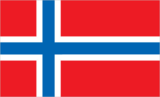
Flag of Jan Mayen

Jan Mayen

Europe

What Jan Mayen means for your money — the prices you pay, the tariffs in motion, and where U.S. policy could change both.
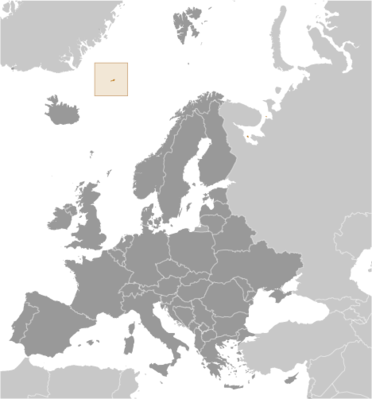
Map showing the location of Jan Mayen

U.S. exposure

Minimal direct economic exposure

Jan Mayen is not a significant U.S. goods-trade partner and has no tracked tariff actions. Policy changes here are unlikely to reach American prices directly.

Reference

The country itself

Europe · Geography, people, economy, and government — public-domain data from the CIA World Factbook.

This desolate, mountainous island in the Arctic Ocean was named after a Dutch whaling captain who indisputably discovered it in 1614 (earlier claims are inconclusive). Visited only occasionally by seal hunters and trappers over the centuries, the island came under Norwegian sovereignty in 1929. The long dormant Beerenberg volcano, the northernmost active volcano on earth, resumed activity in 1970, and the most recent eruption occurred in 1985.
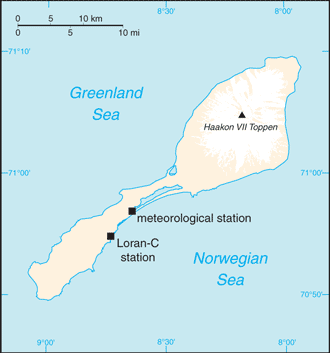
Regional map of Jan Mayen

Geography

Location
Northern Europe, island between the Greenland Sea and the Norwegian Sea, northeast of Iceland
Area
377 sq km
Climate
arctic maritime with frequent storms and persistent fog
Terrain
volcanic island, partly covered by glaciers
Natural resources
none
Coastline
124.1 km
Natural hazards
dominated by the volcano Beerenberg volcanism: Beerenberg (2,227 m) is Norway's only active volcano; volcanic activity resumed in 1970; the most recent eruption occurred in 1985

People & society

Population
no permanent inhabitants

Full reference data

Every field, by section — CIA World Factbook. Open a topic to expand it.

Introduction
Background
This desolate, mountainous island in the Arctic Ocean was named after a Dutch whaling captain who indisputably discovered it in 1614 (earlier claims are inconclusive). Visited only occasionally by seal hunters and trappers over the centuries, the island came under Norwegian sovereignty in 1929. The long dormant Beerenberg volcano, the northernmost active volcano on earth, resumed activity in 1970, and the most recent eruption occurred in 1985.
Geography
Location
Northern Europe, island between the Greenland Sea and the Norwegian Sea, northeast of Iceland
Geographic coordinates
71 00 N, 8 00 W
Map references
Arctic Region
Area - total
377 sq km
Area - land
377 sq km
Area - water
0 sq km
Area - comparative
slightly more than twice the size of Washington, D.C.
Land boundaries - total
0 km
Coastline
124.1 km
Maritime claims - territorial sea
12 nm
Maritime claims - contiguous zone
24 nm
Maritime claims - exclusive economic zone
200 nm
Maritime claims - continental shelf
200-m depth or to the depth of exploitation
Climate
arctic maritime with frequent storms and persistent fog
Terrain
volcanic island, partly covered by glaciers
Elevation - highest point
Haakon VII Toppen on Beerenberg 2,277
Elevation - lowest point
Norwegian/Greenland Seas 0 m
Elevation - note
note: Beerenberg volcano has numerous peaks; the highest point on the volcano rim is named Haakon VII Toppen, after Norway's first king following the reestablishment of Norwegian independence in 1905
Natural resources
none
Land use - agricultural land
0% (2011 est.)
Land use - other
100% (2018 est.)
Irrigated land
0 sq km (2022)
Natural hazards
dominated by the volcano Beerenberg volcanism: Beerenberg (2,227 m) is Norway's only active volcano; volcanic activity resumed in 1970; the most recent eruption occurred in 1985
Geography - note
barren volcanic spoon-shaped island with some moss and grass flora; island consists of two parts: a larger northeast Nord-Jan (the spoon "bowl") and the smaller Sor-Jan (the "handle"), linked by a 2.5 km-wide isthmus (the "stem") with two large lakes, Sorlaguna (South Lagoon) and Nordlaguna (North Lagoon)
People and Society
Population - total
no permanent inhabitants
Population - note
note: military personnel present on the south side of the island; meteorological stations
Government
Country name - conventional long form
none
Country name - conventional short form
Jan Mayen
Country name - etymology
named after Dutch Captain Jan Jacobszoon MAY, one of the first explorers to reach the island in 1614
Dependency status
territory of Norway; since 1994, administered from Oslo through the county governor ( fylkesmann ) of Nordland; however, authority has been delegated to a station commander of the Norwegian Defense Communication Service; in 2010, Norway designated the majority of Jan Mayen as a nature reserve
Legal system
the laws of Norway apply
Flag
the flag of Norway is used
Communications
Broadcast media
a coastal radio station has been remotely operated since 1994
Military and Security
Military - note
defense is the responsibility of Norway
Environment
Environmental issues
pollutants transported from southerly latitudes by winds and ocean currents
Climate
arctic maritime with frequent storms and persistent fog
Land use - agricultural land
0% (2011 est.)
Land use - other
100% (2018 est.)