
Country exposure · PG
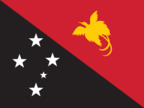
Papua New Guinea
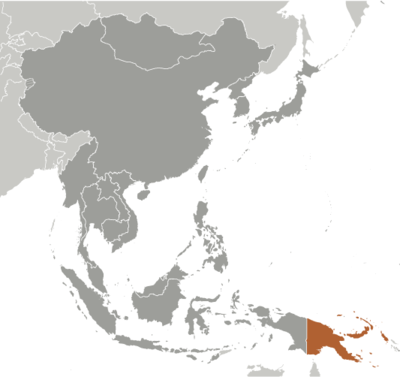
East N Southeast Asia · Port Moresby · parliamentary democracy under a constitutional monarchy; a Commonwealth realm
What Papua New Guinea means for your money, the prices you pay, the tariffs in motion, and where U.S. policy could change both.
$79M
U.S. imports, 2025
-0.7%
change in one year
$82M
U.S. exports, 2025
10M
Population
$32.5B
GDP
In your house
What you buy that Papua New Guinea makes
America bought $79M in goods from Papua New Guinea in 2025. Of every $100 of it, here's where the money went.
Green coffee
green coffee for roasters
Cocoa beans
cocoa for chocolate
Tea, spices, etc.
tea and spices
U.s. goods returned, and reimports
Artwork, antiques, stamps, etc.
Fish and shellfish
fish, shrimp, shellfish
Feedstuff and foodgrains
Other parts and accessories of vehicles
car parts and accessories
Minimum value shipments
Lumber
lumber for homebuilding
2026 so far (through July): $28M in imports. Source: U.S. Census Bureau, International Trade in Goods (customs basis).
The other direction
What America sells to Papua New Guinea
$82M in 2025, a trade rupture cuts both ways, for American producers as well as American prices.
Civilian aircraft, engines, equipment, and parts
$25MIndustrial engines
$7MSpecialized mining
$7MIndustrial machines, other
$4MNonfarm tractors and parts
$3MMiscellaneous domestic exports and special transactions
$3MMinimum value shipments
$3MToiletries and cosmetics
$2Mtoiletries and cosmetics
Drilling & oilfield equipment
$2MWhere you stand
U.S. tariff posture toward Papua New Guinea
No U.S. tariff action singles this country out. Its goods face the universal 10% temporary import surcharge under Section 122 of the Trade Act (which replaced the IEEPA reciprocal baseline in February 2026) plus the sectoral Section 232 duties — steel and aluminum at 50% — that apply to all countries. The Section 122 surcharge is statutorily temporary — scheduled to lapse on or about July 23, 2026 (a 150-day cap) unless extended or replaced.
Reciprocal tariff (universal baseline)
10%
The universal 10% floor, a Section 122 import surcharge since February 2026, previously the EO 14257 reciprocal baseline, applies to nearly all U.S. imports. This country has no higher assigned rate of its own.
Policy in motion
Tariff status: a moving target
No U.S. tariff action names Papua New Guinea. These are the universal measures, applied to every country without a country-specific arrangement, that set its treatment.
2026-04-06
Section 232 metals coverage expanded
In effectThe April 2026 proclamation strengthening Section 232 actions on aluminum, steel, and copper expanded derivative-product coverage for all countries, keeping the general metals rate at 50%.
91 FR 18201 →2026-02-24
IEEPA reciprocal tariffs terminated — replaced by 10% Section 122 surcharge
In effectExecutive Order 14389 (Ending Certain Tariff Actions) terminated the IEEPA tariff duties — including the EO 14257 reciprocal baseline — effective February 24, 2026. A flat 10% Section 122 temporary import surcharge (Proclamation 11012 of February 20, 2026) replaced them, leaving the universal rate unchanged at 10% on a different statutory basis. Section 122 caps such surcharges at 150 days, so this 10% surcharge is scheduled to lapse on or about July 23, 2026 absent further action (the administration has signaled it could raise the rate toward the 15% statutory maximum).
91 FR 9437 →2025-11-13
Agricultural products exempted from reciprocal tariffs
In effectExecutive Order 14360 of November 14, 2025 removed reciprocal duties from certain agricultural products listed in its annexes (coffee, cocoa, bananas, and other goods the U.S. does not produce in sufficient quantity), retroactive to November 13, 2025 — for all countries subject to the reciprocal tariff.
90 FR 54091 →2025-06-04
Section 232 steel and aluminum duties doubled to 50%
In effectThe June 3, 2025 proclamation raised Section 232 duties on steel and aluminum articles and derivatives from 25% to 50% for all countries, effective June 4, 2025.
90 FR 24199 →2025-04-05
Universal 10% reciprocal baseline takes effect
In effectExecutive Order 14257 (signed April 2, 2025) imposed a 10% ad valorem reciprocal duty on imports from all trading partners, effective April 5, 2025. Countries without a higher Annex I rate remain at this baseline.
Federal Register · 2025-06063 →2025-03-12
Section 232 steel and aluminum duties set at 25% for all countries
In effectProclamations of February 10, 2025 terminated all country exemptions and quota arrangements and applied 25% Section 232 duties to steel and aluminum imports from every country, effective March 12, 2025.
90 FR 9817 →
Made for America
What Papua New Guinea makes for America
Papua New Guinea is a direct U.S. source of 1 essential good Americans rely on, the items themselves, shipped finished off the line.
Go deeper
The supply chain view
Papua New Guinea sits upstream of 3 essential American goods through 3 tracked inputs.
Full supply-map profile →Reference
The country itself
East N Southeast Asia · Geography, people, economy, and government, public-domain data from the CIA World Factbook.
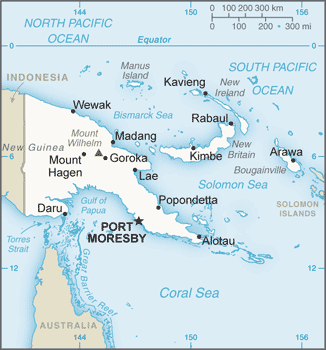
Papua New Guinea (PNG) occupies the eastern half of the island of New Guinea; the western half is part of Indonesia. PNG was first settled between 50,000 and 60,000 years ago. Its harsh geography of mountains, jungles, and numerous river valleys kept many of the arriving groups isolated, giving rise to PNG’s ethnic and linguistic diversity. Around 500 B.C., Austronesian voyagers settled along the coast. Spanish and Portuguese explorers periodically visited the island starting in the 1500s, but none made it into the country’s interior. American and British whaling ships frequented the islands off the coast of New Guinea in the mid-1800s. In 1884, Germany declared a protectorate -- and eventually a colony -- over the northern part of what would become PNG and named it German New Guinea; days later the UK followed suit on the southern part and nearby islands and called it Papua. Most of their focus was on the coastal regions, leaving the highlands largely unexplored. The UK put its colony under Australian administration in 1902 and formalized the act in 1906. At the outbreak of World War I, Australia occupied German New Guinea and continued to rule it after the war as a League of Nations Mandate. The discovery of gold along the Bulolo River in the 1920s led prospectors to venture into the highlands, where they found about 1 million people living in isolated communities. The New Guinea campaign of World War II lasted from January 1942 to the Japanese surrender in August 1945. After the war, Australia combined the two territories and administered PNG as a UN trusteeship. In 1975, PNG gained independence and became a member of the Commonwealth. Between 1988-1997, a secessionist movement on the island province of Bougainville, located off the eastern PNG coast, fought the PNG Government, resulting in 15,000-20,000 deaths. In 1997, the PNG Government and Bougainville leaders reached a cease-fire and subsequently signed a peace agreement in 2001. The Autonomous Bougainville Government was formally established in 2005. Bougainvilleans voted in favor of independence in a 2019 non-binding referendum. The Bougainville and PNG governments are in the process of negotiating a roadmap for independence, which requires approval by the PNG parliament.
Geography
- Location
- Oceania, group of islands including the eastern half of the island of New Guinea between the Coral Sea and the South Pacific Ocean, east of Indonesia
- Area
- 462,840 sq km
- Climate
- tropical; northwest monsoon (December to March), southeast monsoon (May to October); slight seasonal temperature variation
- Terrain
- mostly mountains with coastal lowlands and rolling foothills
- Natural resources
- gold, copper, silver, natural gas, timber, oil, fisheries
- Coastline
- 5,152 km
- Natural hazards
- active volcanism; frequent and sometimes severe earthquakes; mud slides; tsunamis volcanism: severe volcanic activity; Ulawun (2,334 m), one of Papua New Guinea's potentially most dangerous volcanoes, has been deemed a Decade Volcano by the International Association of Volcanology and Chemistry of the Earth's Interior, worthy of study due to its explosive history and close proximity to human populations; Rabaul (688 m) destroyed the city of Rabaul in 1937 and 1994; Lamington erupted in 1951, killing 3,000 people; Manam's 2004 eruption forced the island's abandonment; other historically active volcanoes include Bam, Bagana, Garbuna, Karkar, Langila, Lolobau, Long Island, Pago, St. Andrew Strait, Victory, and Waiowa; see note 2 under "Geography - note"
People & society
- Population
- 10,273,996 (2025 est.)
- Nationality
- Papua New Guinean(s)
- Ethnic groups
- Melanesian, Papuan, Negrito, Micronesian, Polynesian
- Languages
- Tok Pisin (official), English (official), Hiri Motu (official), some 839 living indigenous languages are spoken (about 12% of the world's total)
- Religions
- Protestant 64.3% (Evangelical Lutheran 18.4%, Seventh Day Adventist 12.9%, Pentecostal 10.4%, United Church 10.3%, Evangelical Alliance 5.9%, Anglican 3.2%, Baptist 2.8%, Salvation Army 0.4%), Roman Catholic 26%, other Christian 5.3%, non-Christian 1.4%, unspecified 3.1% (2011 est.)
- Median age
- 21.9 years (2025 est.)
- Life expectancy at birth
- 70.1 years (2024 est.)
- Literacy
- 70.1% (2017 est.)
Economy
- Economic overview
- lower-middle-income Pacific island economy; primarily informal agrarian sector; natural-resource-rich and key exporter of liquified natural gas; collapse in betel nut prices, tighter monetary policy, and improved foreign-exchange availability contributing to declining inflation; challenges include lack of progress in infrastructure, agricultural reform, and corruption
- Industries
- oil and gas; mining (gold, copper, and nickel); palm oil processing; plywood and wood chip production; copra crushing; construction; tourism; fishing; livestock (pork, poultry, cattle) and dairy farming; spice products (turmeric, vanilla, ginger, cardamom, chili, pepper, citronella, and nutmeg)
- Agricultural products
- oil palm fruit, coconuts, bananas, fruits, sweet potatoes, game meat, yams, root vegetables, vegetables, sugarcane (2023)
- Exports - partners
- China 28%, Japan 25%, Australia 17%, Taiwan 8%, India 4% (2023)
- Imports - partners
- Australia 27%, China 24%, Singapore 15%, Malaysia 9%, Japan 4% (2023)
Government
- Government type
- parliamentary democracy under a constitutional monarchy; a Commonwealth realm
- Capital
- Port Moresby
- Independence
- 16 September 1975 (from the Australia-administered UN trusteeship)
- Constitution
- adopted 15 August 1975, effective at independence 16 September 1975
- Executive branch
- King CHARLES III (since 8 September 2022); represented by Governor General Grand Chief Sir Bob DADAE (since 28 February 2017)
- Legislative branch
- National Parliament
Full reference data
Every field, by section, CIA World Factbook. Open a topic to expand it.
Introduction
Travel Facts
Please visit the following links to find further information about your desired destination.
World Health Organization (WHO) - To learn what vaccines and health precautions to take while visiting your destination.
US State Dept Travel Information - Overall information about foreign travel for US citizens.
To obtain an international driving permit (IDP). Only two organizations in the US issue IDPs: American Automobile Association (AAA) and American Automobile Touring Alliance (AATA)
How to get help in an emergency? Contact the nearest US embassy or consulate, or call one of these numbers: from the US or Canada - 1-888-407-4747 or from Overseas - +1 202-501-4444
Page last updated: Wednesday, May 03, 2023