Country exposure · PN

Flag of Pitcairn Islands

Pitcairn Islands

Australia Oceania · Adamstown · parliamentary democracy

What Pitcairn Islands means for your money — the prices you pay, the tariffs in motion, and where U.S. policy could change both.
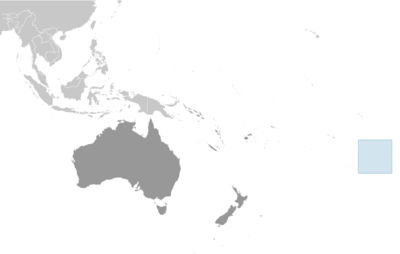
Map showing the location of Pitcairn Islands

$2K

U.S. imports, 2025

-75.3%

change in one year

$120K

U.S. exports, 2025

50

Population

In your house

What you buy that Pitcairn Islands makes

America bought $2K in goods from Pitcairn Islands in 2025 — down 75.3% in a single year. Of every $100 of it, here's where the money went.

Minimum value shipments

$2K100%

2026 so far (through April): $2K in imports. Source: U.S. Census Bureau, International Trade in Goods (customs basis).

The other direction

What America sells to Pitcairn Islands

$120K in 2025 — a trade rupture cuts both ways, for American producers as well as American prices.

Excavating machinery

$113K

Minimum value shipments

$6K

Where you stand

U.S. tariff posture toward Pitcairn Islands

No U.S. tariff action singles this country out. Its goods face the universal 10% temporary import surcharge under Section 122 of the Trade Act (which replaced the IEEPA reciprocal baseline in February 2026) plus the sectoral Section 232 duties — steel and aluminum at 50% — that apply to all countries. The Section 122 surcharge is statutorily temporary — scheduled to lapse on or about July 23, 2026 (a 150-day cap) unless extended or replaced.

Reciprocal tariff (universal baseline)

10%

The universal 10% floor — a Section 122 import surcharge since February 2026, previously the EO 14257 reciprocal baseline — applies to nearly all U.S. imports. This country has no higher assigned rate of its own.

Policy in motion

Tariff status: a moving target

No U.S. tariff action names Pitcairn Islands. These are the universal measures — applied to every country without a country-specific arrangement — that set its treatment.

  1. 2026-04-06

    Section 232 metals coverage expanded

    In effect

    The April 2026 proclamation strengthening Section 232 actions on aluminum, steel, and copper expanded derivative-product coverage for all countries, keeping the general metals rate at 50%.

    91 FR 18201
  2. 2026-02-24

    IEEPA reciprocal tariffs terminated — replaced by 10% Section 122 surcharge

    In effect

    Executive Order 14389 (Ending Certain Tariff Actions) terminated the IEEPA tariff duties — including the EO 14257 reciprocal baseline — effective February 24, 2026. A flat 10% Section 122 temporary import surcharge (Proclamation 11012 of February 20, 2026) replaced them, leaving the universal rate unchanged at 10% on a different statutory basis. Section 122 caps such surcharges at 150 days, so this 10% surcharge is scheduled to lapse on or about July 23, 2026 absent further action (the administration has signaled it could raise the rate toward the 15% statutory maximum).

    91 FR 9437
  3. 2025-11-13

    Agricultural products exempted from reciprocal tariffs

    In effect

    Executive Order 14360 of November 14, 2025 removed reciprocal duties from certain agricultural products listed in its annexes (coffee, cocoa, bananas, and other goods the U.S. does not produce in sufficient quantity), retroactive to November 13, 2025 — for all countries subject to the reciprocal tariff.

    90 FR 54091
  4. 2025-06-04

    Section 232 steel and aluminum duties doubled to 50%

    In effect

    The June 3, 2025 proclamation raised Section 232 duties on steel and aluminum articles and derivatives from 25% to 50% for all countries, effective June 4, 2025.

    90 FR 24199
  5. 2025-04-05

    Universal 10% reciprocal baseline takes effect

    In effect

    Executive Order 14257 (signed April 2, 2025) imposed a 10% ad valorem reciprocal duty on imports from all trading partners, effective April 5, 2025. Countries without a higher Annex I rate remain at this baseline.

    Federal Register · 2025-06063
  6. 2025-03-12

    Section 232 steel and aluminum duties set at 25% for all countries

    In effect

    Proclamations of February 10, 2025 terminated all country exemptions and quota arrangements and applied 25% Section 232 duties to steel and aluminum imports from every country, effective March 12, 2025.

    90 FR 9817

Reference

The country itself

Australia Oceania · Geography, people, economy, and government — public-domain data from the CIA World Factbook.

Polynesians were the first settlers on the four tiny islands that are now called the Pitcairn Islands, but all four were uninhabited by the time Europeans discovered them in 1606. Pitcairn Island -- the only one now inhabited -- was rediscovered by a British explorer in 1767. In 1789, Fletcher CHRISTIAN led a mutiny on the HMS Bounty, and after several months of searching for Pitcairn Island, he landed on it with eight other mutineers and their Tahitian companions. They lived in isolation and evaded detection by English authorities until 1808, when only one man, 10 women, and 23 children remained. In 1831, with the population of 87 proving too big for the island, the British attempted to move all the islanders to Tahiti, but they were soon returned to Pitcairn Island. The island became an official British colony in 1838, and in 1856, the British again determined that the population of 193 was too high and relocated all the residents to Norfolk Island. Several families returned in 1858 and 1864, bringing the island’s population to 43, and almost all of the island’s current population are descendants of these returnees. The UK annexed the nearby uninhabited islands of Henderson, Oeno, and Ducie in 1902 and incorporated them into the Pitcairn Islands colony in 1938. The population peaked at 233 in 1937 as outmigration, primarily to New Zealand, has since thinned the population. Only two children were born between 1986 and 2012, and in 2005, a couple became the first outsiders to obtain citizenship in more than a century. Since 2013, the Pitcairn Islands has tried to attract new migrants but has had no applicants because it requires prospective migrants to front significant sums of money and prohibits employment during a two-year trial period, at which point the local council can deny long-term resident status.
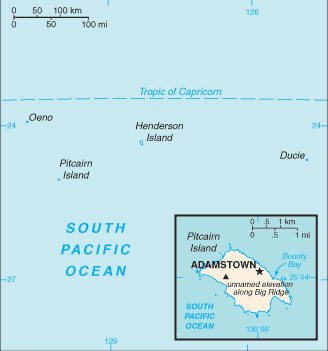
Regional map of Pitcairn Islands

Geography

Location
Oceania, islands in the South Pacific Ocean, about midway between Peru and New Zealand
Area
47 sq km
Climate
tropical; hot and humid; modified by southeast trade winds; rainy season (November to March)
Terrain
rugged volcanic formation; rocky coastline with cliffs
Natural resources
miro trees (used for handicrafts), fish
Coastline
51 km
Natural hazards
occasional tropical cyclones (especially November to March), but generally only heavy tropical storms; landslides

People & society

Population
50 (2025 est.)
Nationality
Pitcairn Islander(s)
Ethnic groups
descendants of the Bounty mutineers and their Tahitian wives
Languages
English (official), Pitkern (mixture of an 18th century English dialect and a Tahitian dialect)
Religions
Seventh Day Adventist 100%

Economy

Economic overview
small South Pacific British island territorial economy; exports primarily postage stamps, handicraft goods, honey, and tinctures; extremely limited infrastructure; dependent upon UK and EU aid; recent border reopening post-COVID-19
Industries
postage stamps, handicrafts, beekeeping, honey
Agricultural products
honey; wide variety of fruits and vegetables; goats, chickens; fish
Exports - partners
UK 21%, Canada 19%, Tanzania 12%, Colombia 11%, Spain 8% (2023)
Imports - partners
USA 59%, NZ 37%, Italy 2%, UAE 1%, Brazil 1% (2023)

Government

Government type
parliamentary democracy
Capital
Adamstown
Independence
none (overseas territory of the UK)
Constitution
several previous; latest drafted 10 February 2010, presented 17 February 2010, effective 4 March 2010
Executive branch
King CHARLES III (since 8 September 2022); represented by UK High Commissioner to New Zealand and Governor (nonresident) of the Pitcairn Islands Iona THOMAS (since 9 August 2022)
Legislative branch
Island Council

Full reference data

Every field, by section — CIA World Factbook. Open a topic to expand it.

Introduction
Background
Polynesians were the first settlers on the four tiny islands that are now called the Pitcairn Islands, but all four were uninhabited by the time Europeans discovered them in 1606. Pitcairn Island -- the only one now inhabited -- was rediscovered by a British explorer in 1767. In 1789, Fletcher CHRISTIAN led a mutiny on the HMS Bounty, and after several months of searching for Pitcairn Island, he landed on it with eight other mutineers and their Tahitian companions. They lived in isolation and evaded detection by English authorities until 1808, when only one man, 10 women, and 23 children remained. In 1831, with the population of 87 proving too big for the island, the British attempted to move all the islanders to Tahiti, but they were soon returned to Pitcairn Island. The island became an official British colony in 1838, and in 1856, the British again determined that the population of 193 was too high and relocated all the residents to Norfolk Island. Several families returned in 1858 and 1864, bringing the island’s population to 43, and almost all of the island’s current population are descendants of these returnees. The UK annexed the nearby uninhabited islands of Henderson, Oeno, and Ducie in 1902 and incorporated them into the Pitcairn Islands colony in 1938. The population peaked at 233 in 1937 as outmigration, primarily to New Zealand, has since thinned the population. Only two children were born between 1986 and 2012, and in 2005, a couple became the first outsiders to obtain citizenship in more than a century. Since 2013, the Pitcairn Islands has tried to attract new migrants but has had no applicants because it requires prospective migrants to front significant sums of money and prohibits employment during a two-year trial period, at which point the local council can deny long-term resident status.
Geography
Location
Oceania, islands in the South Pacific Ocean, about midway between Peru and New Zealand
Geographic coordinates
25 04 S, 130 06 W
Map references
Oceania
Area - total
47 sq km
Area - land
47 sq km
Area - water
0 sq km
Area - comparative
about three-tenths the size of Washington, D.C.
Land boundaries - total
0 km
Coastline
51 km
Maritime claims - territorial sea
12 nm
Maritime claims - exclusive economic zone
200 nm
Climate
tropical; hot and humid; modified by southeast trade winds; rainy season (November to March)
Terrain
rugged volcanic formation; rocky coastline with cliffs
Elevation - highest point
Palwala Valley Point on Big Ridge 347 m
Elevation - lowest point
Pacific Ocean 0 m
Natural resources
miro trees (used for handicrafts), fish
Natural resources - note
note: manganese, iron, copper, gold, silver, and zinc have been discovered offshore
Land use - agricultural land
0% (2022 est.)
Land use - forest
74.5% (2022 est.)
Land use - other
25.5% (2022 est.)
Irrigated land
0 sq km (2022)
Population distribution
a handful of inhabitants, most residing near the village of Adamstown
Natural hazards
occasional tropical cyclones (especially November to March), but generally only heavy tropical storms; landslides
Geography - note
Britain's most isolated dependency; only the larger island of Pitcairn is inhabited, but it has no port or natural harbor; supplies must be transported by longboat from larger ships stationed offshore
People and Society
Population - total
50 (2025 est.)
Nationality - noun
Pitcairn Islander(s)
Nationality - adjective
Pitcairn Islander
Ethnic groups
descendants of the Bounty mutineers and their Tahitian wives
Languages
English (official), Pitkern (mixture of an 18th century English dialect and a Tahitian dialect)
Religions
Seventh Day Adventist 100%
Population growth rate
0% (2014 est.)
Population distribution
a handful of inhabitants, most residing near the village of Adamstown
Government
Country name - conventional long form
Pitcairn, Henderson, Ducie, and Oeno Islands
Country name - conventional short form
Pitcairn Islands
Country name - etymology
named after English midshipman Robert PITCAIRN, who first sighted the island in 1767
Government type
parliamentary democracy
Dependency status
overseas territory of the UK
Capital - name
Adamstown
Capital - geographic coordinates
25 04 S, 130 05 W
Capital - time difference
UTC-9 (4 hours behind Washington, DC, during Standard Time)
Capital - etymology
named after John ADAMS (1767–1829), the last survivor of the Bounty mutineers who settled on Pitcairn Island in 1790
Legal system
local island by-laws
Constitution - history
several previous; latest drafted 10 February 2010, presented 17 February 2010, effective 4 March 2010
Citizenship
see United Kingdom
Suffrage
18 years of age; universal with three years of residency
Executive branch - chief of state
King CHARLES III (since 8 September 2022); represented by UK High Commissioner to New Zealand and Governor (nonresident) of the Pitcairn Islands Iona THOMAS (since 9 August 2022)
Executive branch - head of government
Mayor and Chairman of the Island Council Shawn CHRISTIAN (since 5 November 2025)
Executive branch - cabinet
none
Executive branch - election/appointment process
the monarchy is hereditary; governor and commissioner appointed by the monarch; island mayor directly elected by majority popular vote for a 3-year term
Executive branch - most recent election date
5 November 2025
Executive branch - election results
Shawn CHRISTIAN elected mayor and chairman of the Island Council
Executive branch - expected date of next election
November 2028
Legislative branch - legislature name
Island Council
Legislative branch - legislative structure
unicameral
Legislative branch - number of seats
10 (directly elected and appointed)
Legislative branch - electoral system
plurality/majority
Legislative branch - scope of elections
full renewal
Legislative branch - term in office
2 years note: the councilors and the deputy mayor serve 2-year terms, the mayor serves a 3-year term, and the administrator is appointed by the governor for an indefinite term
Legislative branch - most recent election date
6 November 2019
Legislative branch - parties elected and seats per party
independent (5)
Legislative branch - percentage of women in chamber
60%
Legislative branch - expected date of next election
N/A
Legislative branch - note
note: the Council includes 5 councilors, the mayor, and the deputy mayor (who are elected by popular vote) and 3 ex officio non-voting members -- the administrator, who serves as both the head of government and the representative of the governor of Pitcairn Islands, the governor, and the deputy governor
Judicial branch - highest court(s)
Pitcairn Court of Appeal (consists of the court president, 2 judges, and the Supreme Court chief justice, an ex-officio member); Pitcairn Supreme Court (consists of the chief justice and 2 judges)
Judicial branch - judge selection and term of office
all judges of both courts appointed by the governor of the Pitcairn Islands on the instructions of the British monarch through the Secretary of State; all judges can serve until retirement, normally at age 75
Judicial branch - subordinate courts
Magistrate's Court
Judicial branch - note
note: appeals beyond the Pitcairn Court of Appeal are referred to the Judicial Committee of the Privy Council (in London)
Political parties
none
Diplomatic representation in the US
none (overseas territory of the UK)
Diplomatic representation from the US - embassy
none (overseas territory of the UK)
International organization participation
SPC, UPU
Independence
none (overseas territory of the UK)
National holiday
Official birthday of King Charles III, usually celebrated the second Saturday in June (1948); Discovery Day (Pitcairn Day), 2 July (1767)
Flag
description: blue with the UK flag in the upper-left quadrant and the Pitcairn Islander coat of arms centered on the right half of the flag; the green field features a yellow anchor with a Bible over it (both were on the HMS Bounty ); a Pitcairn Island wheelbarrow is on the crest, with a flowering twig of miro (a local plant) meaning: the green, yellow, and blue of the shield represents the island rising from the ocean
National anthem(s) - title
"God Save the King"
National anthem(s) - lyrics/music
unknown
National anthem(s) - history
official anthem, as a UK overseas territory
Economy
Economic overview
small South Pacific British island territorial economy; exports primarily postage stamps, handicraft goods, honey, and tinctures; extremely limited infrastructure; dependent upon UK and EU aid; recent border reopening post-COVID-19
Agricultural products
honey; wide variety of fruits and vegetables; goats, chickens; fish
Industries
postage stamps, handicrafts, beekeeping, honey
Exports - partners
UK 21%, Canada 19%, Tanzania 12%, Colombia 11%, Spain 8% (2023)
Exports - partners - note
note: top five export partners based on percentage share of exports
Exports - commodities
fertilizers, sulfur, refined petroleum, excavation machinery, ethylene polymers (2022)
Exports - commodities - note
note: top five export commodities based on value in dollars
Imports - partners
USA 59%, NZ 37%, Italy 2%, UAE 1%, Brazil 1% (2023)
Imports - partners - note
note: top five import partners based on percentage share of imports
Imports - commodities
construction vehicles, refined petroleum, beef, computers, other foods (2023)
Imports - commodities - note
note: top five import commodities based on value in dollars
Exchange rates - Currency
New Zealand dollars (NZD) per US dollar -
Exchange rates - Exchange rates 2024
1.652 (2024 est.)
Exchange rates - Exchange rates 2023
1.628 (2023 est.)
Exchange rates - Exchange rates 2022
1.577 (2022 est.)
Exchange rates - Exchange rates 2021
1.414 (2021 est.)
Exchange rates - Exchange rates 2020
1.542 (2020 est.)
Communications
Telephones - mobile cellular
No traditional public cellular network. Satellite-based internet (Starlink) and VoIP apps (WhatsApp, Viber) are available.
Broadcast media
satellite TV from Fiji-based Sky Pacific offering a wide range of international channels
Internet country code
.pn
Internet users - percent of population
96.2% (2021 est.)
Military and Security
Military - note
defense is the responsibility of the UK
Environment
Environmental issues
deforestation (only a small portion of the original forest remains because of burning and clearing for settlement)
Climate
tropical; hot and humid; modified by southeast trade winds; rainy season (November to March)
Land use - agricultural land
0% (2022 est.)
Land use - forest
74.5% (2022 est.)
Land use - other
25.5% (2022 est.)