
Country exposure · SO
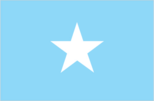
Somalia
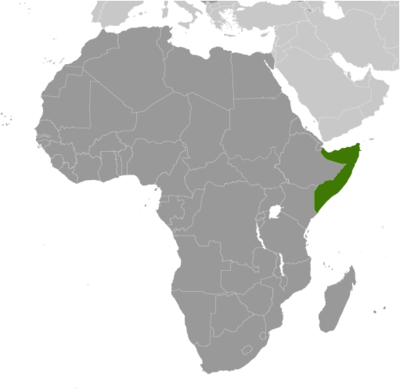
Africa · Mogadishu · federal parliamentary republic
What Somalia means for your money, the prices you pay, the tariffs in motion, and where U.S. policy could change both.
$701K
U.S. imports, 2025
-71.8%
change in one year
$50M
U.S. exports, 2025
20M
Population
$12.1B
GDP
In your house
What you buy that Somalia makes
America bought $701K in goods from Somalia in 2025, down 71.8% in a single year. Of every $100 of it, here's where the money went.
Synthetic rubber--primary
Food oils, oilseeds
Tobacco, waxes, etc.
Minimum value shipments
Industrial supplies, other
Numismatic coins
Other parts and accessories of vehicles
car parts and accessories
Telecommunications equipment
phones, routers, networking gear
U.s. goods returned, and reimports
Agricultural machinery, equipment
2026 so far (through July): $301K in imports. Source: U.S. Census Bureau, International Trade in Goods (customs basis).
The other direction
What America sells to Somalia
$50M in 2025, a trade rupture cuts both ways, for American producers as well as American prices.
Other foods
$8MParts for military-type goods
$4MMeat, poultry, etc.
$4MCivilian aircraft, engines, equipment, and parts
$4MMedicinal equipment
$3Mmedical devices and equipment
Sorghum, barley, oats
$3MTelecommunications equipment
$3Mphones, routers, networking gear
Laboratory testing instruments
$2MMinimum value shipments
$2MWhere you stand
U.S. tariff posture toward Somalia
No U.S. tariff action singles this country out. Its goods face the universal 10% temporary import surcharge under Section 122 of the Trade Act (which replaced the IEEPA reciprocal baseline in February 2026) plus the sectoral Section 232 duties — steel and aluminum at 50% — that apply to all countries. The Section 122 surcharge is statutorily temporary — scheduled to lapse on or about July 23, 2026 (a 150-day cap) unless extended or replaced.
Reciprocal tariff (universal baseline)
10%
The universal 10% floor, a Section 122 import surcharge since February 2026, previously the EO 14257 reciprocal baseline, applies to nearly all U.S. imports. This country has no higher assigned rate of its own.
Policy in motion
Tariff status: a moving target
No U.S. tariff action names Somalia. These are the universal measures, applied to every country without a country-specific arrangement, that set its treatment.
2026-04-06
Section 232 metals coverage expanded
In effectThe April 2026 proclamation strengthening Section 232 actions on aluminum, steel, and copper expanded derivative-product coverage for all countries, keeping the general metals rate at 50%.
91 FR 18201 →2026-02-24
IEEPA reciprocal tariffs terminated — replaced by 10% Section 122 surcharge
In effectExecutive Order 14389 (Ending Certain Tariff Actions) terminated the IEEPA tariff duties — including the EO 14257 reciprocal baseline — effective February 24, 2026. A flat 10% Section 122 temporary import surcharge (Proclamation 11012 of February 20, 2026) replaced them, leaving the universal rate unchanged at 10% on a different statutory basis. Section 122 caps such surcharges at 150 days, so this 10% surcharge is scheduled to lapse on or about July 23, 2026 absent further action (the administration has signaled it could raise the rate toward the 15% statutory maximum).
91 FR 9437 →2025-11-13
Agricultural products exempted from reciprocal tariffs
In effectExecutive Order 14360 of November 14, 2025 removed reciprocal duties from certain agricultural products listed in its annexes (coffee, cocoa, bananas, and other goods the U.S. does not produce in sufficient quantity), retroactive to November 13, 2025 — for all countries subject to the reciprocal tariff.
90 FR 54091 →2025-06-04
Section 232 steel and aluminum duties doubled to 50%
In effectThe June 3, 2025 proclamation raised Section 232 duties on steel and aluminum articles and derivatives from 25% to 50% for all countries, effective June 4, 2025.
90 FR 24199 →2025-04-05
Universal 10% reciprocal baseline takes effect
In effectExecutive Order 14257 (signed April 2, 2025) imposed a 10% ad valorem reciprocal duty on imports from all trading partners, effective April 5, 2025. Countries without a higher Annex I rate remain at this baseline.
Federal Register · 2025-06063 →2025-03-12
Section 232 steel and aluminum duties set at 25% for all countries
In effectProclamations of February 10, 2025 terminated all country exemptions and quota arrangements and applied 25% Section 232 duties to steel and aluminum imports from every country, effective March 12, 2025.
90 FR 9817 →
Reference
The country itself
Africa · Geography, people, economy, and government, public-domain data from the CIA World Factbook.
Between A.D. 800 and 1100, immigrant Muslim Arabs and Persians set up coastal trading posts along the Gulf of Aden and the Indian Ocean, solidifying present-day Somalia’s close trading relationship with the Arab Peninsula. In the late 19th century, Britain, France, and Italy established colonies in the Somali Peninsula that lasted until 1960, when British Somaliland gained independence and joined with Italian Somaliland to form the Republic of Somalia. The country functioned as a parliamentary democracy until 1969, when General Mohamed SIAD Barre took control in a coup, beginning a 22-year socialist dictatorship. In an effort to centralize power, SIAD called for the eradication of the clan, the key cultural and social organizing principle in Somali society. Resistance to SIAD’s socialist leadership, which was causing a rapid deterioration of the country, prompted allied clan militias to overthrow SIAD in 1991, resulting in state collapse. Subsequent fighting between rival clans for resources and territory overwhelmed the country, causing a manmade famine and prompting international intervention. Beginning in 1993, the UN spearheaded an international humanitarian mission, but the international community largely withdrew by 1995 after an incident that became known as Black Hawk Down, in which two US military helicopters were shot down in Mogadishu. The fighting and subsequent siege and rescue resulted in 21 deaths and 82 wounded among the international forces. International peace conferences in the 2000s resulted in a number of transitional governments that operated outside Somalia. Left largely to themselves, Somalis in the country established alternative governance structures; some areas formed their own administrations, such as Somaliland and Puntland, while others developed localized institutions. Many local populations turned to sharia courts, an Islamic judicial system that implements religious law. Several of these courts came together in 2006 to form the Islamic Courts Union (ICU). The ICU established order in many areas of central and southern Somalia, including Mogadishu, but was forced out when Ethiopia intervened militarily in 2006 on behalf of the Somali Transitional Federal Government (TFG). As the TFG settled in the capital, the ICU fled to rural areas or left Somalia altogether, but the organization reemerged less than a year later as the Islamic insurgent and terrorist movement al-Shabaab, which is still active today. In 2007, the African Union (AU) established a peacekeeping force, took over security responsibility for the country, and gave the TFG space to develop Somalia’s new government. By 2012, Somali powerbrokers agreed on a provisional constitution with a loose federal structure and established a central government in Mogadishu called the Somali Federal Government (SFG). Since then, the country has seen several interim regional administrations and three presidential elections, but significant governance and security problems remain because al-Shabaab still controls large portions of the country.
Geography
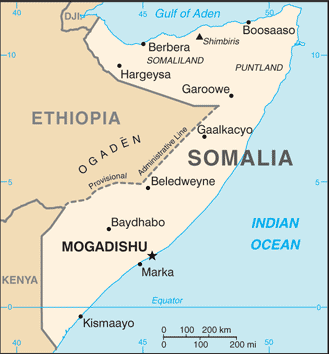
- Location
- Eastern Africa, bordering the Gulf of Aden and the Indian Ocean, east of Ethiopia
- Area
- 637,657 sq km
- Climate
- principally desert; northeast monsoon (December to February), moderate temperatures in north and hot in south; southwest monsoon (May to October), torrid in the north and hot in the south, irregular rainfall, hot and humid periods (tangambili) between monsoons
- Terrain
- mostly flat to undulating plateau rising to hills in north
- Natural resources
- uranium and largely unexploited reserves of iron ore, tin, gypsum, bauxite, copper, salt, natural gas, likely oil reserves
- Coastline
- 3,025 km
- Natural hazards
- recurring droughts; frequent dust storms over eastern plains in summer; floods during rainy season
People & society
- Population
- 20,324,160 (2025 est.)
- Nationality
- Somali(s)
- Ethnic groups
- predominantly Somali with lesser numbers of Arabs, Bantus, and others
- Languages
- Somali (official), Arabic (official), Italian, English
- Religions
- Muslim 99.9% (Sunni Muslim 98.1%, Shia Muslim 1.2%, Islamic schismatic 0.6%), ethnic religionist 0.1% (2020 est.)
- Median age
- 15.7 years (2025 est.)
- Life expectancy at birth
- 56.5 years (2024 est.)
- Literacy
- 54.1% (2022 est.)
Economy
- Economic overview
- low-income African Horn economy; 30 years of war and instability crippled economic potential; high remittances for basic survival; new fiscal federalism approach; cleared some unsustainable debt; environmentally fragile; digitally driven urbanization efforts
- Industries
- light industries, including sugar refining, textiles, wireless communication
- Agricultural products
- camel milk, milk, goat milk, sheep milk, sugarcane, fruits, sorghum, cassava, vegetables, maize (2023)
- Exports - partners
- UAE 35%, Saudi Arabia 27%, Oman 18%, Djibouti 8%, India 3% (2023)
- Imports - partners
- UAE 29%, China 19%, India 15%, Turkey 8%, Oman 5% (2023)
Government
- Government type
- federal parliamentary republic
- Capital
- Mogadishu
- Independence
- 1 July 1960 (from a merger of British Somaliland, which became independent from the UK on 26 June 1960, and Italian Somaliland, which became independent from the Italian-administered UN trusteeship on 1 July 1960 to form the Somali Republic)
- Constitution
- previous 1961, 1979; latest drafted 12 June 2012, adopted 1 August 2012
- Executive branch
- President HASSAN SHEIKH Mohamud (since 23 May 2022)
- Legislative branch
- Federal Parliament
Full reference data
Every field, by section, CIA World Factbook. Open a topic to expand it.
Introduction
Travel Facts
Please visit the following links to find further information about your desired destination.
World Health Organization (WHO) - To learn what vaccines and health precautions to take while visiting your destination.
US State Dept Travel Information - Overall information about foreign travel for US citizens.
To obtain an international driving permit (IDP). Only two organizations in the US issue IDPs: American Automobile Association (AAA) and American Automobile Touring Alliance (AATA)
How to get help in an emergency? Contact the nearest US embassy or consulate, or call one of these numbers: from the US or Canada - 1-888-407-4747 or from Overseas - +1 202-501-4444
Page last updated: Thursday, December 01, 2022