
Country exposure · TD
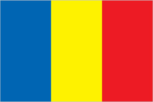
Chad
Africa · N'Djamena · presidential republic
What Chad means for your money, the prices you pay, the tariffs in motion, and where U.S. policy could change both.
$16M
U.S. imports, 2025
-79.7%
change in one year
$79M
U.S. exports, 2025
20M
Population
$20.6B
GDP
In your house
What you buy that Chad makes
America bought $16M in goods from Chad in 2025, down 79.7% in a single year. Of every $100 of it, here's where the money went.
Synthetic rubber--primary
Natural rubber
natural rubber for tires
U.s. goods returned, and reimports
Computers
laptops, desktops, monitors
Toys, games, and sporting goods
toys, games, sporting goods
Numismatic coins
Semiconductors
semiconductors and chips
Jewelry
jewelry
Metalworking machine tools
Minimum value shipments
2026 so far (through July): $6M in imports. Source: U.S. Census Bureau, International Trade in Goods (customs basis).
The other direction
What America sells to Chad
$79M in 2025, a trade rupture cuts both ways, for American producers as well as American prices.
Industrial engines
$9MCivilian aircraft, engines, equipment, and parts
$7MGenerators, accessories
$6MChemicals-other
$6MIndustrial machines, other
$5MElectric apparatus
$5MOther foods
$5MRice
$5Mcocoa for chocolate
Chemicals-inorganic
$4MWhere you stand
U.S. tariff posture toward Chad
Chad was assigned 13% in April 2025, but its exports to the U.S. are almost entirely crude oil, which falls under the energy carve-out — so real exposure is negligible. It held the 13% rate through August with no deal. Executive Order 14389 (Ending Certain Tariff Actions, Feb 20, 2026) terminated the IEEPA reciprocal duties, and Proclamation 11012 replaced it with a 10% Section 122 temporary import surcharge effective February 24, 2026; energy imports remain exempt. Chad has no Section 232 steel/aluminum exposure.
Reciprocal tariff (assigned, terminated)
13%
The rate this country was assigned under the EO 14257 reciprocal Annex, no longer in force. The Supreme Court struck down the IEEPA tariffs and they were terminated February 24, 2026 (EO 14389), replaced by a universal ~10% Section 122 surcharge. See the timeline below for the current effective rate.
Policy in motion
Tariff status: a moving target
U.S. tariff policy toward Chad has changed 4 times since 2025. This page tracks it.
2026-02-24
IEEPA reciprocal tariffs terminated — replaced by 10% Section 122
In effectExecutive Order 14389 (Ending Certain Tariff Actions) terminated the IEEPA tariff duties effective February 24, 2026, replacing Chad's 13% reciprocal rate with a 10% Section 122 temporary import surcharge under Proclamation 11012 (capped at 150 days); energy imports remain exempt.
91 FR 9437 →2025-08-07
13% rate takes effect — no deal reached
In effectExecutive Order 14326 set the post-pause Annex I reciprocal rates; with no bilateral agreement, Chad's 13% rate took effect August 7, 2025, the energy carve-out leaving its crude oil exports untouched.
90 FR 37963 →2025-04-10
Elevated reciprocal rates paused to 10% for 90 days
In effectExecutive Order 14266 suspended the higher country-specific reciprocal rates — including Chad's 13% — back to the 10% baseline for 90 days.
90 FR 15625 →2025-04-05
Reciprocal tariff regime begins — Chad assigned 13% (oil exempt)
In effectExecutive Order 14257 imposed a 10% universal reciprocal duty effective April 5 and a 13% country-specific rate for Chad scheduled to take effect April 9 — but crude oil, nearly all of Chad's exports to the U.S., fell under the energy carve-out.
90 FR 15041 →
Reference
The country itself
Africa · Geography, people, economy, and government, public-domain data from the CIA World Factbook.
Chad emerged from a collection of powerful states that controlled the Sahelian belt starting around the 9th century. These states focused on controlling trans-Saharan trade routes and profited mostly from the slave trade. The Kanem-Bornu Empire, centered around the Lake Chad Basin, existed between the 9th and 19th centuries, and at its peak, the empire controlled territory stretching from southern Chad to southern Libya and included portions of modern-day Algeria, Cameroon, Niger, Nigeria, and Sudan. The Sudanese warlord Rabih AZ-ZUBAYR used an army comprised largely of slaves to conquer the Kanem-Bornu Empire in the late 19th century. In southeastern Chad, the Bagirmi and Ouaddai (Wadai) kingdoms emerged in the 15th and 16th centuries and lasted until the arrival of the French in the 19th and 20th centuries. France began moving into the region in the late 1880s and defeated the Bagirmi kingdom in 1897, Rabih AZ-ZUBAYR in 1900, and the Ouddai kingdom in 1909. In the arid regions of northern Chad and southern Libya, an Islamic order called the Sanusiyya (Sanusi) relied heavily on the trans-Saharan slave trade and had upwards of 3 million followers by the 1880s. The French defeated the Sanusiyya in 1910 after years of intermittent war. By 1910, France had incorporated the northern arid region, the Lake Chad Basin, and southeastern Chad into French Equatorial Africa. Chad achieved its independence in 1960 and then saw three decades of instability, oppressive rule, civil war, and a Libyan invasion. With the help of the French military and several African countries, Chadian leaders expelled Libyan forces during the 1987 "Toyota War," so named for the use of Toyota pickup trucks as fighting vehicles. In 1990, Chadian general Idriss DEBY led a rebellion against President Hissene HABRE. Under DEBY, Chad approved a constitution and held elections in 1996. Shortly after DEBY was killed during a rebel incursion in 2021, a group of military officials -- led by DEBY’s son, Mahamat Idriss DEBY -- took control of the government. The military officials dismissed the National Assembly, suspended the Constitution, and formed a Transitional Military Council (TMC), while pledging to hold democratic elections by October 2022. A national dialogue in August-October 2022 culminated in decisions to extend the transition for up to two years, dissolve the TMC, and appoint Mahamat DEBY as Transitional President; the transitional authorities held a constitutional referendum in December 2023 and claimed 86 percent of votes were in favor of the new constitution. The transitional authorities have announced plans to hold elections by October 2024. Chad has faced widespread poverty, an economy severely weakened by volatile international oil prices, terrorist-led insurgencies in the Lake Chad Basin, and several waves of rebellions in northern and eastern Chad. In 2015, the government imposed a state of emergency in the Lake Chad Basin following multiple attacks by the terrorist group Boko Haram, now known as ISIS-West Africa. The same year, Boko Haram conducted bombings in N'Djamena. In 2019, the Chadian government also declared a state of emergency in the Sila and Ouaddai regions bordering Sudan and in the Tibesti region bordering Niger, where rival ethnic groups are still fighting. The army has suffered heavy losses to Islamic terror groups in the Lake Chad Basin.
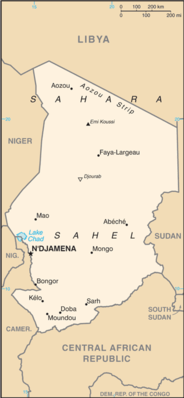
Geography
- Location
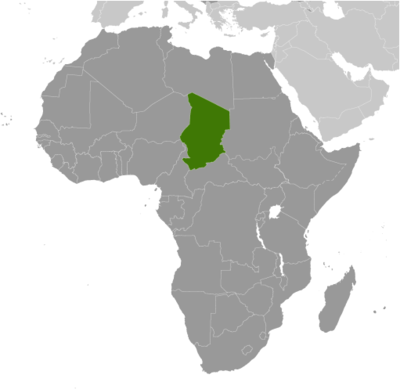
- Central Africa, south of Libya
- Area
- 1.284 million sq km
- Climate
- tropical in south, desert in north
- Terrain
- broad, arid plains in center, desert in north, mountains in northwest, lowlands in south
- Natural resources
- petroleum, uranium, natron, kaolin, fish (Lake Chad), gold, limestone, sand and gravel, salt
- Coastline
- 0 km (landlocked)
- Natural hazards
- hot, dry, dusty harmattan winds occur in north; periodic droughts; locust plagues
People & society
- Population
- 19,674,004 (2025 est.)
- Nationality
- Chadian(s)
- Ethnic groups
- Sara (Ngambaye/Sara/Madjingaye/Mbaye) 30.5%, Kanembu/Bornu/Buduma 9.8%, Arab 9.7%, Wadai/Maba/Masalit/Mimi 7%, Gorane 5.8%, Masa/Musseye/Musgum 4.9%, Bulala/Medogo/Kuka 3.7%, Marba/Lele/Mesme 3.5%, Mundang 2.7%, Bidiyo/Migaama/Kenga/Dangleat 2.5%, Dadjo/Kibet/Muro 2.4%, Tupuri/Kera 2%, Gabri/Kabalaye/Nanchere/Somrai 2%, Fulani/Fulbe/Bodore 1.8%, Karo/Zime/Peve 1.3%, Baguirmi/Barma 1.2%, Zaghawa/Bideyat/Kobe 1.1%, Tama/Assongori/Mararit 1.1%, Mesmedje/Massalat/Kadjakse 0.8%, other 4.6%, unspecified 1.7% (2014-15 est.)
- Languages
- French (official), Arabic (official), Sara (in south), more than 120 languages and dialects
- Religions
- Muslim 52.1%, Protestant 23.9%, Roman Catholic 20%, animist 0.3%, other Christian 0.2%, none 2.8%, unspecified 0.7% (2014-15 est.)
- Median age
- 16.9 years (2025 est.)
- Life expectancy at birth
- 60 years (2024 est.)
- Literacy
- 30.6% (2019 est.)
Economy
- Economic overview
- oil-dependent economy challenged by market fluctuations, regional instability, refugee influx, and climate vulnerability; high levels of extreme poverty and food insecurity; recent growth driven by oil and agricultural recovery; debt-restructuring agreement under G20 Common Framework
- Industries
- oil, cotton textiles, brewing, natron (sodium carbonate), soap, cigarettes, construction materials
- Agricultural products
- sorghum, groundnuts, millet, beef, cereals, yams, sugarcane, maize, cassava, milk (2023)
- Exports - partners
- UAE 26%, China 19%, Germany 17%, Netherlands 13%, France 10% (2023)
- Imports - partners
- China 28%, UAE 23%, Turkey 10%, France 9%, India 5% (2023)
Government
- Government type
- presidential republic
- Capital
- N'Djamena
- Independence
- 11 August 1960 (from France)
- Constitution
- several previous; latest adopted by National Transitional Council 27 June 2023, approved by referendum 17 December, verified by Chad Supreme Court 28 December, promulgated 1 January 2024
- Executive branch
- President Mahamat Idriss DéBY (since 6 May 2024)
- Legislative branch
- Parliament
Full reference data
Every field, by section, CIA World Factbook. Open a topic to expand it.
Introduction
Travel Facts
Please visit the following links to find further information about your desired destination.
World Health Organization (WHO) - To learn what vaccines and health precautions to take while visiting your destination.
US State Dept Travel Information - Overall information about foreign travel for US citizens.
To obtain an international driving permit (IDP). Only two organizations in the US issue IDPs: American Automobile Association (AAA) and American Automobile Touring Alliance (AATA)
How to get help in an emergency? Contact the nearest US embassy or consulate, or call one of these numbers: from the US or Canada - 1-888-407-4747 or from Overseas - +1 202-501-4444
Page last updated: Wednesday, October 05, 2022