
Country exposure · TZ
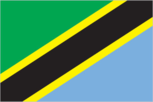
Tanzania (United Republic of Tanzania)
Africa · Dodoma · presidential republic
What Tanzania (United Republic of Tanzania) means for your money, the prices you pay, the tariffs in motion, and where U.S. policy could change both.
$242M
U.S. imports, 2025
+18.1%
change in one year
$194M
U.S. exports, 2025
69M
Population
$78.8B
GDP
In your house
What you buy that Tanzania (United Republic of Tanzania) makes
America bought $242M in goods from Tanzania (United Republic of Tanzania) in 2025, up 18.1% in a single year. Of every $100 of it, here's where the money went.
Green coffee
green coffee for roasters
Apparel, textiles, nonwool or cotton
synthetic and performance apparel
Apparel, household goods - cotton
cotton clothing and linens
Gem stones, other
U.s. goods returned, and reimports
Tobacco, waxes, etc.
Semiconductors
semiconductors and chips
Plywood and veneers
Farming materials, livestock
Chemicals-organic
2026 so far (through July): $227M in imports. Source: U.S. Census Bureau, International Trade in Goods (customs basis).
The other direction
What America sells to Tanzania (United Republic of Tanzania)
$194M in 2025, a trade rupture cuts both ways, for American producers as well as American prices.
Civilian aircraft, engines, equipment, and parts
$34MPlastic materials
$17Mplastics for packaging and goods
Wheat
$16Mgreen coffee for roasters
Pulpwood and woodpulp
$11MExcavating machinery
$10MIndustrial machines, other
$9MMedicinal equipment
$8Mmedical devices and equipment
Computers
$7Mlaptops, desktops, monitors
Industrial engines
$6MWhere you stand
U.S. tariff posture toward Tanzania (United Republic of Tanzania)
No U.S. tariff action singles this country out. Its goods face the universal 10% temporary import surcharge under Section 122 of the Trade Act (which replaced the IEEPA reciprocal baseline in February 2026) plus the sectoral Section 232 duties — steel and aluminum at 50% — that apply to all countries. The Section 122 surcharge is statutorily temporary — scheduled to lapse on or about July 23, 2026 (a 150-day cap) unless extended or replaced.
Reciprocal tariff (universal baseline)
10%
The universal 10% floor, a Section 122 import surcharge since February 2026, previously the EO 14257 reciprocal baseline, applies to nearly all U.S. imports. This country has no higher assigned rate of its own.
Policy in motion
Tariff status: a moving target
No U.S. tariff action names Tanzania (United Republic of Tanzania). These are the universal measures, applied to every country without a country-specific arrangement, that set its treatment.
2026-04-06
Section 232 metals coverage expanded
In effectThe April 2026 proclamation strengthening Section 232 actions on aluminum, steel, and copper expanded derivative-product coverage for all countries, keeping the general metals rate at 50%.
91 FR 18201 →2026-02-24
IEEPA reciprocal tariffs terminated — replaced by 10% Section 122 surcharge
In effectExecutive Order 14389 (Ending Certain Tariff Actions) terminated the IEEPA tariff duties — including the EO 14257 reciprocal baseline — effective February 24, 2026. A flat 10% Section 122 temporary import surcharge (Proclamation 11012 of February 20, 2026) replaced them, leaving the universal rate unchanged at 10% on a different statutory basis. Section 122 caps such surcharges at 150 days, so this 10% surcharge is scheduled to lapse on or about July 23, 2026 absent further action (the administration has signaled it could raise the rate toward the 15% statutory maximum).
91 FR 9437 →2025-11-13
Agricultural products exempted from reciprocal tariffs
In effectExecutive Order 14360 of November 14, 2025 removed reciprocal duties from certain agricultural products listed in its annexes (coffee, cocoa, bananas, and other goods the U.S. does not produce in sufficient quantity), retroactive to November 13, 2025 — for all countries subject to the reciprocal tariff.
90 FR 54091 →2025-06-04
Section 232 steel and aluminum duties doubled to 50%
In effectThe June 3, 2025 proclamation raised Section 232 duties on steel and aluminum articles and derivatives from 25% to 50% for all countries, effective June 4, 2025.
90 FR 24199 →2025-04-05
Universal 10% reciprocal baseline takes effect
In effectExecutive Order 14257 (signed April 2, 2025) imposed a 10% ad valorem reciprocal duty on imports from all trading partners, effective April 5, 2025. Countries without a higher Annex I rate remain at this baseline.
Federal Register · 2025-06063 →2025-03-12
Section 232 steel and aluminum duties set at 25% for all countries
In effectProclamations of February 10, 2025 terminated all country exemptions and quota arrangements and applied 25% Section 232 duties to steel and aluminum imports from every country, effective March 12, 2025.
90 FR 9817 →
Made for America
What Tanzania (United Republic of Tanzania) makes for America
Tanzania (United Republic of Tanzania) is a direct U.S. source of 3 essential goods Americans rely on, the items themselves, shipped finished off the line.
Go deeper
The supply chain view
Tanzania (United Republic of Tanzania) sits upstream of 3 essential American goods through 3 tracked inputs.
mineral
4%Conductive Graphite / Carbon Black
chemical
2%Organic UV Filters (Avobenzone/Octocrylene/Homosalate)
mineral
2%Helium-rich natural gas feedstock
Reference
The country itself
Africa · Geography, people, economy, and government, public-domain data from the CIA World Factbook.
Tanzania contains some of Africa’s most iconic national parks and famous paleoanthropological sites, and its diverse cultural heritage reflects the multiple ethnolinguistic groups that live in the country. Its long history of integration into trade networks spanning the Indian Ocean and the African interior led to the development of Swahili as a common language in much of east Africa and the introduction of Islam into the region. A number of independent coastal and island trading posts in what is now Tanzania came under Portuguese control after 1498 when they began to take control of much of the coast and Indian Ocean trade. By 1700, the Sultanate of Oman had become the dominant power in the region after ousting the Portuguese, who were also facing a series of local uprisings. During the next hundred years, Zanzibar -- an archipelago off the coast that is now part of Tanzania -- became a hub of Indian Ocean trade, with Arab and Indian traders establishing and consolidating trade routes with communities in mainland Tanzania that contributed to the expansion of the slave trade. Zanzibar briefly became the capital of the Sultanate of Oman before it split into separate Omani and Zanzibar Sultanates in 1856. Beginning in the mid-1800s, European explorers, traders, and Christian missionaries became more active in the region. The Germans eventually established control over mainland Tanzania -- which they called Tanganyika -- and the British established control over Zanzibar. Tanganyika came under British administration after the German defeat in World War I. Tanganyika gained independence from Great Britain in 1961, and Zanzibar followed in 1963 as a constitutional monarchy. In Tanganyika, Julius NYERERE, a charismatic and idealistic socialist, established a one-party political system that centralized power and encouraged national self-reliance and rural development. In 1964, a popular uprising overthrew the Sultan in Zanzibar and either killed or expelled many of the Arabs and Indians who had dominated the isles for more than 200 years. Later that year, Tanganyika and Zanzibar combined to form the United Republic of Tanzania, but Zanzibar retained considerable autonomy. Their two ruling parties combined to form the Chama Cha Mapinduzi (CCM) party in 1977, which has since won every presidential election. Tanzania held its first multi-party elections in 1995, but CCM candidates have continued to dominate politics. The ruling party has claimed victory in four contentious elections since 1995, despite international observers' claims of voting irregularities. In 2001, 35 people died in Zanzibar when soldiers fired on protestors. John MAGUFULI won the 2015 and 2020 presidential elections, and the CCM won over two-thirds of the seats in Parliament in both elections. MAGUFULI died in 2021 while in office and was succeeded by his vice president, Samia Suluhu HASSAN.
Geography
- Location
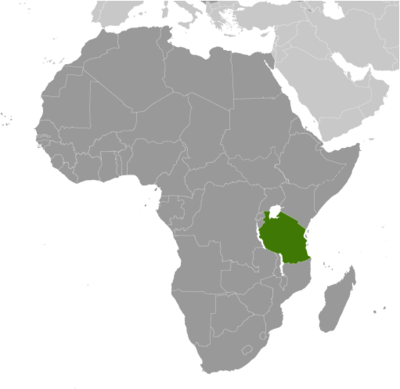
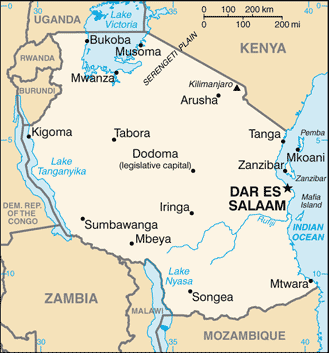
- Eastern Africa, bordering the Indian Ocean, between Kenya and Mozambique
- Area
- 947,300 sq km
- Climate
- varies from tropical along coast to temperate in highlands
- Terrain
- plains along coast; central plateau; highlands in north, south
- Natural resources
- hydropower, tin, phosphates, iron ore, coal, diamonds, gemstones (including tanzanite, found only in Tanzania), gold, natural gas, nickel
- Coastline
- 1,424 km
- Natural hazards
- flooding on the central plateau during the rainy season; drought volcanism: limited volcanic activity; Ol Doinyo Lengai (2,962 m) has emitted lava in recent years; other historically active volcanoes include Kieyo and Meru
People & society
- Population
- 69,145,464 (2025 est.)
- Nationality
- Tanzanian(s)
- Ethnic groups
- mainland - African 99% (of which 95% are Bantu consisting of more than 130 tribes), other 1% (consisting of Asian, European, and Arab); Zanzibar - Arab, African, mixed Arab and African
- Languages
- Kiswahili or Swahili (official), Kiunguja (name for Swahili in Zanzibar), English (official, primary language of commerce, administration, and higher education), Arabic, many local languages
- Religions
- Christian 63.1%, Muslim 34.1%, folk religion 1.1%, Buddhist <1%, Hindu <1%, Jewish <1%, other <1%, unspecified 1.6% (2020 est.)
- Median age
- 18.8 years (2025 est.)
- Life expectancy at birth
- 70.8 years (2024 est.)
- Literacy
- 78.2% (2022 est.)
Economy
- Economic overview
- emerging lower middle-income East African economy; resource-rich and growing tourism; strong post-pandemic recovery from hospitality, electricity, mining, and transit sectors; declining poverty; stable inflation; gender-based violence economic and labor force disruptions
- Industries
- agricultural processing (sugar, beer, cigarettes, sisal twine); mining (diamonds, gold, and iron), salt, soda ash; cement, oil refining, shoes, apparel, wood products, fertilizer
- Agricultural products
- maize, cassava, sweet potatoes, bananas, milk, sugarcane, rice, vegetables, beans, sunflower seeds (2023)
- Exports - partners
- India 15%, UAE 14%, Uganda 12%, South Africa 10%, China 6% (2023)
- Imports - partners
- China 32%, India 13%, UAE 9%, Saudi Arabia 5%, Japan 4% (2023)
Government
- Government type
- presidential republic
- Capital
- Dodoma
- Independence
- 26 April 1964 (Tanganyika united with Zanzibar to form the United Republic of Tanganyika and Zanzibar); 29 October 1964 (renamed United Republic of Tanzania); notable earlier dates: 9 December 1961 (Tanganyika became independent from UK-administered UN trusteeship); 10 December 1963 (Zanzibar became independent from UK)
- Constitution
- several previous; latest adopted 25 April 1977
- Executive branch
- President Samia Suluhu HASSAN (since 19 March 2021)
- Legislative branch
- National Assembly (Bunge)
Full reference data
Every field, by section, CIA World Factbook. Open a topic to expand it.
Introduction
Travel Facts
Please visit the following links to find further information about your desired destination.
World Health Organization (WHO) - To learn what vaccines and health precautions to take while visiting your destination.
US State Dept Travel Information - Overall information about foreign travel for US citizens.
To obtain an international driving permit (IDP). Only two organizations in the US issue IDPs: American Automobile Association (AAA) and American Automobile Touring Alliance (AATA)
How to get help in an emergency? Contact the nearest US embassy or consulate, or call one of these numbers: from the US or Canada - 1-888-407-4747 or from Overseas - +1 202-501-4444
Page last updated: Wednesday, July 20, 2022