
Country exposure · VU
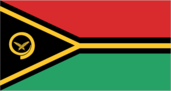
Vanuatu
Australia Oceania · Port-Vila (on Efate) · parliamentary republic
What Vanuatu means for your money, the prices you pay, the tariffs in motion, and where U.S. policy could change both.
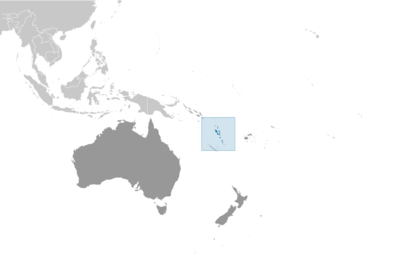
$17M
U.S. imports, 2025
+24.9%
change in one year
$34M
U.S. exports, 2025
318K
Population
$1.2B
GDP
In your house
What you buy that Vanuatu makes
America bought $17M in goods from Vanuatu in 2025, up 24.9% in a single year. Of every $100 of it, here's where the money went.
Tobacco, waxes, etc.
Fish and shellfish
fish, shrimp, shellfish
Materials, excluding chemicals
Other foods
Tea, spices, etc.
tea and spices
Telecommunications equipment
phones, routers, networking gear
Food oils, oilseeds
Artwork, antiques, stamps, etc.
Minimum value shipments
U.s. goods returned, and reimports
2026 so far (through July): $9M in imports. Source: U.S. Census Bureau, International Trade in Goods (customs basis).
The other direction
What America sells to Vanuatu
$34M in 2025, a trade rupture cuts both ways, for American producers as well as American prices.
Telecommunications equipment
$15Mphones, routers, networking gear
Minimum value shipments
$14MComputers
$1Mlaptops, desktops, monitors
Shingles, molding, wallboard
$978KFinished metal shapes
$344KPassenger cars, new and used
$329Knew and used cars
Industrial machines, other
$197KPharmaceutical preparations
$194Kmedicines and pharmacy items
Toiletries and cosmetics
$145Ktoiletries and cosmetics
Where you stand
U.S. tariff posture toward Vanuatu
Vanuatu was assigned 22% in April 2025, reduced to 15% in August — affecting its small export base (about $6.5M to the U.S., roughly 0.7% of GDP), of which kava is around 73%, plus copra and beef. Executive Order 14389 (Ending Certain Tariff Actions, Feb 20, 2026) terminated the IEEPA reciprocal duties, and Proclamation 11012 replaced it with a 10% Section 122 temporary import surcharge effective February 24, 2026. Vanuatu has no Section 232 steel/aluminum exposure.
Reciprocal tariff (assigned, terminated)
22%
The rate this country was assigned under the EO 14257 reciprocal Annex, no longer in force. The Supreme Court struck down the IEEPA tariffs and they were terminated February 24, 2026 (EO 14389), replaced by a universal ~10% Section 122 surcharge. See the timeline below for the current effective rate.
Policy in motion
Tariff status: a moving target
U.S. tariff policy toward Vanuatu has changed 4 times since 2025. This page tracks it.
2026-02-24
IEEPA reciprocal tariffs terminated — replaced by 10% Section 122
In effectExecutive Order 14389 (Ending Certain Tariff Actions) terminated the IEEPA tariff duties effective February 24, 2026, replacing Vanuatu's 15% reciprocal rate with a 10% Section 122 temporary import surcharge under Proclamation 11012 (capped at 150 days).
91 FR 9437 →2025-08-07
Rate reduced to 15%
In effectExecutive Order 14326 set the post-pause Annex I reciprocal rates; Vanuatu's rate was lowered from 22% to 15% effective August 7, 2025, affecting its kava, copra, and beef exports.
90 FR 37963 →2025-04-10
Elevated reciprocal rates paused to 10% for 90 days
In effectExecutive Order 14266 suspended the higher country-specific reciprocal rates — including Vanuatu's 22% — back to the 10% baseline for 90 days.
90 FR 15625 →2025-04-05
Reciprocal tariff regime begins — Vanuatu assigned 22%
In effectExecutive Order 14257 imposed a 10% universal reciprocal duty effective April 5 and a 22% country-specific rate for Vanuatu scheduled to take effect April 9 under Annex I.
90 FR 15041 →
Reference
The country itself
Australia Oceania · Geography, people, economy, and government, public-domain data from the CIA World Factbook.
Austronesian speakers from the Solomon Islands first settled Vanuatu around 2000 B.C. By around 1000, localized chieftain systems began to develop on the islands. Around 1600, Melanesian Chief ROI MATA united some of the islands of modern-day Vanuatu under his rule. In 1606, a Portuguese explorer was the first European to see Vanuatu's Banks Islands and Espiritu Santo, setting up a short-lived settlement on the latter. The next European explorers arrived in the 1760s, and the islands -- then known as the New Hebrides -- were frequented by whalers in the 1800s. European interest in harvesting the islands’ sandalwood trees caused conflict with the inhabitants. In the 1860s, European planters in Australia, Fiji, New Caledonia, and Samoa needed labor and kidnapped almost half the adult males on the islands to work as indentured servants. With growing and overlapping interests in the islands, France and the UK agreed that the New Hebrides would be neutral in 1878 and established a joint naval commission in 1887. In 1906, the two countries created the UK-France condominium to jointly administer the islands, with separate laws, police forces, currencies, and education and health systems. The condominium arrangement was dysfunctional, and the UK used France’s initial defeat in World War II to assert greater control over the islands. During the war, the US stationed up to 50,000 soldiers in Vanuatu. In 1945, they withdrew and sold their equipment, leading to the rise of political and religious movements known as "cargo cults," such as the John Frum movement. The UK-France condominium was reestablished after World War II. The UK was interested in moving the condominium toward independence in the 1960s, but France was hesitant. Political parties agitating for independence began to form, largely divided along linguistic lines. France eventually relented, and elections were held in 1974, with independence granted to the newly named Vanuatu in 1980 under English-speaking Prime Minister Walter LINI. The Nagriamel Movement, with support from French-speaking landowners, then declared the island of Espiritu Santo independent from Vanuatu, but the short-lived state was dissolved 12 weeks later. Linguistic divisions have lessened over time, but highly fractious political parties have led to weak coalition governments that require support from both Anglophone and Francophone parties. Since 2008, prime ministers have been ousted more than a dozen times through no-confidence motions or temporary procedural issues.
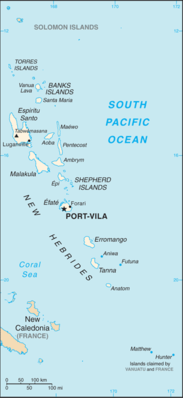
Geography
- Location
- Oceania, group of islands in the South Pacific Ocean, about three-quarters of the way from Hawaii to Australia
- Area
- 12,189 sq km
- Climate
- tropical; moderated by southeast trade winds from May to October; moderate rainfall from November to April; may be affected by cyclones from December to April
- Terrain
- mostly mountainous islands of volcanic origin; narrow coastal plains
- Natural resources
- manganese, hardwood forests, fish
- Coastline
- 2,528 km
- Natural hazards
- tropical cyclones (January to April); volcanic activity; volcanism also causes minor earthquakes; tsunamis volcanism: significant volcanic activity with multiple eruptions in recent years; Yasur (361 m), one of the world's most active volcanoes, has experienced continuous activity in recent centuries; other historically active volcanoes include Aoba, Ambrym, Epi, Gaua, Kuwae, Lopevi, Suretamatai, and Traitor's Head
People & society
- Population
- 318,007 (2024 est.)
- Nationality
- Ni-Vanuatu (singular and plural)
- Ethnic groups
- Ni-Vanuatu 99%, other 1% (European, Asian, other Melanesian, Polynesian, Micronesian, other) (2020 est.)
- Languages
- indigenous languages (more than 100) 82.6%, Bislama (official; creole) 14.5%, English (official) 2.1%, French (official) 0.8% (2020 est.)
- Religions
- Protestant 39.9% (Presbyterian 27.2%, Seventh Day Adventist 14.8%, Anglican 12%, Churches of Christ 5%, Assemblies of God 4.9%, Neil Thomas Ministry/Inner Life Ministry 3.2%), Roman Catholic 12.1%, Apostolic 2.3%, Church of Jesus Christ 1.8%, customary beliefs (including Jon Frum cargo cult) 3.1%, other 12%, none 1.4%, unspecified 0.1% (2020 est.)
- Median age
- 24.9 years (2025 est.)
- Life expectancy at birth
- 75.7 years (2024 est.)
- Literacy
- 88% (2023 est.)
Economy
- Economic overview
- lower-middle income Pacific island economy; extremely reliant on subsistence agriculture and tourism; environmentally fragile; struggling post-pandemic and Tropical Cyclone Harold rebound; sizeable inflation; road infrastructure aid from Australia
- Industries
- food and fish freezing, wood processing, meat canning
- Agricultural products
- coconuts, oranges, yams, cabbages, taro, bananas, chillies/peppers, chestnuts, sweet potatoes, cassava (2023)
- Exports - partners
- Thailand 49%, Japan 19%, Cote d'Ivoire 10%, China 7%, USA 3% (2023)
- Imports - partners
- China 26%, Australia 15%, Angola 11%, Fiji 9%, NZ 8% (2023)
Government
- Government type
- parliamentary republic
- Capital
- Port-Vila (on Efate)
- Independence
- 30 July 1980 (from France and the UK)
- Constitution
- draft completed August 1979, finalized by constitution conference 19 September 1979, ratified by French and British Governments 23 October 1979, effective 30 July 1980 at independence
- Executive branch
- President Nikenike VUROBARAVU (since 23 July 2022)
- Legislative branch
- Parliament
Full reference data
Every field, by section, CIA World Factbook. Open a topic to expand it.
Introduction
Travel Facts
Please visit the following links to find further information about your desired destination.
World Health Organization (WHO) - To learn what vaccines and health precautions to take while visiting your destination.
US State Dept Travel Information - Overall information about foreign travel for US citizens.
To obtain an international driving permit (IDP). Only two organizations in the US issue IDPs: American Automobile Association (AAA) and American Automobile Touring Alliance (AATA)
How to get help in an emergency? Contact the nearest US embassy or consulate, or call one of these numbers: from the US or Canada - 1-888-407-4747 or from Overseas - +1 202-501-4444
Page last updated: Wednesday, October 19, 2022