
Country exposure · RN
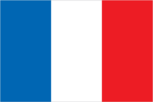
Saint Martin
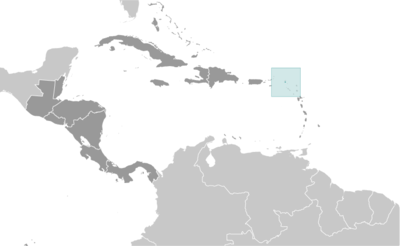
Central America N Caribbean · Marigot · parliamentary democracy (Territorial Council); overseas collectivity of France
What Saint Martin means for your money, the prices you pay, the tariffs in motion, and where U.S. policy could change both.
33K
Population
$649M
GDP
U.S. exposure
Minimal direct economic exposure
Saint Martin is not a significant U.S. goods-trade partner and has no tracked tariff actions. Policy changes here are unlikely to reach American prices directly.
Reference
The country itself
Central America N Caribbean · Geography, people, economy, and government, public-domain data from the CIA World Factbook.
Christopher COLUMBUS claimed Saint Martin for Spain in 1493, naming it after the feast day of St. Martin of Tours, but it was the Dutch who occupied the island in 1631 to exploit its salt deposits. The Spanish retook Saint Martin in 1633, but the Dutch continued to assert their claims. The Spanish finally relinquished the island to the French and Dutch, who divided it between themselves in 1648. The border frequently fluctuated over the next 200 years because of friction between the two countries, with the French eventually holding the greater portion of the island (about 61%). The cultivation of sugarcane introduced African slavery to the island in the late 18th century; the practice was not abolished until 1848. The island became a free port in 1939, and the tourism industry was dramatically expanded during the 1970s and 1980s. In 2003, the populace of Saint Martin voted to secede from Guadeloupe, and in 2007, the northern portion of the island became a French overseas collectivity. In 2010, the southern Dutch portion of the island became the independent nation of Sint Maarten within the Kingdom of the Netherlands. In 2017, Hurricane Irma passed over the island of Saint Martin, causing extensive damage to roads, communications, electrical power, and housing; the UN estimated that 90% of the buildings were damaged or destroyed.
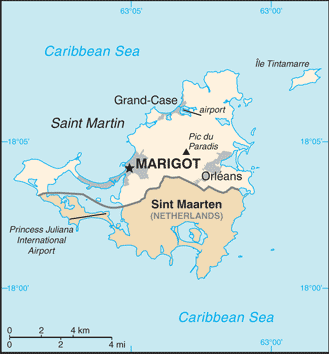
Geography
- Location
- Caribbean, located in the Leeward Islands (northern) group; French part of the island of Saint Martin in the Caribbean Sea; Saint Martin lies east of the US Virgin Islands
- Area
- 50 sq km
- Climate
- temperature averages 27-29 degrees Celsius all year long; low humidity, gentle trade winds, brief, intense rain showers; hurricane season stretches from July to November
- Natural resources
- salt
- Coastline
- 58.9 km (for entire island)
- Natural hazards
- subject to hurricanes from July to November
People & society
- Population
- 33,093 (2025 est.)
- Ethnic groups
- Creole (Mulatto), Black, Guadeloupe Mestizo (French-East Asian), White, East Indian, other
- Languages
- French (official), Dutch, English, Guadeloupian Creole, Haitian Creole, Italian, Martiniquan Creole, Papiamento (dialect of Netherlands Antilles), Spanish
- Religions
- Roman Catholic, Jehovah's Witness, Protestant, Hindu
- Median age
- 34.3 years (2025 est.)
- Life expectancy at birth
- 81 years (2024 est.)
Economy
- Economic overview
- high-income French Caribbean territorial economy; extremely reliant on tourism, with severe COVID-19 impacts; near-total destruction from Hurricane Irma in 2017; some offshore banking; import-dependent; duty-free commerce; yachting destination
- Industries
- tourism, light industry and manufacturing, heavy industry
- Exports - partners
- United States 35%, Netherlands 26%, Antigua and Barbuda 21%, France 10% (2019)
- Imports - partners
- United States 76%, Netherlands 7%, France 7% (2019)
Government
- Government type
- parliamentary democracy (Territorial Council); overseas collectivity of France
- Capital
- Marigot
- Independence
- none (overseas collectivity of France)
- Constitution
- 4 October 1958 (French Constitution)
- Executive branch
- President Emmanuel MACRON (since 14 May 2017); represented by Prefect Cyrille LE VELY (since 10 February 2025)
- Legislative branch
- Territorial Council
Full reference data
Every field, by section, CIA World Factbook. Open a topic to expand it.
Introduction
Travel Facts
Please visit the following links to find further information about your desired destination.
World Health Organization (WHO) - To learn what vaccines and health precautions to take while visiting your destination.
US State Dept Travel Information - Overall information about foreign travel for US citizens.
To obtain an international driving permit (IDP). Only two organizations in the US issue IDPs: American Automobile Association (AAA) and American Automobile Touring Alliance (AATA)
How to get help in an emergency? Contact the nearest US embassy or consulate, or call one of these numbers: from the US or Canada - 1-888-407-4747 or from Overseas - +1 202-501-4444
Page last updated: Wednesday, July 20, 2022