Country exposure · ET

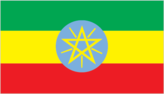
Flag of Ethiopia

Ethiopia

Africa · Addis Ababa · federal parliamentary republic

What Ethiopia means for your money — the prices you pay, the tariffs in motion, and where U.S. policy could change both.
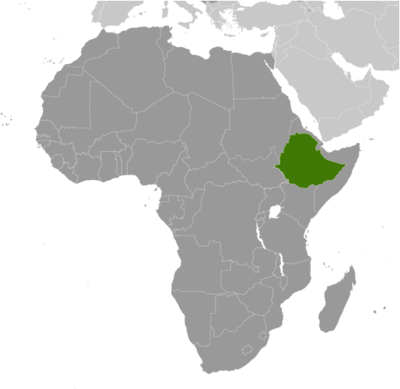
Map showing the location of Ethiopia

$1.0B

U.S. imports, 2025

+123.3%

change in one year

$1.4B

U.S. exports, 2025

121M

Population

$126.8B

GDP

In your house

What you buy that Ethiopia makes

America bought $1.0B in goods from Ethiopia in 2025 — up 123.3% in a single year. Of every $100 of it, here's where the money went.

Green coffee

green coffee for roasters

$312M30%

Semiconductors

semiconductors and chips

$292M28%

U.s. goods returned, and reimports

$186M17.9%

Apparel, household goods - cotton

cotton clothing and linens

$101M9.8%

Apparel, textiles, nonwool or cotton

synthetic and performance apparel

$48M4.6%

Feedstuff and foodgrains

$43M4.2%

Food oils, oilseeds

$11M1%

Camping apparel and gear

camping gear and outdoor apparel

$6M0.6%

Minimum value shipments

$6M0.6%

Tobacco, waxes, etc.

$5M0.5%

2026 so far (through April): $432M in imports. Source: U.S. Census Bureau, International Trade in Goods (customs basis).

The other direction

What America sells to Ethiopia

$1.4B in 2025 — a trade rupture cuts both ways, for American producers as well as American prices.

Civilian aircraft, engines, equipment, and parts

$957M

Industrial engines

$166M

Miscellaneous domestic exports and special transactions

$55M

Industrial machines, other

$27M

Minimum value shipments

$21M

Sorghum, barley, oats

$21M

Computers

$16M

laptops, desktops, monitors

Telecommunications equipment

$15M

phones, routers, networking gear

Electric apparatus

$14M

Where you stand

U.S. tariff posture toward Ethiopia

No U.S. tariff action singles this country out. Its goods face the universal 10% temporary import surcharge under Section 122 of the Trade Act (which replaced the IEEPA reciprocal baseline in February 2026) plus the sectoral Section 232 duties — steel and aluminum at 50% — that apply to all countries. The Section 122 surcharge is statutorily temporary — scheduled to lapse on or about July 23, 2026 (a 150-day cap) unless extended or replaced.

Reciprocal tariff (universal baseline)

10%

The universal 10% floor — a Section 122 import surcharge since February 2026, previously the EO 14257 reciprocal baseline — applies to nearly all U.S. imports. This country has no higher assigned rate of its own.

Policy in motion

Tariff status: a moving target

No U.S. tariff action names Ethiopia. These are the universal measures — applied to every country without a country-specific arrangement — that set its treatment.

  1. 2026-04-06

    Section 232 metals coverage expanded

    In effect

    The April 2026 proclamation strengthening Section 232 actions on aluminum, steel, and copper expanded derivative-product coverage for all countries, keeping the general metals rate at 50%.

    91 FR 18201
  2. 2026-02-24

    IEEPA reciprocal tariffs terminated — replaced by 10% Section 122 surcharge

    In effect

    Executive Order 14389 (Ending Certain Tariff Actions) terminated the IEEPA tariff duties — including the EO 14257 reciprocal baseline — effective February 24, 2026. A flat 10% Section 122 temporary import surcharge (Proclamation 11012 of February 20, 2026) replaced them, leaving the universal rate unchanged at 10% on a different statutory basis. Section 122 caps such surcharges at 150 days, so this 10% surcharge is scheduled to lapse on or about July 23, 2026 absent further action (the administration has signaled it could raise the rate toward the 15% statutory maximum).

    91 FR 9437
  3. 2025-11-13

    Agricultural products exempted from reciprocal tariffs

    In effect

    Executive Order 14360 of November 14, 2025 removed reciprocal duties from certain agricultural products listed in its annexes (coffee, cocoa, bananas, and other goods the U.S. does not produce in sufficient quantity), retroactive to November 13, 2025 — for all countries subject to the reciprocal tariff.

    90 FR 54091
  4. 2025-06-04

    Section 232 steel and aluminum duties doubled to 50%

    In effect

    The June 3, 2025 proclamation raised Section 232 duties on steel and aluminum articles and derivatives from 25% to 50% for all countries, effective June 4, 2025.

    90 FR 24199
  5. 2025-04-05

    Universal 10% reciprocal baseline takes effect

    In effect

    Executive Order 14257 (signed April 2, 2025) imposed a 10% ad valorem reciprocal duty on imports from all trading partners, effective April 5, 2025. Countries without a higher Annex I rate remain at this baseline.

    Federal Register · 2025-06063
  6. 2025-03-12

    Section 232 steel and aluminum duties set at 25% for all countries

    In effect

    Proclamations of February 10, 2025 terminated all country exemptions and quota arrangements and applied 25% Section 232 duties to steel and aluminum imports from every country, effective March 12, 2025.

    90 FR 9817

Made for America

What Ethiopia makes for America

Ethiopia is a direct U.S. source of 3 essential goods Americans rely on — the items themselves, shipped finished off the line.

Go deeper

The supply chain view

Ethiopia sits upstream of 1 essential American goods through 2 tracked inputs.

Full supply-map profile →

Reference

The country itself

Africa · Geography, people, economy, and government — public-domain data from the CIA World Factbook.

The area that is modern-day Ethiopia is rich in cultural and religious diversity with more than 80 ethnic groups. The oldest hominid yet found comes from Ethiopia, and Ethiopia was the second country to officially adopt Christianity in the 4th century A.D. A series of monarchies ruled the area that is now Ethiopia from 980 B.C. to 1855, when the Amhara kingdoms of northern Ethiopia united in an empire under Tewodros II. Many Ethiopians still speak reverently about the Battle of Adwa in 1896, when they defeated Italian forces and won their freedom from colonial rule. Emperor Haile SELASSIE became an internationally renowned figure in 1935, when he unsuccessfully appealed to the League of Nations to prevent Italy from occupying Ethiopia from 1936 to 1941. SELASSIE survived an attempted coup in 1960, annexed modern-day Eritrea in 1962, and played a leading role in establishing the Organization of African Unity in 1963. However, in 1974, a military junta called the Derg deposed him and established a socialist state. Torn by bloody coups, uprisings, drought, and massive displacement, the Derg regime was toppled in 1991 by a coalition of opposing forces, the Ethiopian People's Revolutionary Democratic Front (EPRDF). The EPRDF became an ethno-federalist political coalition that ruled Ethiopia from 1991 until its dissolution in 2019. Ethiopia adopted its constitution in 1994 and held its first multiparty elections in 1995. A two-and-a-half-year border war with Eritrea in the late 1990s ended with a peace treaty in 2000. Ethiopia subsequently rejected the 2007 Eritrea-Ethiopia Boundary Commission demarcation. This resulted in more than a decade of a tense “no peace, no war” stalemate between the two countries. In 2012, longtime Prime Minister MELES Zenawi died in office and was replaced by his Deputy Prime Minister HAILEMARIAM Desalegn, marking the first peaceful transition of power in decades. Following a wave of popular dissent and anti-government protest that began in 2015, HAILEMARIAM resigned in 2018, and ABIY Ahmed Ali took office the same year as Ethiopia's first ethnic Oromo prime minister. In 2018, ABIY promoted a rapprochement between Ethiopia and Eritrea that was marked with a peace agreement and a reopening of their shared border. In 2019, Ethiopia's nearly 30-year ethnic-based ruling coalition, the EPRDF, merged into a single unity party called the Prosperity Party; however, the lead coalition party, the Tigray People’s Liberation Front (TPLF), declined to join. In 2020, a military conflict erupted between forces aligned with the TPLF and the Ethiopian military. The conflict -- which was marked by atrocities committed by all parties -- ended in 2022 with a cessation of hostilities agreement between the TPLF and the Ethiopian Government. However, Ethiopia continues to experience ethnic-based violence as other groups -- including the Oromo Liberation Army (OLA) and Amhara militia Fano -- seek concessions from the Ethiopian Government.
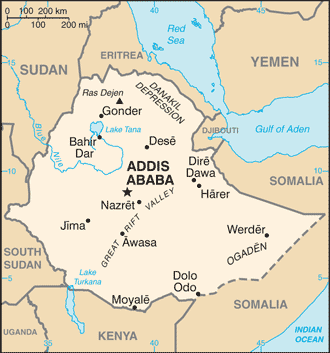
Regional map of Ethiopia

Geography

Location
Eastern Africa, west of Somalia
Area
1,104,300 sq km
Climate
tropical monsoon with wide topographic-induced variation
Terrain
high plateau with central mountain range divided by Great Rift Valley
Natural resources
small reserves of gold, platinum, copper, potash, natural gas, hydropower
Coastline
0 km (landlocked)
Natural hazards
geologically active Great Rift Valley susceptible to earthquakes, volcanic eruptions; frequent droughts volcanism: volcanic activity in the Great Rift Valley; Erta Ale (613 m) is the country's most active volcano; Dabbahu became active in 2005, forcing evacuations; other historically active volcanoes include Alayta, Dalaffilla, Dallol, Dama Ali, Fentale, Kone, Manda Hararo, and Manda-Inakir

People & society

Population
121,372,632 (2025 est.)
Nationality
Ethiopian(s)
Ethnic groups
Oromo 35.8%, Amhara 24.1%, Somali 7.2%, Tigray 5.7%, Sidama 4.1%, Guragie 2.6%, Welaita 2.3%, Afar 2.2%, Silte 1.3%, Kefficho 1.2%, other 13.5% (2022 est.)
Languages
Oromo (official regional working language) 33.8%, Amharic (official national language) 29.3%, Somali (official regional working language) 6.2%, Tigrigna (Tigrinya) (official regional working language) 5.9%, Sidamo 4%, Wolaytta 2.2%, Gurage 2%, Afar (official regional working language) 1.7%, Hadiyya 1.7%, Gamo 1.5%, Gedeo 1.3%, Opuuo 1.2%, Kafa 1.1%, other 8.1%, English (2007 est.)
Religions
Ethiopian Orthodox 43.8%, Muslim 31.3%, Protestant 22.8%, Catholic 0.7%, traditional 0.6%, other 0.8% (2016 est.)
Median age
20.6 years (2025 est.)
Life expectancy at birth
67.7 years (2024 est.)
Literacy
60.5% (2022 est.)

Economy

Economic overview
low-income, fast-growing Horn of Africa economy; widespread poverty and food insecurity worsened by conflict and environmental factors; landlocked with tensions over seaport access; development aid supporting reforms to boost private-sector growth and financial stability; challenge of creating jobs for growing labor force
Industries
food processing, beverages, textiles, leather, garments, chemicals, metals processing, cement
Agricultural products
maize, cereals, wheat, milk, sorghum, barley, taro, beans, sweet potatoes, potatoes (2023)
Exports - partners
USA 12%, China 10%, UAE 8%, Saudi Arabia 8%, Netherlands 5% (2023)
Imports - partners
China 26%, Djibouti 16%, India 7%, Kuwait 7%, Saudi Arabia 6% (2023)

Government

Government type
federal parliamentary republic
Capital
Addis Ababa
Independence
oldest independent country in Africa and one of the oldest in the world, at least 2,000 years; may be traced to the Aksumite Kingdom, which appeared in the first century B.C.
Constitution
several previous; latest drafted June 1994, adopted 8 December 1994, entered into force 21 August 1995
Executive branch
President TAYE Atske Selassie (since 7 October 2024)
Legislative branch
bicameral

Full reference data

Every field, by section — CIA World Factbook. Open a topic to expand it.

Introduction
Background
The area that is modern-day Ethiopia is rich in cultural and religious diversity with more than 80 ethnic groups. The oldest hominid yet found comes from Ethiopia, and Ethiopia was the second country to officially adopt Christianity in the 4th century A.D. A series of monarchies ruled the area that is now Ethiopia from 980 B.C. to 1855, when the Amhara kingdoms of northern Ethiopia united in an empire under Tewodros II. Many Ethiopians still speak reverently about the Battle of Adwa in 1896, when they defeated Italian forces and won their freedom from colonial rule. Emperor Haile SELASSIE became an internationally renowned figure in 1935, when he unsuccessfully appealed to the League of Nations to prevent Italy from occupying Ethiopia from 1936 to 1941. SELASSIE survived an attempted coup in 1960, annexed modern-day Eritrea in 1962, and played a leading role in establishing the Organization of African Unity in 1963. However, in 1974, a military junta called the Derg deposed him and established a socialist state. Torn by bloody coups, uprisings, drought, and massive displacement, the Derg regime was toppled in 1991 by a coalition of opposing forces, the Ethiopian People's Revolutionary Democratic Front (EPRDF). The EPRDF became an ethno-federalist political coalition that ruled Ethiopia from 1991 until its dissolution in 2019. Ethiopia adopted its constitution in 1994 and held its first multiparty elections in 1995. A two-and-a-half-year border war with Eritrea in the late 1990s ended with a peace treaty in 2000. Ethiopia subsequently rejected the 2007 Eritrea-Ethiopia Boundary Commission demarcation. This resulted in more than a decade of a tense “no peace, no war” stalemate between the two countries. In 2012, longtime Prime Minister MELES Zenawi died in office and was replaced by his Deputy Prime Minister HAILEMARIAM Desalegn, marking the first peaceful transition of power in decades. Following a wave of popular dissent and anti-government protest that began in 2015, HAILEMARIAM resigned in 2018, and ABIY Ahmed Ali took office the same year as Ethiopia's first ethnic Oromo prime minister. In 2018, ABIY promoted a rapprochement between Ethiopia and Eritrea that was marked with a peace agreement and a reopening of their shared border. In 2019, Ethiopia's nearly 30-year ethnic-based ruling coalition, the EPRDF, merged into a single unity party called the Prosperity Party; however, the lead coalition party, the Tigray People’s Liberation Front (TPLF), declined to join. In 2020, a military conflict erupted between forces aligned with the TPLF and the Ethiopian military. The conflict -- which was marked by atrocities committed by all parties -- ended in 2022 with a cessation of hostilities agreement between the TPLF and the Ethiopian Government. However, Ethiopia continues to experience ethnic-based violence as other groups -- including the Oromo Liberation Army (OLA) and Amhara militia Fano -- seek concessions from the Ethiopian Government.
Travel Facts
US State Dept Travel Advisory
The US Department of State currently recommends US citizens Reconsider Travel to Ethiopia due to sporadic violent conflict, civil unrest, crime, communications disruptions, terrorism and kidnapping in border areas. Consult its website via the link below for updates to travel advisories and statements on safety, security, local laws, and special circumstances in this country. https://travel.state.gov/content/travel/en/traveladvisories/traveladvisories.html
Passport/Visa Requirements
For the latest passport and visa requirements for this country, please consult the U.S. State Department’s “Learn About Your Destination” search tool, available through the link below. https://travel.state.gov/content/travel/en/international-travel/International-Travel-Country-Information-Pages.html
US Embassy/Consulate
[251] 11 130-6000; US Embassy in Addis Ababa; Entoto Street, PO Box 1014, Addis Ababa, Ethiopia; https://et.usembassy.gov/; AddisACS@state.gov
Telephone Code
251
Local Emergency Phone
Ambulance: 92; Fire: 93; Police: 91
Vaccinations
The CDC and WHO recommend the following vaccinations for Ethiopia: hepatitis A, hepatitis B, typhoid, yellow fever, rabies, meningitis, polio, measles, mumps and rubella (MMR), Tdap (tetanus, diphtheria and pertussis), chickenpox, shingles, pneumonia and influenza. See WHO recommendations. See WHO recommendations. http://www.who.int/
Climate
Tropical monsoon with wide topographically-induced variation
Currency (Code)
Birr (ETB)
Electricity/Voltage/Plug Type(s)
220 V / 50 Hz / plug types(s): C, F, G
Major Languages
Oromo, Amharic, Somali, Tigrigna, Sidamo, Wolaytta, Gurage, Afar, Hadiyya, Gamo, Gedeo, Opuuo, Kafa, English, Arabic
Major Religions
Ethiopian Orthodox 43.8%, Muslim 31.3%, Protestant 22.8%, Catholic 0.7%, traditional .6%
Time Difference
UTC+3 (8 hours ahead of Washington, DC, during Standard Time)
Potable Water
Opt for bottled water
International Driving Permit
A temporary license from a local authority is recommended. An IDP is not recognized.
Road Driving Side
Right
Tourist Destinations
Addis Ababa (incudes Imperial Palace, St. George’s Cathedral, Holy Trinity Cathedral); Axum (Aksum); Bahir Dar; Harar Jugol; Gondar (includes Fasil Ghebbi); Simien Mountains
Major Sports
Track and Field, soccer, basketball
Cultural Practices
It is customary to bow when introduced to an elder or respected person. Elders are also usually introduced first when making new acquaintances.
Tipping Guidelines
A 10-15% tip is normal for good service at restaurants and in bars. Tip $1 (USD) per bag for bellhops who carry luggage to your room and $1-2 (USD) per day for hotel staff.
Souvenirs
Coffee, traditional clothing, shema cloth, carved-metal or wood religious crosses and other wooden items, leather goods, wickerwork, handicrafts
Traditional Cuisine
Wat — a stew that may be prepared with chicken, beef, lamb, a variety of vegetables, spice mixtures such as berbere, and niter kibbeh (seasoned clarified butter); typically served with injera (a spongy flat bread)
CIA source last updated
Thursday, May 09, 2024
Travel resources

Please visit the following links to find further information about your desired destination.

World Health Organization (WHO) - To learn what vaccines and health precautions to take while visiting your destination.

US State Dept Travel Information - Overall information about foreign travel for US citizens.

To obtain an international driving permit (IDP). Only two organizations in the US issue IDPs: American Automobile Association (AAA) and American Automobile Touring Alliance (AATA)

How to get help in an emergency? Contact the nearest US embassy or consulate, or call one of these numbers: from the US or Canada - 1-888-407-4747 or from Overseas - +1 202-501-4444

Page last updated: Thursday, May 09, 2024

Geography
Location
Eastern Africa, west of Somalia
Geographic coordinates
8 00 N, 38 00 E
Map references
Africa
Area - total
1,104,300 sq km
Area - land
1,096,570 sq km
Area - water
7,730 sq km
Area - note
note: area numbers are approximate since a large portion of the Ethiopia-Somalia border is undefined
Area - comparative
slightly less than twice the size of Texas
Land boundaries - total
5,925 km
Land boundaries - border countries
Djibouti 342 km; Eritrea 1,033 km; Kenya 867 km; Somalia 1,640 km; South Sudan 1,299 km; Sudan 744 km
Coastline
0 km (landlocked)
Maritime claims
none (landlocked)
Climate
tropical monsoon with wide topographic-induced variation
Terrain
high plateau with central mountain range divided by Great Rift Valley
Elevation - highest point
Ras Dejen 4,550 m
Elevation - lowest point
Danakil Depression -125 m
Elevation - mean elevation
1,330 m
Natural resources
small reserves of gold, platinum, copper, potash, natural gas, hydropower
Land use - agricultural land
34.1% (2023 est.)
Land use - agricultural land: arable land
arable land: 14.5% (2023 est.)
Land use - agricultural land: permanent crops
permanent crops: 1.8% (2023 est.)
Land use - agricultural land: permanent pasture
permanent pasture: 17.7% (2023 est.)
Land use - forest
23.7% (2023 est.)
Land use - other
42.2% (2023 est.)
Irrigated land
1,814 sq km (2020)
Major lakes (area sq km) - fresh water lake(s)
Lake Tana - 3,600 sq km; Abaya Hayk - 1,160 sq km; Ch'amo Hayk - 550 sq km
Major lakes (area sq km) - salt water lake(s)
Lake Turkana (shared with Kenya) - 6,400 sq km; Abhe Bid Hayk/Abhe Bad (shared with Djibouti) - 780 sq km;
Major rivers (by length in km)
Blue Nile river source (shared with Sudan [m]) - 1,600 km note: [s] after country name indicates river source; [m] after country name indicates river mouth
Major watersheds (area sq km) - Atlantic Ocean drainage
(Mediterranean Sea) Nile (3,254,853 sq km)
Major aquifers
Ogaden-Juba Basin, Sudd Basin (Umm Ruwaba Aquifer)
Population distribution
highest density is found in the highlands of the north and middle areas of the country, particularly around the centrally located capital city of Addis Ababa; the far east and southeast are sparsely populated, as shown in this population distribution map
Natural hazards
geologically active Great Rift Valley susceptible to earthquakes, volcanic eruptions; frequent droughts volcanism: volcanic activity in the Great Rift Valley; Erta Ale (613 m) is the country's most active volcano; Dabbahu became active in 2005, forcing evacuations; other historically active volcanoes include Alayta, Dalaffilla, Dallol, Dama Ali, Fentale, Kone, Manda Hararo, and Manda-Inakir
Geography - note
the most populous landlocked country in the world; the Blue Nile, the chief headstream of the Nile by water volume, rises in T'ana Hayk (Lake Tana) in northwest Ethiopia
People and Society
Population - total
121,372,632 (2025 est.)
Population - male
60,461,406
Population - female
60,911,226
Nationality - noun
Ethiopian(s)
Nationality - adjective
Ethiopian
Ethnic groups
Oromo 35.8%, Amhara 24.1%, Somali 7.2%, Tigray 5.7%, Sidama 4.1%, Guragie 2.6%, Welaita 2.3%, Afar 2.2%, Silte 1.3%, Kefficho 1.2%, other 13.5% (2022 est.)
Languages - Languages
Oromo (official regional working language) 33.8%, Amharic (official national language) 29.3%, Somali (official regional working language) 6.2%, Tigrigna (Tigrinya) (official regional working language) 5.9%, Sidamo 4%, Wolaytta 2.2%, Gurage 2%, Afar (official regional working language) 1.7%, Hadiyya 1.7%, Gamo 1.5%, Gedeo 1.3%, Opuuo 1.2%, Kafa 1.1%, other 8.1%, English (2007 est.)
Languages - major-language sample(s)
Kitaaba Addunyaa Waan Qabataamaatiif - Kan Madda Odeeffannoo bu’uraawaatiif baay’ee barbaachisaa ta’e. (Oromo) የአለም እውነታ መጽሐፍ፣ ለመሠረታዊ መረጃ እጅግ አስፈላጊ የሆነ ምንጭ። (Amharic) The World Factbook, the indispensable source for basic information.
Religions
Ethiopian Orthodox 43.8%, Muslim 31.3%, Protestant 22.8%, Catholic 0.7%, traditional 0.6%, other 0.8% (2016 est.)
Age structure - 0-14 years
38.7% (male 23,092,496/female 22,765,882)
Age structure - 15-64 years
58% (male 34,175,328/female 34,536,238)
Age structure - 65 years and over
3.4% (2024 est.) (male 1,794,269/female 2,186,085)
Dependency ratios - total dependency ratio
71.7 (2025 est.)
Dependency ratios - youth dependency ratio
65.8 (2025 est.)
Dependency ratios - elderly dependency ratio
5.9 (2025 est.)
Dependency ratios - potential support ratio
17.1 (2025 est.)
Median age - total
20.6 years (2025 est.)
Median age - male
20.2 years
Median age - female
20.7 years
Population growth rate
2.34% (2025 est.)
Birth rate
29.08 births/1,000 population (2025 est.)
Death rate
5.58 deaths/1,000 population (2025 est.)
Net migration rate
-0.12 migrant(s)/1,000 population (2025 est.)
Population distribution
highest density is found in the highlands of the north and middle areas of the country, particularly around the centrally located capital city of Addis Ababa; the far east and southeast are sparsely populated, as shown in this population distribution map
Urbanization - urban population
23.2% of total population (2023)
Urbanization - rate of urbanization
4.4% annual rate of change (2020-25 est.)
Major urban areas - population
5.461 million ADDIS ABABA (capital) (2023)
Sex ratio - at birth
1.03 male(s)/female
Sex ratio - 0-14 years
1.01 male(s)/female
Sex ratio - 15-64 years
0.99 male(s)/female
Sex ratio - 65 years and over
0.82 male(s)/female
Sex ratio - total population
0.99 male(s)/female (2024 est.)
Mother's mean age at first birth
19.3 years (2019 est.)
Mother's mean age at first birth - note
note: data represents median age at first birth among women 20-49
Maternal mortality ratio
195 deaths/100,000 live births (2023 est.)
Infant mortality rate - total
31.3 deaths/1,000 live births (2025 est.)
Infant mortality rate - male
37.4 deaths/1,000 live births
Infant mortality rate - female
27.6 deaths/1,000 live births
Life expectancy at birth - total population
67.7 years (2024 est.)
Life expectancy at birth - male
65.4 years
Life expectancy at birth - female
70 years
Total fertility rate
3.77 children born/woman (2025 est.)
Gross reproduction rate
1.86 (2025 est.)
Drinking water source - improved: urban
urban: 83.2% of population (2022 est.)
Drinking water source - improved: rural
rural: 42.2% of population (2022 est.)
Drinking water source - improved: total
total: 51.5% of population (2022 est.)
Drinking water source - unimproved: urban
urban: 16.8% of population (2022 est.)
Drinking water source - unimproved: rural
rural: 57.8% of population (2022 est.)
Drinking water source - unimproved: total
total: 48.5% of population (2022 est.)
Health expenditure - Health expenditure (as % of GDP)
3.2% of GDP (2021)
Health expenditure - Health expenditure (as % of national budget)
5.7% of national budget (2022 est.)
Physician density
0.14 physicians/1,000 population (2023)
Hospital bed density
0.3 beds/1,000 population (2016 est.)
Sanitation facility access - improved: urban
urban: 50.8% of population (2022 est.)
Sanitation facility access - improved: rural
rural: 8.2% of population (2022 est.)
Sanitation facility access - improved: total
total: 17.8% of population (2022 est.)
Sanitation facility access - unimproved: urban
urban: 49.2% of population (2022 est.)
Sanitation facility access - unimproved: rural
rural: 91.8% of population (2022 est.)
Sanitation facility access - unimproved: total
total: 82.2% of population (2022 est.)
Obesity - adult prevalence rate
4.5% (2016)
Alcohol consumption per capita - total
1.16 liters of pure alcohol (2019 est.)
Alcohol consumption per capita - beer
0.92 liters of pure alcohol (2019 est.)
Alcohol consumption per capita - wine
0 liters of pure alcohol (2019 est.)
Alcohol consumption per capita - spirits
0.2 liters of pure alcohol (2019 est.)
Alcohol consumption per capita - other alcohols
0.03 liters of pure alcohol (2019 est.)
Tobacco use - total
4.5% (2025 est.)
Tobacco use - male
7.7% (2025 est.)
Tobacco use - female
1.4% (2025 est.)
Children under the age of 5 years underweight
21.2% (2019 est.)
Currently married women (ages 15-49)
66.3% (2019 est.)
Child marriage - women married by age 15
14.1% (2016)
Child marriage - women married by age 18
40.3% (2016)
Child marriage - men married by age 18
5% (2016)
Education expenditure - Education expenditure (% GDP)
2.3% of GDP (2024 est.)
Education expenditure - Education expenditure (% national budget)
16.7% national budget (2024 est.)
Literacy - total population
60.5% (2022 est.)
Literacy - male
71% (2022 est.)
Literacy - female
50% (2022 est.)
Government
Country name - conventional long form
Federal Democratic Republic of Ethiopia
Country name - conventional short form
Ethiopia
Country name - local long form
YeItyop'iya Federalawi Demokrasiyawi Ripeblik
Country name - local short form
Ityop'iya
Country name - former
Abyssinia, Italian East Africa
Country name - abbreviation
FDRE
Country name - etymology
the country name derives from the ancient Greek word used to describe the inhabitants, aithiops , meaning "burnt appearance"
Government type
federal parliamentary republic
Capital - name
Addis Ababa
Capital - geographic coordinates
9 02 N, 38 42 E
Capital - time difference
UTC+3 (8 hours ahead of Washington, DC, during Standard Time)
Capital - etymology
the name in Amharic means "new flower;" Empress TAITU gave the name to the new capital city in 1887
Administrative divisions
12 ethnically based regional states ( kililoch , singular - kilil ) and 2 chartered cities* ( astedader akabibiwach , singular - astedader akabibi ); Adis Abeba* (Addis Ababa), Afar, Amara (Amhara), Binshangul Gumuz, Dire Dawa*, Gambela Hizboch (Gambela), Hareri Hizb (Harari), Oromia, Sidama, Sumale, Tigray, YeDebub Biheroch Bihereseboch na Hizboch (Southern Nations, Nationalities and Peoples), YeDebub M'irab Ityop'iya Hizboch (Southwest Ethiopia Peoples), Southern Ethiopia Peoples
Legal system
civil law system
Constitution - history
several previous; latest drafted June 1994, adopted 8 December 1994, entered into force 21 August 1995
Constitution - amendment process
proposals submitted for discussion require two-thirds majority approval in either house of Parliament or majority approval of one-third of the State Councils; passage of amendments other than constitutional articles on fundamental rights and freedoms and the initiation and amendment of the constitution requires two-thirds majority vote in a joint session of Parliament and majority vote by two thirds of the State Councils; passage of amendments affecting rights and freedoms and amendment procedures requires two-thirds majority vote in each house of Parliament and majority vote by all the State Councils
International law organization participation
has not submitted an ICJ jurisdiction declaration; non-party state to the ICCt
Citizenship - citizenship by birth
no
Citizenship - citizenship by descent only
at least one parent must be a citizen of Ethiopia
Citizenship - dual citizenship recognized
no
Citizenship - residency requirement for naturalization
4 years
Suffrage
18 years of age; universal
Executive branch - chief of state
President TAYE Atske Selassie (since 7 October 2024)
Executive branch - head of government
Prime Minister ABIY Ahmed Ali (since April 2018)
Executive branch - cabinet
Council of Ministers selected by the prime minister and approved by the House of People's Representatives
Executive branch - election/appointment process
president indirectly elected by both chambers of Parliament for a 6-year term (eligible for a second term); prime minister designated by the majority party following legislative elections
Executive branch - most recent election date
21 June 2021 and 30 September 2021 (scheduled 29 August 2020 election was postponed due to the COVID-19 pandemic)
Executive branch - election results
2021: SAHLE-WORK Zewde reelected president during joint session of Parliament, vote - 659 (unanimous); ABIY confirmed Prime Minister by House of Peoples' Representatives (4 October 2021)
Legislative branch - legislative structure
bicameral
Legislative branch - note
note: the House of Federation is responsible for interpreting the constitution and federal-regional issues, and the House of People's Representatives is responsible for passing legislation
Legislative branch - lower chamber - chamber name
House of Peoples' Representatives (Yehizb Tewokayoch Mekir Bete)
Legislative branch - lower chamber - number of seats
547 (all directly elected)
Legislative branch - lower chamber - electoral system
plurality/majority
Legislative branch - lower chamber - scope of elections
full renewal
Legislative branch - lower chamber - term in office
5 years
Legislative branch - lower chamber - most recent election date
6/21/2021 to 9/30/2021
Legislative branch - lower chamber - parties elected and seats per party
Prosperity Party (448); Other (22)
Legislative branch - lower chamber - percentage of women in chamber
41.9%
Legislative branch - lower chamber - expected date of next election
June 2026
Legislative branch - lower chamber - note
note: only 470 of the 547 seats in the House of People's Representatives were filled during the 2021 elections due to security issues in the Tigray State and other areas
Legislative branch - upper chamber - chamber name
House of the Federation (Yefedereshein Mekir Bete)
Legislative branch - upper chamber - number of seats
153 (all indirectly elected)
Legislative branch - upper chamber - scope of elections
full renewal
Legislative branch - upper chamber - term in office
5 years
Legislative branch - upper chamber - most recent election date
10/4/2021
Legislative branch - upper chamber - percentage of women in chamber
29.7%
Legislative branch - upper chamber - expected date of next election
October 2026
Judicial branch - highest court(s)
Federal Supreme Court (consists of 11 judges)
Judicial branch - judge selection and term of office
president and vice president of Federal Supreme Court recommended by the prime minister and appointed by the House of People's Representatives; other Supreme Court judges nominated by the Federal Judicial Administrative Council (a 10-member body chaired by the president of the Federal Supreme Court) and appointed by the House of People's Representatives; judges serve until retirement at age 60
Judicial branch - subordinate courts
federal high courts and federal courts of first instance; state court systems (mirror structure of federal system); sharia courts and customary and traditional courts
Judicial branch - note
note: the House of Federation has jurisdiction for all constitutional issues
Political parties
Ethiopian Citizens for Social Justice and Democracy or EZEMA Gedeo People's Democratic Party Independent Kucha People Democratic Party National Movement of Amhara or NAMA Prosperity Party or PP
Diplomatic representation in the US - chief of mission
Ambassador BINALF Andualem Ashenef (since 25 February 2025)
Diplomatic representation in the US - chancery
3506 International Drive NW, Washington, DC 20008
Diplomatic representation in the US - telephone
[1] (202) 364-1200
Diplomatic representation in the US - FAX
[1] (202) 587-0195
Diplomatic representation in the US - email address and website
Diplomatic representation in the US - consulate(s) general
Los Angeles, St. Paul (MN)
Diplomatic representation from the US - chief of mission
Ambassador Ervin MASSINGA (since 4 October 2023)
Diplomatic representation from the US - embassy
Entoto Street, P.O. Box 1014, Addis Ababa
Diplomatic representation from the US - mailing address
2030 Addis Ababa Place, Washington DC 20521-2030
Diplomatic representation from the US - telephone
[251] 111-30-60-00
Diplomatic representation from the US - FAX
[251] 111-24-24-01
Diplomatic representation from the US - email address and website
International organization participation
ACP, AfDB, ATMIS, AU, BRICS, COMESA, EITI, FAO, G-24, G-77, IAEA, IBRD, ICAO, ICRM, IDA, IFAD, IFC, IFRCS, IGAD, ILO, IMF, IMO, Interpol, IOC, IOM, IPU, ISO, ITSO, ITU, ITUC (NGOs), MIGA, NAM, OPCW, PCA, UN, UNCTAD, UNESCO, UNHCR, UNIDO, UNMISS, UNOOSA, UNWTO, UPU, WCO, WFTU (NGOs), WHO, WIPO, WMO, WTO (accession candidate)
Independence
oldest independent country in Africa and one of the oldest in the world, at least 2,000 years; may be traced to the Aksumite Kingdom, which appeared in the first century B.C.
National holiday
Derg Downfall Day (defeat of MENGISTU regime), 28 May (1991)
Flag
description: three equal horizontal bands of green (top), yellow, and red, with a light blue disk centered on the three bands; on the disk is a yellow pentagram with single yellow rays emanating from the angles between the points meaning: green stands for hope and the land's fertility, yellow for justice and harmony, and red for sacrifice and heroism; the blue of the disk symbolizes peace, and the pentagram represents the Ethiopian people's unity and equality history: the emblem in the center of the current flag was added in 1996
Flag - note
note: Ethiopia is the oldest independent country in Africa, and newly independent African countries often adopted the Ethiopian flag's colors, which were later known as the Pan-African movement's colors
National symbol(s)
Abyssinian lion (traditional), yellow pentagram with five rays of light on a blue field (promoted by government)
National color(s)
green, yellow, red
National coat of arms
adopted in 1996, the coat of arms features the national symbol, a pentagram; the blue circle symbolizes peace, and the pentagram represents the unity and equality of the Ethiopian people
National anthem(s) - title
"Whedefit Gesgeshi Woud Enat Ethiopia" (March Forward, Dear Mother Ethiopia)
National anthem(s) - lyrics/music
DEREJE Melaku Mengesha/SOLOMON Lulu
National anthem(s) - history
adopted 1992
National heritage - total World Heritage Sites
12 (10 cultural, 2 natural)
National heritage - selected World Heritage Site locales
Rock-Hewn Churches, Lalibela (c); Simien National Park (n); Fasil Ghebbi, Gondar Region (c); Aksum (c); Lower Valley of the Awash (c); Lower Valley of the Omo (c); Tiya (c); Harar Jugol, the Fortified Historic Town (c); Konso Cultural Landscape (c); Gedeo Cultural Landscape (c); Bale Mountains National Park (n); Melka Kunture and Balchit: Archaeological and Palaeontological Sites in the Highland Area of Ethiopia (c)
Economy
Economic overview
low-income, fast-growing Horn of Africa economy; widespread poverty and food insecurity worsened by conflict and environmental factors; landlocked with tensions over seaport access; development aid supporting reforms to boost private-sector growth and financial stability; challenge of creating jobs for growing labor force
Real GDP (purchasing power parity) - Real GDP (purchasing power parity) 2024
$380.895 billion (2024 est.)
Real GDP (purchasing power parity) - Real GDP (purchasing power parity) 2023
$354.926 billion (2023 est.)
Real GDP (purchasing power parity) - Real GDP (purchasing power parity) 2022
$332.97 billion (2022 est.)
Real GDP (purchasing power parity) - note
note: data in 2021 dollars
Real GDP growth rate - Real GDP growth rate 2024
7.3% (2024 est.)
Real GDP growth rate - Real GDP growth rate 2023
6.6% (2023 est.)
Real GDP growth rate - Real GDP growth rate 2022
5.3% (2022 est.)
Real GDP growth rate - note
note: annual GDP % growth based on constant local currency
Real GDP per capita - Real GDP per capita 2024
$2,900 (2024 est.)
Real GDP per capita - Real GDP per capita 2023
$2,800 (2023 est.)
Real GDP per capita - Real GDP per capita 2022
$2,700 (2022 est.)
Real GDP per capita - note
note: data in 2021 dollars
GDP (official exchange rate)
$126.773 billion (2022 est.)
GDP (official exchange rate) - note
note: data in current dollars at official exchange rate
Inflation rate (consumer prices) - Inflation rate (consumer prices) 2024
21% (2024 est.)
Inflation rate (consumer prices) - Inflation rate (consumer prices) 2023
30.2% (2023 est.)
Inflation rate (consumer prices) - Inflation rate (consumer prices) 2022
33.9% (2022 est.)
Inflation rate (consumer prices) - note
note: annual % change based on consumer prices
GDP - composition, by sector of origin - agriculture
34.9% (2024 est.)
GDP - composition, by sector of origin - industry
25.4% (2024 est.)
GDP - composition, by sector of origin - services
37.6% (2024 est.)
GDP - composition, by sector of origin - note
note: figures may not total 100% due to non-allocated consumption not captured in sector-reported data
GDP - composition, by end use - household consumption
80.2% (2024 est.)
GDP - composition, by end use - government consumption
5.5% (2024 est.)
GDP - composition, by end use - investment in fixed capital
20.5% (2024 est.)
GDP - composition, by end use - investment in inventories
0% (2024 est.)
GDP - composition, by end use - exports of goods and services
5.6% (2024 est.)
GDP - composition, by end use - imports of goods and services
-11.8% (2024 est.)
GDP - composition, by end use - note
note: figures may not total 100% due to rounding or gaps in data collection
Agricultural products
maize, cereals, wheat, milk, sorghum, barley, taro, beans, sweet potatoes, potatoes (2023)
Agricultural products - note
note: top ten agricultural products based on tonnage
Industries
food processing, beverages, textiles, leather, garments, chemicals, metals processing, cement
Industrial production growth rate
9.2% (2024 est.)
Industrial production growth rate - note
note: annual % change in industrial value added based on constant local currency
Labor force
54.47 million (2024 est.)
Labor force - note
note: number of people ages 15 or older who are employed or seeking work
Unemployment rate - Unemployment rate 2024
3.4% (2024 est.)
Unemployment rate - Unemployment rate 2023
3.5% (2023 est.)
Unemployment rate - Unemployment rate 2022
3.5% (2022 est.)
Unemployment rate - note
note: % of labor force seeking employment
Youth unemployment rate (ages 15-24) - total
5.4% (2024 est.)
Youth unemployment rate (ages 15-24) - male
4% (2024 est.)
Youth unemployment rate (ages 15-24) - female
7.2% (2024 est.)
Youth unemployment rate (ages 15-24) - note
note: % of labor force ages 15-24 seeking employment
Population below poverty line
23.5% (2015 est.)
Population below poverty line - note
note: % of population with income below national poverty line
Gini Index coefficient - distribution of family income - Gini Index coefficient - distribution of family income 2021
31.1 (2021 est.)
Gini Index coefficient - distribution of family income - note
note: index (0-100) of income distribution; higher values represent greater inequality
Average household expenditures - on food
37.9% of household expenditures (2023 est.)
Average household expenditures - on alcohol and tobacco
3.1% of household expenditures (2023 est.)
Household income or consumption by percentage share - lowest 10%
3.5% (2021 est.)
Household income or consumption by percentage share - highest 10%
24.8% (2021 est.)
Household income or consumption by percentage share - note
note: % share of income accruing to lowest and highest 10% of population
Remittances - Remittances 2023
0.33% of GDP (2023 est.)
Remittances - Remittances 2022
0.4% of GDP (2022 est.)
Remittances - Remittances 2021
0.4% of GDP (2021 est.)
Remittances - note
note: personal transfers and compensation between resident and non-resident individuals/households/entities
Budget - revenues
$8.808 billion (2023 est.)
Budget - expenditures
$12.49 billion (2023 est.)
Budget - note
note: central government revenues and expenses (excluding grants/extrabudgetary units/social security funds) converted to US dollars at average official exchange rate for year indicated
Public debt - Public debt 2019
31.4% of GDP (2019 est.)
Public debt - note
note: central government debt as a % of GDP
Taxes and other revenues
3.9% (of GDP) (2023 est.)
Taxes and other revenues - note
note: central government tax revenue as a % of GDP
Current account balance - Current account balance 2023
-$4.788 billion (2023 est.)
Current account balance - Current account balance 2022
-$5.16 billion (2022 est.)
Current account balance - Current account balance 2021
-$4.507 billion (2021 est.)
Current account balance - note
note: balance of payments - net trade and primary/secondary income in current dollars
Exports - Exports 2023
$10.865 billion (2023 est.)
Exports - Exports 2022
$10.971 billion (2022 est.)
Exports - Exports 2021
$9.496 billion (2021 est.)
Exports - note
note: balance of payments - exports of goods and services in current dollars
Exports - partners
USA 12%, China 10%, UAE 8%, Saudi Arabia 8%, Netherlands 5% (2023)
Exports - partners - note
note: top five export partners based on percentage share of exports
Exports - commodities
coffee, garments, dried legumes, cut flowers, oil seeds (2023)
Exports - commodities - note
note: top five export commodities based on value in dollars
Imports - Imports 2023
$22.951 billion (2023 est.)
Imports - Imports 2022
$24.187 billion (2022 est.)
Imports - Imports 2021
$20.859 billion (2021 est.)
Imports - note
note: balance of payments - imports of goods and services in current dollars
Imports - partners
China 26%, Djibouti 16%, India 7%, Kuwait 7%, Saudi Arabia 6% (2023)
Imports - partners - note
note: top five import partners based on percentage share of imports
Imports - commodities
refined petroleum, fertilizers, plastics, raw sugar, cars (2023)
Imports - commodities - note
note: top five import commodities based on value in dollars
Reserves of foreign exchange and gold - Reserves of foreign exchange and gold 2024
$3.784 billion (2024 est.)
Reserves of foreign exchange and gold - Reserves of foreign exchange and gold 2023
$2.028 billion (2023 est.)
Reserves of foreign exchange and gold - Reserves of foreign exchange and gold 2022
$1.192 billion (2022 est.)
Reserves of foreign exchange and gold - note
note: holdings of gold (year-end prices)/foreign exchange/special drawing rights in current dollars
Debt - external - Debt - external 2023
$25.426 billion (2023 est.)
Debt - external - note
note: present value of external debt in current US dollars
Exchange rates - Currency
birr (ETB) per US dollar -
Exchange rates - Exchange rates 2023
54.601 (2023 est.)
Exchange rates - Exchange rates 2022
51.756 (2022 est.)
Exchange rates - Exchange rates 2021
43.734 (2021 est.)
Exchange rates - Exchange rates 2020
34.927 (2020 est.)
Exchange rates - Exchange rates 2019
29.07 (2019 est.)
Energy
Electricity access - electrification - total population
55% (2022 est.)
Electricity access - electrification - urban areas
94%
Electricity access - electrification - rural areas
43%
Electricity - installed generating capacity
5.69 million kW (2023 est.)
Electricity - consumption
12.298 billion kWh (2023 est.)
Electricity - exports
1.762 billion kWh (2023 est.)
Electricity - transmission/distribution losses
4.194 billion kWh (2023 est.)
Electricity generation sources - solar
0.2% of total installed capacity (2023 est.)
Electricity generation sources - wind
3.1% of total installed capacity (2023 est.)
Electricity generation sources - hydroelectricity
96.5% of total installed capacity (2023 est.)
Electricity generation sources - geothermal
0.2% of total installed capacity (2023 est.)
Coal - production
456,000 metric tons (2023 est.)
Coal - consumption
1.653 million metric tons (2023 est.)
Coal - exports
1,000 metric tons (2022 est.)
Coal - imports
1.153 million metric tons (2023 est.)
Petroleum - refined petroleum consumption
102,000 bbl/day (2023 est.)
Petroleum - crude oil estimated reserves
428,000 barrels (2021 est.)
Natural gas - proven reserves
24.919 billion cubic meters (2021 est.)
Energy consumption per capita - Total energy consumption per capita 2023
2.366 million Btu/person (2023 est.)
Communications
Telephones - fixed lines - total subscriptions
766,000 (2024 est.)
Telephones - fixed lines - subscriptions per 100 inhabitants
(2024 est.) less than 1
Telephones - mobile cellular - total subscriptions
85.9 million (2024 est.)
Telephones - mobile cellular - subscriptions per 100 inhabitants
65 (2024 est.)
Broadcast media
10 public/state broadcasters; 9 public/state radio stations; 13 commercial FM radio stations; 18 commercial TV stations; 45 community radio stations; 5 community TV stations (2023)
Internet country code
.et
Internet users - percent of population
17% (2021 est.)
Broadband - fixed subscriptions - total
566,000 (2022 est.)
Broadband - fixed subscriptions - subscriptions per 100 inhabitants
(2022 est.) less than 1
Transportation
Civil aircraft registration country code prefix
ET
Airports
58 (2025)
Heliports
1 (2025)
Railways - total
659 km (2017) (Ethiopian segment of the 756 km Addis Ababa-Djibouti railroad)
Railways - standard gauge
659 km (2017) 1.435-m gauge
Railways - note
note: electric railway with redundant power supplies; under joint control of Djibouti and Ethiopia and managed by a Chinese contractor
Merchant marine - total
12 (2023)
Merchant marine - by type
general cargo 10, oil tanker 2
Military and Security
Military and security forces
Ethiopian National Defense Force (ENDF; aka Federal Defense Force of Ethiopia, FDRE): Army, Air Force, Naval Force, Defense Cyber Main Directorate (2025)
Military and security forces - note
note 1: national and regional police forces are responsible for law enforcement and maintenance of order, with the ENDF sometimes providing internal security support; the Ethiopian Federal Police (EFP) report to the Prime Minister’s Office note 2: the regional governments control regional security forces, including "special" paramilitary forces, which generally operate independently from the federal government and in some cases operate as regional defense forces maintaining national borders; in April 2023, the federal government ordered the integration of these regional special forces into the EFP or ENDF; in some cases, the regional governments have maintained former members of the special forces for “crowd control/Adma Bitena” as a separate unit within their security structures; local militias also operate across the country in loose and varying coordination with regional security and police forces, the ENDF, and the EFP note 3: in 2018, Ethiopia established a Republican Guard military unit as a separate command operationally under the Office of the Prime Minister and administratively accountable to the Ministry of Defense; it is responsible for protecting senior officials and government institutions and conducting some military operations
Military expenditures - Military Expenditures 2024
0.7% of GDP (2024 est.)
Military expenditures - Military Expenditures 2023
1% of GDP (2023 est.)
Military expenditures - Military Expenditures 2022
1.7% of GDP (2022 est.)
Military expenditures - Military Expenditures 2021
0.5% of GDP (2021 est.)
Military expenditures - Military Expenditures 2020
0.5% of GDP (2020 est.)
Military and security service personnel strengths
available information varies widely; estimated 150-300,000 active-duty Defense Force (2025)
Military equipment inventories and acquisitions
the ENDF's inventory has traditionally been comprised of Russian, Soviet, and Eastern Bloc armaments; it suffered considerable equipment losses during the 2020-2022 Tigray conflict; in more recent years, Ethiopia has diversified its arms sources to include such suppliers as China, Türkiye, Ukraine, and the UAE; Ethiopia's defense industry produces small arms, as well as armored vehicles under license (2025)
Military service age and obligation
18-22 years of age for voluntary military service; 24-month service obligation; no compulsory military service, but the military can conduct callups when necessary and compliance is compulsory (2025)
Military deployments
1,500 South Sudan (UNMISS); estimated to have as many as 10,000 troops Somalia (approximately 2,500 under the AU; the remainder under a bilateral agreement with the Somali Government) (2025)
Military - note
the Ethiopian National Defense Force (ENDF) is focused on both external threats emanating from its neighbors and internal threats from multiple internal armed groups; since 1998, the ENDF has engaged in several conventional and counterinsurgency operations, including border wars with Eritrea (1998-2000) and Somalia (2006-2008) and internal conflicts with the Tigray regional state (2020-2022), multiple insurgent groups and ethnic militias, and the al-Shabaab terrorist group; as of 2025, the ENDF was actively conducting counterinsurgency operations against anti-government militants in several states, including the Amhara militia Fano and the Oromo Liberation Army (OLA), as well as al-Shabaab in Somalia (2025)
Terrorism
Terrorist group(s)
al-Shabaab
Terrorist group(s) - note
note: details about the history, aims, leadership, organization, areas of operation, tactics, targets, weapons, size, and sources of support of the group(s) appear(s) in the Terrorism reference guide
Transnational Issues
Refugees and internally displaced persons - refugees
1,071,881 (2024 est.)
Refugees and internally displaced persons - IDPs
3,134,600 (2024 est.)
Environment
Environmental issues
deforestation; overgrazing; soil erosion; desertification; loss of biodiversity; water shortages in some areas from water-intensive farming and poor management; industrial pollution and pesticides contribute to air, water, and soil pollution
International environmental agreements - party to
Biodiversity, Climate Change, Climate Change-Kyoto Protocol, Climate Change-Paris Agreement, Comprehensive Nuclear Test Ban, Desertification, Endangered Species, Hazardous Wastes, Ozone Layer Protection
International environmental agreements - signed, but not ratified
Environmental Modification, Law of the Sea, Nuclear Test Ban
Climate
tropical monsoon with wide topographic-induced variation
Land use - agricultural land
34.1% (2023 est.)
Land use - agricultural land: arable land
arable land: 14.5% (2023 est.)
Land use - agricultural land: permanent crops
permanent crops: 1.8% (2023 est.)
Land use - agricultural land: permanent pasture
permanent pasture: 17.7% (2023 est.)
Land use - forest
23.7% (2023 est.)
Land use - other
42.2% (2023 est.)
Urbanization - urban population
23.2% of total population (2023)
Urbanization - rate of urbanization
4.4% annual rate of change (2020-25 est.)
Carbon dioxide emissions - total emissions
18.519 million metric tonnes of CO2 (2023 est.)
Carbon dioxide emissions - from coal and metallurgical coke
3.427 million metric tonnes of CO2 (2023 est.)
Carbon dioxide emissions - from petroleum and other liquids
15.092 million metric tonnes of CO2 (2023 est.)
Particulate matter emissions
23.5 micrograms per cubic meter (2019 est.)
Methane emissions - energy
1,108.5 kt (2022-2024 est.)
Methane emissions - agriculture
1,948.6 kt (2019-2021 est.)
Methane emissions - waste
356.3 kt (2019-2021 est.)
Methane emissions - other
143.9 kt (2019-2021 est.)
Waste and recycling - municipal solid waste generated annually
6.533 million tons (2024 est.)
Waste and recycling - percent of municipal solid waste recycled
12.8% (2022 est.)
Total water withdrawal - municipal
810 million cubic meters (2022 est.)
Total water withdrawal - industrial
51.1 million cubic meters (2022 est.)
Total water withdrawal - agricultural
9.687 billion cubic meters (2022 est.)
Total renewable water resources
122 billion cubic meters (2022 est.)
Space
Space agency/agencies
Ethiopian Space Science and Geospatial Institute (ESSGI; formed in 2022 from the joining of the Ethiopian Space Science and Technology Institute or ESSTI and the Ethiopian Geospatial Information Institute or EGII) (2025)
Space program overview
focuses on acquiring and operating satellites, as well as conducting research; jointly builds satellites with foreign partners, and operates and exploits remote sensing (RS) satellites; developing the ability to manufacture satellites and their payloads; involved in astronomy and the construction of space observatories; works with a variety of countries, including China, France, India, Russia, and multiple African countries, particularly Kenya, Rwanda, Sudan, Tanzania, and Uganda; shares RS data with neighboring countries (2025)
Key space-program milestones
2015 - established Entoto Observatory and Space Science Research Center 2019 - first remote sensing (RS) satellite (Ethiopia RS Satellite or ETRSS-1) built and launched by China 2020 - second RS satellite (ET-SMART-RSS) built with assistance from and launched by China; began construction of satellite manufacturing, assembly, integration, and testing facility 2021 - established a multi-mission ground control station for RS satellites 2024 - declared second satellite ground station operational 2025 - announced plans to launch third RS satellite (ETRSS-02) in partnership with China in 2026