
Country exposure · PY
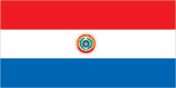
Paraguay
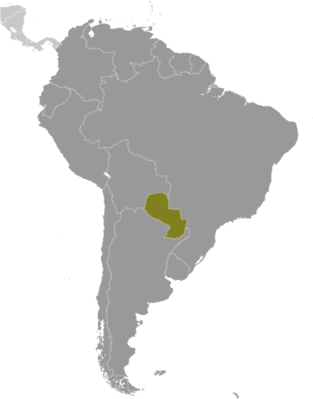
South America · Asunción · presidential republic
What Paraguay means for your money, the prices you pay, the tariffs in motion, and where U.S. policy could change both.
$559M
U.S. imports, 2025
+57.3%
change in one year
$4.4B
U.S. exports, 2025
8M
Population
$44.5B
GDP
In your house
What you buy that Paraguay makes
America bought $559M in goods from Paraguay in 2025, up 57.3% in a single year. Of every $100 of it, here's where the money went.
Meat products
meat at the counter
Food oils, oilseeds
Tobacco, waxes, etc.
Nonmonetary gold
Feedstuff and foodgrains
Coal and related fuels
Cane and beet sugar
cane and beet sugar
Plywood and veneers
Other parts and accessories of vehicles
car parts and accessories
Apparel, household goods - cotton
cotton clothing and linens
2026 so far (through July): $391M in imports. Source: U.S. Census Bureau, International Trade in Goods (customs basis).
The other direction
What America sells to Paraguay
$4.4B in 2025, a trade rupture cuts both ways, for American producers as well as American prices.
Cell phones and other household goods, n.e.c.
$2.0Bcell phones and home electronics
Telecommunications equipment
$558Mphones, routers, networking gear
Computers
$321Mlaptops, desktops, monitors
Fuel oil
$313MBusiness machines and equipment
$167MSemiconductors
$111Msemiconductors and chips
Petroleum products, other
$89MComputer accessories
$80Mkeyboards, drives, computer parts
Toiletries and cosmetics
$77Mtoiletries and cosmetics
Where you stand
U.S. tariff posture toward Paraguay
No U.S. tariff action singles this country out. Its goods face the universal 10% temporary import surcharge under Section 122 of the Trade Act (which replaced the IEEPA reciprocal baseline in February 2026) plus the sectoral Section 232 duties — steel and aluminum at 50% — that apply to all countries. The Section 122 surcharge is statutorily temporary — scheduled to lapse on or about July 23, 2026 (a 150-day cap) unless extended or replaced.
Reciprocal tariff (universal baseline)
10%
The universal 10% floor, a Section 122 import surcharge since February 2026, previously the EO 14257 reciprocal baseline, applies to nearly all U.S. imports. This country has no higher assigned rate of its own.
Policy in motion
Tariff status: a moving target
No U.S. tariff action names Paraguay. These are the universal measures, applied to every country without a country-specific arrangement, that set its treatment.
2026-04-06
Section 232 metals coverage expanded
In effectThe April 2026 proclamation strengthening Section 232 actions on aluminum, steel, and copper expanded derivative-product coverage for all countries, keeping the general metals rate at 50%.
91 FR 18201 →2026-02-24
IEEPA reciprocal tariffs terminated — replaced by 10% Section 122 surcharge
In effectExecutive Order 14389 (Ending Certain Tariff Actions) terminated the IEEPA tariff duties — including the EO 14257 reciprocal baseline — effective February 24, 2026. A flat 10% Section 122 temporary import surcharge (Proclamation 11012 of February 20, 2026) replaced them, leaving the universal rate unchanged at 10% on a different statutory basis. Section 122 caps such surcharges at 150 days, so this 10% surcharge is scheduled to lapse on or about July 23, 2026 absent further action (the administration has signaled it could raise the rate toward the 15% statutory maximum).
91 FR 9437 →2025-11-13
Agricultural products exempted from reciprocal tariffs
In effectExecutive Order 14360 of November 14, 2025 removed reciprocal duties from certain agricultural products listed in its annexes (coffee, cocoa, bananas, and other goods the U.S. does not produce in sufficient quantity), retroactive to November 13, 2025 — for all countries subject to the reciprocal tariff.
90 FR 54091 →2025-06-04
Section 232 steel and aluminum duties doubled to 50%
In effectThe June 3, 2025 proclamation raised Section 232 duties on steel and aluminum articles and derivatives from 25% to 50% for all countries, effective June 4, 2025.
90 FR 24199 →2025-04-05
Universal 10% reciprocal baseline takes effect
In effectExecutive Order 14257 (signed April 2, 2025) imposed a 10% ad valorem reciprocal duty on imports from all trading partners, effective April 5, 2025. Countries without a higher Annex I rate remain at this baseline.
Federal Register · 2025-06063 →2025-03-12
Section 232 steel and aluminum duties set at 25% for all countries
In effectProclamations of February 10, 2025 terminated all country exemptions and quota arrangements and applied 25% Section 232 duties to steel and aluminum imports from every country, effective March 12, 2025.
90 FR 9817 →
Made for America
What Paraguay makes for America
Paraguay is a direct U.S. source of 6 essential goods Americans rely on, the items themselves, shipped finished off the line.
Go deeper
The supply chain view
Paraguay sits upstream of 4 essential American goods through 4 tracked inputs.
manufactured
20%Bone char and granular activated carbon (GAC)
manufactured
17%Cooking Charcoal / Briquettes
agricultural
3%Soybeans
agricultural
2%Refined Sugar
Reference
The country itself
South America · Geography, people, economy, and government, public-domain data from the CIA World Factbook.
Several Indigenous groups, principally belonging to the Guarani language family, inhabited the area of modern Paraguay before the arrival of the Spanish in the early 16th century, when the territory was incorporated into the Viceroyalty of Peru. Paraguay achieved its independence from Spain in 1811 with the help of neighboring states. In the aftermath of independence, a series of military dictators ruled the country until 1870. During the disastrous War of the Triple Alliance (1864-70) -- fought against Argentina, Brazil, and Uruguay -- Paraguay lost two thirds of its adult males and much of its territory. The country stagnated economically for the next half-century and experienced a tumultuous series of political regimes. Following the Chaco War of 1932-35 with Bolivia, Paraguay gained a large part of the Chaco lowland region. The 35-year military dictatorship of Alfredo STROESSNER ended in 1989, and Paraguay has held relatively free and regular presidential elections since the country's return to democracy.
Geography
- Location
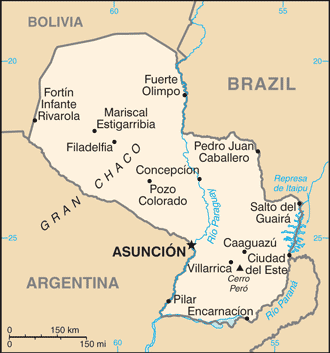
- Central South America, northeast of Argentina, southwest of Brazil
- Area
- 406,752 sq km
- Climate
- subtropical to temperate; substantial rainfall in the eastern portions, becoming semiarid in the far west
- Terrain
- grassy plains and wooded hills east of Rio Paraguay; Gran Chaco region west of Rio Paraguay mostly low, marshy plain near the river, and dry forest and thorny scrub elsewhere
- Natural resources
- hydropower, timber, iron ore, manganese, limestone
- Coastline
- 0 km (landlocked)
- Natural hazards
- local flooding in southeast (early September to June); poorly drained plains may become boggy (early October to June)
People & society
- Population
- 7,604,044 (2025 est.)
- Nationality
- Paraguayan(s)
- Ethnic groups
- Mestizo (mixed Spanish and Indigenous ancestry) 95%, other 5%
- Languages
- Spanish (official) and Guarani (official) 46.3%, only Guarani 34%, only Spanish 15.2%, other (includes Portuguese, German, other Indigenous languages) 4.1%, no response 0.4% (2012 est.)
- Religions
- Roman Catholic 80.4%, Protestant 7% (Evangelical (non-specific) 6.7%, Evangelical Pentecostal <0.1%, Adventist <0.1%, Protestant (non-specific) <0.1%), Believer (not belonging to the church) 5.7%, other 0.6%, agnostic <0.1%, none 0.2%, unspecified 6.2% (2023 est.)
- Median age
- 32.3 years (2025 est.)
- Life expectancy at birth
- 78.8 years (2024 est.)
- Literacy
- 94.9% (2024 est.)
Economy
- Economic overview
- upper middle-income South American economy; COVID-19 hit while still recovering from 2019 Argentina-driven recession; global hydroelectricity leader; major corruption and money-laundering locale; highly agrarian economy; significant income inequality
- Industries
- sugar processing, cement, textiles, beverages, wood products, steel, base metals, electric power
- Agricultural products
- soybeans, sugarcane, maize, cassava, wheat, rice, milk, beef, oranges, bananas (2023)
- Exports - partners
- Argentina 33%, Brazil 25%, Chile 10%, USA 2%, Uruguay 2% (2023)
- Imports - partners
- China 33%, Brazil 24%, USA 8%, Argentina 7%, Germany 2% (2023)
Government
- Government type
- presidential republic
- Capital
- Asunción
- Independence
- 14-15 May 1811 (from Spain)
- Constitution
- several previous; latest approved and promulgated 20 June 1992
- Executive branch
- President Santiago PEñA Palacios (since 15 August 2023)
- Legislative branch
- Congress (Congreso)
Full reference data
Every field, by section, CIA World Factbook. Open a topic to expand it.
Introduction
Travel Facts
Please visit the following links to find further information about your desired destination.
CDC - To learn what vaccines and health precautions to take while visiting your destination.
US State Dept Travel Information - Overall information about foreign travel for US citizens.
To obtain an international driving permit (IDP). Only two organizations in the US issue IDPs: American Automobile Association (AAA) and American Automobile Touring Alliance (AATA)
How to get help in an emergency? Contact the nearest US embassy or consulate, or call one of these numbers: from the US or Canada - 1-888-407-4747 or from Overseas - +1 202-501-4444
Page last updated: Tuesday, June 18, 2024