
Country exposure · UZ
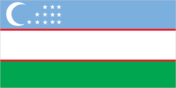
Uzbekistan
Central Asia · Tashkent (Toshkent) · presidential republic; highly authoritarian
What Uzbekistan means for your money, the prices you pay, the tariffs in motion, and where U.S. policy could change both.
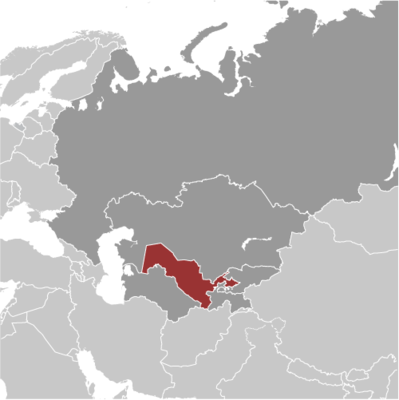
$575M
U.S. imports, 2025
+1254.6%
change in one year
$474M
U.S. exports, 2025
37M
Population
$115.0B
GDP
In your house
What you buy that Uzbekistan makes
America bought $575M in goods from Uzbekistan in 2025, up 1254.6% in a single year. Of every $100 of it, here's where the money went.
Finished metal shapes
Other precious metals
U.s. goods returned, and reimports
Bauxite and aluminum
aluminum for cans and autos
Nonferrous metals, other
Vegetables
vegetables
Nuclear fuel materials
Fruits, frozen juices
fruit and frozen juices
Tea, spices, etc.
tea and spices
Petroleum products, other
gasoline and petroleum products
2026 so far (through July): $49M in imports. Source: U.S. Census Bureau, International Trade in Goods (customs basis).
The other direction
What America sells to Uzbekistan
$474M in 2025, a trade rupture cuts both ways, for American producers as well as American prices.
Civilian aircraft, engines, equipment, and parts
$174MPassenger cars, new and used
$44Mnew and used cars
Electric apparatus
$39MPharmaceutical preparations
$32Mmedicines and pharmacy items
Industrial engines
$25MMeasuring, testing, control instruments
$11MOther parts and accessories of vehicles
$11Mcar parts and accessories
Industrial machines, other
$10MLaboratory testing instruments
$10MWhere you stand
U.S. tariff posture toward Uzbekistan
No U.S. tariff action singles this country out. Its goods face the universal 10% temporary import surcharge under Section 122 of the Trade Act (which replaced the IEEPA reciprocal baseline in February 2026) plus the sectoral Section 232 duties — steel and aluminum at 50% — that apply to all countries. The Section 122 surcharge is statutorily temporary — scheduled to lapse on or about July 23, 2026 (a 150-day cap) unless extended or replaced.
Reciprocal tariff (universal baseline)
10%
The universal 10% floor, a Section 122 import surcharge since February 2026, previously the EO 14257 reciprocal baseline, applies to nearly all U.S. imports. This country has no higher assigned rate of its own.
Policy in motion
Tariff status: a moving target
No U.S. tariff action names Uzbekistan. These are the universal measures, applied to every country without a country-specific arrangement, that set its treatment.
2026-04-06
Section 232 metals coverage expanded
In effectThe April 2026 proclamation strengthening Section 232 actions on aluminum, steel, and copper expanded derivative-product coverage for all countries, keeping the general metals rate at 50%.
91 FR 18201 →2026-02-24
IEEPA reciprocal tariffs terminated — replaced by 10% Section 122 surcharge
In effectExecutive Order 14389 (Ending Certain Tariff Actions) terminated the IEEPA tariff duties — including the EO 14257 reciprocal baseline — effective February 24, 2026. A flat 10% Section 122 temporary import surcharge (Proclamation 11012 of February 20, 2026) replaced them, leaving the universal rate unchanged at 10% on a different statutory basis. Section 122 caps such surcharges at 150 days, so this 10% surcharge is scheduled to lapse on or about July 23, 2026 absent further action (the administration has signaled it could raise the rate toward the 15% statutory maximum).
91 FR 9437 →2025-11-13
Agricultural products exempted from reciprocal tariffs
In effectExecutive Order 14360 of November 14, 2025 removed reciprocal duties from certain agricultural products listed in its annexes (coffee, cocoa, bananas, and other goods the U.S. does not produce in sufficient quantity), retroactive to November 13, 2025 — for all countries subject to the reciprocal tariff.
90 FR 54091 →2025-06-04
Section 232 steel and aluminum duties doubled to 50%
In effectThe June 3, 2025 proclamation raised Section 232 duties on steel and aluminum articles and derivatives from 25% to 50% for all countries, effective June 4, 2025.
90 FR 24199 →2025-04-05
Universal 10% reciprocal baseline takes effect
In effectExecutive Order 14257 (signed April 2, 2025) imposed a 10% ad valorem reciprocal duty on imports from all trading partners, effective April 5, 2025. Countries without a higher Annex I rate remain at this baseline.
Federal Register · 2025-06063 →2025-03-12
Section 232 steel and aluminum duties set at 25% for all countries
In effectProclamations of February 10, 2025 terminated all country exemptions and quota arrangements and applied 25% Section 232 duties to steel and aluminum imports from every country, effective March 12, 2025.
90 FR 9817 →
Made for America
What Uzbekistan makes for America
Uzbekistan is a direct U.S. source of 1 essential good Americans rely on, the items themselves, shipped finished off the line.
Go deeper
The supply chain view
Uzbekistan sits upstream of 4 essential American goods through 2 tracked inputs.
Full supply-map profile →Reference
The country itself
Central Asia · Geography, people, economy, and government, public-domain data from the CIA World Factbook.
Uzbekistan is the geographic and population center of Central Asia, with a diverse economy and a relatively young population. Russia conquered and united the disparate territories of present-day Uzbekistan in the late 19th century. Stiff resistance to the Red Army after the Bolshevik Revolution was eventually suppressed and a socialist republic established in 1924. During the Soviet era, intensive production of "white gold" (cotton) and grain led to the overuse of agrochemicals and the depletion of water supplies, leaving the land degraded and the Aral Sea and certain rivers half-dry. Independent since the Union of Soviet Socialist Republics (USSR) dissolved in 1991, the country has diversified agricultural production while developing its mineral and petroleum export capacity and increasing its manufacturing base, although cotton remains a major part of its economy. Uzbekistan’s first president, Islom KARIMOV, led Uzbekistan for 25 years until his death in 2016. His successor, former Prime Minister Shavkat MIRZIYOYEV, has improved relations with Uzbekistan’s neighbors and introduced wide-ranging economic, judicial, and social reforms. MIRZIYOYEV was reelected in 2021 with 80% of the vote and again following a 2023 constitutional referendum with 87% of the vote.
Geography
- Location
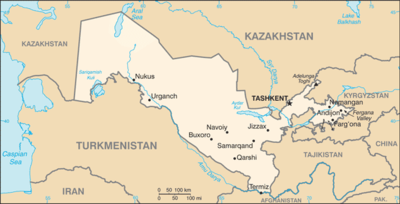
- Central Asia, north of Turkmenistan, south of Kazakhstan
- Area
- 447,400 sq km
- Climate
- mostly mid-latitude desert, long, hot summers, mild winters; semiarid grassland in east
- Terrain
- mostly flat-to-rolling sandy desert with dunes; broad, flat intensely irrigated river valleys along course of Amu Darya, Syr Darya (Sirdaryo), and Zaravshan; Fergana Valley in east surrounded by mountainous Tajikistan and Kyrgyzstan; shrinking Aral Sea in west
- Natural resources
- natural gas, petroleum, coal, gold, uranium, silver, copper, lead and zinc, tungsten, molybdenum
- Coastline
- 0 km (doubly landlocked)
- Natural hazards
- earthquakes; floods; landslides or mudslides; avalanches; droughts
People & society
- Population
- 37,015,151 (2025 est.)
- Nationality
- Uzbekistani
- Ethnic groups
- Uzbek 83.8%, Tajik 4.8%, Kazakh 2.5%, Russian 2.3%, Karakalpak 2.2%, Tatar 1.5%, other 2.9% (2017 est.)
- Languages
- Uzbek (official) 74.3%, Russian 14.2%, Tajik 4.4%, other 7.1%
- Religions
- Muslim 88% (mostly Sunni), Eastern Orthodox 9%, other 3%
- Median age
- 29.2 years (2025 est.)
- Life expectancy at birth
- 76.2 years (2024 est.)
- Literacy
- 100% (2022 est.)
Economy
- Economic overview
- lower-middle income Central Asian economy; key exporter of natural gas, cotton, and gold; ongoing reform efforts to reduce state-owned sector dominance, attract foreign investment, and improve sustainability of cotton production
- Industries
- textiles, food processing, machine building, metallurgy, mining, hydrocarbon extraction, chemicals
- Agricultural products
- milk, wheat, cotton, potatoes, carrots/turnips, tomatoes, grapes, watermelons, vegetables, apples (2023)
- Exports - partners
- Switzerland 34%, Russia 12%, UK 11%, China 7%, Turkey 6% (2023)
- Imports - partners
- China 32%, Russia 17%, Kazakhstan 8%, S. Korea 6%, Turkey 5% (2023)
Government
- Government type
- presidential republic; highly authoritarian
- Capital
- Tashkent (Toshkent)
- Independence
- 1 September 1991 (from the Soviet Union)
- Constitution
- several previous; latest adopted 8 December 1992
- Executive branch
- President Shavkat MIRZIYOYEV (since 14 December 2016)
- Legislative branch
- Supreme Assembly (Oliy Majlis)
Full reference data
Every field, by section, CIA World Factbook. Open a topic to expand it.
Introduction
Travel Facts
Please visit the following links to find further information about your desired destination.
World Health Organization (WHO) - To learn what vaccines and health precautions to take while visiting your destination.
US State Dept Travel Information - Overall information about foreign travel for US citizens.
To obtain an international driving permit (IDP). Only two organizations in the US issue IDPs: American Automobile Association (AAA) and American Automobile Touring Alliance (AATA)
How to get help in an emergency? Contact the nearest US embassy or consulate, or call one of these numbers: from the US or Canada - 1-888-407-4747 or from Overseas - +1 202-501-4444
Page last updated: Wednesday, May 03, 2023