Country exposure · LI

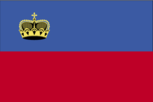
Flag of Liechtenstein

Liechtenstein

Europe · Vaduz · constitutional monarchy

What Liechtenstein means for your money — the prices you pay, the tariffs in motion, and where U.S. policy could change both.
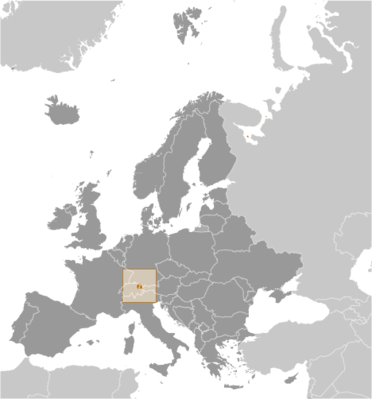
Map showing the location of Liechtenstein

$233M

U.S. imports, 2025

-4.3%

change in one year

$56M

U.S. exports, 2025

41K

Population

$8.4B

GDP

In your house

What you buy that Liechtenstein makes

America bought $233M in goods from Liechtenstein in 2025. Of every $100 of it, here's where the money went.

Iron and steel, advanced

$58M24.9%

Chemicals-other, n.e.c.

$42M17.9%

Pharmaceutical preparations

medicines and pharmacy items

$35M14.9%

Measuring, testing, control instruments

$23M10%

Industrial machines, other

$18M7.7%

Other parts and accessories of vehicles

car parts and accessories

$10M4.2%

Electric apparatus

$8M3.5%

Medicinal equipment

medical devices and equipment

$5M2.3%

Minimum value shipments

$5M2.1%

Chemicals-inorganic

$4M1.7%

2026 so far (through April): $81M in imports. Source: U.S. Census Bureau, International Trade in Goods (customs basis).

The other direction

What America sells to Liechtenstein

$56M in 2025 — a trade rupture cuts both ways, for American producers as well as American prices.

Mineral supplies-manufactured

$17M

Industrial machines, other

$8M

Laboratory testing instruments

$8M

Chemicals-other

$4M

Measuring, testing, control instruments

$3M

Minimum value shipments

$2M

Photo, service industry machinery

$2M

Civilian aircraft, engines, equipment, and parts

$2M

Other industrial supplies

$1M

Where you stand

U.S. tariff posture toward Liechtenstein

Liechtenstein was assigned 37% in April 2025 but — unlike Switzerland, with which it shares a customs union and which faced 39% — was set at 15% in the August reshuffle. The November 14, 2025 framework among the U.S., Switzerland, and Liechtenstein confirmed the higher of the MFN rate or a 15% all-in rate, with exemptions for certain goods. Executive Order 14389 (Ending Certain Tariff Actions, Feb 20, 2026) terminated the IEEPA reciprocal duties, and Proclamation 11012 replaced it with a 10% Section 122 temporary import surcharge effective February 24, 2026. Liechtenstein has no Section 232 steel/aluminum exposure.

Reciprocal tariff (assigned — terminated)

37%

The rate this country was assigned under the EO 14257 reciprocal Annex — no longer in force. The Supreme Court struck down the IEEPA tariffs and they were terminated February 24, 2026 (EO 14389), replaced by a universal ~10% Section 122 surcharge. See the timeline below for the current effective rate.

Policy in motion

Tariff status: a moving target

U.S. tariff policy toward Liechtenstein has changed 5 times since 2025. This page tracks it.

  1. 2026-02-24

    IEEPA reciprocal tariffs terminated — replaced by 10% Section 122

    In effect

    Executive Order 14389 (Ending Certain Tariff Actions) terminated the IEEPA tariff duties effective February 24, 2026, replacing Liechtenstein's 15% reciprocal rate with a 10% Section 122 temporary import surcharge under Proclamation 11012 (capped at 150 days).

    91 FR 9437
  2. 2025-11-14

    U.S.-Switzerland-Liechtenstein framework confirms 15%

    Agreement

    A framework among the U.S., Switzerland, and Liechtenstein set the reciprocal rate at the higher of MFN or a 15% all-in rate, with exemptions for certain agricultural goods, non-patented pharmaceuticals, civil aircraft, and unavailable natural resources, subject to a full agreement targeted for Q1 2026.

    Source
  3. 2025-08-07

    Rate set at 15% — below Switzerland's 39%

    In effect

    Executive Order 14326 set the post-pause Annex I reciprocal rates; Liechtenstein was assigned 15% effective August 7, 2025 — notably lower than the 39% imposed on Switzerland despite their shared customs union.

    90 FR 37963
  4. 2025-04-10

    Elevated reciprocal rates paused to 10% for 90 days

    In effect

    Executive Order 14266 suspended the higher country-specific reciprocal rates — including Liechtenstein's 37% — back to the 10% baseline for 90 days.

    90 FR 15625
  5. 2025-04-05

    Reciprocal tariff regime begins — Liechtenstein assigned 37%

    In effect

    Executive Order 14257 imposed a 10% universal reciprocal duty effective April 5 and a 37% country-specific rate for Liechtenstein scheduled to take effect April 9 under Annex I.

    90 FR 15041

Made for America

What Liechtenstein makes for America

Liechtenstein is a direct U.S. source of 3 essential goods Americans rely on — the items themselves, shipped finished off the line.

Reference

The country itself

Europe · Geography, people, economy, and government — public-domain data from the CIA World Factbook.

The Principality of Liechtenstein was established within the Holy Roman Empire in 1719. Occupied by both French and Russian troops during the Napoleonic Wars, it became a sovereign state in 1806 and joined the German Confederation in 1815. Liechtenstein became fully independent in 1866 when the Confederation dissolved. Until the end of World War I, it was closely tied to Austria, but the economic devastation caused by that conflict forced Liechtenstein to enter into a customs and monetary union with Switzerland. Since World War II (in which Liechtenstein remained neutral), the country's low taxes have spurred outstanding economic growth. In 2000, shortcomings in banking regulatory oversight resulted in concerns about the use of financial institutions for money laundering. However, Liechtenstein implemented anti-money laundering legislation and a Mutual Legal Assistance Treaty with the US that went into effect in 2003.
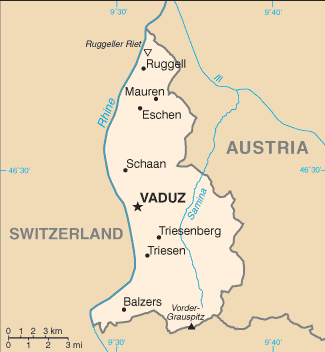
Regional map of Liechtenstein

Geography

Location
Central Europe, between Austria and Switzerland
Area
160 sq km
Climate
continental; cold, cloudy winters with frequent snow or rain; cool to moderately warm, cloudy, humid summers
Terrain
mostly mountainous (Alps) with Rhine Valley in western third
Natural resources
hydroelectric potential, arable land
Coastline
0 km (doubly landlocked)
Natural hazards
avalanches, landslides

People & society

Population
40,547 (2025 est.)
Nationality
Liechtensteiner(s)
Ethnic groups
Liechtensteiner 65.6%, Swiss 9.6%, Austrian 5.8%, German 4.5%, Italian 3.1%, other 11.4% (2021 est.)
Languages
German 91.5% (official, Alemannic is the main dialect), Italian 1.5%, Turkish 1.3%, Portuguese 1.1%, other 4.6% (2015 est.)
Religions
Roman Catholic (official) 73.4%, Protestant Reformed 6.3%, Muslim 5.9%, Christian Orthodox 1.3%, Lutheran 1.2%, other Protestant 0.7%, other Christian 0.3%, other 0.8%, none 7%, unspecified 3.3% (2015 est.)
Median age
44.4 years (2025 est.)
Life expectancy at birth
83 years (2024 est.)

Economy

Economic overview
high-income European economy; Schengen Area participant; key European financial leader; integrated with Swiss economy and franc currency user; one of the highest GDP per capita countries; relies on US and Eurozone markets for exports
Industries
electronics, metal manufacturing, dental products, ceramics, pharmaceuticals, food products, precision instruments, tourism, optical instruments
Agricultural products
wheat, barley, corn, potatoes; livestock, dairy products

Government

Government type
constitutional monarchy
Capital
Vaduz
Independence
23 January 1719 (Principality of Liechtenstein established); 12 July 1806 (independence from the Holy Roman Empire); 24 August 1866 (independence from the German Confederation)
Constitution
previous 1862; latest adopted 5 October 1921
Executive branch
Prince HANS-ADAM II (since 13 November 1989, assumed executive powers on 26 August 1984)
Legislative branch
Diet (Landtag)

Full reference data

Every field, by section — CIA World Factbook. Open a topic to expand it.

Introduction
Background
The Principality of Liechtenstein was established within the Holy Roman Empire in 1719. Occupied by both French and Russian troops during the Napoleonic Wars, it became a sovereign state in 1806 and joined the German Confederation in 1815. Liechtenstein became fully independent in 1866 when the Confederation dissolved. Until the end of World War I, it was closely tied to Austria, but the economic devastation caused by that conflict forced Liechtenstein to enter into a customs and monetary union with Switzerland. Since World War II (in which Liechtenstein remained neutral), the country's low taxes have spurred outstanding economic growth. In 2000, shortcomings in banking regulatory oversight resulted in concerns about the use of financial institutions for money laundering. However, Liechtenstein implemented anti-money laundering legislation and a Mutual Legal Assistance Treaty with the US that went into effect in 2003.
Travel Facts
US State Dept Travel Advisory
The US Department of State currently recommends US citizens exercise normal precautions in Liechtenstein. Consult its website via the link below for updates to travel advisories and statements on safety, security, local laws, and special circumstances in this country. https://travel.state.gov/content/travel/en/traveladvisories/traveladvisories.html
Passport/Visa Requirements
US citizens should make sure their passport will not expire for at least 6 months after they enter the country even if they do not intend to stay that long. They should also make sure they have at least 1 blank page in their passport for any entry stamp that will be required. A visa is not required as long as the stay is less than 90 days.
US Embassy/Consulate
US does not have an embassy in Liechtenstein; the US Ambassador to Switzerland is accredited to Liechtenstein EMER: +(41) (031) 357-7011; US Embassy Bern, Sulgeneckstrasse 19, CH-3007 Bern, Switzerland
Telephone Code
423
Local Emergency Phone
112
Vaccinations
See WHO recommendations http://www.who.int/
Climate
Continental; cold, cloudy winters with frequent snow or rain; cool to moderately warm, cloudy, humid summers
Currency (Code)
Swiss francs (CHF)
Electricity/Voltage/Plug Type(s)
230 V / 50 Hz / plug types(s): C, J
Major Languages
German, Italian, Turkish, Portuguese
Major Religions
Roman Catholic 73.4%, Protestant Reformed 6.3%, Muslim 5.9%, Christian Orthodox 1.3%, Lutheran 1.2%, other Protestant .7%
Time Difference
UTC+1 (6 hours ahead of Washington, DC, during Standard Time); daylight saving time: +1hr, begins last Sunday in March; ends last Sunday in October
Potable Water
Yes
International Driving Permit
Suggested
Road Driving Side
Right
Tourist Destinations
Treasure Chamber; Kunstmuseum Liechtenstein; Gutenberg Castle; Liechtenstein National Museum; Towns of Nendeln & Eschen
Major Sports
Soccer, downhill skiing, tennis, swimming, mountain biking
Cultural Practices
Liechtenstein's workday is longer than many other countries, 8 a.m. to 6:30 p.m., albeit with a very long lunch break (officially from noon to 1:30 p.m.). So, do not be surprised if people are busy until later than might otherwise be expected. Additionally, on the country's National Day, 15 August, all residents of the principality are invited to Vaduz Castle, the prince's residence, for a reception that includes speeches and free aperitifs.
Tipping Guidelines
Service charges are included in most bills and further tipping is not required. Taxi fares include a service charge so no tipping is necessary.
Souvenirs
Embroidered household linens, knitted woolen and felt items; wooden toys, cuckoo clocks, and jewelry boxes; ceramic, pottery, and marble items; wine, collectible postage stamps
Traditional Cuisine
Käsknöpfle — pasta and sweet onions in cheese sauce
CIA source last updated
Wednesday, November 09, 2022
Travel resources

Please visit the following links to find further information about your desired destination.

World Health Organization (WHO) - To learn what vaccines and health precautions to take while visiting your destination.

US State Dept Travel Information - Overall information about foreign travel for US citizens.

To obtain an international driving permit (IDP). Only two organizations in the US issue IDPs: American Automobile Association (AAA) and American Automobile Touring Alliance (AATA)

How to get help in an emergency? Contact the nearest US embassy or consulate, or call one of these numbers: from the US or Canada - 1-888-407-4747 or from Overseas - +1 202-501-4444

Page last updated: Wednesday, November 09, 2022

Geography
Location
Central Europe, between Austria and Switzerland
Geographic coordinates
47 16 N, 9 32 E
Map references
Europe
Area - total
160 sq km
Area - land
160 sq km
Area - water
0 sq km
Area - comparative
about 0.9 times the size of Washington, D.C.
Land boundaries - total
75 km
Land boundaries - border countries
Austria 34 km; Switzerland 41 km
Coastline
0 km (doubly landlocked)
Maritime claims
none (landlocked)
Climate
continental; cold, cloudy winters with frequent snow or rain; cool to moderately warm, cloudy, humid summers
Terrain
mostly mountainous (Alps) with Rhine Valley in western third
Elevation - highest point
Vorder-Grauspitz 2,599 m
Elevation - lowest point
Ruggeller Riet 430 m
Natural resources
hydroelectric potential, arable land
Land use - agricultural land
32.3% (2023 est.)
Land use - agricultural land: arable land
arable land: 10.8% (2023 est.)
Land use - agricultural land: permanent crops
permanent crops: 0% (2022 est.)
Land use - agricultural land: permanent pasture
permanent pasture: 21.5% (2023 est.)
Land use - forest
36.3% (2023 est.)
Land use - other
31.4% (2023 est.)
Irrigated land
0 sq km (2012)
Major watersheds (area sq km) - Atlantic Ocean drainage
Rhine-Maas (198,735 sq km)
Population distribution
most of the population is found in the western half of the country along the Rhine River
Natural hazards
avalanches, landslides
Geography - note
along with Uzbekistan, one of only two doubly landlocked countries in the world; variety of microclimatic variations based on elevation
People and Society
Population - total
40,547 (2025 est.)
Population - male
20,215
Population - female
20,332
Nationality - noun
Liechtensteiner(s)
Nationality - adjective
Liechtenstein
Ethnic groups
Liechtensteiner 65.6%, Swiss 9.6%, Austrian 5.8%, German 4.5%, Italian 3.1%, other 11.4% (2021 est.)
Ethnic groups - note
note: data represent population by nationality
Languages - Languages
German 91.5% (official, Alemannic is the main dialect), Italian 1.5%, Turkish 1.3%, Portuguese 1.1%, other 4.6% (2015 est.)
Languages - major-language sample(s)
Das World Factbook, die unverzichtbare Quelle für grundlegende Informationen. (German) The World Factbook, the indispensable source for basic information.
Religions
Roman Catholic (official) 73.4%, Protestant Reformed 6.3%, Muslim 5.9%, Christian Orthodox 1.3%, Lutheran 1.2%, other Protestant 0.7%, other Christian 0.3%, other 0.8%, none 7%, unspecified 3.3% (2015 est.)
Age structure - 0-14 years
15.3% (male 3,412/female 2,732)
Age structure - 15-64 years
63.9% (male 12,814/female 12,921)
Age structure - 65 years and over
20.8% (2024 est.) (male 3,846/female 4,547)
Dependency ratios - total dependency ratio
57.6 (2025 est.)
Dependency ratios - youth dependency ratio
23.9 (2025 est.)
Dependency ratios - elderly dependency ratio
33.6 (2025 est.)
Dependency ratios - potential support ratio
3 (2025 est.)
Median age - total
44.4 years (2025 est.)
Median age - male
42.4 years
Median age - female
46.1 years
Population growth rate
0.68% (2025 est.)
Birth rate
10.31 births/1,000 population (2025 est.)
Death rate
8.24 deaths/1,000 population (2025 est.)
Net migration rate
4.71 migrant(s)/1,000 population (2025 est.)
Population distribution
most of the population is found in the western half of the country along the Rhine River
Urbanization - urban population
14.6% of total population (2023)
Urbanization - rate of urbanization
1.15% annual rate of change (2020-25 est.)
Major urban areas - population
5,000 VADUZ (capital) (2018)
Sex ratio - at birth
1.26 male(s)/female
Sex ratio - 0-14 years
1.25 male(s)/female
Sex ratio - 15-64 years
0.99 male(s)/female
Sex ratio - 65 years and over
0.85 male(s)/female
Sex ratio - total population
0.99 male(s)/female (2024 est.)
Mother's mean age at first birth
31.3 years (2017)
Infant mortality rate - total
3.8 deaths/1,000 live births (2025 est.)
Infant mortality rate - male
4.3 deaths/1,000 live births
Infant mortality rate - female
3.5 deaths/1,000 live births
Life expectancy at birth - total population
83 years (2024 est.)
Life expectancy at birth - male
80.7 years
Life expectancy at birth - female
85.8 years
Total fertility rate
1.69 children born/woman (2025 est.)
Gross reproduction rate
0.75 (2025 est.)
Drinking water source - improved: total
total: 100% of population (2022 est.)
Drinking water source - unimproved: total
total: 0% of population (2022 est.)
Physician density
1.3 physicians/1,000 population (2022)
Sanitation facility access - improved: total
total: 100% of population (2022 est.)
Sanitation facility access - unimproved: urban
urban: NA
Sanitation facility access - unimproved: total
total: 0% of population (2022 est.)
Currently married women (ages 15-49)
64.7% (2020 est.)
Education expenditure
2.6% of GDP (2011 est.)
School life expectancy (primary to tertiary education) - total
15 years (2021 est.)
School life expectancy (primary to tertiary education) - male
16 years (2021 est.)
School life expectancy (primary to tertiary education) - female
14 years (2021 est.)
Government
Country name - conventional long form
Principality of Liechtenstein
Country name - conventional short form
Liechtenstein
Country name - local long form
Fuerstentum Liechtenstein
Country name - local short form
Liechtenstein
Country name - etymology
named after the Liechtenstein family that purchased and united the counties of Schellenburg and Vaduz in 1719; the family name was taken from its Austrian castle of the same name, which in German means "light stone"
Government type
constitutional monarchy
Capital - name
Vaduz
Capital - geographic coordinates
47 08 N, 9 31 E
Capital - time difference
UTC+1 (6 hours ahead of Washington, DC, during Standard Time)
Capital - daylight saving time
+1hr, begins last Sunday in March; ends last Sunday in October
Capital - etymology
may be a conflation from the Latin vallis (valley) and the Old German dutsch (German) to produce Valdutsch ("German valley"), which was simplified over time to Vaduz
Administrative divisions
11 communes ( Gemeinden , singular - Gemeinde ); Balzers, Eschen, Gamprin, Mauren, Planken, Ruggell, Schaan, Schellenberg, Triesen, Triesenberg, Vaduz
Legal system
civil law system influenced by Swiss, Austrian, and German law
Constitution - history
previous 1862; latest adopted 5 October 1921
Constitution - amendment process
proposed by Parliament, by the reigning prince (in the form of "Government" proposals), by petition of at least 1,500 qualified voters, or by at least four communes; passage requires unanimous approval of Parliament members in one sitting or three-quarters majority vote in two successive sittings; referendum required only if petitioned by at least 1,500 voters or by at least four communes; passage by referendum requires absolute majority of votes cast
International law organization participation
accepts compulsory ICJ jurisdiction with reservations; accepts ICCt jurisdiction
Citizenship - citizenship by birth
no
Citizenship - citizenship by descent only
the father must be a citizen of Liechtenstein; in the case of a child born out of wedlock, the mother must be a citizen
Citizenship - dual citizenship recognized
no
Citizenship - residency requirement for naturalization
5 years
Suffrage
18 years of age; universal
Executive branch - chief of state
Prince HANS-ADAM II (since 13 November 1989, assumed executive powers on 26 August 1984)
Executive branch - head of government
Prime Minister Brigitte HAAS (since 10 April 2025)
Executive branch - cabinet
Cabinet elected by the Parliament, confirmed by the monarch
Executive branch - election/appointment process
the monarchy is hereditary; following legislative elections, the monarch usually appoints the leader of the majority party in Parliament as the head of government, and also appoints the leader of the largest minority party in Parliament as the deputy head of government if there is a coalition government
Executive branch - note
note : the prince's successor is his son, Heir Apparent and Regent of Liechtenstein Prince ALOIS; on 15 August 2004, HANS-ADAM II transferred the official duties of the ruling prince to ALOIS, but Prince HANS-ADAM II retains the status of chief of state
Legislative branch - legislature name
Diet (Landtag)
Legislative branch - legislative structure
unicameral
Legislative branch - number of seats
25 (all directly elected)
Legislative branch - electoral system
proportional representation
Legislative branch - scope of elections
full renewal
Legislative branch - term in office
4 years
Legislative branch - most recent election date
2/9/2025
Legislative branch - parties elected and seats per party
Patriotic Union (VU) (10); Progressive Citizens' Party (FBP) (7); Democrats for Liechtenstein (DpL) (6); Free List (FL) (2)
Legislative branch - percentage of women in chamber
32%
Legislative branch - expected date of next election
February 2029
Judicial branch - highest court(s)
Supreme Court or Supreme Court or Fürstlicher Oberster Gerichtshof (consists of 5 judges and 5 substitutes); Constitutional Court or Staatsgerichtshof (consists of 5 judges, and 5 alternates)
Judicial branch - judge selection and term of office
judges of both courts elected by the Landtag and appointed by the monarch; Supreme Court judges serve 4-year renewable terms; Constitutional Court judges appointed for renewable 5-year terms
Judicial branch - subordinate courts
Court of Appeal (second instance), Regional Court (first instance), Administrative Court, Tribunal Court, district courts
Political parties
Democrats for Liechtenstein (Demokraten pro Liechtenstein) or DpL Fatherland Union (Vaterlaendische Union) or VU Progressive Citizens' Party (Fortschrittliche Buergerpartei) or FBP The Free List (Die Freie Liste) or FL The Independents (Die Unabhaengigen) or DU
Diplomatic representation in the US - chief of mission
Ambassador Georg SPARBER (since 1 December 2021)
Diplomatic representation in the US - chancery
2900 K Street NW, Suite 602B, Washington, DC 20007
Diplomatic representation in the US - telephone
[1] (202) 331-0590
Diplomatic representation in the US - FAX
[1] (202) 331-3221
Diplomatic representation in the US - email address and website
Diplomatic representation from the US - embassy
the US does not have an embassy in Liechtenstein; the US Ambassador to Switzerland is accredited to Liechtenstein
International organization participation
CD, CE, EBRD, EFTA, IAEA, ICCt, ICRM, IFRCS, Interpol, IOC, IPU, ITSO, ITU, ITUC (NGOs), OAS (observer), OPCW, OSCE, PCA, Schengen Convention, UN, UNCTAD, UPU, WIPO, WTO
Independence
23 January 1719 (Principality of Liechtenstein established); 12 July 1806 (independence from the Holy Roman Empire); 24 August 1866 (independence from the German Confederation)
National holiday
National Day, 15 August (1940)
National holiday - note
note: a National Day was originally established in 1940 to combine celebrations for the Feast of the Assumption (15 August) with those honoring the birthday of former Prince FRANZ JOSEF II (1906-1989) on 16 August; after the prince's death, National Day became the official national holiday in 1990
Flag
description: two equal horizontal bands of blue (top) and red, with a gold crown on the left side of the blue band history: the colors may derive from the blue-and-red livery used in the principality's household in the 18th century; the prince's crown was added in 1937 to distinguish it from Haiti's flag
National symbol(s)
princely hat (crown)
National color(s)
blue, red
National coat of arms
the six motifs on the coat of arms provide a history of the royal House of Liechtenstein since 1719, when the country was founded; the small shield at the center is the royal family’s gold-and-red coat of arms, the gold-crowned eagle signifies the Silesia family, the diamond wreath represents the Kuenringer family, the red-and-silver shield is the Duchy of Troppau, the black eagle comes from the coat of arms of a family that married into the royal line, and the golden hunting horn represents the Duchy of Jägerndorf
National anthem(s) - title
"Oben am jungen Rhein" (High Above the Young Rhine)
National anthem(s) - lyrics/music
Jakob Joseph JAUCH/Josef FROMMELT
National anthem(s) - history
adopted 1850, revised 1963; uses the tune of the United Kingdom's anthem, "God Save the King"
Economy
Economic overview
high-income European economy; Schengen Area participant; key European financial leader; integrated with Swiss economy and franc currency user; one of the highest GDP per capita countries; relies on US and Eurozone markets for exports
Real GDP (purchasing power parity) - Real GDP (purchasing power parity) 2024
$7.172 billion (2024 est.)
Real GDP (purchasing power parity) - Real GDP (purchasing power parity) 2023
$7.031 billion (2023 est.)
Real GDP (purchasing power parity) - Real GDP (purchasing power parity) 2022
$6.885 billion (2022 est.)
Real GDP (purchasing power parity) - note
note: data in 2015 dollars
Real GDP per capita - Real GDP per capita 2024
$210,600 (2024 est.)
Real GDP per capita - Real GDP per capita 2023
$201,200 (2023 est.)
Real GDP per capita - Real GDP per capita 2022
$187,700 (2022 est.)
Real GDP per capita - note
note: data in 2015 dollars
GDP (official exchange rate)
$8.395 billion (2024 est.)
GDP (official exchange rate) - note
note: data in current dollars at official exchange rate
Inflation rate (consumer prices) - Inflation rate (consumer prices) 2022
2.8% (2022 est.)
Inflation rate (consumer prices) - Inflation rate (consumer prices) 2021
0.6% (2021 est.)
Inflation rate (consumer prices) - Inflation rate (consumer prices) 2020
-0.7% (2020 est.)
Inflation rate (consumer prices) - note
note: annual % change based on consumer prices
GDP - composition, by sector of origin - agriculture
0.2% (2022 est.)
GDP - composition, by sector of origin - industry
40.6% (2022 est.)
GDP - composition, by sector of origin - services
55.6% (2022 est.)
GDP - composition, by sector of origin - note
note: figures may not total 100% due to non-allocated consumption not captured in sector-reported data
Agricultural products
wheat, barley, corn, potatoes; livestock, dairy products
Industries
electronics, metal manufacturing, dental products, ceramics, pharmaceuticals, food products, precision instruments, tourism, optical instruments
Exports - Exports 2015
$3.217 billion (2015 est.)
Exports - Exports 2014
$3.774 billion (2014 est.)
Exports - note
note: trade data exclude trade with Switzerland
Exports - commodities
small specialty machinery, connectors for audio and video, parts for motor vehicles, dental products, hardware
Exports - commodities - note
top five export commodities based on value in dollars
Imports - commodities
agricultural products, raw materials, energy products, machinery, metal goods, textiles, foodstuffs, motor vehicles
Exchange rates - Currency
Swiss francs (CHF) per US dollar -
Exchange rates - Exchange rates 2024
0.88 (2024 est.)
Exchange rates - Exchange rates 2023
0.898 (2023 est.)
Exchange rates - Exchange rates 2022
0.955 (2022 est.)
Exchange rates - Exchange rates 2021
0.914 (2021 est.)
Exchange rates - Exchange rates 2020
0.939 (2020 est.)
Energy
Electricity access - electrification - total population
100% (2022 est.)
Communications
Telephones - fixed lines - total subscriptions
10,000 (2023 est.)
Telephones - fixed lines - subscriptions per 100 inhabitants
26 (2023 est.)
Telephones - mobile cellular - total subscriptions
51,400 (2024 est.)
Telephones - mobile cellular - subscriptions per 100 inhabitants
129 (2024 est.)
Broadcast media
relies on foreign terrestrial and satellite broadcasters for most broadcast media services; first Liechtenstein-based TV station established in 2008; Radio Liechtenstein operates multiple radio stations; a Swiss-based broadcaster operates one radio station
Internet country code
.li
Internet users - percent of population
97% (2023 est.)
Broadband - fixed subscriptions - total
20,000 (2023 est.)
Broadband - fixed subscriptions - subscriptions per 100 inhabitants
50 (2023 est.)
Transportation
Civil aircraft registration country code prefix
HB
Heliports
2 (2025)
Railways - total
9 km (2018)
Railways - standard gauge
9 km (2018) 1.435-m gauge (electrified)
Railways - note
note: belongs to the Austrian Railway System connecting Austria and Switzerland
Merchant marine - total
17 (2023)
Merchant marine - by type
bulk carrier 14, general cargo 1, other 2 (includes Switzerland)
Military and Security
Military and security forces
no regular military forces; National Police of the Principality of Liechtenstein (Landespolizei des Fürstentums Liechtenstein)
Transnational Issues
Refugees and internally displaced persons - refugees
875 (2024 est.)
Environment
Environmental issues
some air pollution generated locally, some carried over from surrounding countries
International environmental agreements - party to
Air Pollution, Air Pollution-Heavy Metals, Air Pollution-Nitrogen Oxides, Air Pollution-Persistent Organic Pollutants, Air Pollution-Sulphur 85, Air Pollution-Sulphur 94, Air Pollution-Volatile Organic Compounds, Biodiversity, Climate Change, Climate Change-Kyoto Protocol, Climate Change-Paris Agreement, Comprehensive Nuclear Test Ban, Desertification, Endangered Species, Hazardous Wastes, Ozone Layer Protection, Wetlands
International environmental agreements - signed, but not ratified
Air Pollution-Multi-effect Protocol, Law of the Sea
Climate
continental; cold, cloudy winters with frequent snow or rain; cool to moderately warm, cloudy, humid summers
Land use - agricultural land
32.3% (2023 est.)
Land use - agricultural land: arable land
arable land: 10.8% (2023 est.)
Land use - agricultural land: permanent crops
permanent crops: 0% (2022 est.)
Land use - agricultural land: permanent pasture
permanent pasture: 21.5% (2023 est.)
Land use - forest
36.3% (2023 est.)
Land use - other
31.4% (2023 est.)
Urbanization - urban population
14.6% of total population (2023)
Urbanization - rate of urbanization
1.15% annual rate of change (2020-25 est.)
Waste and recycling - municipal solid waste generated annually
32,400 tons (2024 est.)
Waste and recycling - percent of municipal solid waste recycled
64.6% (2015 est.)
Total water withdrawal - municipal
10 million cubic meters (2020 est.)