
Country exposure · LB
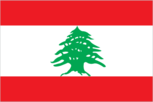
Lebanon
Middle East · Beirut · parliamentary democratic republic
What Lebanon means for your money, the prices you pay, the tariffs in motion, and where U.S. policy could change both.
$217M
U.S. imports, 2025
-15.3%
change in one year
$815M
U.S. exports, 2025
5M
Population
$20.1B
GDP
In your house
What you buy that Lebanon makes
America bought $217M in goods from Lebanon in 2025, down 15.3% in a single year. Of every $100 of it, here's where the money went.
Chemicals-fertilizers
Jewelry
jewelry
Food oils, oilseeds
Other foods
Apparel, textiles, nonwool or cotton
synthetic and performance apparel
Nuts
nuts
Bakery products
Telecommunications equipment
phones, routers, networking gear
Artwork, antiques, stamps, etc.
Vegetables
vegetables
2026 so far (through July): $102M in imports. Source: U.S. Census Bureau, International Trade in Goods (customs basis).
The other direction
What America sells to Lebanon
$815M in 2025, a trade rupture cuts both ways, for American producers as well as American prices.
Passenger cars, new and used
$229Mnew and used cars
Civilian aircraft, engines, equipment, and parts
$74MPharmaceutical preparations
$64Mmedicines and pharmacy items
Nuts
$42MPlastic materials
$29Mplastics for packaging and goods
Petroleum products, other
$27MApparel, household goods - textile
$23Mcotton clothing and linens
Soybeans
$21Mmeat at the counter
Industrial engines
$17MWhere you stand
U.S. tariff posture toward Lebanon
No U.S. tariff action singles this country out. Its goods face the universal 10% temporary import surcharge under Section 122 of the Trade Act (which replaced the IEEPA reciprocal baseline in February 2026) plus the sectoral Section 232 duties — steel and aluminum at 50% — that apply to all countries. The Section 122 surcharge is statutorily temporary — scheduled to lapse on or about July 23, 2026 (a 150-day cap) unless extended or replaced.
Reciprocal tariff (universal baseline)
10%
The universal 10% floor, a Section 122 import surcharge since February 2026, previously the EO 14257 reciprocal baseline, applies to nearly all U.S. imports. This country has no higher assigned rate of its own.
Policy in motion
Tariff status: a moving target
No U.S. tariff action names Lebanon. These are the universal measures, applied to every country without a country-specific arrangement, that set its treatment.
2026-04-06
Section 232 metals coverage expanded
In effectThe April 2026 proclamation strengthening Section 232 actions on aluminum, steel, and copper expanded derivative-product coverage for all countries, keeping the general metals rate at 50%.
91 FR 18201 →2026-02-24
IEEPA reciprocal tariffs terminated — replaced by 10% Section 122 surcharge
In effectExecutive Order 14389 (Ending Certain Tariff Actions) terminated the IEEPA tariff duties — including the EO 14257 reciprocal baseline — effective February 24, 2026. A flat 10% Section 122 temporary import surcharge (Proclamation 11012 of February 20, 2026) replaced them, leaving the universal rate unchanged at 10% on a different statutory basis. Section 122 caps such surcharges at 150 days, so this 10% surcharge is scheduled to lapse on or about July 23, 2026 absent further action (the administration has signaled it could raise the rate toward the 15% statutory maximum).
91 FR 9437 →2025-11-13
Agricultural products exempted from reciprocal tariffs
In effectExecutive Order 14360 of November 14, 2025 removed reciprocal duties from certain agricultural products listed in its annexes (coffee, cocoa, bananas, and other goods the U.S. does not produce in sufficient quantity), retroactive to November 13, 2025 — for all countries subject to the reciprocal tariff.
90 FR 54091 →2025-06-04
Section 232 steel and aluminum duties doubled to 50%
In effectThe June 3, 2025 proclamation raised Section 232 duties on steel and aluminum articles and derivatives from 25% to 50% for all countries, effective June 4, 2025.
90 FR 24199 →2025-04-05
Universal 10% reciprocal baseline takes effect
In effectExecutive Order 14257 (signed April 2, 2025) imposed a 10% ad valorem reciprocal duty on imports from all trading partners, effective April 5, 2025. Countries without a higher Annex I rate remain at this baseline.
Federal Register · 2025-06063 →2025-03-12
Section 232 steel and aluminum duties set at 25% for all countries
In effectProclamations of February 10, 2025 terminated all country exemptions and quota arrangements and applied 25% Section 232 duties to steel and aluminum imports from every country, effective March 12, 2025.
90 FR 9817 →
Made for America
What Lebanon makes for America
Lebanon is a direct U.S. source of 8 essential goods Americans rely on, the items themselves, shipped finished off the line.
agriculture
1% of U.S.Potash and phosphate fertilizers
$48M to the U.S.
materials
Jewelry
$27M to the U.S.
food
Cooking oils
$17M to the U.S.
food
Snacks & confectionery
$16M to the U.S.
materials
Clothing and apparel
$14M to the U.S.
food
Canned and shelf-stable foods
$6M to the U.S.
food
Soft drinks & juices
$6M to the U.S.
food
Coffee
$5M to the U.S.
Go deeper
The supply chain view
Lebanon sits upstream of 1 essential American goods through 1 tracked inputs.
Full supply-map profile →Reference
The country itself
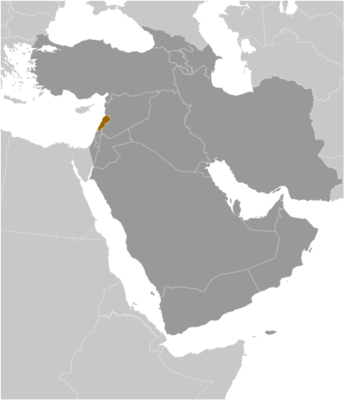
Middle East · Geography, people, economy, and government, public-domain data from the CIA World Factbook.
As a result of its location at the crossroads of three continents, the area that is modern-day Lebanon is rich in cultural and religious diversity. This region was subject to various foreign conquerors for much of its history, including the Romans, Arabs, and Ottomans. Following World War I, France acquired a mandate over the northern portion of the former Ottoman Empire province of Syria. From it the French demarcated the region of Lebanon in 1920, and it gained independence in 1943. Lebanon subsequently experienced periods of political turmoil interspersed with prosperity built on its position as a regional center for finance and trade. The country's 1975-90 civil war, which resulted in an estimated 120,000 fatalities, was followed by years of social and political instability, and sectarianism remains a key element of Lebanese political life. The Israeli defense forces, which occupied parts of Lebanon during the civil war, did not completely withdraw until 2000. Neighboring Syria influenced Lebanon's foreign and domestic policies while its military occupied Lebanon from 1976 until 2005, but its influence diminished significantly after 2005. Over 1.5 million Syrian refugees fled to Lebanon after the start of the Syrian conflict in 2011. Hizballah -- a major Lebanese political party, militia, and US-designated foreign terrorist organization -- and Israel continued attacks and counterattacks against each other after Syria's withdrawal and fought a brief war in 2006. After HAMAS attacked Israel on 7 October 2023, the intensity and frequency of these cross-border attacks increased substantially into a cycle of hostilities, mostly limited to the border areas as of January 2024. Lebanon's borders with Syria and Israel remain unresolved. Lebanon's prosperity has significantly diminished since the beginning of the country's economic crisis in 2019, which has crippled its economy, shut down its previously lucrative banking sector, reduced the value of its currency, and caused many Lebanese to emigrate in search of better prospects.
Geography
- Location
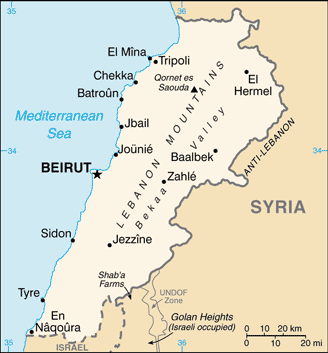
- Middle East, bordering the Mediterranean Sea, between Israel and Syria
- Area
- 10,400 sq km
- Climate
- Mediterranean; mild to cool, wet winters with hot, dry summers; the Lebanon Mountains experience heavy winter snows
- Terrain
- narrow coastal plain; El Beqaa (Bekaa Valley) separates Lebanon and Anti-Lebanon Mountains
- Natural resources
- limestone, iron ore, salt, water-surplus state in a water-deficit region, arable land
- Coastline
- 225 km
- Natural hazards
- earthquakes; dust storms, sandstorms
People & society
- Population
- 5,364,482 (2024 est.)
- Nationality
- Lebanese (singular and plural)
- Ethnic groups
- Arab 95%, Armenian 4%, other 1%
- Languages
- Arabic (official), French, English, Armenian
- Religions
- Muslim 67.8% (31.9% Sunni, 31.2% Shia, smaller percentages of Alawites and Ismailis), Christian 32.4% (Maronite Catholics are the largest Christian group), Druze 4.5%, very small numbers of Jews, Baha'is, Buddhists, and Hindus (2020 est.)
- Median age
- 29.4 years (2025 est.)
- Life expectancy at birth
- 79.2 years (2024 est.)
- Literacy
- 92% (2019 est.)
Economy
- Economic overview
- lower middle-income Middle Eastern economy; hyperinflation and sharp poverty increases; banks have ceased lending; economic contraction, destroyed infrastructure, and reduced consumer demand resulting from Israel-Hezbollah conflict
- Industries
- banking, tourism, real estate and construction, food processing, wine, jewelry, cement, textiles, mineral and chemical products, wood and furniture products, oil refining, metal fabricating
- Agricultural products
- potatoes, milk, tomatoes, apples, oranges, olives, cucumbers/gherkins, chicken, lemons/limes, wheat (2023)
- Exports - partners
- UAE 26%, Egypt 7%, Turkey 5%, Iraq 5%, USA 4% (2023)
- Imports - partners
- Switzerland 12%, China 11%, Greece 9%, Turkey 8%, Italy 6% (2023)
Government
- Government type
- parliamentary democratic republic
- Capital
- Beirut
- Independence
- 22 November 1943 (from League of Nations mandate under French administration)
- Constitution
- drafted 15 May 1926, adopted 23 May 1926
- Executive branch
- President Joseph AOUN (since 9 January 2025)
- Legislative branch
- National Assembly (Majlis Al-Nuwwab)
Full reference data
Every field, by section, CIA World Factbook. Open a topic to expand it.
Introduction
Travel Facts
Please visit the following links to find further information about your desired destination.
CDC - To learn what vaccines and health precautions to take while visiting your destination.
US State Dept Travel Information - Overall information about foreign travel for US citizens.
To obtain an international driving permit (IDP). Only two organizations in the US issue IDPs: American Automobile Association (AAA) and American Automobile Touring Alliance (AATA)
How to get help in an emergency? Contact the nearest US embassy or consulate, or call one of these numbers: from the US or Canada - 1-888-407-4747 or from Overseas - +1 202-501-4444
Page last updated: Friday, December 27, 2024