
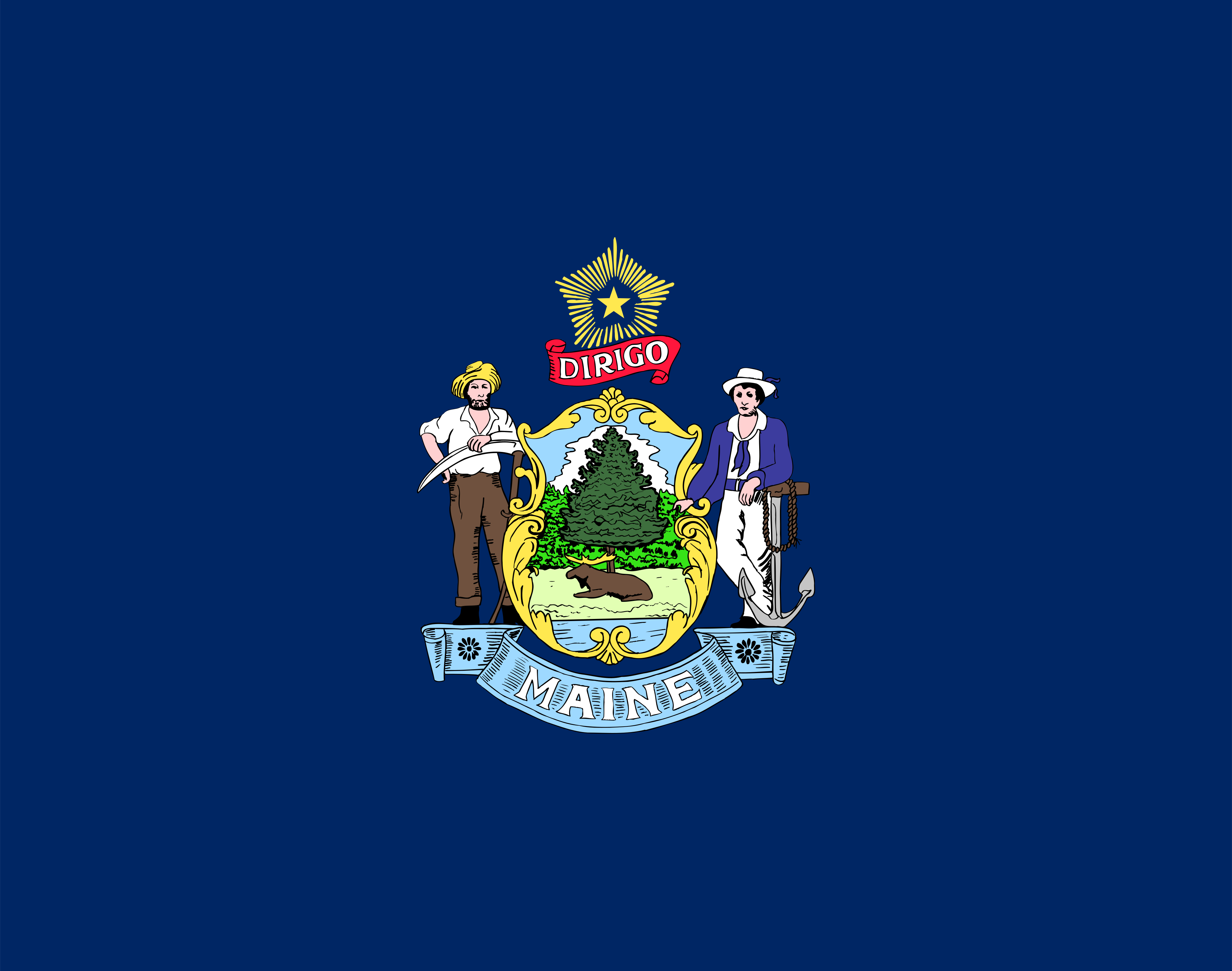
State of · ME
Maine
Janet Mills
Governor
DemocratState Government 101
How Maine’s Government Works
Maine was the first state to adopt ranked-choice voting statewide, and it stands out in another way too: it has no lieutenant governor, and its secretary of state, treasurer, and attorney general are chosen by the Legislature rather than the voters. A part-time citizen Legislature pairs that with a strong tradition of citizen ballot initiatives.
- Governor term
- 4 years
- Governor term limit
- 2 consecutive terms
- Legislature
- Maine Legislature
- State Senate
- 35 seats · 2-yr terms
- House of Representatives
- 151 seats · 2-yr terms
- Legislator term limit
- 4 consecutive terms (8 years) per chamber
- Sessions
- Biennial Legislature, two annual sessions (long odd / short even)
- Session length
- Statutory adjournment targets by year
- Legislature type
- Part-time / citizen legislature
- Legislator pay
- $25,000 (first session year) / $20,000 (second session year) of each biennium + per diem (raised effective Dec. 2024)
- Veto override
- Two-thirds of each chamber
- Line-item veto
- No
The Executive Branch, Who Runs the State
Maine has an unusually small set of statewide elected executives: the Governor is the only official elected by the voters statewide. There is no lieutenant governor at all, if the office becomes vacant, the President of the Senate acts as governor. And the other constitutional officers are not elected by the public either: the Secretary of State, the State Treasurer, and the Attorney General are each chosen by a joint vote of the Legislature, while the State Auditor is also legislatively selected.
That makes Maine, like Tennessee, a state where the Legislature fills the major non-gubernatorial offices. The Governor appoints the heads of the executive departments, but the broader pattern is a governor elected alone, surrounded by officers who answer to the Legislature rather than to the Governor or the voters directly.
The Legislature, Who Writes the Laws
The Maine Legislature is bicameral: a 35-seat State Senate and a 151-seat House of Representatives, with all members serving two-year terms and limited to four consecutive terms (eight years) in a chamber. It is a part-time, citizen legislature, with relatively low pay, so members generally hold other jobs.
The Legislature is constituted for two years and holds two annual sessions: a longer "first regular session" in odd years and a shorter "second regular session" in even years, with statutory targets for adjournment. Because the Legislature also elects most of the state’s constitutional officers, it sits at the center of Maine government to an unusual degree.
How a Bill Becomes Law
A bill is introduced, sent to a joint committee (Maine, like Massachusetts and Connecticut, routes most bills through committees of both chambers), and, if it advances, voted on the floor of each chamber, with differences reconciled before final passage. The Governor can sign a bill, veto it, or let it become law; Maine’s governor has no line-item veto, so bills must be accepted or rejected whole, and a veto override takes two-thirds of each chamber.
Maine has a strong citizen-initiative tradition: voters can enact statutes by initiative (an indirect process, in which a measure goes to the Legislature first and then to the ballot if lawmakers do not adopt it) and overturn laws by "people’s veto" referendum. And Maine’s signature innovation is ranked-choice voting, it became the first state to adopt RCV statewide, using it for primaries and federal elections after voters approved it at the ballot, despite resistance from the Legislature and challenges in court.
What the Governor Can (and Can’t) Do
The Governor appoints the heads of the executive departments, proposes the budget, can call special sessions, holds emergency powers, and holds the clemency power. But the office sits in an unusual web: there is no lieutenant governor, and the Secretary of State, Treasurer, Attorney General, and Auditor are all chosen by the Legislature, so the Governor cannot staff those offices and they answer to lawmakers instead.
Maine’s governor has no line-item veto, a comparatively weak budget tool, and the two-thirds override and the citizen "people’s veto" both serve as checks. The result is a governor elected with a strong independent mandate but operating alongside a Legislature that controls much of the rest of state government.
The Courts
Maine’s judges are appointed, not elected. The Governor nominates them, a legislative committee holds confirmation hearings, and the State Senate confirms; judges then serve seven-year terms and may be reappointed. The Supreme Judicial Court of Maine, often called the "Law Court" when it hears appeals, sits at the top, above the trial-level Superior and District courts. The appoint-and-confirm model keeps Maine’s judiciary out of electoral politics.
What makes Maine’s government distinctive
- The first state to adopt ranked-choice voting statewide, using it for primaries and federal elections after voters approved it.
- No lieutenant governor, the Senate President acts as governor if the office is vacant.
- The Secretary of State, Treasurer, Attorney General, and Auditor are all chosen by the Legislature, not the voters.
- A strong citizen-initiative and "people’s veto" tradition, used to enact laws and repeal them at the ballot.
- The governor has no line-item veto, and most bills move through joint committees of both chambers.
See how Maine is governed right now
Jump from the explainer into the live record for Maine.
Executive branch
Orders, rulemaking & official actions
Recent activity
View all →- Press Release·Oct 21, 2026Open ↗
Governor Mills Meets with Top Irish Government Leaders
- Press Release·Oct 21, 2026Open ↗
Governor Mills Statement on U.S. DOE Authorization of Exchange from Northeast Home Heating Oil Reserve
- Press Release·Oct 21, 2026Open ↗
1776 copy of the Declaration of Independence on display at the Maine State Archives this week
- Press Release·Oct 20, 2026Open ↗
Secretary of State Marks Election Heroes Day
- Press Release·Oct 19, 2026Open ↗
Governor Mills Arrives in Dublin to Promote Relations Between Maine and Ireland
- Press Release·Oct 15, 2026Open ↗
TREASURER PERRY SHARES KEY FINANCIAL DATA FOR SEPTEMBER 2026 AND DISCUSSES UPDATES ON MAINE’S AFFORDABILITY PAYMENTS
- Press Release·Oct 14, 2026Open ↗
Governor Mills Proclaims Thursday as Second “Maine Day of Soccer”
- Press Release·Oct 12, 2026Open ↗
Governor Mills Statement Honoring Indigenous Peoples’ Day
Legislative branch
Constitution, statutes & bills
2,242 bills tracked · 133rd Maine Legislature (2027-2028)
Foundational
Maine Constitution
15 articles · 145 sections · 0 paragraphs
Codified
Maine Statutes
64 titles · 25,600 sections
- LD 505failed
An Act to Update Processes and Fees in the Probate Court System
Anne M. CarneyDemocrat
Last action May 1, 2026
- LD 1522failed
An Act to Establish the Maine Eviction Prevention Program
Ambureen RanaDemocrat
Last action Apr 29, 2026
- LD 1626failed
An Act to Improve Professional Development for Educational Technicians and School Support Staff
Kelly MurphyDemocrat
Last action Apr 29, 2026
- LD 1872failed
An Act to Reinvest in the Pension Funds of the Maine Public Employees Retirement System
Charles SkoldDemocrat
Last action Apr 29, 2026
- LD 1294failed
An Act to Expand the Dependent Exemption Tax Credit
Matthea E. L. DaughtryDemocrat
Last action Apr 29, 2026
- LD 599failed
An Act to Raise the Salary Threshold for Overtime Pay
Michael Tipping
Last action Apr 29, 2026
- LD 19failed
An Act Related to Oversized All-terrain Vehicles
Marianne MooreRepublican
Last action Apr 29, 2026
- LD 34failed
An Act to Increase the Minimum Salary for Teachers
Teresa S. PierceDemocrat
Last action Apr 29, 2026
Frequently asked questions
Was Maine the first state to use ranked-choice voting?
Yes. Maine became the first state to adopt ranked-choice voting statewide, after voters approved it at the ballot. Under RCV, voters rank candidates in order of preference, and if no one wins a majority outright, last-place candidates are eliminated and their votes redistributed until someone has a majority. Maine uses it for primaries and federal elections, and it survived resistance from the Legislature and legal challenges along the way.
Does Maine have a lieutenant governor?
No. Maine is one of the few states with no lieutenant governor. If the governorship becomes vacant, the President of the State Senate acts as governor. The state simply never created the office.
How are Maine’s other state officers chosen?
By the Legislature, not the voters. The Secretary of State, State Treasurer, and Attorney General are each chosen by a joint vote of the Maine Legislature, and the State Auditor is also legislatively selected. So the governor is the only statewide official elected by the public, Maine resembles Tennessee in letting the legislature fill the other constitutional offices.
Can Maine voters pass their own laws?
Yes. Maine has a strong direct-democracy tradition. Citizens can enact statutes by initiative, an indirect process in which a measure goes to the Legislature first and then to the ballot if lawmakers decline to adopt it, and can repeal laws through a "people’s veto" referendum.
Does the Maine governor have a line-item veto?
No. Maine’s governor must accept or reject an entire bill, including the budget, there is no power to strike individual spending items. A veto can be overridden by a two-thirds vote of each chamber.