Country exposure · PE

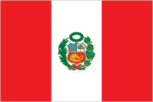
Flag of Peru

Peru

South America · Lima · presidential republic

What Peru means for your money — the prices you pay, the tariffs in motion, and where U.S. policy could change both.
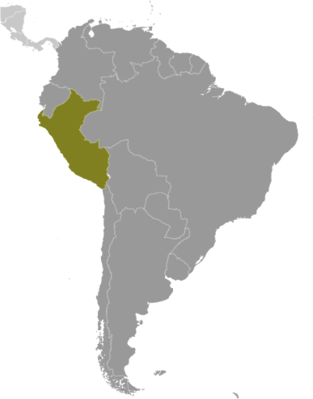
Map showing the location of Peru

$10.7B

U.S. imports, 2025

+14.5%

change in one year

$12.1B

U.S. exports, 2025

33M

Population

$289.2B

GDP

In your house

What you buy that Peru makes

America bought $10.7B in goods from Peru in 2025. Of every $100 of it, here's where the money went.

Fruits, frozen juices

fruit and frozen juices

$3.3B30.7%

Copper

copper for wiring

$885M8.3%

Vegetables

vegetables

$655M6.1%

Green coffee

green coffee for roasters

$653M6.1%

Apparel, household goods - cotton

cotton clothing and linens

$607M5.7%

Tin

$460M4.3%

Finished metal shapes

$445M4.2%

Steelmaking materials

$344M3.2%

Nonmonetary gold

$323M3%

Zinc

$315M2.9%

2026 so far (through April): $3.9B in imports. Source: U.S. Census Bureau, International Trade in Goods (customs basis).

The other direction

What America sells to Peru

$12.1B in 2025 — a trade rupture cuts both ways, for American producers as well as American prices.

Petroleum products, other

$2.2B

Fuel oil

$1.5B

Crude oil

$1.1B

Plastic materials

$482M

plastics for packaging and goods

Excavating machinery

$358M

Industrial machines, other

$333M

Civilian aircraft, engines, equipment, and parts

$311M

Minimum value shipments

$310M

Industrial engines

$303M

Where you stand

U.S. tariff posture toward Peru

No U.S. tariff action singles this country out. Its goods face the universal 10% temporary import surcharge under Section 122 of the Trade Act (which replaced the IEEPA reciprocal baseline in February 2026) plus the sectoral Section 232 duties — steel and aluminum at 50% — that apply to all countries. The Section 122 surcharge is statutorily temporary — scheduled to lapse on or about July 23, 2026 (a 150-day cap) unless extended or replaced.

Reciprocal tariff (universal baseline)

10%

The universal 10% floor — a Section 122 import surcharge since February 2026, previously the EO 14257 reciprocal baseline — applies to nearly all U.S. imports. This country has no higher assigned rate of its own.

Policy in motion

Tariff status: a moving target

No U.S. tariff action names Peru. These are the universal measures — applied to every country without a country-specific arrangement — that set its treatment.

  1. 2026-04-06

    Section 232 metals coverage expanded

    In effect

    The April 2026 proclamation strengthening Section 232 actions on aluminum, steel, and copper expanded derivative-product coverage for all countries, keeping the general metals rate at 50%.

    91 FR 18201
  2. 2026-02-24

    IEEPA reciprocal tariffs terminated — replaced by 10% Section 122 surcharge

    In effect

    Executive Order 14389 (Ending Certain Tariff Actions) terminated the IEEPA tariff duties — including the EO 14257 reciprocal baseline — effective February 24, 2026. A flat 10% Section 122 temporary import surcharge (Proclamation 11012 of February 20, 2026) replaced them, leaving the universal rate unchanged at 10% on a different statutory basis. Section 122 caps such surcharges at 150 days, so this 10% surcharge is scheduled to lapse on or about July 23, 2026 absent further action (the administration has signaled it could raise the rate toward the 15% statutory maximum).

    91 FR 9437
  3. 2025-11-13

    Agricultural products exempted from reciprocal tariffs

    In effect

    Executive Order 14360 of November 14, 2025 removed reciprocal duties from certain agricultural products listed in its annexes (coffee, cocoa, bananas, and other goods the U.S. does not produce in sufficient quantity), retroactive to November 13, 2025 — for all countries subject to the reciprocal tariff.

    90 FR 54091
  4. 2025-06-04

    Section 232 steel and aluminum duties doubled to 50%

    In effect

    The June 3, 2025 proclamation raised Section 232 duties on steel and aluminum articles and derivatives from 25% to 50% for all countries, effective June 4, 2025.

    90 FR 24199
  5. 2025-04-05

    Universal 10% reciprocal baseline takes effect

    In effect

    Executive Order 14257 (signed April 2, 2025) imposed a 10% ad valorem reciprocal duty on imports from all trading partners, effective April 5, 2025. Countries without a higher Annex I rate remain at this baseline.

    Federal Register · 2025-06063
  6. 2025-03-12

    Section 232 steel and aluminum duties set at 25% for all countries

    In effect

    Proclamations of February 10, 2025 terminated all country exemptions and quota arrangements and applied 25% Section 232 duties to steel and aluminum imports from every country, effective March 12, 2025.

    90 FR 9817

Reference

The country itself

South America · Geography, people, economy, and government — public-domain data from the CIA World Factbook.

Ancient Peru was the seat of several prominent Andean civilizations, most notably that of the Incas whose empire was captured by Spanish conquistadors in 1533. Peru declared its independence in 1821, and remaining Spanish forces were defeated in 1824. After a dozen years of military rule, Peru returned to democratic leadership in 1980 but experienced economic problems and the growth of a violent insurgency. President Alberto FUJIMORI's election in 1990 ushered in a decade that saw a dramatic turnaround in the economy and significant progress in curtailing guerrilla activity. Nevertheless, an economic slump and the president's increasing reliance on authoritarian measures in the late 1990s generated mounting dissatisfaction with his regime, which led to his resignation in 2000. A caretaker government oversaw a new election in 2001 that installed Alejandro TOLEDO Manrique as the new head of government - Peru's first democratically elected president of indigenous ethnicity. The presidential election of 2006 saw the return of Alan GARCIA Perez who, after a disappointing presidential term from 1985 to 1990, presided over a robust economic rebound. Former army officer Ollanta HUMALA Tasso was elected president in 2011 and carried on the market-oriented economic policies of the three preceding administrations. Pedro Pablo KUCZYNSKI Godard won a very narrow runoff in the 2016 presidential election. Facing impeachment after evidence surfaced of his involvement in a vote-buying scandal, KUCZYNSKI offered his resignation in 2018, and First Vice President Martin Alberto VIZCARRA Cornejo was sworn in as president. In 2019, VIZCARRA invoked his constitutional authority to dissolve Peru's Congress after months of battling with the body over anticorruption reforms. New congressional elections in 2020 resulted in an opposition-led legislature. The Congress impeached VIZCARRA for a second time and removed him from office after accusations of corruption and mishandling of the COVID-19 pandemic. Because of vacancies in the vice-presidential positions, the President of the Peruvian Congress, Manuel MERINO, became the next president. His ascension to office was not well received, and large protests forced his resignation later in 2020. Francisco SAGASTI assumed the position of President of Peru after being appointed President of the Congress the previous day. Jose Pedro CASTILLO Terrones won presidential election in 2021 but was impeached and ousted the following year; his vice president, Dina BOLUARTE, assumed the presidency by constitutional succession in 2022.
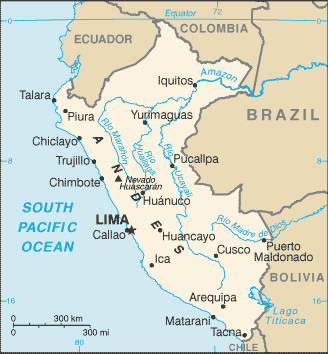
Regional map of Peru

Geography

Location
Western South America, bordering the South Pacific Ocean, between Chile and Ecuador
Area
1,285,216 sq km
Climate
varies from tropical in east to dry desert in west; temperate to frigid in Andes
Terrain
western coastal plain (costa), high and rugged Andes in center (sierra), eastern lowland jungle of Amazon Basin (selva)
Natural resources
copper, silver, gold, petroleum, timber, fish, iron ore, coal, phosphate, potash, hydropower, natural gas
Coastline
2,414 km
Natural hazards
earthquakes, tsunamis, flooding, landslides, mild volcanic activity volcanism: volcanic activity in the Andes Mountains; Ubinas (5,672 m) is the country's most active volcano; other historically active volcanoes include El Misti, Huaynaputina, Sabancaya, and Yucamane; see note 2 under "Geography - note"

People & society

Population
32,768,614 (2025 est.)
Nationality
Peruvian(s)
Ethnic groups
Mestizo (mixed Indigenous and White) 60.2%, Indigenous 25.8%, White 5.9%, African descent 3.6%, other (includes Chinese and Japanese descent) 1.2%, unspecified 3.3% (2017 est.)
Languages
Spanish (official) 82.9%, Quechua (official) 13.6%, Aymara (official) 1.6%, Ashaninka 0.3%, other native languages (includes many minor Amazonian languages) 0.8%, other 0.2%, none 0.1%, unspecified 0.7% (2017 est.)
Religions
Catholic 76%, Evangelical Christian 15.7%, no religion 5.1%, other religions 3.2% (2017 est.)
Median age
30.4 years (2025 est.)
Life expectancy at birth
68.9 years (2024 est.)
Literacy
93.7% (2024 est.)

Economy

Economic overview
upper-middle-income South American economy; strong post-COVID rebound tempered by political uncertainty and climate risks; exports driven by mineral extraction and agriculture; large informal sector and uneven access to public services; stable fiscal position and financial sector
Industries
mining and refining of minerals; steel, metal fabrication; petroleum extraction and refining, natural gas and natural gas liquefaction; fishing and fish processing, cement, glass, textiles, clothing, food processing, beer, soft drinks, rubber, machinery, electrical machinery, chemicals, furniture
Agricultural products
sugarcane, potatoes, rice, bananas, milk, maize, chicken, oil palm fruit, cassava, grapes (2023)
Exports - partners
China 34%, USA 14%, Canada 5%, India 4%, Switzerland 4% (2023)
Imports - partners
China 26%, USA 21%, Brazil 7%, Argentina 5%, Mexico 3% (2023)

Government

Government type
presidential republic
Capital
Lima
Independence
28 July 1821 (from Spain)
Constitution
several previous; latest promulgated 29 December 1993, enacted 31 December 1993
Executive branch
President José Enrique JERí Oré (since 10 October 2025)
Legislative branch
Congress of the Republic (Congreso de la República)

Full reference data

Every field, by section — CIA World Factbook. Open a topic to expand it.

Introduction
Background
Ancient Peru was the seat of several prominent Andean civilizations, most notably that of the Incas whose empire was captured by Spanish conquistadors in 1533. Peru declared its independence in 1821, and remaining Spanish forces were defeated in 1824. After a dozen years of military rule, Peru returned to democratic leadership in 1980 but experienced economic problems and the growth of a violent insurgency. President Alberto FUJIMORI's election in 1990 ushered in a decade that saw a dramatic turnaround in the economy and significant progress in curtailing guerrilla activity. Nevertheless, an economic slump and the president's increasing reliance on authoritarian measures in the late 1990s generated mounting dissatisfaction with his regime, which led to his resignation in 2000. A caretaker government oversaw a new election in 2001 that installed Alejandro TOLEDO Manrique as the new head of government - Peru's first democratically elected president of indigenous ethnicity. The presidential election of 2006 saw the return of Alan GARCIA Perez who, after a disappointing presidential term from 1985 to 1990, presided over a robust economic rebound. Former army officer Ollanta HUMALA Tasso was elected president in 2011 and carried on the market-oriented economic policies of the three preceding administrations. Pedro Pablo KUCZYNSKI Godard won a very narrow runoff in the 2016 presidential election. Facing impeachment after evidence surfaced of his involvement in a vote-buying scandal, KUCZYNSKI offered his resignation in 2018, and First Vice President Martin Alberto VIZCARRA Cornejo was sworn in as president. In 2019, VIZCARRA invoked his constitutional authority to dissolve Peru's Congress after months of battling with the body over anticorruption reforms. New congressional elections in 2020 resulted in an opposition-led legislature. The Congress impeached VIZCARRA for a second time and removed him from office after accusations of corruption and mishandling of the COVID-19 pandemic. Because of vacancies in the vice-presidential positions, the President of the Peruvian Congress, Manuel MERINO, became the next president. His ascension to office was not well received, and large protests forced his resignation later in 2020. Francisco SAGASTI assumed the position of President of Peru after being appointed President of the Congress the previous day. Jose Pedro CASTILLO Terrones won presidential election in 2021 but was impeached and ousted the following year; his vice president, Dina BOLUARTE, assumed the presidency by constitutional succession in 2022.
Travel Facts
US State Dept Travel Advisory
The US Department of State currently recommends US citizens Reconsider Travel and exercise increased caution due to crime, civil unrest, and the possibility of kidnapping. Some areas have increased risk. Consult its website via the link below for updates to travel advisories and statements on safety, security, local laws, and special circumstances in this country. https://travel.state.gov/content/travel/en/traveladvisories/traveladvisories.html
Passport/Visa Requirements
US citizens should make sure their passport will not expire for at least 6 months after they enter the country even if they do not intend to stay that long. They should also make sure they have at least 1 blank page in their passport for any entry stamp that will be required. A visa is required, but US citizens may obtain the visa upon entering the country.
US Embassy/Consulate
[51] (1) 618-2000; US Embassy in Lima, Avenida La Encalada cdra. 17 s/n, Surco, Lima 33, Peru; LimaACS@state.gov; https://pe.usembassy.gov/
LGBTQIA+ Travelers
Lesbian, gay, bisexual, transgender, queer, intersex, and asexual (LGBTQIA+) travelers can face unique challenges when traveling abroad. Laws and attitudes in some countries may affect safety and ease of travel. Legal protections vary from country to country. Many countries do not legally recognize same-sex marriage . Approximately seventy countries consider consensual same-sex sexual relations a crime , sometimes carrying severe punishment. https://travel.state.gov/content/travel/en/international-travel/before-you-go/travelers-with-special-considerations/lgbtqi.html
Telephone Code
51
Local Emergency Phone
011, 5114
Vaccinations
An International Certificate of Vaccination for yellow fever is required for travelers arriving from countries with a risk of yellow fever transmission and for travelers having transited through the airport of a country with risk of yellow fever transmission. See WHO recommendations. http://www.who.int/
Climate
Varies from tropical in east to dry desert in west; temperate to frigid in Andes
Currency (Code)
Nuevo sol (PEN)
Electricity/Voltage/Plug Type(s)
220 V / 60 Hz / plug types(s): A, C
Major Languages
Spanish, Quechua, Aymara, Ashaninka
Major Religions
Roman Catholic 60%, Christian 14.6% (includes evangelical 11.1%, other 3.5%)
Time Difference
UTC-5 (same time as Washington, DC, during Standard Time)
Potable Water
Opt for bottled water
International Driving Permit
Suggested; additionally, if you plan to drive in Peru, you will need an Inter-American Driving Permit issued by the AAA
Road Driving Side
Right
Tourist Destinations
Machu Picchu; Cusco's architectural treasures; Lake Titicaca; Colca Canyon; Lima; Nazca Lines; Qhapaq Nan/Andean Road System
Major Sports
Soccer, volleyball, tennis
Cultural Practices
Greetings in Peru are quite important. For women, between friends, friends of friends and family, whether male or female, it is customary to give a kiss on the cheek (air kiss). If they are close friends or family this is usually accompanied by a hug.
Tipping Guidelines
Most restaurant and bar bills will include a 10% gratuity. It is customary to add an extra 10% tip if the service has been satisfactory. Tipping is not expected for taxis and fares are negotiated beforehand. One Nuevo sol per bag for porters is appreciated.
Souvenirs
Alpaca wool sweaters, scarves, and Chullo hats; pottery; sterling silver jewelry; leather goods; carved gourds
Traditional Cuisine
Ceviche — chunks of raw fish marinated in lime juice, mixed with onions, chili peppers, and garlic; fish bone broth, salt, and pepper are used for seasoning
CIA source last updated
Tuesday, September 12, 2023
Travel resources

Please visit the following links to find further information about your desired destination.

World Health Organization (WHO) - To learn what vaccines and health precautions to take while visiting your destination.

US State Dept Travel Information - Overall information about foreign travel for US citizens.

To obtain an international driving permit (IDP). Only two organizations in the US issue IDPs: American Automobile Association (AAA) and American Automobile Touring Alliance (AATA)

How to get help in an emergency? Contact the nearest US embassy or consulate, or call one of these numbers: from the US or Canada - 1-888-407-4747 or from Overseas - +1 202-501-4444

Page last updated: Tuesday, September 12, 2023

Geography
Location
Western South America, bordering the South Pacific Ocean, between Chile and Ecuador
Geographic coordinates
10 00 S, 76 00 W
Map references
South America
Area - total
1,285,216 sq km
Area - land
1,279,996 sq km
Area - water
5,220 sq km
Area - comparative
almost twice the size of Texas; slightly smaller than Alaska
Land boundaries - total
7,062 km
Land boundaries - border countries
Bolivia 1,212 km; Brazil 2,659 km; Chile 168 km; Colombia 1,494 km; Ecuador 1,529 km
Coastline
2,414 km
Maritime claims - territorial sea
200 nm; note: the US does not recognize this claim
Maritime claims - exclusive economic zone
200 nm
Maritime claims - continental shelf
200 nm
Climate
varies from tropical in east to dry desert in west; temperate to frigid in Andes
Terrain
western coastal plain (costa), high and rugged Andes in center (sierra), eastern lowland jungle of Amazon Basin (selva)
Elevation - highest point
Nevado Huascaran 6,746 m
Elevation - lowest point
Pacific Ocean 0 m
Elevation - mean elevation
1,555 m
Natural resources
copper, silver, gold, petroleum, timber, fish, iron ore, coal, phosphate, potash, hydropower, natural gas
Land use - agricultural land
19.1% (2023 est.)
Land use - agricultural land: arable land
arable land: 3.1% (2023 est.)
Land use - agricultural land: permanent crops
permanent crops: 1.8% (2023 est.)
Land use - agricultural land: permanent pasture
permanent pasture: 14.2% (2023 est.)
Land use - forest
52.9% (2023 est.)
Land use - other
28% (2023 est.)
Irrigated land
25,800 sq km (2012)
Major lakes (area sq km) - fresh water lake(s)
Lago Titicaca (shared with Bolivia) - 8,030 sq km
Major rivers (by length in km)
Amazon river source (shared with Brazil [m]) - 6,400 km note: [s] after country name indicates river source; [m] after country name indicates river mouth
Major watersheds (area sq km) - Atlantic Ocean drainage
Amazon (6,145,186 sq km)
Major aquifers
Amazon Basin
Population distribution
approximately one third of the population resides along the desert coastal belt in the west, with a strong focus on the capital city of Lima; the Andean highlands, or sierra, contain roughly half of the population; the eastern slopes of the Andes and adjoining rainforest are sparsely populated
Natural hazards
earthquakes, tsunamis, flooding, landslides, mild volcanic activity volcanism: volcanic activity in the Andes Mountains; Ubinas (5,672 m) is the country's most active volcano; other historically active volcanoes include El Misti, Huaynaputina, Sabancaya, and Yucamane; see note 2 under "Geography - note"
Geography - note
note 1: shares control of Lago Titicaca, world's highest navigable lake, with Bolivia; a remote slope of Nevado Mismi, a 5,316-m (17,441-ft) peak, is the ultimate source of the Amazon River note 2: Peru is one of the countries along the Ring of Fire, which is a belt bordering the Pacific Ocean that contains about 75% of the world's volcanoes and up to 90% of the world's earthquakes note 3: on 19 February 1600, Mount Huaynaputina in the southern Peruvian Andes erupted in the largest volcanic explosion in South America in historical times; intermittent eruptions lasted until 5 March 1600 and pumped an estimated 16 to 32 million metric tons of particulates into the atmosphere, reducing the amount of sunlight reaching the earth's surface and affecting weather worldwide; over the next two-and-a-half years, millions died around the globe in famines from bitterly cold winters, cool summers, and the loss of crops and animals
People and Society
Population - total
32,768,614 (2025 est.)
Population - male
16,016,448
Population - female
16,752,166
Nationality - noun
Peruvian(s)
Nationality - adjective
Peruvian
Ethnic groups
Mestizo (mixed Indigenous and White) 60.2%, Indigenous 25.8%, White 5.9%, African descent 3.6%, other (includes Chinese and Japanese descent) 1.2%, unspecified 3.3% (2017 est.)
Languages - Languages
Spanish (official) 82.9%, Quechua (official) 13.6%, Aymara (official) 1.6%, Ashaninka 0.3%, other native languages (includes many minor Amazonian languages) 0.8%, other 0.2%, none 0.1%, unspecified 0.7% (2017 est.)
Languages - major-language sample(s)
La Libreta Informativa del Mundo, la fuente indispensable de información básica. (Spanish) The World Factbook, the indispensable source for basic information.
Religions
Catholic 76%, Evangelical Christian 15.7%, no religion 5.1%, other religions 3.2% (2017 est.)
Age structure - 0-14 years
25.8% (male 4,293,229/female 4,119,269)
Age structure - 15-64 years
66.2% (male 10,546,502/female 11,041,106)
Age structure - 65 years and over
8% (2024 est.) (male 1,112,825/female 1,487,318)
Dependency ratios - total dependency ratio
50.4 (2025 est.)
Dependency ratios - youth dependency ratio
38.4 (2025 est.)
Dependency ratios - elderly dependency ratio
12 (2025 est.)
Dependency ratios - potential support ratio
8.3 (2025 est.)
Median age - total
30.4 years (2025 est.)
Median age - male
29.1 years
Median age - female
31.3 years
Population growth rate
0.55% (2025 est.)
Birth rate
16.43 births/1,000 population (2025 est.)
Death rate
9.79 deaths/1,000 population (2025 est.)
Net migration rate
-1.16 migrant(s)/1,000 population (2025 est.)
Population distribution
approximately one third of the population resides along the desert coastal belt in the west, with a strong focus on the capital city of Lima; the Andean highlands, or sierra, contain roughly half of the population; the eastern slopes of the Andes and adjoining rainforest are sparsely populated
Urbanization - urban population
78.9% of total population (2023)
Urbanization - rate of urbanization
1.33% annual rate of change (2020-25 est.)
Major urban areas - population
11.204 million LIMA (capital), 959,000 Arequipa, 904,000 Trujillo (2023)
Sex ratio - at birth
1.05 male(s)/female
Sex ratio - 0-14 years
1.04 male(s)/female
Sex ratio - 15-64 years
0.96 male(s)/female
Sex ratio - 65 years and over
0.75 male(s)/female
Sex ratio - total population
0.96 male(s)/female (2024 est.)
Mother's mean age at first birth
21.9 years (2013 est.)
Mother's mean age at first birth - note
note: data represents median age at first birth among women 25-49
Maternal mortality ratio
51 deaths/100,000 live births (2023 est.)
Infant mortality rate - total
10.6 deaths/1,000 live births (2025 est.)
Infant mortality rate - male
11.9 deaths/1,000 live births
Infant mortality rate - female
9.7 deaths/1,000 live births
Life expectancy at birth - total population
68.9 years (2024 est.)
Life expectancy at birth - male
65.4 years
Life expectancy at birth - female
72.7 years
Total fertility rate
2.12 children born/woman (2025 est.)
Gross reproduction rate
1.04 (2025 est.)
Drinking water source - improved: urban
urban: 97.5% of population (2022 est.)
Drinking water source - improved: rural
rural: 84.9% of population (2022 est.)
Drinking water source - improved: total
total: 94.8% of population (2022 est.)
Drinking water source - unimproved: urban
urban: 2.5% of population (2022 est.)
Drinking water source - unimproved: rural
rural: 15.1% of population (2022 est.)
Drinking water source - unimproved: total
total: 5.2% of population (2022 est.)
Health expenditure - Health expenditure (as % of GDP)
6.2% of GDP (2021)
Health expenditure - Health expenditure (as % of national budget)
16.7% of national budget (2022 est.)
Physician density
1.69 physicians/1,000 population (2023)
Hospital bed density
1.6 beds/1,000 population (2021 est.)
Sanitation facility access - improved: urban
urban: 94.1% of population (2022 est.)
Sanitation facility access - improved: rural
rural: 65.9% of population (2022 est.)
Sanitation facility access - improved: total
total: 88.1% of population (2022 est.)
Sanitation facility access - unimproved: urban
urban: 5.9% of population (2022 est.)
Sanitation facility access - unimproved: rural
rural: 34.1% of population (2022 est.)
Sanitation facility access - unimproved: total
total: 11.9% of population (2022 est.)
Obesity - adult prevalence rate
19.7% (2016)
Alcohol consumption per capita - total
5.74 liters of pure alcohol (2019 est.)
Alcohol consumption per capita - beer
3.01 liters of pure alcohol (2019 est.)
Alcohol consumption per capita - wine
0.46 liters of pure alcohol (2019 est.)
Alcohol consumption per capita - spirits
2.26 liters of pure alcohol (2019 est.)
Alcohol consumption per capita - other alcohols
0.01 liters of pure alcohol (2019 est.)
Tobacco use - total
5.7% (2025 est.)
Tobacco use - male
9.5% (2025 est.)
Tobacco use - female
2.1% (2025 est.)
Children under the age of 5 years underweight
2.7% (2023 est.)
Currently married women (ages 15-49)
52.7% (2022 est.)
Child marriage - women married by age 15
2% (2020)
Child marriage - women married by age 18
14.1% (2020)
Education expenditure - Education expenditure (% GDP)
4.2% of GDP (2023 est.)
Education expenditure - Education expenditure (% national budget)
19.2% national budget (2024 est.)
Literacy - total population
93.7% (2024 est.)
Literacy - male
97% (2024 est.)
Literacy - female
90.7% (2024 est.)
School life expectancy (primary to tertiary education) - total
15 years (2017 est.)
School life expectancy (primary to tertiary education) - male
15 years (2017 est.)
School life expectancy (primary to tertiary education) - female
15 years (2017 est.)
Government
Country name - conventional long form
Republic of Peru
Country name - conventional short form
Peru
Country name - local long form
República del Perú
Country name - local short form
Perú
Country name - etymology
the name may derive from the Guarani word biru, meaning "river"
Government type
presidential republic
Capital - name
Lima
Capital - geographic coordinates
12 03 S, 77 03 W
Capital - time difference
UTC-5 (same time as Washington, DC, during Standard Time)
Capital - etymology
the name is an early Spanish mispronunciation of the Quechua name Rimak , referring to a god and deriving from the word rima (to speak); Quechua priests used to speak to worshippers from inside statues of their gods
Administrative divisions
24 departments ( departamentos , singular - departamento ), 1 province* ( provincia ), and 1 constitutional province** ( provincia constitucional ); Amazonas, Ancash, Apurimac, Arequipa, Ayacucho, Cajamarca, Callao**, Cusco, Huancavelica, Huánuco, Ica, Junín, La Libertad, Lambayeque, Lima, Lima*, Loreto, Madre de Dios, Moquegua, Pasco, Piura, Puno, San Martin, Tacna, Tumbes, Ucayali
Legal system
civil law system
Constitution - history
several previous; latest promulgated 29 December 1993, enacted 31 December 1993
Constitution - amendment process
proposed by Congress, by the president of the republic with the approval of the Council of Ministers or by petition of at least 0.3% of voters; passage requires absolute majority approval by the Congress membership, followed by approval in a referendum; a referendum is not required if Congress approves the amendment by greater than two-thirds majority vote in each of two successive sessions
International law organization participation
accepts compulsory ICJ jurisdiction with reservations; accepts ICCt jurisdiction
Citizenship - citizenship by birth
yes
Citizenship - citizenship by descent only
yes
Citizenship - dual citizenship recognized
yes
Citizenship - residency requirement for naturalization
2 years
Suffrage
18 years of age; universal and compulsory until the age of 70
Executive branch - chief of state
President José Enrique JERí Oré (since 10 October 2025)
Executive branch - head of government
President José Enrique JERí Oré (since 10 October 2025)
Executive branch - cabinet
Council of Ministers appointed by the president
Executive branch - election/appointment process
president directly elected by absolute-majority popular vote in 2 rounds, if needed, for a 5-year term (eligible for nonconsecutive terms)
Executive branch - most recent election date
11 April 2021, with a runoff on 6 June 2021
Executive branch - election results
2021: Jose Pedro CASTILLO Terrones elected president in second round; percent of vote in first round - Jose Pedro CASTILLO Terrones (PL) 18.9%, Keiko Sofia FUJIMORI Higuchi (FP) 13.4%, Rafael LOPEZ ALIAGA Cazorla (RP) 11.8%, Hernando DE SOTO Polar (Social Integration Party) 11.6%, Yonhy LESCANO Ancieta (AP) 9.1%, Veronika MENDOZA Frisch (JP) 7.9%, Cesar ACUNA Peralta (APP) 6%, George FORSYTH Sommer (VN) 5.7%, Daniel Belizario URRESTI Elera (PP) 5.6%, other 10%; percent of vote second round - Jose Pedro CASTILLO Terrones 50.1%, Keiko Sofia FUJIMORI Higuchi 49.9% 2016: Pedro Pablo KUCZYNSKI Godard elected president in second round; percent of vote in first round - Keiko FUJIMORI Higuchi (FP) 39.9%, Pedro Pablo KUCZYNSKI Godard (PPK) 21.1%, Veronika MENDOZA (FA) 18.7%, Alfredo BARNECHEA (AP) 7%, Alan GARCIA (APRA) 5.8%, other 7.5%; percent of vote in second round - Pedro Pablo KUCZYNSKI Godard 50.1%, Keiko FUJIMORI Higuchi 49.9%
Executive branch - expected date of next election
12 April 2026
Executive branch - note
note 1: First Vice President Dina Ercilia BOLUARTE Zegarra assumed the office of the president on 7 December 2022 after President Jose Pedro CASTILLO Terrones was impeached and arrested; on 10 October 2025, the president of the Congress, José Enrique JERÍ Oré, was sworn in as the new president after Congress overwhelmingly voted to remove BOLUARTE from office note 2: Prime Minister Ernesto ÁLVAREZ (since 14 October 2025) does not exercise executive power; this power rests with the president note 3: the president is both chief of state and head of government
Legislative branch - legislature name
Congress of the Republic (Congreso de la República)
Legislative branch - legislative structure
unicameral
Legislative branch - number of seats
130 (all directly elected)
Legislative branch - electoral system
proportional representation
Legislative branch - scope of elections
full renewal
Legislative branch - term in office
5 years
Legislative branch - most recent election date
4/11/2021
Legislative branch - parties elected and seats per party
Free Peru (PL) (37); Popular Force (FP) (24); Popular Action (AP) (16); Alliance for Progress (APP) (15); Go on Country - Social Integration Party (AvP) (10); Popular Renewal (RP) (9); We Are Peru" (SP) - Purple Party (PM) (9); Other (10)
Legislative branch - percentage of women in chamber
41.5%
Legislative branch - expected date of next election
April 2026
Judicial branch - highest court(s)
Supreme Court (consists of 16 judges and divided into civil, criminal, and constitutional-social sectors)
Judicial branch - judge selection and term of office
justices proposed by the National Board of Justice (a 7-member independent body), nominated by the president, and confirmed by the Congress; justices can serve until mandatory retirement at age 70
Judicial branch - subordinate courts
Court of Constitutional Guarantees; Superior Courts or Cortes Superiores; specialized civil, criminal, and mixed courts; 2 types of peace courts in which professional judges and selected members of the local communities preside
Political parties
Advance the Nation (Avanza País) or AvP Alliance for Progress (Alianza para el Progreso) or APP Broad Front (Frente Amplio) or FA Free Peru (Perú Libre) or PL Front for Hope (Frente Esperanza) Magisterial Block of National Concentration (Bloque Magisterial de Concertación Nacional) or BMCN National Victory (Victoria Nacional) or VN Peru Bicentennial (Perú Bicentenario) or PB Popular Action (Acción Popular) or AP Popular Force (Fuerza Popular) or FP Popular Renewal (Renovación Popular) or RP Purple Party (Partido Morado) Social Integration Party (Avanza País - Partido de Integración Social) Together For Perú (Juntos por el Peru) or JP We Are Peru (Somos Perú) of SP We Can Peru (Podemos Perú) or PP
Diplomatic representation in the US - chief of mission
Ambassador Alfredo Santiago Carlos FERRERO DIEZ CANSECO (since 27 February 2024)
Diplomatic representation in the US - chancery
1700 Massachusetts Avenue NW, Washington, DC 20036
Diplomatic representation in the US - telephone
[1] (202) 833-9860
Diplomatic representation in the US - FAX
[1] (202) 659-8124
Diplomatic representation in the US - email address and website
Webadmin@embassyofperu.us Embassy of Peru in the United States - E-United States - Platform of the Peruvian State (www.gob.pe)
Diplomatic representation in the US - consulate(s) general
Atlanta, Boston, Chicago, Dallas, Denver, Hartford (CT), Houston, Los Angeles, Miami, New York, Paterson (NJ), San Francisco
Diplomatic representation from the US - chief of mission
Ambassador-designate Bernardo NAVARRO; Chargé d’Affaires Joan PERKINS (since 18 April 2025)
Diplomatic representation from the US - embassy
Avenida La Encalada, Cuadra 17 s/n, Surco, Lima 33
Diplomatic representation from the US - mailing address
3230 Lima Place, Washington DC 20521-3230
Diplomatic representation from the US - telephone
[51] (1) 618-2000
Diplomatic representation from the US - FAX
[51] (1) 618-2724
Diplomatic representation from the US - email address and website
International organization participation
AIIB, APEC, BIS, CAN, CD, CELAC, EITI (compliant country), FAO, G-24, G-77, IADB, IAEA, IBRD, ICAO, ICC (NGOs), ICCt, ICRM, IDA, IFAD, IFC, IFRCS, IHO, ILO, IMF, IMO, IMSO, Interpol, IOC, IOM, IPU, ISO, ITSO, ITU, ITUC (NGOs), LAES, LAIA, Mercosur (associate), MIGA, MINUSTAH, MONUSCO, NAM, OAS, OPANAL, OPCW, Pacific Alliance, PCA, PROSUR, SICA (observer), UN, UNAMID, UNASUR, UNCTAD, UNESCO, UNHCR, UNIDO, Union Latina, UNISFA, UNMISS, UNOCI, UNOOSA, UN Security Council (temporary), UNWTO, UPU, WCO, WFTU (NGOs), WHO, WIPO, WMO, WTO
Independence
28 July 1821 (from Spain)
National holiday
Independence Day, 28-29 July (1821)
Flag
description: three equal vertical bands of red (left side), white, and red, with the coat of arms centered on the white band; the coat of arms has a shield with a vicuna, a cinchona tree, and a yellow cornucopia spilling out coins meaning: the vicuna represents fauna, the cinchona tree is the source of quinine, and the cornucopia symbolizes mineral wealth; red stands for blood shed for independence, and white for peace
National symbol(s)
vicuna (a camelid related to the llama)
National color(s)
red, white
National anthem(s) - title
"Himno Nacional del Peru" (National Anthem of Peru)
National anthem(s) - lyrics/music
Jose DE LA TORRE Ugarte/Jose Bernardo ALZEDO
National anthem(s) - history
adopted 1821
National heritage - total World Heritage Sites
13 (9 cultural, 2 natural, 2 mixed)
National heritage - selected World Heritage Site locales
Cuzco (c); Machu Picchu (m); Chavin (c); Historic Lima (c); Huascarán National Park (n); Chan Chan (c); Manú National Park (n); Lines and Geoglyphs of Nazca (c); Rio Abiseo National Park (m); Historic Arequipa (c); Sacred City of Caral-Supe (c); Qhapaq Ñan/Andean Road System (c)
Economy
Economic overview
upper-middle-income South American economy; strong post-COVID rebound tempered by political uncertainty and climate risks; exports driven by mineral extraction and agriculture; large informal sector and uneven access to public services; stable fiscal position and financial sector
Real GDP (purchasing power parity) - Real GDP (purchasing power parity) 2024
$535.911 billion (2024 est.)
Real GDP (purchasing power parity) - Real GDP (purchasing power parity) 2023
$518.771 billion (2023 est.)
Real GDP (purchasing power parity) - Real GDP (purchasing power parity) 2022
$520.872 billion (2022 est.)
Real GDP (purchasing power parity) - note
note: data in 2021 dollars
Real GDP growth rate - Real GDP growth rate 2024
3.3% (2024 est.)
Real GDP growth rate - Real GDP growth rate 2023
-0.4% (2023 est.)
Real GDP growth rate - Real GDP growth rate 2022
2.8% (2022 est.)
Real GDP growth rate - note
note: annual GDP % growth based on constant local currency
Real GDP per capita - Real GDP per capita 2024
$15,700 (2024 est.)
Real GDP per capita - Real GDP per capita 2023
$15,300 (2023 est.)
Real GDP per capita - Real GDP per capita 2022
$15,600 (2022 est.)
Real GDP per capita - note
note: data in 2021 dollars
GDP (official exchange rate)
$289.222 billion (2024 est.)
GDP (official exchange rate) - note
note: data in current dollars at official exchange rate
Inflation rate (consumer prices) - Inflation rate (consumer prices) 2024
2% (2024 est.)
Inflation rate (consumer prices) - Inflation rate (consumer prices) 2023
6.5% (2023 est.)
Inflation rate (consumer prices) - Inflation rate (consumer prices) 2022
8.3% (2022 est.)
Inflation rate (consumer prices) - note
note: annual % change based on consumer prices
GDP - composition, by sector of origin - agriculture
6.1% (2024 est.)
GDP - composition, by sector of origin - industry
32.2% (2024 est.)
GDP - composition, by sector of origin - services
52.7% (2024 est.)
GDP - composition, by sector of origin - note
note: figures may not total 100% due to non-allocated consumption not captured in sector-reported data
GDP - composition, by end use - household consumption
61.6% (2024 est.)
GDP - composition, by end use - government consumption
13.4% (2024 est.)
GDP - composition, by end use - investment in fixed capital
20.8% (2024 est.)
GDP - composition, by end use - investment in inventories
-1.4% (2024 est.)
GDP - composition, by end use - exports of goods and services
28.5% (2024 est.)
GDP - composition, by end use - imports of goods and services
-22.9% (2024 est.)
GDP - composition, by end use - note
note: figures may not total 100% due to rounding or gaps in data collection
Agricultural products
sugarcane, potatoes, rice, bananas, milk, maize, chicken, oil palm fruit, cassava, grapes (2023)
Agricultural products - note
note: top ten agricultural products based on tonnage
Industries
mining and refining of minerals; steel, metal fabrication; petroleum extraction and refining, natural gas and natural gas liquefaction; fishing and fish processing, cement, glass, textiles, clothing, food processing, beer, soft drinks, rubber, machinery, electrical machinery, chemicals, furniture
Industrial production growth rate
3.1% (2024 est.)
Industrial production growth rate - note
note: annual % change in industrial value added based on constant local currency
Labor force
18.918 million (2024 est.)
Labor force - note
note: number of people ages 15 or older who are employed or seeking work
Unemployment rate - Unemployment rate 2024
4.9% (2024 est.)
Unemployment rate - Unemployment rate 2023
4.9% (2023 est.)
Unemployment rate - Unemployment rate 2022
3.9% (2022 est.)
Unemployment rate - note
note: % of labor force seeking employment
Youth unemployment rate (ages 15-24) - total
8.8% (2024 est.)
Youth unemployment rate (ages 15-24) - male
7.9% (2024 est.)
Youth unemployment rate (ages 15-24) - female
9.8% (2024 est.)
Youth unemployment rate (ages 15-24) - note
note: % of labor force ages 15-24 seeking employment
Population below poverty line
27.5% (2022 est.)
Population below poverty line - note
note: % of population with income below national poverty line
Gini Index coefficient - distribution of family income - Gini Index coefficient - distribution of family income 2023
40.7 (2023 est.)
Gini Index coefficient - distribution of family income - note
note: index (0-100) of income distribution; higher values represent greater inequality
Average household expenditures - on food
26.9% of household expenditures (2023 est.)
Average household expenditures - on alcohol and tobacco
2.5% of household expenditures (2023 est.)
Household income or consumption by percentage share - lowest 10%
2% (2023 est.)
Household income or consumption by percentage share - highest 10%
30.6% (2023 est.)
Household income or consumption by percentage share - note
note: % share of income accruing to lowest and highest 10% of population
Remittances - Remittances 2023
1.7% of GDP (2023 est.)
Remittances - Remittances 2022
1.5% of GDP (2022 est.)
Remittances - Remittances 2021
1.6% of GDP (2021 est.)
Remittances - note
note: personal transfers and compensation between resident and non-resident individuals/households/entities
Budget - revenues
$48.003 billion (2021 est.)
Budget - expenditures
$55.34 billion (2021 est.)
Budget - note
note: central government revenues (excluding grants) and expenditures converted to US dollars at average official exchange rate for year indicated
Public debt - Public debt 2021
35.2% of GDP (2021 est.)
Public debt - note
note: central government debt as a % of GDP
Taxes and other revenues
15.9% (of GDP) (2021 est.)
Taxes and other revenues - note
note: central government tax revenue as a % of GDP
Current account balance - Current account balance 2024
$6.39 billion (2024 est.)
Current account balance - Current account balance 2023
$881.934 million (2023 est.)
Current account balance - Current account balance 2022
-$9.972 billion (2022 est.)
Current account balance - note
note: balance of payments - net trade and primary/secondary income in current dollars
Exports - Exports 2024
$83.325 billion (2024 est.)
Exports - Exports 2023
$72.97 billion (2023 est.)
Exports - Exports 2022
$71.39 billion (2022 est.)
Exports - note
note: balance of payments - exports of goods and services in current dollars
Exports - partners
China 34%, USA 14%, Canada 5%, India 4%, Switzerland 4% (2023)
Exports - partners - note
note: top five export partners based on percentage share of exports
Exports - commodities
copper ore, gold, refined copper, refined petroleum, grapes (2023)
Exports - commodities - note
note: top five export commodities based on value in dollars
Imports - Imports 2024
$67.16 billion (2024 est.)
Imports - Imports 2023
$63.776 billion (2023 est.)
Imports - Imports 2022
$69.936 billion (2022 est.)
Imports - note
note: balance of payments - imports of goods and services in current dollars
Imports - partners
China 26%, USA 21%, Brazil 7%, Argentina 5%, Mexico 3% (2023)
Imports - partners - note
note: top five import partners based on percentage share of imports
Imports - commodities
refined petroleum, crude petroleum, cars, trucks, broadcasting equipment (2023)
Imports - commodities - note
note: top five import commodities based on value in dollars
Reserves of foreign exchange and gold - Reserves of foreign exchange and gold 2024
$79.246 billion (2024 est.)
Reserves of foreign exchange and gold - Reserves of foreign exchange and gold 2023
$71.394 billion (2023 est.)
Reserves of foreign exchange and gold - Reserves of foreign exchange and gold 2022
$72.328 billion (2022 est.)
Reserves of foreign exchange and gold - note
note: holdings of gold (year-end prices)/foreign exchange/special drawing rights in current dollars
Debt - external - Debt - external 2023
$38.102 billion (2023 est.)
Debt - external - note
note: present value of external debt in current US dollars
Exchange rates - Currency
nuevo sol (PEN) per US dollar -
Exchange rates - Exchange rates 2023
3.744 (2023 est.)
Exchange rates - Exchange rates 2022
3.835 (2022 est.)
Exchange rates - Exchange rates 2021
3.881 (2021 est.)
Exchange rates - Exchange rates 2020
3.495 (2020 est.)
Exchange rates - Exchange rates 2019
3.337 (2019 est.)
Energy
Electricity access - electrification - total population
96.2% (2022 est.)
Electricity access - electrification - urban areas
99%
Electricity access - electrification - rural areas
85.1%
Electricity - installed generating capacity
16.164 million kW (2023 est.)
Electricity - consumption
53.3 billion kWh (2023 est.)
Electricity - imports
47.696 million kWh (2023 est.)
Electricity - transmission/distribution losses
6.638 billion kWh (2023 est.)
Electricity generation sources - fossil fuels
44.8% of total installed capacity (2023 est.)
Electricity generation sources - solar
1.4% of total installed capacity (2023 est.)
Electricity generation sources - wind
3.2% of total installed capacity (2023 est.)
Electricity generation sources - hydroelectricity
49.6% of total installed capacity (2023 est.)
Electricity generation sources - biomass and waste
1% of total installed capacity (2023 est.)
Coal - production
1.382 million metric tons (2023 est.)
Coal - consumption
973,000 metric tons (2023 est.)
Coal - exports
1.261 million metric tons (2023 est.)
Coal - imports
446,000 metric tons (2023 est.)
Coal - proven reserves
1.567 billion metric tons (2023 est.)
Petroleum - total petroleum production
118,000 bbl/day (2023 est.)
Petroleum - refined petroleum consumption
255,000 bbl/day (2023 est.)
Petroleum - crude oil estimated reserves
858.89 million barrels (2021 est.)
Natural gas - production
14.647 billion cubic meters (2023 est.)
Natural gas - consumption
9.675 billion cubic meters (2023 est.)
Natural gas - exports
4.883 billion cubic meters (2023 est.)
Natural gas - proven reserves
300.159 billion cubic meters (2021 est.)
Energy consumption per capita - Total energy consumption per capita 2023
30.923 million Btu/person (2023 est.)
Communications
Telephones - fixed lines - total subscriptions
1.504 million (2023 est.)
Telephones - fixed lines - subscriptions per 100 inhabitants
4 (2023 est.)
Telephones - mobile cellular - total subscriptions
42.6 million (2024 est.)
Telephones - mobile cellular - subscriptions per 100 inhabitants
125 (2024 est.)
Broadcast media
10 major TV networks of which only one, Television Nacional de Peru, is state owned; multi-channel cable TV services are available; in excess of 5,000 radio stations including a substantial number of local-language stations (2021)
Internet country code
.pe
Internet users - percent of population
80% (2023 est.)
Broadband - fixed subscriptions - total
3.53 million (2023 est.)
Broadband - fixed subscriptions - subscriptions per 100 inhabitants
10 (2023 est.)
Transportation
Civil aircraft registration country code prefix
OB
Airports
174 (2025)
Heliports
7 (2025)
Railways - total
1,854.4 km (2017)
Railways - standard gauge
1,730.4 km (2014) 1.435-m gauge (34 km electrified)
Railways - narrow gauge
124 km (2014) 0.914-m gauge
Merchant marine - total
111 (2023)
Merchant marine - by type
general cargo 1, oil tanker 9, other 101
Ports - total ports
20 (2024)
Ports - large
0
Ports - medium
1
Ports - small
3
Ports - very small
16
Ports - ports with oil terminals
16
Ports - key ports
Bahia de Matarani, Iquitos, Puerto del Callao, Talara
Military and Security
Military and security forces
Armed Forces of Peru (Fuerzas Armadas del Perú or FAP): Peruvian Army (Ejercito del Peru), Peruvian Navy (Marina de Guerra del Peru, MGP, includes naval infantry and General Directorate of Captaincies and Coast Guards, DICAPI), Air Force of Peru (Fuerza Aerea del Peru, FAP) Ministry of the Interior: Peruvian National Police (Policía Nacional del Perú, PNP) (2025)
Military expenditures - Military Expenditures 2024
0.8% of GDP (2024 est.)
Military expenditures - Military Expenditures 2023
1% of GDP (2023 est.)
Military expenditures - Military Expenditures 2022
1.1% of GDP (2022 est.)
Military expenditures - Military Expenditures 2021
1.1% of GDP (2021 est.)
Military expenditures - Military Expenditures 2020
1.2% of GDP (2020 est.)
Military and security service personnel strengths
information varies; approximately 85,000 active-duty Armed Forces (50,000 Army; 25,000 Navy; 10,000 Air Force); approximately 75,000 National Police (2025)
Military equipment inventories and acquisitions
the military's inventory consists of mostly older or secondhand armaments originating from a range of countries, including Brazil, China, France, Germany, Italy, Russia/former Soviet Union, South Korea, Spain, and the US; Peru has a small defense industry, including a shipyard that builds and upgrades naval vessels; it also has defense industrial cooperation agreements with several countries, including Russia, South Korea, Spain, and the US (2025)
Military service age and obligation
18-30 years of age for voluntary military service (12-24 months) (2025)
Military service age and obligation - note
note: as of 2024, women made up about 11% of the active-duty military
Military deployments
225 Central African Republic (MINUSCA) (2025)
Military - note
the Peruvian Armed Forces (FAP) are responsible for external defense in addition to some domestic security responsibilities in designated emergency areas and in exceptional circumstances; key areas of focus include counterinsurgency, counternarcotics, cyber defense, disaster relief, and maritime security operations; the FAP supported the police during anti-government protests in early 2023; it has contributed to UN missions since 1958 and has ties to regional militaries, particularly Colombia, as well as those of numerous other countries such as China, Russia, Spain, and the US; the FAP’s last external conflict was a brief border war with Ecuador in 1995 the Special Command of the Valley of the Apurimac, Ene, and Mantaro rivers (CE-VRAEM) is responsible for combating the remnants of the Shining Path terrorist group (aka Sendero Luminoso) and includes several thousand air, ground, naval, police, and special forces personnel; the FAP also provides aircraft, vehicles, and logistical support to the command (2025)
Terrorism
Terrorist group(s)
Shining Path (Sendero Luminoso); Tren de Aragua (TdA)
Terrorist group(s) - note
note: details about the history, aims, leadership, organization, areas of operation, tactics, targets, weapons, size, and sources of support of the group(s) appear(s) in the Terrorism reference guide
Transnational Issues
Refugees and internally displaced persons - refugees
546,699 (2024 est.)
Refugees and internally displaced persons - IDPs
83,441 (2024 est.)
Refugees and internally displaced persons - stateless persons
32 (2024 est.)
Illicit drugs - USG identification
major illicit drug-producing and/or drug-transit country major precursor-chemical producer (2025)
Environment
Environmental issues
deforestation (some the result of illegal logging); overgrazing leading to soil erosion; desertification; air pollution in Lima; pollution of rivers and coastal waters from municipal and mining wastes; overfishing
International environmental agreements - party to
Antarctic-Environmental Protection, Antarctic-Marine Living Resources, Antarctic Treaty, Biodiversity, Climate Change, Climate Change-Kyoto Protocol, Climate Change-Paris Agreement, Desertification, Endangered Species, Hazardous Wastes, Marine Dumping-London Convention, Marine Dumping-London Protocol, Nuclear Test Ban, Ozone Layer Protection, Ship Pollution, Tropical Timber 2006, Wetlands, Whaling
International environmental agreements - signed, but not ratified
none of the selected agreements
Climate
varies from tropical in east to dry desert in west; temperate to frigid in Andes
Land use - agricultural land
19.1% (2023 est.)
Land use - agricultural land: arable land
arable land: 3.1% (2023 est.)
Land use - agricultural land: permanent crops
permanent crops: 1.8% (2023 est.)
Land use - agricultural land: permanent pasture
permanent pasture: 14.2% (2023 est.)
Land use - forest
52.9% (2023 est.)
Land use - other
28% (2023 est.)
Urbanization - urban population
78.9% of total population (2023)
Urbanization - rate of urbanization
1.33% annual rate of change (2020-25 est.)
Carbon dioxide emissions - total emissions
58.903 million metric tonnes of CO2 (2023 est.)
Carbon dioxide emissions - from coal and metallurgical coke
2.177 million metric tonnes of CO2 (2023 est.)
Carbon dioxide emissions - from petroleum and other liquids
34.863 million metric tonnes of CO2 (2023 est.)
Carbon dioxide emissions - from consumed natural gas
21.863 million metric tonnes of CO2 (2023 est.)
Particulate matter emissions
31.7 micrograms per cubic meter (2019 est.)
Methane emissions - energy
233.6 kt (2022-2024 est.)
Methane emissions - agriculture
623.5 kt (2019-2021 est.)
Methane emissions - waste
317 kt (2019-2021 est.)
Methane emissions - other
51.9 kt (2019-2021 est.)
Waste and recycling - municipal solid waste generated annually
8.357 million tons (2024 est.)
Waste and recycling - percent of municipal solid waste recycled
9.2% (2022 est.)
Total water withdrawal - municipal
3.141 billion cubic meters (2022)
Total water withdrawal - industrial
1.666 billion cubic meters (2022)
Total water withdrawal - agricultural
21.112 billion cubic meters (2022)
Total renewable water resources
1.88 trillion cubic meters (2022 est.)
Geoparks - total global geoparks and regional networks
1
Geoparks - global geoparks and regional networks
Colca y Volcanes de Andagua (2023)
Space
Space agency/agencies
National Aerospace Research and Development Commission (Comisión Nacional de Investigación y Desarrollo Aeroespacia, CONIDA; established 1974) (2025)
Space launch site(s)
in 2024, Peru announced an initiative to develop a future spaceport in Talara (Piura department)
Space program overview
focuses on acquiring satellites, applying space applications such as data satellite imagery, and building small rockets; has built a small science/technology satellite; operates satellites and processes satellite imagery data; builds and launches sounding rockets with goal of developing a satellite/space launch vehicle (SLV); researching, developing, and acquiring technologies for manufacturing satellites and satellite payloads, including remote sensing (RS) capabilities; member of Latin American and Caribbean Space Agency (ALCE) since its formation in 2021; cooperates with a variety of foreign space agencies and industries, including those of Brazil, China, the ESA, individual ESA member states (particularly France and Germany), India, Russia, South Korea, Thailand, and the US, as well as other ALCE signatories (2025)
Key space-program milestones
2006 - launched first sounding rocket/space probe (Paulet-1) 2013 - first domestically built scientific/research satellite (PUCP-SAT-1) launched by Russia; launched first domestically built rocket (Paulet 1-B) capable of reaching the stratosphere 2016 - first remote sensing satellite (PeruSat-1) acquired from France and launched on European rocket 2024 - signed US-led Artemis Accords on space and lunar exploration