Country exposure · PK

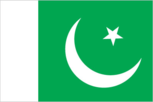
Flag of Pakistan

Pakistan

South Asia · Islamabad · federal parliamentary republic

What Pakistan means for your money — the prices you pay, the tariffs in motion, and where U.S. policy could change both.
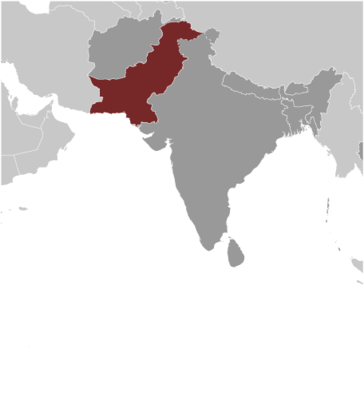
Map showing the location of Pakistan

$5.4B

U.S. imports, 2025

+5.9%

change in one year

$3.1B

U.S. exports, 2025

257M

Population

$373.1B

GDP

In your house

What you buy that Pakistan makes

America bought $5.4B in goods from Pakistan in 2025. Of every $100 of it, here's where the money went.

Apparel, household goods - cotton

cotton clothing and linens

$3.4B63.3%

Apparel, textiles, nonwool or cotton

synthetic and performance apparel

$442M8.2%

Cotton cloth, fabrics

$167M3.1%

Apparel,household goods-nontextile

leather goods and accessories

$161M3%

Medicinal equipment

medical devices and equipment

$134M2.5%

Camping apparel and gear

camping gear and outdoor apparel

$131M2.4%

Plastic materials

plastics for packaging and goods

$85M1.6%

Toys, games, and sporting goods

toys, games, sporting goods

$74M1.4%

Bakery products

$63M1.2%

Hair, waste materials

$61M1.1%

2026 so far (through April): $1.6B in imports. Source: U.S. Census Bureau, International Trade in Goods (customs basis).

The other direction

What America sells to Pakistan

$3.1B in 2025 — a trade rupture cuts both ways, for American producers as well as American prices.

Cotton, raw

$743M

Soybeans

$560M

meat at the counter

Steelmaking materials

$351M

Crude oil

$201M

Civilian aircraft, engines, equipment, and parts

$171M

Industrial engines

$118M

Pulpwood and woodpulp

$67M

Petroleum products, other

$61M

Agric. farming-unmanufactured

$58M

Where you stand

U.S. tariff posture toward Pakistan

Pakistan reached a trade deal on July 30, 2025 cutting its reciprocal tariff from 29% to 19% (effective August 7) in exchange for U.S.-Pakistan cooperation on developing Pakistan's oil reserves and Pakistan withdrawing its 5% digital services tax. The 19% rate gave its textile and apparel exporters a slight edge over Bangladesh and Vietnam (20%) and was far below India's 50%. Executive Order 14389 (Ending Certain Tariff Actions, Feb 20, 2026) terminated the IEEPA reciprocal duties, and Proclamation 11012 replaced it with a 10% Section 122 temporary import surcharge effective February 24, 2026. Pakistan has no Section 232 steel/aluminum exposure.

Reciprocal tariff (assigned — terminated)

29%

The rate this country was assigned under the EO 14257 reciprocal Annex — no longer in force. The Supreme Court struck down the IEEPA tariffs and they were terminated February 24, 2026 (EO 14389), replaced by a universal ~10% Section 122 surcharge. See the timeline below for the current effective rate.

Policy in motion

Tariff status: a moving target

U.S. tariff policy toward Pakistan has changed 5 times since 2025. This page tracks it.

  1. 2026-02-24

    IEEPA reciprocal tariffs terminated — replaced by 10% Section 122

    In effect

    Executive Order 14389 (Ending Certain Tariff Actions) terminated the IEEPA tariff duties effective February 24, 2026, replacing Pakistan's 19% reciprocal rate with a 10% Section 122 temporary import surcharge under Proclamation 11012 (capped at 150 days).

    91 FR 9437
  2. 2025-08-07

    19% reciprocal rate takes effect for Pakistan

    In effect

    Executive Order 14326 set the post-pause Annex I reciprocal rates; Pakistan's rate was set at 19% effective for goods entered on or after August 7, 2025 — slightly below regional peers Bangladesh and Vietnam at 20%.

    90 FR 37963
  3. 2025-07-30

    U.S.-Pakistan trade deal cuts rate to 19%

    Agreement

    Pakistan announced a trade deal reducing its reciprocal tariff from 29% to 19%, paired with U.S.-Pakistan cooperation on developing Pakistan's oil reserves and Pakistan's withdrawal of its 5% digital services tax. The cut was confirmed by Executive Order on July 31.

    Source
  4. 2025-04-10

    Elevated reciprocal rates paused to 10% for 90 days

    In effect

    Executive Order 14266 suspended the higher country-specific reciprocal rates — including Pakistan's 29% — back to the 10% baseline for 90 days to allow negotiations.

    90 FR 15625
  5. 2025-04-05

    Reciprocal tariff regime begins — Pakistan assigned 29%

    In effect

    Executive Order 14257 imposed a 10% universal reciprocal duty effective April 5 and a 29% country-specific rate for Pakistan scheduled to take effect April 9 — a serious threat to its textile-led export economy.

    90 FR 15041

Reference

The country itself

South Asia · Geography, people, economy, and government — public-domain data from the CIA World Factbook.

The Indus Valley civilization, one of the oldest in the world and dating back at least 5,000 years, spread over much of modern-day Pakistan. During the second millennium B.C., remnants of this culture fused with the migrating Indo-Aryan peoples. The area underwent successive invasions in subsequent centuries from the Persians, Greeks, Scythians, Arabs (who brought Islam), Afghans, and Turks. The Mughal Empire flourished in the 16th and 17th centuries; the British came to dominate the region in the 18th century. The partition in 1947 of British India into the Muslim state of Pakistan (with West and East sections) and largely Hindu India created lasting tension between the two countries. They have fought two wars and a limited conflict -- in 1947-48, 1965, and 1999 respectively -- over the Kashmir territory, a dispute that continues to this day. A third war in 1971 -- in which India assisted an indigenous movement reacting to Bengali marginalization in Pakistani politics -- resulted in East Pakistan becoming the separate nation of Bangladesh. In response to Indian nuclear weapons testing, Pakistan conducted its own tests in 1998. Pakistan has been engaged in a decades-long armed conflict with militant groups, including the Tehreek-e-Taliban Pakistan (TTP) and other militant networks that target government institutions and civilians.
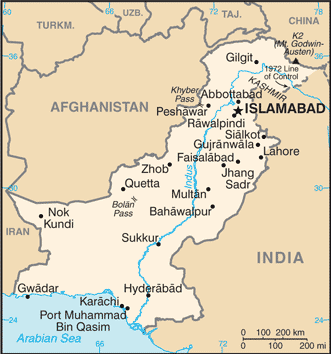
Regional map of Pakistan

Geography

Location
Southern Asia, bordering the Arabian Sea, between India on the east and Iran and Afghanistan on the west and China in the north
Area
796,095 sq km
Climate
mostly hot, dry desert; temperate in northwest; arctic in north
Terrain
divided into three major geographic areas: the northern highlands, the Indus River plain in the center and east, and the Balochistan Plateau in the south and west
Natural resources
arable land, extensive natural gas reserves, limited petroleum, poor quality coal, iron ore, copper, salt, limestone
Coastline
1,046 km
Natural hazards
frequent earthquakes, occasionally severe especially in north and west; flooding along the Indus after heavy rains (July and August)

People & society

Population
257,047,044 (2025 est.)
Nationality
Pakistani(s)
Ethnic groups
Punjabi 44.7%, Pashtun (Pathan) 15.4%, Sindhi 14.1%, Saraiki 8.4%, Muhajirs 7.6%, Baloch 3.6%, other 6.3%
Languages
Punjabi 38.8%, Pashto (alternate name, Pashtu) 18.2%, Sindhi 14.6%, Saraiki (a Punjabi variant) 12.2%, Urdu 7.1%, Balochi 3%, Hindko 2.4%, Brahui 1.2%, other 2.4%
Religions
Muslim 96.4%, Hindu 1.6%, Christian 1.4%; less than 1%: scheduled castes, Qadiani/Ahmadi, other, Sikh. (2020 est.)
Median age
23.2 years (2025 est.)
Life expectancy at birth
70.3 years (2024 est.)
Literacy
58.9% (2021 est.)

Economy

Economic overview
lower middle-income South Asian economy; extremely high debt; endemic corruption; regional disputes with India and Afghanistan hinder investment; falling inflation, IMF relief programs, and strong agricultural output slowly contributing to economic recovery
Industries
textiles and apparel, food processing, pharmaceuticals, surgical instruments, construction materials, paper products, fertilizer, shrimp
Agricultural products
sugarcane, bison milk, wheat, milk, rice, maize, potatoes, cotton, mangoes/guavas, chicken (2023)
Exports - partners
USA 14%, UAE 10%, China 9%, Germany 7%, UK 6% (2023)
Imports - partners
China 25%, Qatar 11%, UAE 9%, Saudi Arabia 8%, Indonesia 6% (2023)

Government

Government type
federal parliamentary republic
Capital
Islamabad
Independence
14 August 1947 (from British India)
Constitution
several previous; latest endorsed 12 April 1973, passed 19 April 1973, entered into force 14 August 1973 (suspended and restored several times)
Executive branch
President Asif Ali ZARDARI (since 10 March 2024)
Legislative branch
Parliament (Majlis-E-Shoora)

Full reference data

Every field, by section — CIA World Factbook. Open a topic to expand it.

Introduction
Background
The Indus Valley civilization, one of the oldest in the world and dating back at least 5,000 years, spread over much of modern-day Pakistan. During the second millennium B.C., remnants of this culture fused with the migrating Indo-Aryan peoples. The area underwent successive invasions in subsequent centuries from the Persians, Greeks, Scythians, Arabs (who brought Islam), Afghans, and Turks. The Mughal Empire flourished in the 16th and 17th centuries; the British came to dominate the region in the 18th century. The partition in 1947 of British India into the Muslim state of Pakistan (with West and East sections) and largely Hindu India created lasting tension between the two countries. They have fought two wars and a limited conflict -- in 1947-48, 1965, and 1999 respectively -- over the Kashmir territory, a dispute that continues to this day. A third war in 1971 -- in which India assisted an indigenous movement reacting to Bengali marginalization in Pakistani politics -- resulted in East Pakistan becoming the separate nation of Bangladesh. In response to Indian nuclear weapons testing, Pakistan conducted its own tests in 1998. Pakistan has been engaged in a decades-long armed conflict with militant groups, including the Tehreek-e-Taliban Pakistan (TTP) and other militant networks that target government institutions and civilians.
Travel Facts
US State Dept Travel Advisory
The US Department of State currently recommends US citizens Reconsider Travel to Pakistan due to terrorism. Some areas have increased risk. Consult its website via the link below for updates to travel advisories and statements on safety, security, local laws, and special circumstances in this country. https://travel.state.gov/content/travel/en/traveladvisories/traveladvisories.html
Passport/Visa Requirements
US citizens should make sure their passport will not expire for at least 6 months after they enter the country even if they do not intend to stay that long. They should also make sure they have at least 2 blank pages in their passport for any entry stamp and or visa that will be required. A visa is required. US citizens will need to get in touch with the country’s embassy or nearest consulate to obtain a visa prior to visiting the country.
US Embassy/Consulate
[92] (51) 201-5000/ [92] (51) 201-4000; US Embassy in Islamabad, Diplomatic Enclave, Ramna 5, Islamabad, Pakistan; ACSIslamabad@state.gov; https://pk.usembassy.gov/
Telephone Code
92
Local Emergency Phone
15
Vaccinations
An International Certificate of Vaccination for yellow fever is required for travelers arriving from countries with a risk of yellow fever transmission and for travelers having transited through the airport of a country with risk of yellow fever transmission. Polio vaccination within one year before travel may be required to exit Pakistan. See WHO recommendations. Note: Pakistan is one of two countries with endemic wild polio virus and considered high risk for international spread of the disease. Before any international travel, anyone unvaccinated, incompletely vaccinated, or with an unknown polio vaccination status should complete the routine polio vaccine series; in addition, before travel to any high-risk destination, Centers for Disease Control and Prevention (CDC) recommends that adults who previously completed the full, routine polio vaccine series receive a single, lifetime booster dose of polio vaccine. http://www.who.int/
Climate
Mostly hot, dry desert; temperate in northwest; arctic in north
Currency (Code)
Pakistani rupees (PKR)
Electricity/Voltage/Plug Type(s)
230 V / 50 Hz / plug types(s): C, D
Major Languages
Punjabi, Sindhi, Pashto, Urdu, Balochi, Hindko, English
Major Religions
Muslim (official) 96.5% (Sunni 85-90%, Shia 10-15%), other (includes Christian and Hindu) 3.5%
Time Difference
UTC+5 (10 hours ahead of Washington, DC, during Standard Time)
Potable Water
Opt for bottled water
International Driving Permit
Suggested
Road Driving Side
Left
Tourist Destinations
Islamabad (includes Pakistan Monument Museum, Faisal Mosque); Naltar Valley & Lakes; Neelum Valley; Skardu; Gojal Valley; Deosai National Park; Lahore (includes Badshahi Mosque, Lahore Fort, Shalimar Gardens); Hunza Valley (includes Baltit Fort); Mohenjo daro
Major Sports
Cricket, field hockey, squash, soccer, polo
Cultural Practices
Pakistani culture is very hierarchical, with age being one of the most important aspects, if not the most important. When interacting with Pakistanis, greet and show deference to the eldest person. It is impolite to start eating before the eldest member at the table has begun to eat.
Tipping Guidelines
Tipping about 30-50 rupees at local restaurants is greatly appreciated. It is best to tip hotel staff directly or leave small change on the table of your hotel room. Taxis do not usually expect a tip.
Souvenirs
Shawls, carpets, onyx and other gemstones and jewelry, inlaid wood furniture and crafts
Traditional Cuisine
Chicken Biryani — a rice dish layered with curried chicken, herbs, biryani spices (including curry, turmeric, allspice, and cardamom), and sometimes potatoes or eggs
CIA source last updated
Tuesday, February 14, 2023
Travel resources

Please visit the following links to find further information about your desired destination.

World Health Organization (WHO) - To learn what vaccines and health precautions to take while visiting your destination.

US State Dept Travel Information - Overall information about foreign travel for US citizens.

To obtain an international driving permit (IDP). Only two organizations in the US issue IDPs: American Automobile Association (AAA) and American Automobile Touring Alliance (AATA)

How to get help in an emergency? Contact the nearest US embassy or consulate, or call one of these numbers: from the US or Canada - 1-888-407-4747 or from Overseas - +1 202-501-4444

Page last updated: Tuesday, February 14, 2023

Geography
Location
Southern Asia, bordering the Arabian Sea, between India on the east and Iran and Afghanistan on the west and China in the north
Geographic coordinates
30 00 N, 70 00 E
Map references
Asia
Area - total
796,095 sq km
Area - land
770,875 sq km
Area - water
25,220 sq km
Area - comparative
slightly more than five times the size of Georgia; slightly less than twice the size of California
Land boundaries - total
7,257 km
Land boundaries - border countries
Afghanistan 2,670 km; China 438 km; India 3,190 km; Iran 959 km
Coastline
1,046 km
Maritime claims - territorial sea
12 nm
Maritime claims - contiguous zone
24 nm
Maritime claims - exclusive economic zone
200 nm
Maritime claims - continental shelf
200 nm or to the edge of the continental margin
Climate
mostly hot, dry desert; temperate in northwest; arctic in north
Terrain
divided into three major geographic areas: the northern highlands, the Indus River plain in the center and east, and the Balochistan Plateau in the south and west
Elevation - highest point
K2 (Mt. Godwin-Austen) 8,611 m
Elevation - lowest point
Arabian Sea 0 m
Elevation - mean elevation
900 m
Natural resources
arable land, extensive natural gas reserves, limited petroleum, poor quality coal, iron ore, copper, salt, limestone
Land use - agricultural land
46.7% (2023 est.)
Land use - agricultural land: arable land
arable land: 39.3% (2023 est.)
Land use - agricultural land: permanent crops
permanent crops: 1% (2023 est.)
Land use - agricultural land: permanent pasture
permanent pasture: 6.5% (2023 est.)
Land use - forest
4.1% (2023 est.)
Land use - other
49.2% (2023 est.)
Irrigated land
194,200 sq km (2022)
Major rivers (by length in km)
Indus river mouth (shared with China [s] and India) - 3,610 km; Sutlej river mouth (shared with China [s] and India) - 1,372 km; Chenab river mouth (shared with India [s]) - 1,086 km note: [s] after country name indicates river source; [m] after country name indicates river mouth
Major watersheds (area sq km) - Indian Ocean drainage
Indus (1,081,718 sq km)
Major watersheds (area sq km) - Internal (endorheic basin) drainage
Tarim Basin (1,152,448 sq km), (Aral Sea basin) Amu Darya (534,739 sq km)
Major aquifers
Indus Basin
Population distribution
the Indus River and its tributaries attract most of the settlement, with Punjab province the most densely populated
Natural hazards
frequent earthquakes, occasionally severe especially in north and west; flooding along the Indus after heavy rains (July and August)
Geography - note
controls Khyber Pass and Bolan Pass, traditional invasion routes between Central Asia and India
People and Society
Population - total
257,047,044 (2025 est.)
Population - male
130,727,015
Population - female
126,320,029
Nationality - noun
Pakistani(s)
Nationality - adjective
Pakistani
Ethnic groups
Punjabi 44.7%, Pashtun (Pathan) 15.4%, Sindhi 14.1%, Saraiki 8.4%, Muhajirs 7.6%, Baloch 3.6%, other 6.3%
Languages - Languages
Punjabi 38.8%, Pashto (alternate name, Pashtu) 18.2%, Sindhi 14.6%, Saraiki (a Punjabi variant) 12.2%, Urdu 7.1%, Balochi 3%, Hindko 2.4%, Brahui 1.2%, other 2.4%
Languages - major-language sample(s)
دنیا کا قاموس، ایک لازمی زریہ بنیادی معلومات کا (Urdu) The World Factbook, the indispensable source for basic information.
Languages - note
note: data represent population by mother tongue; English (official; lingua franca of Pakistani elite and most government ministries)
Religions
Muslim 96.4%, Hindu 1.6%, Christian 1.4%; less than 1%: scheduled castes, Qadiani/Ahmadi, other, Sikh. (2020 est.)
Age structure - 0-14 years
34.4% (male 44,330,669/female 42,529,007)
Age structure - 15-64 years
60.7% (male 78,321,834/female 74,833,003)
Age structure - 65 years and over
4.9% (2024 est.) (male 5,735,294/female 6,613,764)
Dependency ratios - total dependency ratio
64 (2025 est.)
Dependency ratios - youth dependency ratio
55.8 (2025 est.)
Dependency ratios - elderly dependency ratio
8.2 (2025 est.)
Dependency ratios - potential support ratio
12.1 (2025 est.)
Median age - total
23.2 years (2025 est.)
Median age - male
22.8 years
Median age - female
23 years
Population growth rate
1.82% (2025 est.)
Birth rate
25.05 births/1,000 population (2025 est.)
Death rate
5.79 deaths/1,000 population (2025 est.)
Net migration rate
-1.1 migrant(s)/1,000 population (2025 est.)
Population distribution
the Indus River and its tributaries attract most of the settlement, with Punjab province the most densely populated
Urbanization - urban population
38% of total population (2023)
Urbanization - rate of urbanization
2.1% annual rate of change (2020-25 est.)
Major urban areas - population
17.236 million Karachi, 13.979 million Lahore, 3.711 million Faisalabad, 2.415 million Gujranwala, 2.412 million Peshawar, 1.232 million ISLAMABAD (capital) (2023)
Sex ratio - at birth
1.05 male(s)/female
Sex ratio - 0-14 years
1.04 male(s)/female
Sex ratio - 15-64 years
1.05 male(s)/female
Sex ratio - 65 years and over
0.87 male(s)/female
Sex ratio - total population
1.04 male(s)/female (2024 est.)
Mother's mean age at first birth
22.8 years (2017/18 est.)
Mother's mean age at first birth - note
note: data represents median age at first birth among women 25-49
Maternal mortality ratio
155 deaths/100,000 live births (2023 est.)
Infant mortality rate - total
50.3 deaths/1,000 live births (2025 est.)
Infant mortality rate - male
56 deaths/1,000 live births
Infant mortality rate - female
46.8 deaths/1,000 live births
Life expectancy at birth - total population
70.3 years (2024 est.)
Life expectancy at birth - male
68.2 years
Life expectancy at birth - female
72.5 years
Total fertility rate
3.25 children born/woman (2025 est.)
Gross reproduction rate
1.59 (2025 est.)
Drinking water source - improved: urban
urban: 92.9% of population (2022 est.)
Drinking water source - improved: rural
rural: 89.3% of population (2022 est.)
Drinking water source - improved: total
total: 90.6% of population (2022 est.)
Drinking water source - unimproved: urban
urban: 7.1% of population (2022 est.)
Drinking water source - unimproved: rural
rural: 10.7% of population (2022 est.)
Drinking water source - unimproved: total
total: 9.4% of population (2022 est.)
Health expenditure - Health expenditure (as % of GDP)
2.9% of GDP (2021)
Health expenditure - Health expenditure (as % of national budget)
5.6% of national budget (2022 est.)
Physician density
1.16 physicians/1,000 population (2021)
Hospital bed density
0.5 beds/1,000 population (2019 est.)
Sanitation facility access - improved: urban
urban: 90.5% of population (2022 est.)
Sanitation facility access - improved: rural
rural: 76.1% of population (2022 est.)
Sanitation facility access - improved: total
total: 81.5% of population (2022 est.)
Sanitation facility access - unimproved: urban
urban: 9.5% of population (2022 est.)
Sanitation facility access - unimproved: rural
rural: 23.9% of population (2022 est.)
Sanitation facility access - unimproved: total
total: 18.5% of population (2022 est.)
Obesity - adult prevalence rate
8.6% (2016)
Alcohol consumption per capita - total
0.04 liters of pure alcohol (2019 est.)
Alcohol consumption per capita - beer
0 liters of pure alcohol (2019 est.)
Alcohol consumption per capita - wine
0 liters of pure alcohol (2019 est.)
Alcohol consumption per capita - spirits
0.04 liters of pure alcohol (2019 est.)
Alcohol consumption per capita - other alcohols
0 liters of pure alcohol (2019 est.)
Tobacco use - total
15.5% (2025 est.)
Tobacco use - male
25.7% (2025 est.)
Tobacco use - female
5.4% (2025 est.)
Children under the age of 5 years underweight
23.1% (2018 est.)
Currently married women (ages 15-49)
63.4% (2018 est.)
Child marriage - women married by age 15
3.6% (2018)
Child marriage - women married by age 18
18.3% (2018)
Child marriage - men married by age 18
4.7% (2018)
Education expenditure - Education expenditure (% GDP)
1.9% of GDP (2023 est.)
Education expenditure - Education expenditure (% national budget)
9.8% national budget (2023 est.)
Literacy - total population
58.9% (2021 est.)
Literacy - male
69.1% (2021 est.)
Literacy - female
48.5% (2021 est.)
School life expectancy (primary to tertiary education) - total
8 years (2022 est.)
School life expectancy (primary to tertiary education) - male
8 years (2022 est.)
School life expectancy (primary to tertiary education) - female
7 years (2022 est.)
Government
Country name - conventional long form
Islamic Republic of Pakistan
Country name - conventional short form
Pakistan
Country name - local long form
Jamhuryat Islami Pakistan
Country name - local short form
Pakistan
Country name - former
West Pakistan
Country name - etymology
the name is said to have been proposed in the early 1930s by Muslim students at Cambridge University, created from the initials of Punjab, Afghanistan, and Kashmir; the word pak also means "pure" in Persian or Pashto, and the Persian suffix - stan means "place of" or "country," so Pakistan literally means "Land of the Pure"
Government type
federal parliamentary republic
Capital - name
Islamabad
Capital - geographic coordinates
33 41 N, 73 03 E
Capital - time difference
UTC+5 (10 hours ahead of Washington, DC, during Standard Time)
Capital - etymology
the name means "city of Islam" and derives from the Arabic islam , referring to the Islamic faith, and the Persian suffix -abad , meaning "inhabited place" or "city"
Administrative divisions
4 provinces, 2 Pakistan-administered areas*, and 1 capital territory**; Azad Kashmir*, Balochistan, Gilgit-Baltistan*, Islamabad Capital Territory**, Khyber Pakhtunkhwa, Punjab, Sindh
Legal system
common law system with Islamic law influence
Constitution - history
several previous; latest endorsed 12 April 1973, passed 19 April 1973, entered into force 14 August 1973 (suspended and restored several times)
Constitution - amendment process
proposed by the Senate or by the National Assembly; passage requires at least two-thirds majority vote of both houses
International law organization participation
accepts compulsory ICJ jurisdiction with reservations; non-party state to the ICCt
Citizenship - citizenship by birth
yes
Citizenship - citizenship by descent only
at least one parent must be a citizen of Pakistan
Citizenship - dual citizenship recognized
yes, but limited to select countries
Citizenship - residency requirement for naturalization
4 out of the previous 7 years and including the 12 months preceding application
Suffrage
18 years of age; universal
Suffrage - note
note: women and non-Muslims have joint electorates and reserved parliamentary seats
Executive branch - chief of state
President Asif Ali ZARDARI (since 10 March 2024)
Executive branch - head of government
Prime Minister Muhammad Shehbaz SHARIF (since 3 March 2024)
Executive branch - cabinet
Cabinet appointed by the president on the advice of the prime minister
Executive branch - election/appointment process
president indirectly elected for a 5-year term (limited to 2 consecutive terms) by the Electoral College, which consists of members of the Senate, National Assembly, and provincial assemblies; prime minister elected for a 5-year term by the National Assembly
Executive branch - most recent election date
9 March 2024
Executive branch - election results
2024: Asif Ali ZARDARI elected president; National Assembly vote - Asif Ali ZARDARI (PPP) 411 votes, Mehmood Khan ACHAKZALI (PMAP) 181 votes; Shehbaz SHARIF elected prime minister; National Assembly vote - Shehbaz SHARIF (PML-N) 201, Omar AYUB (PTI) 92
Executive branch - expected date of next election
2029
Legislative branch - legislature name
Parliament (Majlis-E-Shoora)
Legislative branch - legislative structure
bicameral
Legislative branch - lower chamber - chamber name
National Assembly
Legislative branch - lower chamber - number of seats
336 (all directly elected)
Legislative branch - lower chamber - electoral system
plurality/majority
Legislative branch - lower chamber - scope of elections
full renewal
Legislative branch - lower chamber - term in office
5 years
Legislative branch - lower chamber - most recent election date
2/8/2024
Legislative branch - lower chamber - parties elected and seats per party
Pakistan Muslim League-Nawaz (PML-N) (75); Pakistan People's Party Parliamentarians (PPPP) (54); Muttahida Quami Movement Pakistan (MQMP) (17); Independents (101); Other (16)
Legislative branch - lower chamber - percentage of women in chamber
17%
Legislative branch - lower chamber - expected date of next election
February 2029
Legislative branch - upper chamber - chamber name
Senate
Legislative branch - upper chamber - number of seats
96 (all indirectly elected)
Legislative branch - upper chamber - scope of elections
partial renewal
Legislative branch - upper chamber - term in office
6 years
Legislative branch - upper chamber - most recent election date
4/2/2024
Legislative branch - upper chamber - percentage of women in chamber
18.8%
Legislative branch - upper chamber - expected date of next election
March 2027
Judicial branch - highest court(s)
Supreme Court of Pakistan (consists of the chief justice and 16 judges)
Judicial branch - judge selection and term of office
justices nominated by an 8-member parliamentary committee on the recommendation of the Judicial Commission, a 9-member body of judges and other judicial professionals, and appointed by the president; justices can serve until age 65
Judicial branch - subordinate courts
High Courts; Federal Shariat Court; provincial and district civil and criminal courts; specialized courts for issues, such as taxation, banking, and customs
Political parties
Awami National Party or ANP Awami Muslim League or AML Balochistan Awami Party or BAP Balochistan National Party-Awami or BNP-A Balochistan National Party-Mengal or BNP-M Grand Democratic Alliance or GDA (alliance of several parties) Hazara Democratic Party or HDP Istehkam-e-Pakistan Party Jamaat-e-Islami or JI Jamhoori Wattan Party or JWP Jamiat Ulema-e-Islam-Fazl or JUI-F Majlis Wahdat-e-Muslimeen Pakistan or MWM Muttahida Majlis-e-Amal or MMA (alliance of several parties) Muttahida Qaumi Movement-Pakistan or MQM-P National Party or NP Pakistan Muslim League or PML-Z Pakistan Muslim League-Functional or PML-F Pakistan Muslim League-Nawaz or PML-N Pakistan Muslim League-Quaid-e-Azam or PML-Q Pakistan Peoples Party or PPP Pakistan Rah-e-Haq Party or PRHP Pakistan Tehrik-e Insaaf or PTI (Pakistan Movement for Justice) Pashtoonkhwa Milli Awami Party or PMAP or PKMAP Tehreek-e-Labbaik Pakistan or TLP
Diplomatic representation in the US - chief of mission
Ambassador Rizwan Saeed SHEIKH (since 18 September 2024)
Diplomatic representation in the US - chancery
3517 International Court NW, Washington, DC 20008
Diplomatic representation in the US - telephone
[1] (202) 243-6500
Diplomatic representation in the US - FAX
[1] (202) 686-1534
Diplomatic representation in the US - email address and website
Diplomatic representation in the US - consulate(s) general
Chicago, Houston, Los Angeles, New York
Diplomatic representation from the US - chief of mission
Ambassador (vacant); Chargé d’Affaires Natalie A. BAKER (since January 2025)
Diplomatic representation from the US - embassy
Diplomatic Enclave, Ramna 5, Islamabad
Diplomatic representation from the US - mailing address
8100 Islamabad Place, Washington, DC 20521-8100
Diplomatic representation from the US - telephone
[92] 051-201-4000
Diplomatic representation from the US - FAX
[92] 51-2338071
Diplomatic representation from the US - email address and website
Diplomatic representation from the US - consulate(s) general
Karachi, Lahore, Peshawar
International organization participation
ADB, AIIB, ARF, ASEAN (sectoral dialogue partner), C, CERN (associate member), CICA, CP, D-8, ECO, FAO, G-11, G-24, G-77, IAEA, IBRD, ICAO, ICC (national committees), ICRM, IDA, IDB, IFAD, IFC, IFRCS, IHO, ILO, IMF, IMO, IMSO, Interpol, IOC, IOM, IPU, ISO, ITSO, ITU, ITUC (NGOs), MIGA, MINURCAT, MINURSO, MINUSCA, MONUSCO, NAM, OAS (observer), OIC, OPCW, PCA, SAARC, SACEP, SCO, UN, UNAMID, UNCTAD, UNESCO, UNFICYP, UNHCR, UNIDO, UNISFA, UNISFA, UNMISS, UNOOSA, UNSOS, UNWTO, UPU, WCO, WFTU (NGOs), WHO, WIPO, WMO, WTO
Independence
14 August 1947 (from British India)
National holiday
Pakistan Day, 23 March, also referred to as Pakistan Resolution Day (1940) or Republic Day (1956)
National holiday - note
note: commemorates the adoption of the Lahore Resolution on 23 March 1940, which called for the creation of independent Muslim states, and also the adoption of Pakistan's first constitution on 23 March 1956, during the transition to the Islamic Republic of Pakistan
Flag
description: green with a vertical white band on the left side; a large white crescent and star are centered in the green field meaning: the crescent, star, and color green are all traditional Islamic symbols; the white band symbolizes the role of religious minorities
National symbol(s)
five-pointed star between the horns of a waxing crescent moon, jasmine
National color(s)
green, white
National anthem(s) - title
"Qaumi Tarana" (National Anthem)
National anthem(s) - lyrics/music
Abu-Al-Asar Hafeez JULLANDHURI/Ahmed Ghulamali CHAGLA
National anthem(s) - history
adopted 1954; also known as "Pak sarzamin shad bad" (Blessed Be the Sacred Land)
National heritage - total World Heritage Sites
6 (all cultural)
National heritage - selected World Heritage Site locales
Archaeological Ruins at Moenjodaro; Buddhist Ruins of Takht-i-Bahi; Taxila; Fort and Shalamar Gardens in Lahore; Historical Monuments at Makli, Thatta; Rohtas Fort
Economy
Economic overview
lower middle-income South Asian economy; extremely high debt; endemic corruption; regional disputes with India and Afghanistan hinder investment; falling inflation, IMF relief programs, and strong agricultural output slowly contributing to economic recovery
Real GDP (purchasing power parity) - Real GDP (purchasing power parity) 2024
$1.39 trillion (2024 est.)
Real GDP (purchasing power parity) - Real GDP (purchasing power parity) 2023
$1.346 trillion (2023 est.)
Real GDP (purchasing power parity) - Real GDP (purchasing power parity) 2022
$1.347 trillion (2022 est.)
Real GDP (purchasing power parity) - note
note: data in 2021 dollars
Real GDP growth rate - Real GDP growth rate 2024
3.2% (2024 est.)
Real GDP growth rate - Real GDP growth rate 2023
0% (2023 est.)
Real GDP growth rate - Real GDP growth rate 2022
4.8% (2022 est.)
Real GDP growth rate - note
note: annual GDP % growth based on constant local currency
Real GDP per capita - Real GDP per capita 2024
$5,500 (2024 est.)
Real GDP per capita - Real GDP per capita 2023
$5,400 (2023 est.)
Real GDP per capita - Real GDP per capita 2022
$5,500 (2022 est.)
Real GDP per capita - note
note: data in 2021 dollars
GDP (official exchange rate)
$373.072 billion (2024 est.)
GDP (official exchange rate) - note
note: data in current dollars at official exchange rate
Inflation rate (consumer prices) - Inflation rate (consumer prices) 2024
12.6% (2024 est.)
Inflation rate (consumer prices) - Inflation rate (consumer prices) 2023
30.8% (2023 est.)
Inflation rate (consumer prices) - Inflation rate (consumer prices) 2022
19.9% (2022 est.)
Inflation rate (consumer prices) - note
note: annual % change based on consumer prices
GDP - composition, by sector of origin - agriculture
23.5% (2024 est.)
GDP - composition, by sector of origin - industry
20% (2024 est.)
GDP - composition, by sector of origin - services
50.5% (2024 est.)
GDP - composition, by sector of origin - note
note: figures may not total 100% due to non-allocated consumption not captured in sector-reported data
GDP - composition, by end use - household consumption
85.2% (2024 est.)
GDP - composition, by end use - government consumption
8.5% (2024 est.)
GDP - composition, by end use - investment in fixed capital
11.2% (2024 est.)
GDP - composition, by end use - investment in inventories
1.7% (2024 est.)
GDP - composition, by end use - exports of goods and services
10.4% (2024 est.)
GDP - composition, by end use - imports of goods and services
-17.1% (2024 est.)
GDP - composition, by end use - note
note: figures may not total 100% due to rounding or gaps in data collection
Agricultural products
sugarcane, bison milk, wheat, milk, rice, maize, potatoes, cotton, mangoes/guavas, chicken (2023)
Agricultural products - note
note: top ten agricultural products based on tonnage
Industries
textiles and apparel, food processing, pharmaceuticals, surgical instruments, construction materials, paper products, fertilizer, shrimp
Industrial production growth rate
-1.7% (2024 est.)
Industrial production growth rate - note
note: annual % change in industrial value added based on constant local currency
Labor force
83.644 million (2024 est.)
Labor force - note
note: number of people ages 15 or older who are employed or seeking work
Unemployment rate - Unemployment rate 2024
5.5% (2024 est.)
Unemployment rate - Unemployment rate 2023
5.5% (2023 est.)
Unemployment rate - Unemployment rate 2022
5.5% (2022 est.)
Unemployment rate - note
note: % of labor force seeking employment
Youth unemployment rate (ages 15-24) - total
9.9% (2024 est.)
Youth unemployment rate (ages 15-24) - male
9.8% (2024 est.)
Youth unemployment rate (ages 15-24) - female
10.1% (2024 est.)
Youth unemployment rate (ages 15-24) - note
note: % of labor force ages 15-24 seeking employment
Population below poverty line
21.9% (2018 est.)
Population below poverty line - note
note: % of population with income below national poverty line
Gini Index coefficient - distribution of family income - Gini Index coefficient - distribution of family income 2018
29.6 (2018 est.)
Gini Index coefficient - distribution of family income - note
note: index (0-100) of income distribution; higher values represent greater inequality
Average household expenditures - on food
37.8% of household expenditures (2023 est.)
Average household expenditures - on alcohol and tobacco
1.3% of household expenditures (2023 est.)
Household income or consumption by percentage share - lowest 10%
4.2% (2018 est.)
Household income or consumption by percentage share - highest 10%
25.5% (2018 est.)
Household income or consumption by percentage share - note
note: % share of income accruing to lowest and highest 10% of population
Remittances - Remittances 2024
9.4% of GDP (2024 est.)
Remittances - Remittances 2023
7.9% of GDP (2023 est.)
Remittances - Remittances 2022
8% of GDP (2022 est.)
Remittances - note
note: personal transfers and compensation between resident and non-resident individuals/households/entities
Budget - revenues
$40.774 billion (2015 est.)
Budget - expenditures
$49.558 billion (2015 est.)
Budget - note
note: central government revenues and expenses (excluding grants/extrabudgetary units/social security funds) converted to US dollars at average official exchange rate for year indicated
Public debt - Public debt 2016
67.6% of GDP (2016 est.)
Current account balance - Current account balance 2024
$699.22 million (2024 est.)
Current account balance - Current account balance 2023
-$1.039 billion (2023 est.)
Current account balance - Current account balance 2022
-$12.216 billion (2022 est.)
Current account balance - note
note: balance of payments - net trade and primary/secondary income in current dollars
Exports - Exports 2024
$40.219 billion (2024 est.)
Exports - Exports 2023
$36.215 billion (2023 est.)
Exports - Exports 2022
$38.967 billion (2022 est.)
Exports - note
note: balance of payments - exports of goods and services in current dollars
Exports - partners
USA 14%, UAE 10%, China 9%, Germany 7%, UK 6% (2023)
Exports - partners - note
note: top five export partners based on percentage share of exports
Exports - commodities
garments, fabric, refined petroleum, rice, cotton fabric (2023)
Exports - commodities - note
note: top five export commodities based on value in dollars
Imports - Imports 2024
$66.844 billion (2024 est.)
Imports - Imports 2023
$58.069 billion (2023 est.)
Imports - Imports 2022
$76.594 billion (2022 est.)
Imports - note
note: balance of payments - imports of goods and services in current dollars
Imports - partners
China 25%, Qatar 11%, UAE 9%, Saudi Arabia 8%, Indonesia 6% (2023)
Imports - partners - note
note: top five import partners based on percentage share of imports
Imports - commodities
natural gas, refined petroleum, crude petroleum, palm oil, plastics (2023)
Imports - commodities - note
note: top five import commodities based on value in dollars
Reserves of foreign exchange and gold - Reserves of foreign exchange and gold 2024
$18.408 billion (2024 est.)
Reserves of foreign exchange and gold - Reserves of foreign exchange and gold 2023
$13.73 billion (2023 est.)
Reserves of foreign exchange and gold - Reserves of foreign exchange and gold 2022
$9.927 billion (2022 est.)
Reserves of foreign exchange and gold - note
note: holdings of gold (year-end prices)/foreign exchange/special drawing rights in current dollars
Debt - external - Debt - external 2023
$89.148 billion (2023 est.)
Debt - external - note
note: present value of external debt in current US dollars
Exchange rates - Currency
Pakistani rupees (PKR) per US dollar -
Exchange rates - Exchange rates 2024
278.581 (2024 est.)
Exchange rates - Exchange rates 2023
280.356 (2023 est.)
Exchange rates - Exchange rates 2022
204.867 (2022 est.)
Exchange rates - Exchange rates 2021
162.906 (2021 est.)
Exchange rates - Exchange rates 2020
161.838 (2020 est.)
Energy
Electricity access - electrification - total population
95% (2022 est.)
Electricity access - electrification - urban areas
100%
Electricity access - electrification - rural areas
93%
Electricity - installed generating capacity
43.512 million kW (2023 est.)
Electricity - consumption
145.357 billion kWh (2023 est.)
Electricity - imports
481.25 million kWh (2023 est.)
Electricity - transmission/distribution losses
25.811 billion kWh (2023 est.)
Electricity generation sources - fossil fuels
60.4% of total installed capacity (2023 est.)
Electricity generation sources - nuclear
14.1% of total installed capacity (2023 est.)
Electricity generation sources - solar
0.7% of total installed capacity (2023 est.)
Electricity generation sources - wind
3.7% of total installed capacity (2023 est.)
Electricity generation sources - hydroelectricity
19.9% of total installed capacity (2023 est.)
Electricity generation sources - biomass and waste
1.1% of total installed capacity (2023 est.)
Nuclear energy - Number of operational nuclear reactors
6 (2025)
Nuclear energy - Number of nuclear reactors under construction
1 (2025)
Nuclear energy - Net capacity of operational nuclear reactors
3.26GW (2025 est.)
Nuclear energy - Percent of total electricity production
17.4% (2023 est.)
Nuclear energy - Number of nuclear reactors permanently shut down
1 (2025)
Coal - production
13.765 million metric tons (2023 est.)
Coal - consumption
30.191 million metric tons (2023 est.)
Coal - exports
900 metric tons (2023 est.)
Coal - imports
16.185 million metric tons (2023 est.)
Coal - proven reserves
2.857 billion metric tons (2023 est.)
Petroleum - total petroleum production
91,000 bbl/day (2023 est.)
Petroleum - refined petroleum consumption
645,000 bbl/day (2023 est.)
Petroleum - crude oil estimated reserves
540 million barrels (2021 est.)
Natural gas - production
27.476 billion cubic meters (2023 est.)
Natural gas - consumption
36.323 billion cubic meters (2023 est.)
Natural gas - imports
8.847 billion cubic meters (2023 est.)
Natural gas - proven reserves
592.219 billion cubic meters (2021 est.)
Energy consumption per capita - Total energy consumption per capita 2023
14.076 million Btu/person (2023 est.)
Communications
Telephones - fixed lines - total subscriptions
2.573 million (2023 est.)
Telephones - fixed lines - subscriptions per 100 inhabitants
1 (2023 est.)
Telephones - mobile cellular - total subscriptions
193 million (2024 est.)
Telephones - mobile cellular - subscriptions per 100 inhabitants
77 (2024 est.)
Broadcast media
120 satellite TV stations; 42 media companies/channels; state-run Pakistan Television Corporation (PTV) is the largest TV network, serves over 85 percent of the population with 9 TV channels; over 100 private cable and satellite channels; state-owned Pakistan Broadcasting Corporation (PBC or Radio Pakistan) has the largest radio audience, particularly in rural areas, with AM/SW/FM stations covering most of the country (2022)
Internet country code
.pk
Internet users - percent of population
27% (2023 est.)
Broadband - fixed subscriptions - total
3.36 million (2023 est.)
Broadband - fixed subscriptions - subscriptions per 100 inhabitants
1 (2023 est.)
Transportation
Civil aircraft registration country code prefix
AP
Airports
117 (2025)
Heliports
48 (2025)
Railways - total
11,881 km (2021)
Railways - narrow gauge
389 km (2021) 1.000-m gauge
Railways - broad gauge
11,492 km (2021) 1.676-m gauge (286 km electrified)
Merchant marine - total
60 (2023)
Merchant marine - by type
bulk carrier 5, oil tanker 9, other 46
Ports - total ports
3 (2024)
Ports - large
0
Ports - medium
2
Ports - small
1
Ports - very small
0
Ports - ports with oil terminals
2
Ports - key ports
Gwadar, Karachi, Muhamamad Bin Qasim
Military and Security
Military and security forces
Pakistan Armed Forces: Pakistan Army (includes National Guard), Pakistan Navy (includes Pakistan Marines, Pakistan Maritime Security Agency), Pakistan Air Force Ministry of Interior: Frontier Constabulary, Frontier Corps, National Police, Pakistan Coast Guard, Punjab (Pakistan) Rangers, Sindh (Pakistan) Rangers (2025)
Military and security forces - note
note: the National Guard is a paramilitary force and one of the Army's reserve forces; other Army reserves include the Pakistan Army Reserve, the Frontier Corps, and the Pakistan Rangers
Military expenditures - Military Expenditures 2024
2.5% of GDP (2024 est.)
Military expenditures - Military Expenditures 2023
3% of GDP (2023 est.)
Military expenditures - Military Expenditures 2022
4% of GDP (2022 est.)
Military expenditures - Military Expenditures 2021
4% of GDP (2021 est.)
Military expenditures - Military Expenditures 2020
4% of GDP (2020 est.)
Military and security service personnel strengths
approximately 650,000 active Armed Forces (2025)
Military equipment inventories and acquisitions
the military's inventory is a mix of mostly imported and some domestically produced armaments; the majority of its imported weapons are from China; other suppliers include France, Russia, Türkiye, Ukraine, the UK, and the US; Pakistan also has a domestic defense industry, which produces or co-produces such items as armored vehicles, aircraft, missiles, naval vessels (2025)
Military service age and obligation
16-28 years of age for voluntary military service for men and women; lower and upper age limits vary by military branch, position, and role; personnel cannot be deployed for combat until age 18 (2025)
Military deployments
1,400 Central African Republic (MINUSCA); 300 MONUSCO; 300 South Sudan (UNMISS); 575 Sudan (UNISFA) (2025)
Military - note
the Pakistan military is responsible for external defense but also has a domestic security role; its chief external focus is India; the military is the lead security agency in many areas of the former Federally Administered Tribal Areas (FATA) and has for decades conducted operations against various internal militant groups; it is also one of the longest serving and largest contributors to UN peacekeeping missions; China is its closest security partner the military operates largely independently and without effective civilian oversight; it has ruled the country for more than 30 years since independence in 1947 and continues to play a significant role in Pakistan's political arena; it also has a large stake in the country’s economic sector and is involved in a diverse array of commercial activities, including banking, construction of public projects, employment services, energy and power generation, fertilizer, food, housing, real estate, and security services Pakistan has fought four wars and several skirmishes with India; three of the wars have been over the disputed region of Jammu and Kashmir, the status of which has been unsettled since the UK's 1947 withdrawal and the partition and independence of India and Pakistan; a fragile cease-fire was reached in 2003, revised in 2018, and reaffirmed in 2021, although the militarized Line of Control which serves as the border remains contested, and India has accused Pakistan of backing armed separatists and terrorist organizations in the territory New Delhi controls; in the Spring of 2025, Indian held Pakistan responsible for a terrorist attack in India-controlled Kashmir and retaliated, sparking a brief cross-border conflict involving aircraft, artillery, drone, and missile strikes the Kashmir dispute also includes the Siachen Glacier, located in the Karakoram Mountain Range, which was seized by India in 1984 with Pakistan attempting to retake the area several times between 1985 and 1995; despite the 2003 cease-fire, both sides continue to maintain a permanent military presence there with outposts at altitudes above 20,000 feet (over 6,000 meters) where most casualties are due to extreme weather and the hazards of operating in the high mountain terrain of the world’s highest conflict, including avalanches, exposure, and altitude sickness (2025)
Terrorism
Terrorist group(s)
al-Qa’ida; al-Qa’ida in the Indian Subcontinent (AQIS); Balochistan Liberation Army (BLA); Haqqani Network (HQN); Harakat ul-Jihad-i-Islami (HUJI); Harakat ul-Mujahidin; Hizbul Mujahideen; Indian Mujahedeen; Islamic State of Iraq and ash-Sham-Khorasan (ISIS-K); Islamic State of Iraq and ash-Sham – India (ISI); Islamic State of ash-Sham – Pakistan (ISP); Islamic Movement of Uzbekistan (IMU); Jaish-e-Mohammed (JeM); Jaysh al Adl (Jundallah); Lashkar i Jhangvi (LJ); Lashkar-e Tayyiba (LeT); The Resistance Front (TRF); Tehrik-e-Taliban Pakistan (TTP)
Terrorist group(s) - note
note 1: details about the history, aims, leadership, organization, areas of operation, tactics, targets, weapons, size, and sources of support of the group(s) appear(s) in the Terrorism reference guide note 2: the Balochistan Liberation Army (BLA), an armed separatist group that targets security forces and civilians, has been active in Pakistan since the 2000s, mainly in ethnic Baloch areas of the country; in 2019, the US designated BLA as Specially Designated Global Terrorists
Transnational Issues
Refugees and internally displaced persons - refugees
1,759,332 (2024 est.)
Refugees and internally displaced persons - IDPs
224,813 (2024 est.)
Refugees and internally displaced persons - stateless persons
60 (2024 est.)
Illicit drugs - USG identification
major illicit drug-producing and/or drug-transit country major precursor-chemical producer (2025)
Environment
Environmental issues
water pollution from raw sewage, industrial wastes, and agricultural runoff; limited natural freshwater resources; most of the population does not have access to potable water; deforestation; soil erosion; desertification; air pollution and noise pollution in urban areas
International environmental agreements - party to
Antarctic-Environmental Protection, Antarctic-Marine Living Resources, Antarctic Treaty, Biodiversity, Climate Change, Climate Change-Kyoto Protocol, Climate Change-Paris Agreement, Desertification, Endangered Species, Environmental Modification, Hazardous Wastes, Law of the Sea, Marine Dumping-London Convention, Nuclear Test Ban, Ozone Layer Protection, Ship Pollution, Wetlands
International environmental agreements - signed, but not ratified
Marine Life Conservation
Climate
mostly hot, dry desert; temperate in northwest; arctic in north
Land use - agricultural land
46.7% (2023 est.)
Land use - agricultural land: arable land
arable land: 39.3% (2023 est.)
Land use - agricultural land: permanent crops
permanent crops: 1% (2023 est.)
Land use - agricultural land: permanent pasture
permanent pasture: 6.5% (2023 est.)
Land use - forest
4.1% (2023 est.)
Land use - other
49.2% (2023 est.)
Urbanization - urban population
38% of total population (2023)
Urbanization - rate of urbanization
2.1% annual rate of change (2020-25 est.)
Carbon dioxide emissions - total emissions
212.655 million metric tonnes of CO2 (2023 est.)
Carbon dioxide emissions - from coal and metallurgical coke
59.937 million metric tonnes of CO2 (2023 est.)
Carbon dioxide emissions - from petroleum and other liquids
93.713 million metric tonnes of CO2 (2023 est.)
Carbon dioxide emissions - from consumed natural gas
59.006 million metric tonnes of CO2 (2023 est.)
Particulate matter emissions
50.1 micrograms per cubic meter (2019 est.)
Methane emissions - energy
1,625.2 kt (2022-2024 est.)
Methane emissions - agriculture
5,381.3 kt (2019-2021 est.)
Methane emissions - waste
700.4 kt (2019-2021 est.)
Methane emissions - other
128.7 kt (2019-2021 est.)
Waste and recycling - municipal solid waste generated annually
30.76 million tons (2024 est.)
Waste and recycling - percent of municipal solid waste recycled
13.8% (2022 est.)
Total water withdrawal - municipal
9.65 billion cubic meters (2022 est.)
Total water withdrawal - industrial
1.4 billion cubic meters (2022 est.)
Total water withdrawal - agricultural
172.4 billion cubic meters (2022 est.)
Total renewable water resources
246.8 billion cubic meters (2022 est.)
Space
Space agency/agencies
Pakistan Space & Upper Atmosphere Research Commission (SUPARCO; established 1961) (2025)
Space launch site(s)
none; missile test sites at Somiani (Balochistan) and Tilla Jogian (Punjab) (2025)
Space program overview
space program dates back to the early 1960s, but funding shortfalls and shifts in priority toward ballistic missile development in the 1980s and 1990s hampered the program’s development; now has a strengthened focus on acquiring satellites and reaching agreements with other space powers for additional capabilities; manufactures and operates satellites; researching and developing other space-related capabilities and technologies, such as satellite payloads; also conducts research in areas such as astronomy, astrophysics, environmental monitoring, and space sciences; works with China, Russia, and Turkey (cooperated with the UK and US prior to the 1990s) (2025)
Key space-program milestones
1962-1972 - launched about 200 sounding rockets with some US assistance 1990 - first domestically built experimental satellite (Badr-1) launched by China 2001 - first remote sensing (RS) satellite (Badr-2) built jointly with the UK and launched by Russia 2011 - first digital communications satellite (PakSat-1R) launched by China 2017 - successfully test-launched ballistic missile system (Shaheed-III) 2023 - joined China’s International Lunar Research Station program 2024 - first lunar orbiter/satellite (iCube Qamar) launched by China and deployed from China's Chang'e-6 spacecraft 2025 - first fully domestic RS satellite (PRSC-EO1) launched by China; selected country's first astronauts to be trained by China for mission to China's space station