Country exposure · GT

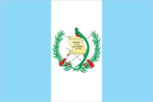
Flag of Guatemala

Guatemala

Central America N Caribbean · Guatemala City · presidential republic

What Guatemala means for your money — the prices you pay, the tariffs in motion, and where U.S. policy could change both.
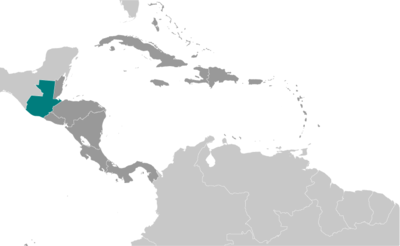
Map showing the location of Guatemala

$5.2B

U.S. imports, 2025

+3.1%

change in one year

$10.0B

U.S. exports, 2025

18M

Population

$113.2B

GDP

In your house

What you buy that Guatemala makes

America bought $5.2B in goods from Guatemala in 2025. Of every $100 of it, here's where the money went.

Fruits, frozen juices

fruit and frozen juices

$1.6B31%

Apparel, household goods - cotton

cotton clothing and linens

$978M18.9%

Green coffee

green coffee for roasters

$624M12.1%

Apparel, textiles, nonwool or cotton

synthetic and performance apparel

$486M9.4%

Vegetables

vegetables

$289M5.6%

Cane and beet sugar

cane and beet sugar

$166M3.2%

Other foods

$139M2.7%

U.s. goods returned, and reimports

$75M1.4%

Tobacco, waxes, etc.

$69M1.3%

Nursery stock, etc.

$63M1.2%

2026 so far (through April): $1.9B in imports. Source: U.S. Census Bureau, International Trade in Goods (customs basis).

The other direction

What America sells to Guatemala

$10.0B in 2025 — a trade rupture cuts both ways, for American producers as well as American prices.

Petroleum products, other

$2.3B

Fuel oil

$1.3B

Meat, poultry, etc.

$483M

Corn

$409M

Plastic materials

$375M

plastics for packaging and goods

Minimum value shipments

$356M

Animal feeds, n.e.c.

$298M

Passenger cars, new and used

$288M

new and used cars

Newsprint

$237M

Where you stand

U.S. tariff posture toward Guatemala

No U.S. tariff action singles this country out. Its goods face the universal 10% temporary import surcharge under Section 122 of the Trade Act (which replaced the IEEPA reciprocal baseline in February 2026) plus the sectoral Section 232 duties — steel and aluminum at 50% — that apply to all countries. The Section 122 surcharge is statutorily temporary — scheduled to lapse on or about July 23, 2026 (a 150-day cap) unless extended or replaced.

Reciprocal tariff (universal baseline)

10%

The universal 10% floor — a Section 122 import surcharge since February 2026, previously the EO 14257 reciprocal baseline — applies to nearly all U.S. imports. This country has no higher assigned rate of its own.

Policy in motion

Tariff status: a moving target

No U.S. tariff action names Guatemala. These are the universal measures — applied to every country without a country-specific arrangement — that set its treatment.

  1. 2026-04-06

    Section 232 metals coverage expanded

    In effect

    The April 2026 proclamation strengthening Section 232 actions on aluminum, steel, and copper expanded derivative-product coverage for all countries, keeping the general metals rate at 50%.

    91 FR 18201
  2. 2026-02-24

    IEEPA reciprocal tariffs terminated — replaced by 10% Section 122 surcharge

    In effect

    Executive Order 14389 (Ending Certain Tariff Actions) terminated the IEEPA tariff duties — including the EO 14257 reciprocal baseline — effective February 24, 2026. A flat 10% Section 122 temporary import surcharge (Proclamation 11012 of February 20, 2026) replaced them, leaving the universal rate unchanged at 10% on a different statutory basis. Section 122 caps such surcharges at 150 days, so this 10% surcharge is scheduled to lapse on or about July 23, 2026 absent further action (the administration has signaled it could raise the rate toward the 15% statutory maximum).

    91 FR 9437
  3. 2025-11-13

    Agricultural products exempted from reciprocal tariffs

    In effect

    Executive Order 14360 of November 14, 2025 removed reciprocal duties from certain agricultural products listed in its annexes (coffee, cocoa, bananas, and other goods the U.S. does not produce in sufficient quantity), retroactive to November 13, 2025 — for all countries subject to the reciprocal tariff.

    90 FR 54091
  4. 2025-06-04

    Section 232 steel and aluminum duties doubled to 50%

    In effect

    The June 3, 2025 proclamation raised Section 232 duties on steel and aluminum articles and derivatives from 25% to 50% for all countries, effective June 4, 2025.

    90 FR 24199
  5. 2025-04-05

    Universal 10% reciprocal baseline takes effect

    In effect

    Executive Order 14257 (signed April 2, 2025) imposed a 10% ad valorem reciprocal duty on imports from all trading partners, effective April 5, 2025. Countries without a higher Annex I rate remain at this baseline.

    Federal Register · 2025-06063
  6. 2025-03-12

    Section 232 steel and aluminum duties set at 25% for all countries

    In effect

    Proclamations of February 10, 2025 terminated all country exemptions and quota arrangements and applied 25% Section 232 duties to steel and aluminum imports from every country, effective March 12, 2025.

    90 FR 9817

Reference

The country itself

Central America N Caribbean · Geography, people, economy, and government — public-domain data from the CIA World Factbook.

The Maya civilization flourished in Guatemala and surrounding regions during the first millennium A.D. After almost three centuries as a Spanish colony, Guatemala won its independence in 1821. During the second half of the 20th century, it experienced a variety of military and civilian governments, as well as a 36-year guerrilla war. In 1996, the government signed a peace agreement formally ending the internal conflict.
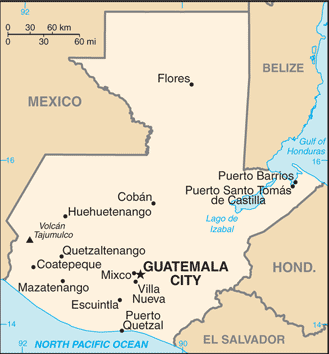
Regional map of Guatemala

Geography

Location
Central America, bordering the North Pacific Ocean, between El Salvador and Mexico, and bordering the Gulf of Honduras (Caribbean Sea) between Honduras and Belize
Area
108,889 sq km
Climate
tropical; hot, humid in lowlands; cooler in highlands
Terrain
two east-west trending mountain chains divide the country into three regions: the mountainous highlands, the Pacific coast south of mountains, and the vast northern Peten lowlands
Natural resources
petroleum, nickel, rare woods, fish, chicle, hydropower
Coastline
400 km
Natural hazards
numerous volcanoes in mountains, with occasional violent earthquakes; Caribbean coast extremely susceptible to hurricanes and other tropical storms volcanism: significant volcanic activity in the Sierra Madre range; Santa Maria (3,772 m) has been deemed a Decade Volcano by the International Association of Volcanology and Chemistry of the Earth's Interior, worthy of study due to its explosive history and close proximity to human populations; Pacaya (2,552 m) is one of the country's most active volcanoes, with frequent eruptions since 1965; other historically active volcanoes include Acatenango, Almolonga, Atitlan, Fuego, and Tacana; see note 2 under "Geography - note"

People & society

Population
18,255,216 (2024 est.)
Nationality
Guatemalan(s)
Ethnic groups
Mestizo (mixed Indigenous-Spanish - in local Spanish called Ladino) 56%, Maya 41.7%, Xinca (Indigenous, non-Maya) 1.8%, African descent 0.2%, Garifuna (mixed West and Central African, Island Carib, and Arawak) 0.1%, foreign 0.2% (2018 est.)
Languages
Spanish (official) 69.9%, Maya languages 29.7% (Q'eqchi' 8.3%, K'iche 7.8%, Mam 4.4%, Kaqchikel 3%, Q'anjob'al 1.2%, Poqomchi' 1%, other 4%), other 0.4% (includes Xinca and Garifuna) (2018 est.)
Religions
Evangelical 45.7%, Roman Catholic 42.4%, none 11%, unspecified 0.9% (2023 est.)
Median age
26.7 years (2025 est.)
Life expectancy at birth
73.5 years (2024 est.)
Literacy
82.1% (2024 est.)

Economy

Economic overview
developing Central American economy; steady economic growth fueled by remittances; high poverty and income inequality; limited government services, lack of employment opportunities, and frequent natural disasters impede human development efforts and drive emigration
Industries
sugar, textiles and clothing, furniture, chemicals, petroleum, metals, rubber, tourism
Agricultural products
sugarcane, bananas, oil palm fruit, maize, cantaloupes/melons, potatoes, milk, tomatoes, chicken, pineapples (2023)
Exports - partners
USA 33%, El Salvador 11%, Honduras 9%, Nicaragua 6%, Mexico 4% (2023)
Imports - partners
USA 30%, China 19%, Mexico 11%, El Salvador 4%, Costa Rica 3% (2023)

Government

Government type
presidential republic
Capital
Guatemala City
Independence
15 September 1821 (from Spain)
Constitution
several previous; latest adopted 31 May 1985, effective 14 January 1986; suspended and reinstated in 1994
Executive branch
President Bernardo ARéVALO de León (since 15 January 2024)
Legislative branch
Congress of the Republic (Congreso de la República)

Full reference data

Every field, by section — CIA World Factbook. Open a topic to expand it.

Introduction
Background
The Maya civilization flourished in Guatemala and surrounding regions during the first millennium A.D. After almost three centuries as a Spanish colony, Guatemala won its independence in 1821. During the second half of the 20th century, it experienced a variety of military and civilian governments, as well as a 36-year guerrilla war. In 1996, the government signed a peace agreement formally ending the internal conflict.
Travel Facts
US State Dept Travel Advisory
The US Department of State currently recommends US citizens Reconsider Travel to Guatemala due to crime. Some areas have increased risk. Consult its website via the link below for updates to travel advisories and statements on safety, security, local laws, and special circumstances in this country. https://travel.state.gov/content/travel/en/traveladvisories/traveladvisories.html
Passport/Visa Requirements
US citizens should make sure their passport will not expire for at least 6 months after they enter the country even if they do not intend to stay that long. They should also make sure they have at least 1 blank page in their passport for any entry stamp that will be required. A visa is not required as long as you do not stay in the country more than 89 days.
US Embassy/Consulate
[502] 2326-4000; US Embassy in Guatemala City, Avenida Reforma 7-01, Zona 10, Guatemala Ciudad, Guatemala;
LGBTQIA+ Travelers
Lesbian, gay, bisexual, transgender, queer, intersex, and asexual (LGBTQIA+) travelers can face unique challenges when traveling abroad. Laws and attitudes in some countries may affect safety and ease of travel. Legal protections vary from country to country. Many countries do not legally recognize same-sex marriage . Approximately seventy countries consider consensual same-sex sexual relations a crime , sometimes carrying severe punishment. https://travel.state.gov/content/travel/en/international-travel/before-you-go/travelers-with-special-considerations/lgbtqi.html
Telephone Code
502
Local Emergency Phone
Ambulance: 123; Fire: 123; Police: 110
Vaccinations
An International Certificate of Vaccination for yellow fever is required for travelers arriving from countries with a risk of yellow fever transmission and for travelers having transited through the airport of a country with risk of yellow fever transmission. See WHO recommendations. http://www.who.int/
Climate
Tropical; hot, humid in lowlands; cooler in highlands
Currency (Code)
Quetzales (GTQ)
Electricity/Voltage/Plug Type(s)
120 V / 60 Hz / plug types(s): A, B
Major Languages
Spanish, Maya languages
Major Religions
Roman Catholic 41.7%, Evangelical 38.8%, other 2.7%, atheist 0.1%
Time Difference
UTC-6 (1 hour behind Washington, DC, during Standard Time)
Potable Water
Opt for bottled water
International Driving Permit
Suggested; additionally, if you plan to drive in Guatemala, you will need an Inter-American Driving Permit issued by the AAA
Road Driving Side
Right
Tourist Destinations
Mayan ruins of Tikal; Antigua Guatemala; Lake Atitlan; Chichicastenango Market; Quetzaltenango; Archaeological Park & Ruins of Quirigua
Major Sports
Soccer, futsal (type of indoor soccer on a hard court)
Cultural Practices
Guatemalans value honesty, family, honor, work, and education. Most Guatemalans are gracious and eager to find humor in most situations.
Tipping Guidelines
Tipping is a question of rewarding good service rather than an obligation. Restaurant bills do not include gratuities so adding 10% is customary. Bellhops and maids expect tips only in the most expensive hotels.
Souvenirs
Coffee, Mayan native textiles and jewelry, jade, wood carvings, leather goods, hammocks, baskets, ceramics
Traditional Cuisine
Pepián — a spicy stew made with chicken, beef, or pork and containing both fruit and vegetables and a mix of spices; traditionally served with rice and tortillas or Pupusas (thick corn tortillas stuffed with a variety of fillings including refried beans, cheese, or pork and then fried)
CIA source last updated
Wednesday, September 06, 2023
Travel resources

Please visit the following links to find further information about your desired destination.

World Health Organization (WHO) - To learn what vaccines and health precautions to take while visiting your destination.

US State Dept Travel Information - Overall information about foreign travel for US citizens.

To obtain an international driving permit (IDP). Only two organizations in the US issue IDPs: American Automobile Association (AAA) and American Automobile Touring Alliance (AATA)

How to get help in an emergency? Contact the nearest US embassy or consulate, or call one of these numbers: from the US or Canada - 1-888-407-4747 or from Overseas - +1 202-501-4444

Page last updated: Wednesday, September 06, 2023

Geography
Location
Central America, bordering the North Pacific Ocean, between El Salvador and Mexico, and bordering the Gulf of Honduras (Caribbean Sea) between Honduras and Belize
Geographic coordinates
15 30 N, 90 15 W
Map references
Central America and the Caribbean
Area - total
108,889 sq km
Area - land
107,159 sq km
Area - water
1,730 sq km
Area - comparative
slightly smaller than Pennsylvania
Land boundaries - total
1,667 km
Land boundaries - border countries
Belize 266 km; El Salvador 199 km; Honduras 244 km; Mexico 958 km
Coastline
400 km
Maritime claims - territorial sea
12 nm
Maritime claims - exclusive economic zone
200 nm
Maritime claims - continental shelf
200-m depth or to the depth of exploitation
Climate
tropical; hot, humid in lowlands; cooler in highlands
Terrain
two east-west trending mountain chains divide the country into three regions: the mountainous highlands, the Pacific coast south of mountains, and the vast northern Peten lowlands
Elevation - highest point
Volcan Tajumulco (highest point in Central America) 4,220 m
Elevation - lowest point
Pacific Ocean 0 m
Elevation - mean elevation
759 m
Natural resources
petroleum, nickel, rare woods, fish, chicle, hydropower
Land use - agricultural land
43% (2023 est.)
Land use - agricultural land: arable land
arable land: 14.5% (2023 est.)
Land use - agricultural land: permanent crops
permanent crops: 11% (2023 est.)
Land use - agricultural land: permanent pasture
permanent pasture: 17.5% (2023 est.)
Land use - forest
33.2% (2023 est.)
Land use - other
23.7% (2023 est.)
Irrigated land
3,375 sq km (2012)
Major lakes (area sq km) - fresh water lake(s)
Lago de Izabal - 590 sq km
Population distribution
the vast majority of the populace resides in the southern half of the country, particularly in the mountainous regions; more than half of the population lives in rural areas
Natural hazards
numerous volcanoes in mountains, with occasional violent earthquakes; Caribbean coast extremely susceptible to hurricanes and other tropical storms volcanism: significant volcanic activity in the Sierra Madre range; Santa Maria (3,772 m) has been deemed a Decade Volcano by the International Association of Volcanology and Chemistry of the Earth's Interior, worthy of study due to its explosive history and close proximity to human populations; Pacaya (2,552 m) is one of the country's most active volcanoes, with frequent eruptions since 1965; other historically active volcanoes include Acatenango, Almolonga, Atitlan, Fuego, and Tacana; see note 2 under "Geography - note"
Geography - note
note 1: despite having both eastern and western coastlines (Caribbean Sea and Pacific Ocean), there are no natural harbors on the west coast note 2: Guatemala is one of the countries along the Ring of Fire, which is a belt bordering the Pacific Ocean that contains about 75% of the world's volcanoes and up to 90% of the world's earthquakes
People and Society
Population - total
18,255,216 (2024 est.)
Population - male
9,050,684
Population - female
9,204,532
Nationality - noun
Guatemalan(s)
Nationality - adjective
Guatemalan
Ethnic groups
Mestizo (mixed Indigenous-Spanish - in local Spanish called Ladino) 56%, Maya 41.7%, Xinca (Indigenous, non-Maya) 1.8%, African descent 0.2%, Garifuna (mixed West and Central African, Island Carib, and Arawak) 0.1%, foreign 0.2% (2018 est.)
Languages - Languages
Spanish (official) 69.9%, Maya languages 29.7% (Q'eqchi' 8.3%, K'iche 7.8%, Mam 4.4%, Kaqchikel 3%, Q'anjob'al 1.2%, Poqomchi' 1%, other 4%), other 0.4% (includes Xinca and Garifuna) (2018 est.)
Languages - major-language sample(s)
La Libreta Informativa del Mundo, la fuente indispensable de información básica. (Spanish) The World Factbook, the indispensable source for basic information.
Languages - note
note: the 2003 Law of National Languages officially recognized 23 indigenous languages, including 21 Maya languages, Xinca, and Garifuna
Religions
Evangelical 45.7%, Roman Catholic 42.4%, none 11%, unspecified 0.9% (2023 est.)
Age structure - 0-14 years
31.5% (male 2,925,079/female 2,819,927)
Age structure - 15-64 years
63.2% (male 5,688,500/female 5,839,958)
Age structure - 65 years and over
5.4% (2024 est.) (male 437,105/female 544,647)
Dependency ratios - total dependency ratio
58.3 (2024 est.)
Dependency ratios - youth dependency ratio
49.8 (2024 est.)
Dependency ratios - elderly dependency ratio
8.5 (2024 est.)
Dependency ratios - potential support ratio
11.7 (2024 est.)
Median age - total
26.7 years (2025 est.)
Median age - male
24.2 years
Median age - female
25.4 years
Population growth rate
0.99% (2025 est.)
Birth rate
17.12 births/1,000 population (2025 est.)
Death rate
4.99 deaths/1,000 population (2025 est.)
Net migration rate
-2.22 migrant(s)/1,000 population (2025 est.)
Population distribution
the vast majority of the populace resides in the southern half of the country, particularly in the mountainous regions; more than half of the population lives in rural areas
Urbanization - urban population
53.1% of total population (2023)
Urbanization - rate of urbanization
2.59% annual rate of change (2020-25 est.)
Major urban areas - population
3.095 million GUATEMALA CITY (capital) (2023)
Sex ratio - at birth
1.05 male(s)/female
Sex ratio - 0-14 years
1.04 male(s)/female
Sex ratio - 15-64 years
0.97 male(s)/female
Sex ratio - 65 years and over
0.8 male(s)/female
Sex ratio - total population
0.98 male(s)/female (2024 est.)
Mother's mean age at first birth
20.6 years (2014/15 est.)
Mother's mean age at first birth - note
note: data represents median age at first birth among women 25-49
Maternal mortality ratio
94 deaths/100,000 live births (2023 est.)
Infant mortality rate - total
23.4 deaths/1,000 live births (2025 est.)
Infant mortality rate - male
28.1 deaths/1,000 live births
Infant mortality rate - female
21.7 deaths/1,000 live births
Life expectancy at birth - total population
73.5 years (2024 est.)
Life expectancy at birth - male
71.5 years
Life expectancy at birth - female
75.6 years
Total fertility rate
1.97 children born/woman (2025 est.)
Gross reproduction rate
0.96 (2025 est.)
Drinking water source - improved: urban
urban: 97.8% of population (2022 est.)
Drinking water source - improved: rural
rural: 91% of population (2022 est.)
Drinking water source - improved: total
total: 94.6% of population (2022 est.)
Drinking water source - unimproved: urban
urban: 2.2% of population (2022 est.)
Drinking water source - unimproved: rural
rural: 9% of population (2022 est.)
Drinking water source - unimproved: total
total: 5.4% of population (2022 est.)
Health expenditure - Health expenditure (as % of GDP)
6.9% of GDP (2021)
Health expenditure - Health expenditure (as % of national budget)
16.9% of national budget (2022 est.)
Physician density
1.28 physicians/1,000 population (2020)
Hospital bed density
0.4 beds/1,000 population (2021 est.)
Sanitation facility access - improved: urban
urban: 91.4% of population (2022 est.)
Sanitation facility access - improved: rural
rural: 68.9% of population (2022 est.)
Sanitation facility access - improved: total
total: 80.8% of population (2022 est.)
Sanitation facility access - unimproved: urban
urban: 8.6% of population (2022 est.)
Sanitation facility access - unimproved: rural
rural: 31.1% of population (2022 est.)
Sanitation facility access - unimproved: total
total: 19.2% of population (2022 est.)
Obesity - adult prevalence rate
21.2% (2016)
Alcohol consumption per capita - total
1.63 liters of pure alcohol (2019 est.)
Alcohol consumption per capita - beer
0.9 liters of pure alcohol (2019 est.)
Alcohol consumption per capita - wine
0.05 liters of pure alcohol (2019 est.)
Alcohol consumption per capita - spirits
0.68 liters of pure alcohol (2019 est.)
Alcohol consumption per capita - other alcohols
0.01 liters of pure alcohol (2019 est.)
Tobacco use - total
11.8% (2025 est.)
Tobacco use - male
22.5% (2025 est.)
Tobacco use - female
1.5% (2025 est.)
Children under the age of 5 years underweight
14.4% (2021 est.)
Currently married women (ages 15-49)
56.2% (2018 est.)
Child marriage - women married by age 15
6.2% (2015)
Child marriage - women married by age 18
29.5% (2015)
Child marriage - men married by age 18
9.6% (2015)
Education expenditure - Education expenditure (% GDP)
3.1% of GDP (2023 est.)
Education expenditure - Education expenditure (% national budget)
17.3% national budget (2025 est.)
Literacy - total population
82.1% (2024 est.)
Literacy - male
86.9% (2024 est.)
Literacy - female
78.5% (2024 est.)
School life expectancy (primary to tertiary education) - total
11 years (2023 est.)
School life expectancy (primary to tertiary education) - male
10 years (2023 est.)
School life expectancy (primary to tertiary education) - female
11 years (2023 est.)
Government
Country name - conventional long form
Republic of Guatemala
Country name - conventional short form
Guatemala
Country name - local long form
República de Guatemala
Country name - local short form
Guatemala
Country name - etymology
the Spanish conquistadors' first capital (established in 1524) was a former Mayan settlement called "Quauhtemallan" by their Nahuatl-speaking Mexican allies, a name that means "land of the eagle" but that the Spanish probably pronounced "Guatemala"
Government type
presidential republic
Capital - name
Guatemala City
Capital - geographic coordinates
14 37 N, 90 31 W
Capital - time difference
UTC-6 (1 hour behind Washington, DC, during Standard Time)
Capital - etymology
the Spanish conquistadors' first capital (established in 1524) was a former Mayan settlement called "Quauhtemallan" by their Nahuatl-speaking Mexican allies, a name that means "land of the eagle" but that the Spanish probably pronounced "Guatemala"
Administrative divisions
22 departments ( departamentos , singular - departamento ); Alta Verapaz, Baja Verapaz, Chimaltenango, Chiquimula, El Progreso, Escuintla, Guatemala, Huehuetenango, Izabal, Jalapa, Jutiapa, Peten, Quetzaltenango, Quiche, Retalhuleu, Sacatepéquez, San Marcos, Santa Rosa, Sololá, Suchitepéquez, Totonicapán, Zacapa
Legal system
civil law system; judicial review of legislative acts
Constitution - history
several previous; latest adopted 31 May 1985, effective 14 January 1986; suspended and reinstated in 1994
Constitution - amendment process
proposed by the president of the republic, by agreement of 10 or more deputies of Congress, by the Constitutional Court, or by public petition of at least 5,000 citizens; passage requires at least two-thirds majority vote by the Congress membership and approval by public referendum, referred to as "popular consultation"; constitutional articles such as national sovereignty, the republican form of government, limitations on those seeking the presidency, or presidential tenure cannot be amended
International law organization participation
has not submitted an ICJ jurisdiction declaration; accepts ICCt jurisdiction
Citizenship - citizenship by birth
yes
Citizenship - citizenship by descent only
yes
Citizenship - dual citizenship recognized
yes
Citizenship - residency requirement for naturalization
5 years with no absences of six consecutive months or longer or absences totaling more than a year
Suffrage
18 years of age; universal
Suffrage - note
note: active-duty members of the armed forces and police by law cannot vote and are restricted to their barracks on election day
Executive branch - chief of state
President Bernardo ARéVALO de León (since 15 January 2024)
Executive branch - head of government
President Bernardo ARéVALO de León (since 15 January 2024)
Executive branch - cabinet
Council of Ministers appointed by the president
Executive branch - election/appointment process
president and vice president directly elected on the same ballot by absolute-majority popular vote in 2 rounds, if needed, for a 4-year term (not eligible for consecutive terms)
Executive branch - most recent election date
25 June 2023, with a runoff on 20 August 2023
Executive branch - election results
2023: Bernardo ARÉVALO de León elected president in second round; percent of vote in first round - Sandra TORRES (UNE) 21%; Bernardo ARÉVALO de León (SEMILLA) 15.6%, Manuel CONDE Orellana (VAMOS) 10.4%; Armando CASTILLO Alvarado (VIVA) 9.6%, other 43.4%; percent of vote in second round - Bernardo ARÉVALO de León 60.9%, Sandra TORRES 39.1% 2019: Alejandro GIAMMATTEI elected president; percent of vote in first round - Sandra TORRES (UNE) 25.5%, Alejandro GIAMMATTEI (VAMOS) 14%, Edmond MULET (PHG) 11.2%, Thelma CABRERA (MLP) 10.4%, Roberto ARZU (PAN-PODEMOS) 6.1%, other 32.8%; percent of vote in second round - Alejandro GIAMMATTEI 58%, Sandra TORRES 42%
Executive branch - expected date of next election
June 2027
Executive branch - note
note: the president is both chief of state and head of government
Legislative branch - legislature name
Congress of the Republic (Congreso de la República)
Legislative branch - legislative structure
unicameral
Legislative branch - number of seats
160 (all directly elected)
Legislative branch - electoral system
mixed system
Legislative branch - scope of elections
full renewal
Legislative branch - term in office
4 years
Legislative branch - most recent election date
6/25/2023
Legislative branch - parties elected and seats per party
Let’s Go for a Different Guatemala (Vamos) (39); National Unity of Hope Party (UNE) (28); Seed Movement (Semilla) (23); Cabal (18); Vision with Values (VIVA) (11); Other (41)
Legislative branch - percentage of women in chamber
20%
Legislative branch - expected date of next election
June 2027
Judicial branch - highest court(s)
Supreme Court of Justice or Corte Suprema de Justicia (consists of 13 magistrates, including the court president and organized into 3 chambers)
Judicial branch - judge selection and term of office
Supreme Court magistrates elected by the Congress of the Republic from candidates proposed by the Postulation Committee, an independent body of deans of the country's university law schools, representatives of the country's law associations, and representatives of the Courts of Appeal; magistrates elected for concurrent, renewable 5-year terms; Constitutional Court judges - 1 elected by the Congress of the Republic, 1 by the Supreme Court, 1 by the president of the republic, 1 by the (public) University of San Carlos, and 1 by the Assembly of the College of Attorneys and Notaries; judges elected for renewable, consecutive 5-year terms; the presidency of the court rotates among the magistrates for a single 1-year term
Judicial branch - subordinate courts
Appellate Courts of Accounts, Contentious Administrative Tribunal, courts of appeal, first instance courts, child and adolescence courts, minor or peace courts
Judicial branch - note
note 1: the Supreme Court of Justice president also supervises trial judges countrywide note 2: the Constitutional Court or Corte de Constitucionalidad of Guatemala resides outside the country's judicial system; its sole purpose is the interpretation of the constitution and to see that the laws and regulations are not superior to the constitution (consists of 5 titular magistrates and 5 substitute magistrates)
Political parties
Bienestar Nacional or BIEN Blue Party (Partido Azul) or Blue CABAL Cambio Citizen Prosperity or PC Commitment, Renewal, and Order or CREO Elephant Community (Comunidad Elefante) or Elephant Everyone Together for Guatemala or TODOS Guatemalan National Revolutionary Unity or URNG-MAIZ or URNG Humanist Party of Guatemala or PHG Movement for the Liberation of Peoples or MLP Movimiento Semilla or SEMILLA National Advancement Party or PAN National Convergence Front or FCN-NACION National Unity for Hope or UNE Nationalist Change Union or UCN (dissolved 16 December 2021) Nosotros or PPN PODEMOS Political Movement Winaq or Winaq TODOS Value or VALOR Vamos por una Guatemala Diferente or VAMOS Victory or VICTORIA Vision with Values or VIVA Will, Opportunity and Solidarity (Voluntad, Oportunidad y Solidaridad) or VOS
Diplomatic representation in the US - chief of mission
Ambassador Hugo Eduardo BETETA (since 17 June 2024)
Diplomatic representation in the US - chancery
2220 R Street NW, Washington, DC 20008
Diplomatic representation in the US - telephone
[1] (202) 745-4953
Diplomatic representation in the US - FAX
[1] (202) 745-1908
Diplomatic representation in the US - email address and website
Diplomatic representation in the US - consulate(s) general
Atlanta, Chicago, Columbus (OH), Denver, Houston, Los Angeles, Miami, Nashville (TN), New York, Oklahoma City, Omaha (NE), Philadelphia, Phoenix, Providence (RI), Raleigh (NC), Rockville (MD), San Francisco, Seattle
Diplomatic representation in the US - consulate(s)
Dallas, Del Rio (TX), Lake Worth (FL), McAllen (TX), Riverhead (NY), San Bernardino (CA), Tucson (AZ)
Diplomatic representation from the US - chief of mission
Ambassador Tobin BRADLEY (since 12 February 2024)
Diplomatic representation from the US - embassy
Boulevard Austriaco 11-51, Zone 16, Guatemala City
Diplomatic representation from the US - mailing address
3190 Guatemala Place, Washington DC 20521-3190
Diplomatic representation from the US - telephone
[502] 2354-0000
Diplomatic representation from the US - FAX
[502] 2326-4654
Diplomatic representation from the US - email address and website
International organization participation
ACS, BCIE, CACM, CD, CELAC, EITI (compliant country), FAO, G-24, G-77, IADB, IAEA, IBRD, ICAO, ICC (national committees), ICCt (signatory), ICRM, IDA, IFAD, IFC, IFRCS, IHO, ILO, IMF, IMO, Interpol, IOC, IOM, IPU, ISO (correspondent), ITSO, ITU, ITUC (NGOs), LAES, LAIA (observer), MIGA, MINUSTAH, MONUSCO, NAM, OAS, OPANAL, OPCW, Pacific Alliance (observer), PCA, Petrocaribe, SICA, UN, UNCTAD, UNESCO, UNHCR, UNIDO, UNIFIL, Union Latina, UNISFA, UNITAR, UNMISS, UNOCI, UNOOSA, UNWTO, UPU, WCO, WFTU (NGOs), WHO, WIPO, WMO, WTO
Independence
15 September 1821 (from Spain)
National holiday
Independence Day, 15 September (1821)
Flag
description: three equal vertical bands of light blue (left side), white, and light blue, with the coat of arms centered in the white band; the coat of arms includes a green-and-red quetzal (the national bird), a scroll with the inscription LIBERTAD 15 DE SEPTIEMBRE DE 1821 (the original date of independence from Spain), a pair of crossed rifles, and a pair of crossed swords; a laurel wreath frames the objects meaning: the rifles stand for Guatemala's willingness to defend itself, the swords for honor, and the laurel wreath for victory; blue stands for the Pacific Ocean and Caribbean Sea, and white for peace and purity
Flag - note
note: one of two national flags featuring a firearm -- the other is Mozambique
National symbol(s)
quetzal (bird)
National color(s)
blue, white
National anthem(s) - title
"Himno Nacional de Guatemala" (National Anthem of Guatemala)
National anthem(s) - lyrics/music
Jose Joaquin PALMA/Rafael Alvarez OVALLE
National anthem(s) - history
adopted 1897, modified lyrics adopted 1934; Cuban poet Jose Joaquin PALMA anonymously submitted lyrics to a public contest calling for a national anthem and it was not discovered until 1911; anthem has four verses with four separate choruses at the end of each verse -- all are official, and the anthem is sung in its entirety when performed in Guatemala
National heritage - total World Heritage Sites
4 (3 cultural, 1 mixed)
National heritage - selected World Heritage Site locales
Antigua Guatemala (c); Tikal National Park (m); Archaeological Park and Ruins of Quirigua (c); National Archaeological Park Tak'alik Ab'aj (c)
Economy
Economic overview
developing Central American economy; steady economic growth fueled by remittances; high poverty and income inequality; limited government services, lack of employment opportunities, and frequent natural disasters impede human development efforts and drive emigration
Real GDP (purchasing power parity) - Real GDP (purchasing power parity) 2024
$232.673 billion (2024 est.)
Real GDP (purchasing power parity) - Real GDP (purchasing power parity) 2023
$224.475 billion (2023 est.)
Real GDP (purchasing power parity) - Real GDP (purchasing power parity) 2022
$216.815 billion (2022 est.)
Real GDP (purchasing power parity) - note
note: data in 2021 dollars
Real GDP growth rate - Real GDP growth rate 2024
3.7% (2024 est.)
Real GDP growth rate - Real GDP growth rate 2023
3.5% (2023 est.)
Real GDP growth rate - Real GDP growth rate 2022
4.2% (2022 est.)
Real GDP growth rate - note
note: annual GDP % growth based on constant local currency
Real GDP per capita - Real GDP per capita 2024
$12,600 (2024 est.)
Real GDP per capita - Real GDP per capita 2023
$12,400 (2023 est.)
Real GDP per capita - Real GDP per capita 2022
$12,100 (2022 est.)
Real GDP per capita - note
note: data in 2021 dollars
GDP (official exchange rate)
$113.2 billion (2024 est.)
GDP (official exchange rate) - note
note: data in current dollars at official exchange rate
Inflation rate (consumer prices) - Inflation rate (consumer prices) 2024
2.9% (2024 est.)
Inflation rate (consumer prices) - Inflation rate (consumer prices) 2023
6.2% (2023 est.)
Inflation rate (consumer prices) - Inflation rate (consumer prices) 2022
6.9% (2022 est.)
Inflation rate (consumer prices) - note
note: annual % change based on consumer prices
GDP - composition, by sector of origin - agriculture
9.8% (2024 est.)
GDP - composition, by sector of origin - industry
21.7% (2024 est.)
GDP - composition, by sector of origin - services
61.8% (2024 est.)
GDP - composition, by sector of origin - note
note: figures may not total 100% due to non-allocated consumption not captured in sector-reported data
GDP - composition, by end use - household consumption
88% (2024 est.)
GDP - composition, by end use - government consumption
10.9% (2024 est.)
GDP - composition, by end use - investment in fixed capital
16.1% (2024 est.)
GDP - composition, by end use - investment in inventories
0.6% (2024 est.)
GDP - composition, by end use - exports of goods and services
15.9% (2024 est.)
GDP - composition, by end use - imports of goods and services
-31.5% (2024 est.)
GDP - composition, by end use - note
note: figures may not total 100% due to rounding or gaps in data collection
Agricultural products
sugarcane, bananas, oil palm fruit, maize, cantaloupes/melons, potatoes, milk, tomatoes, chicken, pineapples (2023)
Agricultural products - note
note: top ten agricultural products based on tonnage
Industries
sugar, textiles and clothing, furniture, chemicals, petroleum, metals, rubber, tourism
Industrial production growth rate
2% (2024 est.)
Industrial production growth rate - note
note: annual % change in industrial value added based on constant local currency
Labor force
7.575 million (2024 est.)
Labor force - note
note: number of people ages 15 or older who are employed or seeking work
Unemployment rate - Unemployment rate 2024
2.3% (2024 est.)
Unemployment rate - Unemployment rate 2023
2.4% (2023 est.)
Unemployment rate - Unemployment rate 2022
3.1% (2022 est.)
Unemployment rate - note
note: % of labor force seeking employment
Youth unemployment rate (ages 15-24) - total
4.2% (2024 est.)
Youth unemployment rate (ages 15-24) - male
4% (2024 est.)
Youth unemployment rate (ages 15-24) - female
4.7% (2024 est.)
Youth unemployment rate (ages 15-24) - note
note: % of labor force ages 15-24 seeking employment
Population below poverty line
56% (2023 est.)
Population below poverty line - note
note: % of population with income below national poverty line
Gini Index coefficient - distribution of family income - Gini Index coefficient - distribution of family income 2023
45.2 (2023 est.)
Gini Index coefficient - distribution of family income - note
note: index (0-100) of income distribution; higher values represent greater inequality
Average household expenditures - on food
35.1% of household expenditures (2023 est.)
Average household expenditures - on alcohol and tobacco
1.3% of household expenditures (2023 est.)
Household income or consumption by percentage share - lowest 10%
1.6% (2023 est.)
Household income or consumption by percentage share - highest 10%
34.1% (2023 est.)
Household income or consumption by percentage share - note
note: % share of income accruing to lowest and highest 10% of population
Remittances - Remittances 2024
19.1% of GDP (2024 est.)
Remittances - Remittances 2023
19.1% of GDP (2023 est.)
Remittances - Remittances 2022
19% of GDP (2022 est.)
Remittances - note
note: personal transfers and compensation between resident and non-resident individuals/households/entities
Budget - revenues
$16.603 billion (2023 est.)
Budget - expenditures
$17.349 billion (2023 est.)
Budget - note
note: central government revenues (excluding grants) and expenditures converted to US dollars at average official exchange rate for year indicated
Public debt - Public debt 2020
31.56% of GDP (2020 est.)
Public debt - note
note: central government debt as a % of GDP
Taxes and other revenues
11.6% (of GDP) (2023 est.)
Taxes and other revenues - note
note: central government tax revenue as a % of GDP
Current account balance - Current account balance 2024
$3.333 billion (2024 est.)
Current account balance - Current account balance 2023
$3.212 billion (2023 est.)
Current account balance - Current account balance 2022
$1.116 billion (2022 est.)
Current account balance - note
note: balance of payments - net trade and primary/secondary income in current dollars
Exports - Exports 2024
$17.997 billion (2024 est.)
Exports - Exports 2023
$17.342 billion (2023 est.)
Exports - Exports 2022
$18.141 billion (2022 est.)
Exports - note
note: balance of payments - exports of goods and services in current dollars
Exports - partners
USA 33%, El Salvador 11%, Honduras 9%, Nicaragua 6%, Mexico 4% (2023)
Exports - partners - note
note: top five export partners based on percentage share of exports
Exports - commodities
garments, bananas, coffee, palm oil, raw sugar (2023)
Exports - commodities - note
note: top five export commodities based on value in dollars
Imports - Imports 2024
$35.576 billion (2024 est.)
Imports - Imports 2023
$33.056 billion (2023 est.)
Imports - Imports 2022
$33.943 billion (2022 est.)
Imports - note
note: balance of payments - imports of goods and services in current dollars
Imports - partners
USA 30%, China 19%, Mexico 11%, El Salvador 4%, Costa Rica 3% (2023)
Imports - partners - note
note: top five import partners based on percentage share of imports
Imports - commodities
refined petroleum, video displays, cars, trucks, packaged medicine (2023)
Imports - commodities - note
note: top five import commodities based on value in dollars
Reserves of foreign exchange and gold - Reserves of foreign exchange and gold 2024
$24.412 billion (2024 est.)
Reserves of foreign exchange and gold - Reserves of foreign exchange and gold 2023
$21.311 billion (2023 est.)
Reserves of foreign exchange and gold - Reserves of foreign exchange and gold 2022
$20.415 billion (2022 est.)
Reserves of foreign exchange and gold - note
note: holdings of gold (year-end prices)/foreign exchange/special drawing rights in current dollars
Debt - external - Debt - external 2023
$11.862 billion (2023 est.)
Debt - external - note
note: present value of external debt in current US dollars
Exchange rates - Currency
quetzales (GTQ) per US dollar -
Exchange rates - Exchange rates 2024
7.759 (2024 est.)
Exchange rates - Exchange rates 2023
7.832 (2023 est.)
Exchange rates - Exchange rates 2022
7.748 (2022 est.)
Exchange rates - Exchange rates 2021
7.734 (2021 est.)
Exchange rates - Exchange rates 2020
7.722 (2020 est.)
Energy
Electricity access - electrification - total population
99.1% (2022 est.)
Electricity access - electrification - urban areas
97.7%
Electricity access - electrification - rural areas
98.2%
Electricity - installed generating capacity
4.995 million kW (2023 est.)
Electricity - consumption
12.222 billion kWh (2023 est.)
Electricity - exports
1.104 billion kWh (2023 est.)
Electricity - imports
1.573 billion kWh (2023 est.)
Electricity - transmission/distribution losses
1.716 billion kWh (2023 est.)
Electricity generation sources - fossil fuels
25.4% of total installed capacity (2023 est.)
Electricity generation sources - solar
1.8% of total installed capacity (2023 est.)
Electricity generation sources - wind
2.6% of total installed capacity (2023 est.)
Electricity generation sources - hydroelectricity
42% of total installed capacity (2023 est.)
Electricity generation sources - geothermal
2.5% of total installed capacity (2023 est.)
Electricity generation sources - biomass and waste
25.7% of total installed capacity (2023 est.)
Coal - consumption
1.012 million metric tons (2023 est.)
Coal - exports
20 metric tons (2023 est.)
Coal - imports
808,000 metric tons (2023 est.)
Petroleum - total petroleum production
6,000 bbl/day (2023 est.)
Petroleum - refined petroleum consumption
117,000 bbl/day (2023 est.)
Petroleum - crude oil estimated reserves
86.11 million barrels (2021 est.)
Natural gas - production
2.016 million cubic meters (2023 est.)
Natural gas - consumption
1.991 million cubic meters (2023 est.)
Energy consumption per capita - Total energy consumption per capita 2023
17.096 million Btu/person (2023 est.)
Communications
Telephones - fixed lines - total subscriptions
1.94 million (2023 est.)
Telephones - fixed lines - subscriptions per 100 inhabitants
11 (2023 est.)
Telephones - mobile cellular - total subscriptions
20.6 million (2023 est.)
Telephones - mobile cellular - subscriptions per 100 inhabitants
115 (2022 est.)
Broadcast media
4 privately owned national terrestrial TV channels dominate TV broadcasting; multi-channel satellite and cable services are available; 1 government-owned radio station and hundreds of privately owned radio stations (2019)
Internet country code
.gt
Internet users - percent of population
56% (2023 est.)
Broadband - fixed subscriptions - total
921,000 (2023 est.)
Broadband - fixed subscriptions - subscriptions per 100 inhabitants
5 (2023 est.)
Transportation
Civil aircraft registration country code prefix
TG
Airports
58 (2025)
Heliports
2 (2025)
Railways - total
800 km (2018)
Railways - narrow gauge
800 km (2018) 0.914-m gauge
Railways - note
note: despite the existence of a railway network, all rail service was suspended in 2007 and no passenger or freight train currently runs in the country (2018)
Merchant marine - total
9 (2023)
Merchant marine - by type
oil tanker 1, other 8
Ports - total ports
3 (2024)
Ports - large
0
Ports - medium
0
Ports - small
2
Ports - very small
1
Ports - ports with oil terminals
2
Ports - key ports
Puerto Barrios, Puerto Quetzal, Santo Tomas de Castilla
Military and Security
Military and security forces
Army of Guatemala (Ejercito de Guatemala; aka Armed Forces of Guatemala or Fuerzas Armadas de Guatemala): Land Forces (Fuerzas de Tierra), Naval Forces (Fuerzas de Mar), and Air Force (Fuerza de Aire) (2025)
Military and security forces - note
note: the National Civil Police (Policia Nacional Civil or PNC) are under the Ministry of Government (Interior)
Military expenditures - Military Expenditures 2024
0.4% of GDP (2024 est.)
Military expenditures - Military Expenditures 2023
0.4% of GDP (2023 est.)
Military expenditures - Military Expenditures 2022
0.4% of GDP (2022 est.)
Military expenditures - Military Expenditures 2021
0.4% of GDP (2021 est.)
Military expenditures - Military Expenditures 2020
0.4% of GDP (2020 est.)
Military and security service personnel strengths
approximately 20,000 active Armed Forces (2025)
Military equipment inventories and acquisitions
the military is lightly armed with an inventory mostly comprised of ageing US equipment; in recent years, the US has provided additional secondhand equipment (2025)
Military service age and obligation
18-28 for voluntary service for men and women (17-21 for military schools); all Guatemalan men 18-49 are subject to selective compulsory service; service obligation is 12-24 months (2025)
Military deployments
180 Democratic Republic of the Congo (MONUSCO) (2025)
Military - note
the military is responsible for maintaining the independence, sovereignty, territorial integrity, and the honor of Guatemala, but has long focused on internal security; since the 2000s, the Guatemalan Government has used the military to support the National Civil Police in internal security operations (as permitted by the constitution) to combat organized crime, gang violence, and narco-trafficking; other responsibilities include border security, cybersecurity, and providing humanitarian assistance; it also participates in UN missions on a small scale and has a peacekeeping operations training command that offers training to regional countries; the military has security ties with regional partners such as Brazil, Colombia, El Salvador, and Honduras; cooperation with El Salvador and Honduras has included a combined police-military anti-gang task force to patrol border areas; it also has ties with the US, including joint training exercises and material assistance the military held power during most of Guatemala’s 36-year civil war (1960-1996) and conducted a campaign of widespread violence and repression, particularly against the country’s majority indigenous population; more than 200,000 people were estimated to have been killed or disappeared during the conflict (2025)
Terrorism
Terrorist group(s)
La Mara Salvatrucha (MS-13)
Terrorist group(s) - note
note: details about the history, aims, leadership, organization, areas of operation, tactics, targets, weapons, size, and sources of support of the group(s) appear(s) in the Terrorism reference guide
Transnational Issues
Refugees and internally displaced persons - refugees
4,676 (2024 est.)
Refugees and internally displaced persons - IDPs
572,813 (2024 est.)
Illicit drugs - USG identification
major illicit drug-producing and/or drug-transit country major precursor-chemical producer (2025)
Environment
Environmental issues
deforestation in the Peten rainforest; soil erosion; water pollution
International environmental agreements - party to
Antarctic Treaty, Biodiversity, Climate Change, Climate Change-Kyoto Protocol, Climate Change-Paris Agreement, Comprehensive Nuclear Test Ban, Desertification, Endangered Species, Environmental Modification, Hazardous Wastes, Law of the Sea, Marine Dumping-London Convention, Marine Dumping-London Protocol, Nuclear Test Ban, Ozone Layer Protection, Ship Pollution, Tropical Timber 2006, Wetlands
International environmental agreements - signed, but not ratified
none of the selected agreements
Climate
tropical; hot, humid in lowlands; cooler in highlands
Land use - agricultural land
43% (2023 est.)
Land use - agricultural land: arable land
arable land: 14.5% (2023 est.)
Land use - agricultural land: permanent crops
permanent crops: 11% (2023 est.)
Land use - agricultural land: permanent pasture
permanent pasture: 17.5% (2023 est.)
Land use - forest
33.2% (2023 est.)
Land use - other
23.7% (2023 est.)
Urbanization - urban population
53.1% of total population (2023)
Urbanization - rate of urbanization
2.59% annual rate of change (2020-25 est.)
Carbon dioxide emissions - total emissions
18.546 million metric tonnes of CO2 (2023 est.)
Carbon dioxide emissions - from coal and metallurgical coke
2.31 million metric tonnes of CO2 (2023 est.)
Carbon dioxide emissions - from petroleum and other liquids
16.232 million metric tonnes of CO2 (2023 est.)
Carbon dioxide emissions - from consumed natural gas
4,000 metric tonnes of CO2 (2023 est.)
Particulate matter emissions
21.8 micrograms per cubic meter (2019 est.)
Waste and recycling - municipal solid waste generated annually
2.757 million tons (2024 est.)
Waste and recycling - percent of municipal solid waste recycled
10.4% (2022 est.)
Total water withdrawal - municipal
835 million cubic meters (2022 est.)
Total water withdrawal - industrial
603.1 million cubic meters (2022 est.)
Total water withdrawal - agricultural
1.886 billion cubic meters (2022 est.)
Total renewable water resources
127.91 billion cubic meters (2022 est.)