
Country exposure · HN
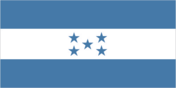
Honduras
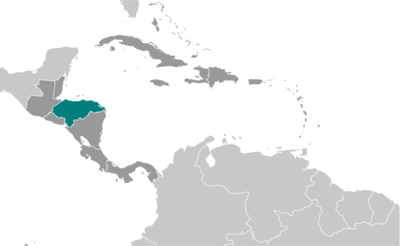
Central America N Caribbean · Tegucigalpa · presidential republic
What Honduras means for your money, the prices you pay, the tariffs in motion, and where U.S. policy could change both.
$5.5B
U.S. imports, 2025
-0.3%
change in one year
$7.0B
U.S. exports, 2025
10M
Population
$37.1B
GDP
In your house
What you buy that Honduras makes
America bought $5.5B in goods from Honduras in 2025. Of every $100 of it, here's where the money went.
Other parts and accessories of vehicles
car parts and accessories
Apparel, textiles, nonwool or cotton
synthetic and performance apparel
Apparel, household goods - cotton
cotton clothing and linens
Green coffee
green coffee for roasters
Fruits, frozen juices
fruit and frozen juices
Nonmonetary gold
Other consumer nondurables
Fish and shellfish
fish, shrimp, shellfish
Vegetables
vegetables
Bauxite and aluminum
aluminum for cans and autos
2026 so far (through July): $3.5B in imports. Source: U.S. Census Bureau, International Trade in Goods (customs basis).
The other direction
What America sells to Honduras
$7.0B in 2025, a trade rupture cuts both ways, for American producers as well as American prices.
Petroleum products, other
$995MFuel oil
$991MCotton fiber cloth
$444MManmade cloth
$442MMinimum value shipments
$358MCorn
$275MMeat, poultry, etc.
$234MNatural gas liquids
$226MPassenger cars, new and used
$210Mnew and used cars
Where you stand
U.S. tariff posture toward Honduras
No U.S. tariff action singles this country out. Its goods face the universal 10% temporary import surcharge under Section 122 of the Trade Act (which replaced the IEEPA reciprocal baseline in February 2026) plus the sectoral Section 232 duties — steel and aluminum at 50% — that apply to all countries. The Section 122 surcharge is statutorily temporary — scheduled to lapse on or about July 23, 2026 (a 150-day cap) unless extended or replaced.
Reciprocal tariff (universal baseline)
10%
The universal 10% floor, a Section 122 import surcharge since February 2026, previously the EO 14257 reciprocal baseline, applies to nearly all U.S. imports. This country has no higher assigned rate of its own.
Policy in motion
Tariff status: a moving target
No U.S. tariff action names Honduras. These are the universal measures, applied to every country without a country-specific arrangement, that set its treatment.
2026-04-06
Section 232 metals coverage expanded
In effectThe April 2026 proclamation strengthening Section 232 actions on aluminum, steel, and copper expanded derivative-product coverage for all countries, keeping the general metals rate at 50%.
91 FR 18201 →2026-02-24
IEEPA reciprocal tariffs terminated — replaced by 10% Section 122 surcharge
In effectExecutive Order 14389 (Ending Certain Tariff Actions) terminated the IEEPA tariff duties — including the EO 14257 reciprocal baseline — effective February 24, 2026. A flat 10% Section 122 temporary import surcharge (Proclamation 11012 of February 20, 2026) replaced them, leaving the universal rate unchanged at 10% on a different statutory basis. Section 122 caps such surcharges at 150 days, so this 10% surcharge is scheduled to lapse on or about July 23, 2026 absent further action (the administration has signaled it could raise the rate toward the 15% statutory maximum).
91 FR 9437 →2025-11-13
Agricultural products exempted from reciprocal tariffs
In effectExecutive Order 14360 of November 14, 2025 removed reciprocal duties from certain agricultural products listed in its annexes (coffee, cocoa, bananas, and other goods the U.S. does not produce in sufficient quantity), retroactive to November 13, 2025 — for all countries subject to the reciprocal tariff.
90 FR 54091 →2025-06-04
Section 232 steel and aluminum duties doubled to 50%
In effectThe June 3, 2025 proclamation raised Section 232 duties on steel and aluminum articles and derivatives from 25% to 50% for all countries, effective June 4, 2025.
90 FR 24199 →2025-04-05
Universal 10% reciprocal baseline takes effect
In effectExecutive Order 14257 (signed April 2, 2025) imposed a 10% ad valorem reciprocal duty on imports from all trading partners, effective April 5, 2025. Countries without a higher Annex I rate remain at this baseline.
Federal Register · 2025-06063 →2025-03-12
Section 232 steel and aluminum duties set at 25% for all countries
In effectProclamations of February 10, 2025 terminated all country exemptions and quota arrangements and applied 25% Section 232 duties to steel and aluminum imports from every country, effective March 12, 2025.
90 FR 9817 →
Made for America
What Honduras makes for America
Honduras is a direct U.S. source of 12 essential goods Americans rely on, the items themselves, shipped finished off the line.
materials
3% of U.S.Clothing and apparel
$2.1B to the U.S.
materials
1% of U.S.Auto parts and repairs
$1.0B to the U.S.
food
5% of U.S.Coffee
$748M to the U.S.
grocery
1% of U.S.Fresh produce staples
$382M to the U.S.
food
Seafood and fish
$103M to the U.S.
food
1% of U.S.Canned and shelf-stable foods
$65M to the U.S.
home
1% of U.S.Lighting & lamps
$48M to the U.S.
materials
Aluminum and aluminum products
$38M to the U.S.
food
1% of U.S.Soft drinks & juices
$33M to the U.S.
food
Bread, grains, and flour
$29M to the U.S.
food
1% of U.S.Sugar
$24M to the U.S.
materials
Furniture
$18M to the U.S.
Go deeper
The supply chain view
Honduras sits upstream of 12 essential American goods through 9 tracked inputs.
agricultural
8%Banana supply chain (plantation, sea transport, ripening)
agricultural
7%Green Coffee Beans — Arabica
manufactured
6%Vehicle wiring harnesses
mineral
4%Freshwater (Processing)
manufactured
3%Aluminum Extrusions (Apparatus Body)
agricultural
2%Refined Sugar
Reference
The country itself
Central America N Caribbean · Geography, people, economy, and government, public-domain data from the CIA World Factbook.
Once part of Spain's vast empire in the New World, Honduras became an independent nation in 1821. After two and a half decades of mostly military rule, a freely elected civilian government came to power in 1982. During the 1980s, Honduras proved a haven for anti-Sandinista contras fighting the Marxist Nicaraguan Government and an ally to Salvadoran Government forces fighting leftist guerrillas. Hurricane Mitch devastated the country in 1998, killing about 5,600 people and causing approximately $2 billion in damage. Since then, the economy has slowly rebounded, despite COVID-19 and severe storm-related setbacks in 2020 and 2021.
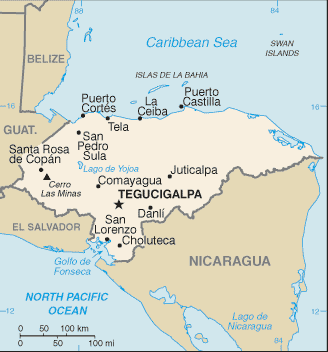
Geography
- Location
- Central America, bordering the Caribbean Sea, between Guatemala and Nicaragua and bordering the Gulf of Fonseca (North Pacific Ocean), between El Salvador and Nicaragua
- Area
- 112,090 sq km
- Climate
- subtropical in lowlands, temperate in mountains
- Terrain
- mostly mountains in interior, narrow coastal plains
- Natural resources
- timber, gold, silver, copper, lead, zinc, iron ore, antimony, coal, fish, hydropower
- Coastline
- 823 km (Caribbean Sea 669 km; Gulf of Fonseca 163 km)
- Natural hazards
- frequent, but generally mild, earthquakes; extremely susceptible to damaging hurricanes and floods along the Caribbean coast
People & society
- Population
- 9,529,188 (2024 est.)
- Nationality
- Honduran(s)
- Ethnic groups
- Mestizo (mixed Indigenous and European) 90%, Indigenous 7%, African descent 2%, White 1%
- Languages
- Spanish (official), Amerindian dialects
- Religions
- Evangelical 55%, Roman Catholic 33.4%, none 10.1%, unspecified 1.5% (2023 est.)
- Median age
- 26.1 years (2025 est.)
- Life expectancy at birth
- 73.1 years (2024 est.)
- Literacy
- 88.2% (2024 est.)
Economy
- Economic overview
- second-fastest-growing Central American economy; COVID-19 and two hurricanes crippled activity; high poverty and inequality; declining-but-still-high violent crime disruption; systemic corruption; coffee and banana exporter; enormous remittances
- Industries
- sugar processing, coffee, woven and knit apparel, wood products, cigars
- Agricultural products
- sugarcane, oil palm fruit, maize, milk, bananas, coffee, cantaloupes/melons, oranges, chicken, beans (2023)
- Exports - partners
- USA 49%, Nicaragua 8%, El Salvador 7%, Guatemala 5%, Mexico 5% (2023)
- Imports - partners
- USA 36%, China 14%, Guatemala 8%, Mexico 6%, El Salvador 6% (2023)
Government
- Government type
- presidential republic
- Capital
- Tegucigalpa
- Independence
- 15 September 1821 (from Spain)
- Constitution
- several previous; latest approved 11 January 1982, effective 20 January 1982
- Executive branch
- President Iris Xiomara CASTRO de Zelaya (since 27 January 2022)
- Legislative branch
- National Congress (Congreso Nacional)
Full reference data
Every field, by section, CIA World Factbook. Open a topic to expand it.
Introduction
Travel Facts
Please visit the following links to find further information about your desired destination.
CDC - To learn what vaccines and health precautions to take while visiting your destination.
US State Dept Travel Information - Overall information about foreign travel for US citizens.
To obtain an international driving permit (IDP). Only two organizations in the US issue IDPs: American Automobile Association (AAA) and American Automobile Touring Alliance (AATA)
How to get help in an emergency? Contact the nearest US embassy or consulate, or call one of these numbers: from the US or Canada - 1-888-407-4747 or from Overseas - +1 202-501-4444
Page last updated: Tuesday, December 10, 2024