
Country exposure · LK
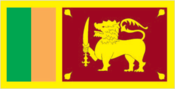
Sri Lanka
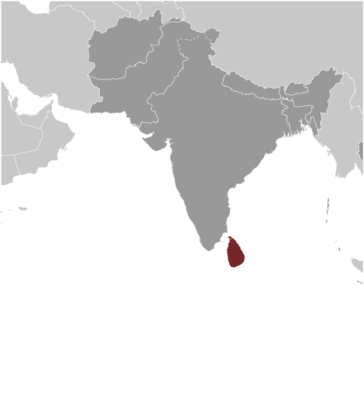
South Asia · Colombo (commercial capital); Sri Jayewardenepura Kotte (legislative capital) · presidential republic
What Sri Lanka means for your money, the prices you pay, the tariffs in motion, and where U.S. policy could change both.
$3.1B
U.S. imports, 2025
+3.2%
change in one year
$369M
U.S. exports, 2025
22M
Population
$99.0B
GDP
In your house
What you buy that Sri Lanka makes
America bought $3.1B in goods from Sri Lanka in 2025. Of every $100 of it, here's where the money went.
Apparel, textiles, nonwool or cotton
synthetic and performance apparel
Apparel, household goods - cotton
cotton clothing and linens
Industrial supplies, other
Gem stones, other
Apparel,household goods-nontextile
leather goods and accessories
Tea, spices, etc.
tea and spices
Camping apparel and gear
camping gear and outdoor apparel
Chemicals-other, n.e.c.
Excavating machinery
Food oils, oilseeds
2026 so far (through July): $1.7B in imports. Source: U.S. Census Bureau, International Trade in Goods (customs basis).
The other direction
What America sells to Sri Lanka
$369M in 2025, a trade rupture cuts both ways, for American producers as well as American prices.
Animal feeds, n.e.c.
$118MWheat
$23Mgreen coffee for roasters
Pharmaceutical preparations
$22Mmedicines and pharmacy items
Finished textile supplies
$16MCivilian aircraft, engines, equipment, and parts
$14MChemicals-other
$10MTelecommunications equipment
$10Mphones, routers, networking gear
Newsprint
$8MMinimum value shipments
$8MWhere you stand
U.S. tariff posture toward Sri Lanka
Sri Lanka was assigned 44% in April 2025 — a major threat to its apparel sector, which makes up about 64% of its U.S.-bound exports and relies on the U.S. as its largest market. Through negotiations the rate was lowered to 30% and then 20% (effective August 7, 2025), though no formal agreement was signed. When Executive Order 14389 took effect Sri Lanka's reciprocal rate stood at 20%; Executive Order 14389 then replaced the IEEPA regime with a 10% Section 122 temporary import surcharge (Proclamation 11012) effective February 24, 2026. Sri Lanka has no Section 232 steel/aluminum exposure.
Reciprocal tariff (assigned, terminated)
44%
The rate this country was assigned under the EO 14257 reciprocal Annex, no longer in force. The Supreme Court struck down the IEEPA tariffs and they were terminated February 24, 2026 (EO 14389), replaced by a universal ~10% Section 122 surcharge. See the timeline below for the current effective rate.
Policy in motion
Tariff status: a moving target
U.S. tariff policy toward Sri Lanka has changed 4 times since 2025. This page tracks it.
2026-02-24
IEEPA reciprocal tariffs terminated — replaced by 10% Section 122
In effectExecutive Order 14389 (Ending Certain Tariff Actions) terminated the IEEPA tariff duties effective February 24, 2026, replacing Sri Lanka's 20% reciprocal rate with a 10% Section 122 temporary import surcharge under Proclamation 11012 (capped at 150 days).
91 FR 9437 →2025-08-07
Rate reduced to 20%
In effectExecutive Order 14326 set the post-pause Annex I reciprocal rates; after negotiations that walked Sri Lanka's rate down from 44% to a proposed 30%, it settled at 20% effective August 7, 2025 — relief for apparel exporters, though without a signed bilateral agreement.
90 FR 37963 →2025-04-10
Elevated reciprocal rates paused to 10% for 90 days
In effectExecutive Order 14266 suspended the higher country-specific reciprocal rates — including Sri Lanka's 44% — back to the 10% baseline for 90 days to allow negotiations.
90 FR 15625 →2025-04-05
Reciprocal tariff regime begins — Sri Lanka assigned 44%
In effectExecutive Order 14257 imposed a 10% universal reciprocal duty effective April 5 and a 44% country-specific rate for Sri Lanka scheduled to take effect April 9 — a severe blow to its apparel-led export economy.
90 FR 15041 →
Made for America
What Sri Lanka makes for America
Sri Lanka is a direct U.S. source of 12 essential goods Americans rely on, the items themselves, shipped finished off the line.
materials
2% of U.S.Clothing and apparel
$1.8B to the U.S.
materials
1% of U.S.Tires
$180M to the U.S.
health
3% of U.S.N95 masks and personal protective equipment
$79M to the U.S.
food
6% of U.S.Tea
$48M to the U.S.
food
2% of U.S.Spices & seasonings
$47M to the U.S.
materials
Hardware & fasteners
$42M to the U.S.
food
Seafood and fish
$40M to the U.S.
food
Snacks & confectionery
$37M to the U.S.
food
Soft drinks & juices
$25M to the U.S.
home
4% of U.S.Camping & outdoor gear
$19M to the U.S.
materials
Aluminum and aluminum products
$13M to the U.S.
materials
Copper and electrical wiring
$8M to the U.S.
Go deeper
The supply chain view
Sri Lanka sits upstream of 4 essential American goods through 5 tracked inputs.
agricultural
10%Cinnamon / Cassia Bark
manufactured
8%Activated carbon (GAC and carbon block)
agricultural
4%Black Pepper
agricultural
4%Raw Tea Leaf (Camellia sinensis)
manufactured
1%Robot Vacuum LiDAR / Navigation Sensor
Reference
The country itself
South Asia · Geography, people, economy, and government, public-domain data from the CIA World Factbook.
The first Sinhalese arrived in Sri Lanka late in the 6th century B.C., probably from northern India. Buddhism was introduced circa 250 B.C., and the first kingdoms developed at the cities of Anuradhapura (from about 200 B.C. to about A.D. 1000) and Polonnaruwa (from about A.D. 1070 to 1200). In the 14th century, a South Indian dynasty established a Tamil kingdom in northern Sri Lanka. The Portuguese controlled the coastal areas of the island in the 16th century, followed by the Dutch in the 17th century. The island was ceded to the British in 1796, became a crown colony in 1802, and was formally united under British rule by 1815. As Ceylon, it became independent in 1948; the name was changed to Sri Lanka in 1972. Prevailing tensions between the Sinhalese majority and Tamil separatists erupted into war in 1983. Fighting between the government and Liberation Tigers of Tamil Eelam (LTTE) continued for over a quarter-century. Although Norway brokered peace negotiations that led to a cease-fire in 2002, the fighting slowly resumed and was again in full force by 2006. The government defeated the LTTE in 2009. During the post-conflict years under then-President Mahinda RAJAPAKSA, the government initiated infrastructure development projects, many of which were financed by loans from China. His regime faced allegations of human rights violations and a shrinking democratic space for civil society. In 2015, a new coalition government headed by President Maithripala SIRISENA of the Sri Lanka Freedom Party and Prime Minister Ranil WICKREMESINGHE of the United National Party came to power with pledges to advance economic, political, and judicial reforms. However, implementation of these reforms was uneven. In 2019, Gotabaya RAJAPAKSA won the presidential election and appointed his brother Mahinda prime minister. Civil society raised concerns about the RAJAPAKSA administration’s commitment to pursuing justice, human rights, and accountability reforms, as well as the risks to foreign creditors that Sri Lanka faced given its ongoing economic crisis. A combination of factors including the COVID-19 pandemic; severe shortages of food, medicine, and fuel; and power outages triggered increasingly violent protests in Columbo beginning in 2022. In response, WICKREMESINGHE -- who had already served as prime minister five times -- was named to replace the prime minister, but he became president within a few months when Gotabaya RAJAPAKSA fled the country.
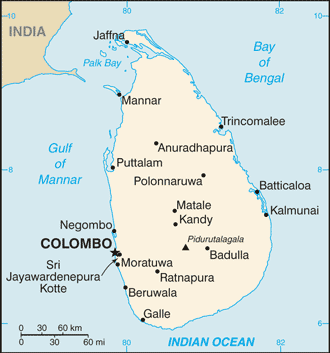
Geography
- Location
- Southern Asia, island in the Indian Ocean, south of India
- Area
- 65,610 sq km
- Climate
- tropical monsoon; northeast monsoon (December to March); southwest monsoon (June to October)
- Terrain
- mostly low, flat to rolling plain; mountains in south-central interior
- Natural resources
- limestone, graphite, mineral sands, gems, phosphates, clay, hydropower, arable land
- Coastline
- 1,340 km
- Natural hazards
- occasional cyclones and tornadoes
People & society
- Population
- 22,050,561 (2025 est.)
- Nationality
- Sri Lankan(s)
- Ethnic groups
- Sinhalese 74.9%, Sri Lankan Tamil 11.2%, Sri Lankan Moors 9.2%, Indian Tamil 4.2%, other 0.5% (2012 est.)
- Languages
- Sinhala (official) 87%, Tamil (official) 28.5%, English 23.8% (2012 est.)
- Religions
- Buddhist (official) 70.2%, Hindu 12.6%, Muslim 9.7%, Roman Catholic 6.1%, other Christian 1.3%, other 0.05% (2012 est.)
- Median age
- 34.2 years (2025 est.)
- Life expectancy at birth
- 76.8 years (2024 est.)
- Literacy
- 92.7% (2023 est.)
Economy
- Economic overview
- economic contraction in 2022-23 marked by increased poverty and significant inflation; IMF two-year debt relief program following 2022 sovereign default; structural challenges from non-diversified economy and rigid labor laws; heavy dependence on tourism receipts and remittances
- Industries
- processing of rubber, tea, coconuts, tobacco and other agricultural commodities; tourism; clothing and textiles; mining
- Agricultural products
- rice, coconuts, tea, sugarcane, plantains, milk, fiber crops, cassava, chicken, pumpkins/squash (2023)
- Exports - partners
- USA 22%, India 7%, Germany 7%, UK 7%, Italy 5% (2023)
- Imports - partners
- India 21%, China 19%, UAE 10%, Singapore 5%, Malaysia 4% (2023)
Government
- Government type
- presidential republic
- Capital
- Colombo (commercial capital); Sri Jayewardenepura Kotte (legislative capital)
- Independence
- 4 February 1948 (from the UK)
- Constitution
- several previous; latest adopted 16 August 1978, certified 31 August 1978
- Executive branch
- President Anura Kumara DISSANAYAKE (since 23 September 2024)
- Legislative branch
- Parliament
Full reference data
Every field, by section, CIA World Factbook. Open a topic to expand it.
Introduction
Travel Facts
Please visit the following links to find further information about your desired destination.
World Health Organization (WHO) - To learn what vaccines and health precautions to take while visiting your destination.
US State Dept Travel Information - Overall information about foreign travel for US citizens.
To obtain an international driving permit (IDP). Only two organizations in the US issue IDPs: American Automobile Association (AAA) and American Automobile Touring Alliance (AATA)
How to get help in an emergency? Contact the nearest US embassy or consulate, or call one of these numbers: from the US or Canada - 1-888-407-4747 or from Overseas - +1 202-501-4444
Page last updated: Wednesday, June 26, 2024