Country exposure · NO

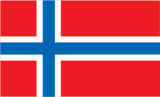
Flag of Norway

Norway

Europe · Oslo · parliamentary constitutional monarchy

What Norway means for your money — the prices you pay, the tariffs in motion, and where U.S. policy could change both.
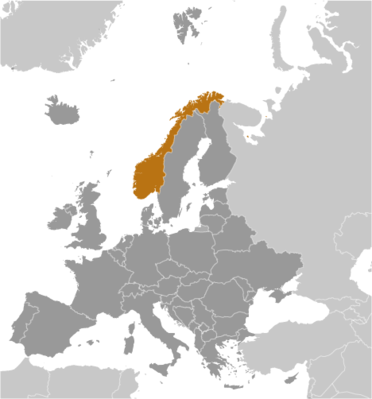
Map showing the location of Norway

$6.6B

U.S. imports, 2025

+0.3%

change in one year

$4.5B

U.S. exports, 2025

6M

Population

$483.7B

GDP

In your house

What you buy that Norway makes

America bought $6.6B in goods from Norway in 2025. Of every $100 of it, here's where the money went.

Fish and shellfish

fish, shrimp, shellfish

$1.6B23.8%

Petroleum products, other

gasoline and petroleum products

$916M13.8%

U.s. goods returned, and reimports

$385M5.8%

Pharmaceutical preparations

medicines and pharmacy items

$365M5.5%

Crude oil

$289M4.4%

Nickel

$227M3.4%

Electric apparatus

$209M3.2%

Nonferrous metals, other

$204M3.1%

Chemicals-other, n.e.c.

$195M2.9%

Telecommunications equipment

phones, routers, networking gear

$167M2.5%

2026 so far (through April): $1.7B in imports. Source: U.S. Census Bureau, International Trade in Goods (customs basis).

The other direction

What America sells to Norway

$4.5B in 2025 — a trade rupture cuts both ways, for American producers as well as American prices.

Crude oil

$554M

Civilian aircraft, engines, equipment, and parts

$355M

Natural gas liquids

$346M

Telecommunications equipment

$247M

phones, routers, networking gear

Minimum value shipments

$242M

Petroleum products, other

$215M

Measuring, testing, control instruments

$193M

Industrial machines, other

$169M

Electric apparatus

$168M

Where you stand

U.S. tariff posture toward Norway

Norway faced a 15% reciprocal tariff from August 2025 with no deal, hitting its roughly $1.3 billion seafood trade — especially farmed Atlantic salmon — hard. Separately, in January 2026 Trump threatened a 10% tariff (rising to 25% on June 1) on Norway and other allies over personnel stationed in Greenland, tied to his bid to acquire the territory. Executive Order 14389 (Ending Certain Tariff Actions, Feb 20, 2026) terminated the IEEPA reciprocal duties, and Proclamation 11012 replaced it with a 10% Section 122 temporary import surcharge effective February 24, 2026. Oil and gas remain exempt; Norway has no distinct Section 232 steel/aluminum posture in the tariff schedule.

Reciprocal tariff (assigned — terminated)

15%

The rate this country was assigned under the EO 14257 reciprocal Annex — no longer in force. The Supreme Court struck down the IEEPA tariffs and they were terminated February 24, 2026 (EO 14389), replaced by a universal ~10% Section 122 surcharge. See the timeline below for the current effective rate.

Policy in motion

Tariff status: a moving target

U.S. tariff policy toward Norway has changed 5 times since 2025. This page tracks it.

  1. 2026-02-24

    IEEPA reciprocal tariffs terminated — replaced by 10% Section 122

    In effect

    Executive Order 14389 (Ending Certain Tariff Actions) terminated the IEEPA tariff duties effective February 24, 2026, replacing Norway's 15% reciprocal rate with a 10% Section 122 temporary import surcharge under Proclamation 11012 (capped at 150 days).

    91 FR 9437
  2. 2026-02-01

    Greenland-related tariff threat

    Threatened

    Trump threatened a 10% tariff from February 1, 2026 — escalating to 25% on June 1 — on Norway and other allies (Denmark, Sweden, France, Germany, UK, Netherlands, Finland) over personnel stationed in Greenland, tied to his demand to purchase the territory.

    Source
  3. 2025-08-07

    15% rate takes effect — no deal reached

    In effect

    Executive Order 14326 set the post-pause Annex I reciprocal rates; Norway's 15% rate took effect August 7, 2025 with no bilateral agreement, adding more than $7 to a typical Atlantic salmon at U.S. wholesale.

    90 FR 37963
  4. 2025-04-10

    Elevated reciprocal rates paused to 10% for 90 days

    In effect

    Executive Order 14266 suspended the higher country-specific reciprocal rates — including Norway's 15% — back to the 10% baseline for 90 days.

    90 FR 15625
  5. 2025-04-05

    Reciprocal tariff regime begins — Norway assigned 15%

    In effect

    Executive Order 14257 imposed a 10% universal reciprocal duty effective April 5 and a 15% country-specific rate for Norway scheduled to take effect April 9, drawing protests that tariffing its seafood was 'absurd.'

    90 FR 15041

Reference

The country itself

Europe · Geography, people, economy, and government — public-domain data from the CIA World Factbook.

Two centuries of Viking raids into Europe tapered off after King Olav TRYGGVASON adopted Christianity in 994; conversion of the Norwegian kingdom occurred over the next several decades. In 1397, Norway was absorbed into a union with Denmark that lasted more than four centuries. In 1814, Norwegians resisted the cession of their country to Sweden and adopted a new constitution. Sweden then invaded Norway but agreed to let Norway keep its constitution in return for accepting the union under a Swedish king. Rising nationalism throughout the 19th century led to a 1905 referendum granting Norway independence. Norway remained neutral in World War I and proclaimed its neutrality at the outset of World War II, but Nazi Germany nonetheless occupied the country for five years (1940-45). In 1949, Norway abandoned neutrality and became a member of NATO. Discovery of oil and gas in adjacent waters in the late 1960s boosted Norway's economic fortunes. In referenda held in 1972 and 1994, Norway rejected joining the EU. Key domestic issues include immigration and integration of ethnic minorities, maintaining the country's extensive social safety net with an aging population, and preserving economic competitiveness.
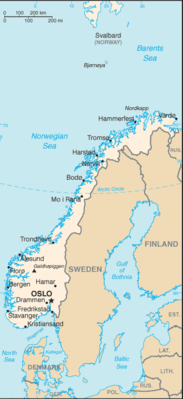
Regional map of Norway

Geography

Location
Northern Europe, bordering the North Sea and the North Atlantic Ocean, west of Sweden
Area
323,802 sq km
Climate
temperate along coast, modified by North Atlantic Current; colder interior with increased precipitation and colder summers; rainy year-round on west coast
Terrain
glaciated; mostly high plateaus and rugged mountains broken by fertile valleys; small, scattered plains; coastline deeply indented by fjords; arctic tundra in north
Natural resources
petroleum, natural gas, iron ore, copper, lead, zinc, titanium, pyrites, nickel, fish, timber, hydropower
Coastline
25,148 km
Natural hazards
rockslides, avalanches volcanism: Beerenberg (2,227 m) on Jan Mayen Island in the Norwegian Sea is the country's only active volcano

People & society

Population
5,509,733 (2024 est.)
Nationality
Norwegian(s)
Ethnic groups
Norwegian 81.5% (includes about 60,000 Sami), other European 8.9%, other 9.6% (2021 est.)
Languages
Bokmal Norwegian (official), Nynorsk Norwegian (official), small Sami- and Finnish-speaking minorities
Religions
Church of Norway (Evangelical Lutheran - official) 67.5%, Muslim 3.1%, Roman Catholic 3.1%, other Christian 3.8%, other 2.6%, unspecified 19.9% (2021 est.)
Median age
41 years (2025 est.)
Life expectancy at birth
82.9 years (2024 est.)

Economy

Economic overview
high-income, non-EU economy with trade links via European Economic Area (EEA); key role in European energy security as leader in oil, gas, and electricity exports; major fishing, forestry, and oil(?) extraction industries; oil sovereign fund supports generous welfare system; low unemployment; inflation moderating but remains above target level
Industries
petroleum and gas, shipping, fishing, aquaculture, food processing, shipbuilding, pulp and paper products, metals, chemicals, timber, mining, textiles
Agricultural products
milk, barley, potatoes, oats, wheat, pork, chicken, beef, eggs, carrots/turnips (2023)
Exports - partners
Germany 18%, UK 17%, Sweden 9%, Denmark 7%, Netherlands 6% (2023)
Imports - partners
Sweden 11%, Germany 11%, China 11%, USA 7%, Netherlands 5% (2023)

Government

Government type
parliamentary constitutional monarchy
Capital
Oslo
Independence
7 June 1905 (union with Sweden declared dissolved); 26 October 1905 (Sweden agreed to the repeal of the union); notable earlier dates: ca. 872 (traditional unification of Norwegian kingdoms by HARALD Fairhair); 1397 (Kalmar Union of Denmark, Norway, and Sweden); 1524 (Denmark-Norway); 17 May 1814 (Norwegian constitution adopted); 4 November 1814 (Sweden-Norway union confirmed)
Constitution
drafted spring 1814, adopted 16 May 1814, signed by Constituent Assembly 17 May 1814
Executive branch
King HARALD V (since 17 January 1991)
Legislative branch
Parliament (Stortinget)

Full reference data

Every field, by section — CIA World Factbook. Open a topic to expand it.

Introduction
Background
Two centuries of Viking raids into Europe tapered off after King Olav TRYGGVASON adopted Christianity in 994; conversion of the Norwegian kingdom occurred over the next several decades. In 1397, Norway was absorbed into a union with Denmark that lasted more than four centuries. In 1814, Norwegians resisted the cession of their country to Sweden and adopted a new constitution. Sweden then invaded Norway but agreed to let Norway keep its constitution in return for accepting the union under a Swedish king. Rising nationalism throughout the 19th century led to a 1905 referendum granting Norway independence. Norway remained neutral in World War I and proclaimed its neutrality at the outset of World War II, but Nazi Germany nonetheless occupied the country for five years (1940-45). In 1949, Norway abandoned neutrality and became a member of NATO. Discovery of oil and gas in adjacent waters in the late 1960s boosted Norway's economic fortunes. In referenda held in 1972 and 1994, Norway rejected joining the EU. Key domestic issues include immigration and integration of ethnic minorities, maintaining the country's extensive social safety net with an aging population, and preserving economic competitiveness.
Travel Facts
US State Dept Travel Advisory
The US Department of State currently recommends US citizens exercise normal precautions in Norway. Consult its website via the link below for updates to travel advisories and statements on safety, security, local laws, and special circumstances in this country. https://travel.state.gov/content/travel/en/traveladvisories/traveladvisories.html
Passport/Visa Requirements
US citizens should make sure their passport will not expire for at least 6 months after they enter the country even if they do not intend to stay that long. They should also make sure they have at least 2 blank pages in their passport for any entry stamp that will be required. A visa is not required as long as you do not stay in the country more than 89 days.
US Embassy/Consulate
[47] 21-30-85-40; US Embassy in Oslo, Morgedalsvegen 36, 0378 Oslo, Norway; OsloACS@state.gov; https://no.usembassy.gov/
Telephone Code
47
Local Emergency Phone
112, 110
Vaccinations
See WHO recommendations http://www.who.int/
Climate
Temperate along coast, modified by North Atlantic Current; colder interior with increased precipitation and colder summers; rainy year-round on west coast
Currency (Code)
Norwegian kroner (NOK)
Electricity/Voltage/Plug Type(s)
230 V / 50 Hz / plug types(s): C, F
Major Languages
Bokmal Norwegian, Nynorsk Norwegian, small Sami- and Finnish-speaking minorities
Major Religions
Church of Norway (Evangelical Lutheran - official) 68.1%, Muslim 3.4%, Roman Catholic 3.1%, other Christian 3.8%
Time Difference
UTC+1 (6 hours ahead of Washington, DC, during Standard Time); daylight saving time: +1hr, begins last Sunday in March, ends last Sunday in October
Potable Water
Yes
International Driving Permit
Suggested
Road Driving Side
Right
Tourist Destinations
Sognefjord; Pulpit Rock; Oslo (includes National Theater, Bygdoy, Viking Ships Museum, Akershus Fortress), Tromsø; Lofoten Islands; Bergen Hanseatic Warf
Major Sports
Soccer, winter sports (biatholon, cross-country skiing, ski jumping, speed skating), ice hockey, handball
Cultural Practices
Modesty is looked on favorably in Norway, while boastfulness is considered quite rude. This disposition stems from a cultural tradition known as Janet Law, which outlines a series of traditional Norwegian values.
Tipping Guidelines
Tipping is not required. It is, however, customary to leave a tip in restaurants and bars if you are happy with the service. A 10-20% tip is the norm. It is uncommon to tip taxi drivers or cleaning staff at hotels.
Souvenirs
Wool-knit sweaters and socks, jewelry and watches; wood-carved ornaments, toys, and decorative items; ceramics, moose- and troll-themed items
Traditional Cuisine
Farikal — mutton-pieces-with-bone, cabbage, salt, and whole black pepper cooked together for several hours in a big pot, until the mutton becomes very soft
CIA source last updated
Wednesday, October 05, 2022
Travel resources

Please visit the following links to find further information about your desired destination.

World Health Organization (WHO) - To learn what vaccines and health precautions to take while visiting your destination.

US State Dept Travel Information - Overall information about foreign travel for US citizens.

To obtain an international driving permit (IDP). Only two organizations in the US issue IDPs: American Automobile Association (AAA) and American Automobile Touring Alliance (AATA)

How to get help in an emergency? Contact the nearest US embassy or consulate, or call one of these numbers: from the US or Canada - 1-888-407-4747 or from Overseas - +1 202-501-4444

Page last updated: Wednesday, October 05, 2022

Geography
Location
Northern Europe, bordering the North Sea and the North Atlantic Ocean, west of Sweden
Geographic coordinates
62 00 N, 10 00 E
Map references
Europe
Area - total
323,802 sq km
Area - land
304,282 sq km
Area - water
19,520 sq km
Area - comparative
slightly larger than twice the size of Georgia; slightly larger than New Mexico
Land boundaries - total
2,566 km
Land boundaries - border countries
Finland 709 km; Sweden 1,666 km; Russia 191 km
Coastline
25,148 km
Coastline - note
note: includes the mainland at 2,650 km, as well as long fjords, numerous small islands, and minor indentations at 22,498 km; length of island coastlines is 58,133 km
Maritime claims - territorial sea
12 nm
Maritime claims - contiguous zone
10 nm
Maritime claims - exclusive economic zone
200 nm
Maritime claims - continental shelf
200 nm
Climate
temperate along coast, modified by North Atlantic Current; colder interior with increased precipitation and colder summers; rainy year-round on west coast
Terrain
glaciated; mostly high plateaus and rugged mountains broken by fertile valleys; small, scattered plains; coastline deeply indented by fjords; arctic tundra in north
Elevation - highest point
Galdhopiggen 2,469 m
Elevation - lowest point
Norwegian Sea 0 m
Elevation - mean elevation
460 m
Natural resources
petroleum, natural gas, iron ore, copper, lead, zinc, titanium, pyrites, nickel, fish, timber, hydropower
Land use - agricultural land
2.7% (2023 est.)
Land use - agricultural land: arable land
arable land: 2.2% (2023 est.)
Land use - agricultural land: permanent crops
permanent crops: 0% (2023 est.)
Land use - agricultural land: permanent pasture
permanent pasture: 0.5% (2023 est.)
Land use - forest
33.3% (2023 est.)
Land use - other
64% (2023 est.)
Irrigated land
337 sq km (2016)
Population distribution
most people live in the south; population clusters are found along the North Sea coast in the southwest and Skaggerak in the southeast; the interior areas of the north remain sparsely populated
Natural hazards
rockslides, avalanches volcanism: Beerenberg (2,227 m) on Jan Mayen Island in the Norwegian Sea is the country's only active volcano
Geography - note
about two-thirds mountains; some 50,000 islands off its much-indented coastline; strategic location adjacent to sea lanes and air routes in North Atlantic; one of the most rugged and longest coastlines in the world
People and Society
Population - total
5,509,733 (2024 est.)
Population - male
2,780,972
Population - female
2,728,761
Nationality - noun
Norwegian(s)
Nationality - adjective
Norwegian
Ethnic groups
Norwegian 81.5% (includes about 60,000 Sami), other European 8.9%, other 9.6% (2021 est.)
Languages - Languages
Bokmal Norwegian (official), Nynorsk Norwegian (official), small Sami- and Finnish-speaking minorities
Languages - major-language sample(s)
Verdens Faktabok, den essensielle kilden for grunnleggende informasjon. (Norwegian) The World Factbook, the indispensable source for basic information.
Languages - note
note: Sami has three dialects (Lule, North Sami, and South Sami) and is an official language in nine municipalities in the northernmost counties of Finnmark, Nordland, and Troms
Religions
Church of Norway (Evangelical Lutheran - official) 67.5%, Muslim 3.1%, Roman Catholic 3.1%, other Christian 3.8%, other 2.6%, unspecified 19.9% (2021 est.)
Age structure - 0-14 years
16.3% (male 461,979/female 438,243)
Age structure - 15-64 years
64.5% (male 1,820,692/female 1,734,818)
Age structure - 65 years and over
19.1% (2024 est.) (male 498,301/female 555,700)
Dependency ratios - total dependency ratio
55 (2024 est.)
Dependency ratios - youth dependency ratio
25.3 (2024 est.)
Dependency ratios - elderly dependency ratio
29.6 (2024 est.)
Dependency ratios - potential support ratio
3.4 (2024 est.)
Dependency ratios - note
note: data include Svalbard and Jan Mayen Islands
Median age - total
41 years (2025 est.)
Median age - male
40.1 years
Median age - female
41.5 years
Population growth rate
0.57% (2025 est.)
Birth rate
10.35 births/1,000 population (2025 est.)
Death rate
8.6 deaths/1,000 population (2025 est.)
Net migration rate
3.98 migrant(s)/1,000 population (2025 est.)
Population distribution
most people live in the south; population clusters are found along the North Sea coast in the southwest and Skaggerak in the southeast; the interior areas of the north remain sparsely populated
Urbanization - urban population
84% of total population (2023)
Urbanization - rate of urbanization
1.32% annual rate of change (2020-25 est.)
Urbanization - note
note: data include Svalbard and Jan Mayen Islands
Major urban areas - population
1.086 million OSLO (capital) (2023)
Sex ratio - at birth
1.05 male(s)/female
Sex ratio - 0-14 years
1.05 male(s)/female
Sex ratio - 15-64 years
1.05 male(s)/female
Sex ratio - 65 years and over
0.9 male(s)/female
Sex ratio - total population
1.02 male(s)/female (2024 est.)
Mother's mean age at first birth
29.8 years (2020 est.)
Mother's mean age at first birth - note
note: data is calculated based on actual age at first births
Maternal mortality ratio
1 deaths/100,000 live births (2023 est.)
Infant mortality rate - total
1.8 deaths/1,000 live births (2025 est.)
Infant mortality rate - male
2.1 deaths/1,000 live births
Infant mortality rate - female
1.5 deaths/1,000 live births
Life expectancy at birth - total population
82.9 years (2024 est.)
Life expectancy at birth - male
81.3 years
Life expectancy at birth - female
84.6 years
Total fertility rate
1.58 children born/woman (2025 est.)
Gross reproduction rate
0.77 (2025 est.)
Drinking water source - improved: urban
urban: 100% of population (2022 est.)
Drinking water source - improved: rural
rural: 100% of population (2022 est.)
Drinking water source - improved: total
total: 100% of population (2022 est.)
Drinking water source - unimproved: urban
urban: 0% of population (2022 est.)
Drinking water source - unimproved: rural
rural: 0% of population (2022 est.)
Drinking water source - unimproved: total
total: 0% of population (2022 est.)
Health expenditure - Health expenditure (as % of GDP)
8.1% of GDP (2022)
Health expenditure - Health expenditure (as % of national budget)
17.8% of national budget (2022 est.)
Physician density
4.98 physicians/1,000 population (2023)
Hospital bed density
3.4 beds/1,000 population (2020 est.)
Sanitation facility access - improved: urban
urban: 100% of population (2022 est.)
Sanitation facility access - improved: rural
rural: 100% of population (2022 est.)
Sanitation facility access - improved: total
total: 100% of population (2022 est.)
Sanitation facility access - unimproved: urban
urban: 0% of population (2022 est.)
Sanitation facility access - unimproved: rural
rural: 0% of population (2022 est.)
Sanitation facility access - unimproved: total
total: 0% of population (2022 est.)
Obesity - adult prevalence rate
23.1% (2016)
Alcohol consumption per capita - total
6.05 liters of pure alcohol (2019 est.)
Alcohol consumption per capita - beer
2.63 liters of pure alcohol (2019 est.)
Alcohol consumption per capita - wine
2.23 liters of pure alcohol (2019 est.)
Alcohol consumption per capita - spirits
1 liters of pure alcohol (2019 est.)
Alcohol consumption per capita - other alcohols
0.19 liters of pure alcohol (2019 est.)
Tobacco use - total
12% (2025 est.)
Tobacco use - male
12.6% (2025 est.)
Tobacco use - female
11.3% (2025 est.)
Currently married women (ages 15-49)
57.4% (2021 est.)
Child marriage - women married by age 15
0% (2022)
Child marriage - women married by age 18
0% (2022)
Education expenditure - Education expenditure (% GDP)
5.5% of GDP (2022 est.)
Education expenditure - Education expenditure (% national budget)
14.5% national budget (2022 est.)
School life expectancy (primary to tertiary education) - total
19 years (2023 est.)
School life expectancy (primary to tertiary education) - male
18 years (2023 est.)
School life expectancy (primary to tertiary education) - female
20 years (2023 est.)
Government
Country name - conventional long form
Kingdom of Norway
Country name - conventional short form
Norway
Country name - local long form
Kongeriket Norge
Country name - local short form
Norge
Country name - etymology
derives from the Old Norse words norre and vegr , meaning "northern way," and refers to the long coastline of western Norway
Government type
parliamentary constitutional monarchy
Capital - name
Oslo
Capital - geographic coordinates
59 55 N, 10 45 E
Capital - time difference
UTC+1 (6 hours ahead of Washington, DC, during Standard Time)
Capital - daylight saving time
+1hr, begins last Sunday in March; ends last Sunday in October
Capital - etymology
the name may derive from the Old Norwegian word os , meaning "estuary" and referring to the city's location on a fjord; alternatively, the name may come from As, a Scandinavian god, and Lo, a nearby river
Administrative divisions
12 counties ( fylker , singular - fylke ); Agder, Innlandet, More og Romsdal, Nordland, Oslo, Rogaland, Romsdal, Troms og Finnmark, Trondelag, Vestfold og Telemark, Vestland, Viken (2024)
Dependent areas
Bouvet Island, Jan Mayen, Svalbard (3)
Legal system
mixed system of civil, common, and customary law; Supreme Court can advise on legislative acts
Constitution - history
drafted spring 1814, adopted 16 May 1814, signed by Constituent Assembly 17 May 1814
Constitution - amendment process
proposals submitted by members of Parliament or by the government within the first three years of Parliament's four-year term; passage requires two-thirds majority vote of a two-thirds quorum in the next elected Parliament
International law organization participation
accepts compulsory ICJ jurisdiction with reservations; accepts ICCt jurisdiction
Citizenship - citizenship by birth
no
Citizenship - citizenship by descent only
at least one parent must be a citizen of Norway
Citizenship - dual citizenship recognized
yes
Citizenship - residency requirement for naturalization
7 years
Suffrage
18 years of age; universal
Executive branch - chief of state
King HARALD V (since 17 January 1991)
Executive branch - head of government
Prime Minister Jonas Gahr STORE (since 14 October 2021)
Executive branch - cabinet
Council of State appointed by the monarch, approved by Parliament
Executive branch - election/appointment process
the monarchy is hereditary; following legislative elections, the monarch usually appoints the leader of the majority party or majority coalition as prime minister, with the approval of Parliament
Legislative branch - legislature name
Parliament (Stortinget)
Legislative branch - legislative structure
unicameral
Legislative branch - number of seats
169 (all directly elected)
Legislative branch - electoral system
proportional representation
Legislative branch - scope of elections
full renewal
Legislative branch - term in office
4 years
Legislative branch - most recent election date
9/8/2025
Legislative branch - parties elected and seats per party
Labour Party (53); Progress Party (47); Conservative Party (24); Socialist Left Party (9); Center Party (9); Red Party (9); Other (18)
Legislative branch - percentage of women in chamber
40.2%
Legislative branch - expected date of next election
September 2029
Judicial branch - highest court(s)
Supreme Court or Hoyesterett (consists of the chief justice and 18 associate justices)
Judicial branch - judge selection and term of office
justices appointed by the monarch (King in Council) on the recommendation of the Judicial Appointments Board; justices can serve until mandatory retirement at age 70
Judicial branch - subordinate courts
Courts of Appeal or Lagmennsrett; regional and district courts; Conciliation Boards; ordinary and special courts
Judicial branch - note
note: in addition to professionally trained judges, elected lay judges sit on the bench with professional judges in the Courts of Appeal and district courts
Political parties
Center Party or Sp Christian Democratic Party or KrF Conservative Party or H Green Party or MDG Labor Party or Ap Liberal Party or V Patient Focus or PF Progress Party or FrP Red Party or R Socialist Left Party or SV
Diplomatic representation in the US - chief of mission
Ambassador Anniken Scharning HUITFELDT (since 18 September 2024)
Diplomatic representation in the US - chancery
2720 34th Street NW, Washington, DC 20008
Diplomatic representation in the US - telephone
[1] (202) 333-6000
Diplomatic representation in the US - FAX
[1] (202) 469-3990
Diplomatic representation in the US - email address and website
Diplomatic representation in the US - consulate(s) general
New York, San Francisco
Diplomatic representation from the US - chief of mission
Ambassador (vacant); Chargé d'Affaires Eric MEYER (since August 2024)
Diplomatic representation from the US - embassy
Morgedalsvegen 36, 0378 Oslo
Diplomatic representation from the US - mailing address
5460 Oslo Place, Washington DC 20521-5460
Diplomatic representation from the US - telephone
[47] 21-30-85-40
Diplomatic representation from the US - FAX
[47] 22-56-27-51
Diplomatic representation from the US - email address and website
International organization participation
ADB (nonregional member), AfDB (nonregional member), Arctic Council, Australia Group, BIS, CBSS, CD, CE, CERN, EAPC, EBRD, EFTA, EITI (implementing country), ESA, FAO, FATF, IADB, IAEA, IBRD, ICAO, ICC (national committees), ICCt, ICRM, IDA, IEA, IFAD, IFC, IFRCS, IGAD (partners), IHO, ILO, IMF, IMO, IMSO, Interpol, IOC, IOM, IPU, ISO, ITSO, ITU, ITUC (NGOs), MIGA, NATO, NC, NEA, NIB, NSG, OAS (observer), OECD, OPCW, OSCE, Paris Club, PCA, Schengen Convention, UN, UNCTAD, UNESCO, UNHCR, UNIDO, UNITAR, UNMISS, UNOOSA, UNRWA, UNTSO, UNWTO, UPU, Wassenaar Arrangement, WCO, WHO, WIPO, WMO, WTO, ZC
Independence
7 June 1905 (union with Sweden declared dissolved); 26 October 1905 (Sweden agreed to the repeal of the union); notable earlier dates: ca. 872 (traditional unification of Norwegian kingdoms by HARALD Fairhair); 1397 (Kalmar Union of Denmark, Norway, and Sweden); 1524 (Denmark-Norway); 17 May 1814 (Norwegian constitution adopted); 4 November 1814 (Sweden-Norway union confirmed)
National holiday
Constitution Day, 17 May (1814)
Flag
description: red with a blue cross outlined in white that extends to the edges of the flag; the the cross is shifted to the left side in the style of the Dannebrog (Danish flag) meaning: the colors represent Norway's past political unions with Denmark (red and white) and Sweden (blue)
National symbol(s)
lion
National color(s)
red, white, blue
National anthem(s) - title
"Kongesangen" (Song of the King)
National anthem(s) - lyrics/music
Gustav JENSEN
National anthem(s) - history
royal anthem; uses the tune of "God Save the King," the United Kingdom's anthem
National anthem(s) - note
note: since 2011, the patriotic song “Mitt lille land” has been called a new national anthem and is sometimes performed at patriotic events, but it is not used as often as “Ja, vi elsker dette landet”
National heritage - total World Heritage Sites
8 (7 cultural, 1 natural)
National heritage - selected World Heritage Site locales
Bryggen (c); Urnes Stave Church (c); Røros Mining Town and the Circumference (c); Rock Art of Alta (c); Vegaøyan – The Vega Archipelago (c); Struve Geodetic Arc (c); West Norwegian Fjords – Geirangerfjord and Nærøyfjord (n); Rjukan-Notodden Industrial Heritage Site (c)
Economy
Economic overview
high-income, non-EU economy with trade links via European Economic Area (EEA); key role in European energy security as leader in oil, gas, and electricity exports; major fishing, forestry, and oil(?) extraction industries; oil sovereign fund supports generous welfare system; low unemployment; inflation moderating but remains above target level
Real GDP (purchasing power parity) - Real GDP (purchasing power parity) 2024
$507.68 billion (2024 est.)
Real GDP (purchasing power parity) - Real GDP (purchasing power parity) 2023
$497.236 billion (2023 est.)
Real GDP (purchasing power parity) - Real GDP (purchasing power parity) 2022
$496.877 billion (2022 est.)
Real GDP (purchasing power parity) - note
note: data in 2021 dollars
Real GDP growth rate - Real GDP growth rate 2024
2.1% (2024 est.)
Real GDP growth rate - Real GDP growth rate 2023
0.1% (2023 est.)
Real GDP growth rate - Real GDP growth rate 2022
3.2% (2022 est.)
Real GDP growth rate - note
note: annual GDP % growth based on constant local currency
Real GDP per capita - Real GDP per capita 2024
$91,100 (2024 est.)
Real GDP per capita - Real GDP per capita 2023
$90,100 (2023 est.)
Real GDP per capita - Real GDP per capita 2022
$91,100 (2022 est.)
Real GDP per capita - note
note: data in 2021 dollars
GDP (official exchange rate)
$483.727 billion (2024 est.)
GDP (official exchange rate) - note
note: data in current dollars at official exchange rate
Inflation rate (consumer prices) - Inflation rate (consumer prices) 2024
3.1% (2024 est.)
Inflation rate (consumer prices) - Inflation rate (consumer prices) 2023
5.5% (2023 est.)
Inflation rate (consumer prices) - Inflation rate (consumer prices) 2022
5.8% (2022 est.)
Inflation rate (consumer prices) - note
note: annual % change based on consumer prices
GDP - composition, by sector of origin - agriculture
2% (2024 est.)
GDP - composition, by sector of origin - industry
37% (2024 est.)
GDP - composition, by sector of origin - services
51.8% (2024 est.)
GDP - composition, by sector of origin - note
note: figures may not total 100% due to non-allocated consumption not captured in sector-reported data
GDP - composition, by end use - household consumption
37.7% (2023 est.)
GDP - composition, by end use - government consumption
22% (2023 est.)
GDP - composition, by end use - investment in fixed capital
21.7% (2023 est.)
GDP - composition, by end use - investment in inventories
2.6% (2023 est.)
GDP - composition, by end use - exports of goods and services
47.9% (2023 est.)
GDP - composition, by end use - imports of goods and services
-32.5% (2023 est.)
GDP - composition, by end use - note
note: figures may not total 100% due to rounding or gaps in data collection
Agricultural products
milk, barley, potatoes, oats, wheat, pork, chicken, beef, eggs, carrots/turnips (2023)
Agricultural products - note
note: top ten agricultural products based on tonnage
Industries
petroleum and gas, shipping, fishing, aquaculture, food processing, shipbuilding, pulp and paper products, metals, chemicals, timber, mining, textiles
Industrial production growth rate
2.4% (2024 est.)
Industrial production growth rate - note
note: annual % change in industrial value added based on constant local currency
Labor force
3.042 million (2024 est.)
Labor force - note
note: number of people ages 15 or older who are employed or seeking work
Unemployment rate - Unemployment rate 2024
4% (2024 est.)
Unemployment rate - Unemployment rate 2023
3.6% (2023 est.)
Unemployment rate - Unemployment rate 2022
3.3% (2022 est.)
Unemployment rate - note
note: % of labor force seeking employment
Youth unemployment rate (ages 15-24) - total
11.6% (2024 est.)
Youth unemployment rate (ages 15-24) - male
12.3% (2024 est.)
Youth unemployment rate (ages 15-24) - female
10.8% (2024 est.)
Youth unemployment rate (ages 15-24) - note
note: % of labor force ages 15-24 seeking employment
Population below poverty line
12.2% (2021 est.)
Population below poverty line - note
note: % of population with income below national poverty line
Gini Index coefficient - distribution of family income - Gini Index coefficient - distribution of family income 2022
26.9 (2022 est.)
Gini Index coefficient - distribution of family income - note
note: index (0-100) of income distribution; higher values represent greater inequality
Average household expenditures - on food
11.7% of household expenditures (2023 est.)
Average household expenditures - on alcohol and tobacco
3.9% of household expenditures (2023 est.)
Household income or consumption by percentage share - lowest 10%
3.5% (2022 est.)
Household income or consumption by percentage share - highest 10%
22% (2022 est.)
Household income or consumption by percentage share - note
note: % share of income accruing to lowest and highest 10% of population
Remittances - Remittances 2024
0.1% of GDP (2024 est.)
Remittances - Remittances 2023
0.1% of GDP (2023 est.)
Remittances - Remittances 2022
0.1% of GDP (2022 est.)
Remittances - note
note: personal transfers and compensation between resident and non-resident individuals/households/entities
Budget - revenues
$261.945 billion (2023 est.)
Budget - expenditures
$178.156 billion (2023 est.)
Budget - note
note: central government revenues (excluding grants) and expenditures converted to US dollars at average official exchange rate for year indicated
Public debt - Public debt 2017
36.5% of GDP (2017 est.)
Public debt - note
note: data cover general government debt and include debt instruments issued (or owned) by government entities other than the treasury; the data exclude treasury debt held by foreign entities; the data exclude debt issued by subnational entities, as well as intragovernmental debt; intragovernmental debt consists of treasury borrowings from surpluses in the social funds, such as for retirement, medical care, and unemployment; debt instruments for the social funds are not sold at public auctions
Taxes and other revenues
27.1% (of GDP) (2023 est.)
Taxes and other revenues - note
note: central government tax revenue as a % of GDP
Current account balance - Current account balance 2024
$82.511 billion (2024 est.)
Current account balance - Current account balance 2023
$84.104 billion (2023 est.)
Current account balance - Current account balance 2022
$170.714 billion (2022 est.)
Current account balance - note
note: balance of payments - net trade and primary/secondary income in current dollars
Exports - Exports 2024
$229.205 billion (2024 est.)
Exports - Exports 2023
$230.882 billion (2023 est.)
Exports - Exports 2022
$323.875 billion (2022 est.)
Exports - note
note: balance of payments - exports of goods and services in current dollars
Exports - partners
Germany 18%, UK 17%, Sweden 9%, Denmark 7%, Netherlands 6% (2023)
Exports - partners - note
note: top five export partners based on percentage share of exports
Exports - commodities
natural gas, crude petroleum, fish, refined petroleum, aluminum (2023)
Exports - commodities - note
note: top five export commodities based on value in dollars
Imports - Imports 2024
$162.467 billion (2024 est.)
Imports - Imports 2023
$156.11 billion (2023 est.)
Imports - Imports 2022
$160.649 billion (2022 est.)
Imports - note
note: balance of payments - imports of goods and services in current dollars
Imports - partners
Sweden 11%, Germany 11%, China 11%, USA 7%, Netherlands 5% (2023)
Imports - partners - note
note: top five import partners based on percentage share of imports
Imports - commodities
cars, refined petroleum, ships, nickel, garments (2023)
Imports - commodities - note
note: top five import commodities based on value in dollars
Reserves of foreign exchange and gold - Reserves of foreign exchange and gold 2024
$81.242 billion (2024 est.)
Reserves of foreign exchange and gold - Reserves of foreign exchange and gold 2023
$80.459 billion (2023 est.)
Reserves of foreign exchange and gold - Reserves of foreign exchange and gold 2022
$72.077 billion (2022 est.)
Reserves of foreign exchange and gold - note
note: holdings of gold (year-end prices)/foreign exchange/special drawing rights in current dollars
Exchange rates - Currency
Norwegian kroner (NOK) per US dollar -
Exchange rates - Exchange rates 2024
10.746 (2024 est.)
Exchange rates - Exchange rates 2023
10.563 (2023 est.)
Exchange rates - Exchange rates 2022
9.614 (2022 est.)
Exchange rates - Exchange rates 2021
8.59 (2021 est.)
Exchange rates - Exchange rates 2020
9.416 (2020 est.)
Energy
Electricity access - electrification - total population
100% (2022 est.)
Electricity - installed generating capacity
41.1 million kW (2023 est.)
Electricity - consumption
127.335 billion kWh (2023 est.)
Electricity - exports
30.978 billion kWh (2023 est.)
Electricity - imports
13.232 billion kWh (2023 est.)
Electricity - transmission/distribution losses
7.025 billion kWh (2023 est.)
Electricity generation sources - fossil fuels
1.2% of total installed capacity (2023 est.)
Electricity generation sources - solar
0.2% of total installed capacity (2023 est.)
Electricity generation sources - wind
9.2% of total installed capacity (2023 est.)
Electricity generation sources - hydroelectricity
89.1% of total installed capacity (2023 est.)
Electricity generation sources - biomass and waste
0.2% of total installed capacity (2023 est.)
Coal - production
120,000 metric tons (2023 est.)
Coal - consumption
1.096 million metric tons (2023 est.)
Coal - exports
60,000 metric tons (2023 est.)
Coal - imports
1.042 million metric tons (2023 est.)
Coal - proven reserves
2 million metric tons (2023 est.)
Petroleum - total petroleum production
2.02 million bbl/day (2023 est.)
Petroleum - refined petroleum consumption
229,000 bbl/day (2024 est.)
Petroleum - crude oil estimated reserves
8.122 billion barrels (2021 est.)
Natural gas - production
121.637 billion cubic meters (2023 est.)
Natural gas - consumption
5.082 billion cubic meters (2023 est.)
Natural gas - exports
117.597 billion cubic meters (2023 est.)
Natural gas - imports
104.744 million cubic meters (2023 est.)
Natural gas - proven reserves
1.544 trillion cubic meters (2021 est.)
Energy consumption per capita - Total energy consumption per capita 2023
206.961 million Btu/person (2023 est.)
Communications
Telephones - fixed lines - total subscriptions
145,000 (2022 est.)
Telephones - fixed lines - subscriptions per 100 inhabitants
3 (2022 est.)
Telephones - mobile cellular - total subscriptions
6.09 million (2022 est.)
Telephones - mobile cellular - subscriptions per 100 inhabitants
111 (2022 est.)
Broadcast media
state-owned public radio and TV broadcaster operates 3 nationwide TV stations, 3 nationwide radio stations, and 16 regional radio stations; roughly a dozen privately owned TV stations broadcast nationally, and another 25 locally; nearly 75% of households have access to multi-channel cable or satellite TV; 2 privately owned radio stations broadcast nationwide, with another 240 local stations; Norway was the first country to phase out FM radio in favor of Digital Audio Broadcasting (DAB) (2019)
Internet country code
.no
Internet users - percent of population
99% (2023 est.)
Broadband - fixed subscriptions - total
2.49 million (2022 est.)
Broadband - fixed subscriptions - subscriptions per 100 inhabitants
46 (2022 est.)
Transportation
Civil aircraft registration country code prefix
LN
Airports
146 (2025)
Heliports
113 (2025)
Railways - total
3,848 km (2020) 2,482 km electrified
Merchant marine - total
1,720 (2022)
Merchant marine - by type
bulk carrier 109, container ship 1, general cargo 274, oil tanker 95, other 1,241
Ports - total ports
141 (2024)
Ports - large
1
Ports - medium
10
Ports - small
34
Ports - very small
90
Ports - size unknown
6
Ports - ports with oil terminals
54
Ports - key ports
Bergen, Drammen, Hammerfest, Harstad, Horten, Karsto, Mongstad, Oslo, Stavanger, Tromso, Trondheim
Military and Security
Military and security forces
Norwegian Armed Forces (Forsvaret or "the Defense"): Norwegian Army (Haeren), Royal Norwegian Navy (Kongelige Norske Sjoeforsvaret; includes Coastal Rangers and Coast Guard (Kystvakt)), Royal Norwegian Air Force (Kongelige Norske Luftforsvaret), Home Guard (Heimevernet, HV) (2025)
Military and security forces - note
note: the Norwegian Police Service is under the Ministry of Justice and Public Security
Military expenditures - Military Expenditures 2025
3.4% of GDP (2025 est.)
Military expenditures - Military Expenditures 2024
2.3% of GDP (2024 est.)
Military expenditures - Military Expenditures 2023
1.8% of GDP (2023 est.)
Military expenditures - Military Expenditures 2022
1.5% of GDP (2022 est.)
Military expenditures - Military Expenditures 2021
1.7% of GDP (2021 est.)
Military and security service personnel strengths
approximately 27,000 active military personnel; approximately 40,000 Home Guard (2025)
Military equipment inventories and acquisitions
the military has an inventory of modern, domestically produced and imported Western European and US armaments; Norway's defense industry participates in joint development and production of weapons systems with other European countries (2025)
Military service age and obligation
17 (men) or 18 (women) for voluntary military service; all Norwegian citizens 19-44 are subject to selective compulsory military service; 19-month service obligation for those selected (12 months plus 4-5 refresher training periods) (2025)
Military service age and obligation - note
note 1: Norway has had compulsory military service since 1907; individuals conscripted each year are selected from a larger cohort who are evaluated through online assessments and physical tests note 2: Norway was the first NATO country to allow women to serve in all combat arms branches of the military (1985); it also has an all-female special operations unit known as Jegertroppen (The Hunter Troop), which was established in 2014
Military deployments
around 100 Lithuania (NATO); Norway also deploys air and naval assets in support of other NATO operations (2025)
Military - note
the Norwegian Armed Forces (Forsvaret) are responsible for protecting Norway and its allies, including monitoring Norway’s airspace, digital, land, and maritime areas, maintaining the country’s borders and sovereignty, contributing to NATO and UN missions, and providing support to civil society, such as assisting the police, search and rescue, and maritime counterterrorism efforts; the military’s territorial and sovereignty defense missions are complicated by Norway’s vast sea areas, numerous islands, long and winding fjords, and difficult and mountainous terrain; a key area of emphasis is its far northern border with Russia Norway is one of the original members of NATO, and the Alliance is a key component of Norway’s defense policy; the Forsvaret participates in NATO exercises, missions, and operations, including air policing of NATO territory, NATO’s Enhanced Forward Presence mission in the Baltic States and Eastern Europe, and standing naval missions, as well as operations in non-NATO areas, such as the Middle East the Forsvaret also cooperates closely with the militaries of other Nordic countries through the Nordic Defense Cooperation (NORDEFCO; established 2009), which consists of Denmark, Finland, Iceland, Norway, and Sweden; Norway contributes to the UK-led Joint Expeditionary Force, a pool of high-readiness military forces from 10 Baltic and Scandinavian countries designed to respond to a wide range of contingencies in the High North, North Atlantic, and Baltic Sea regions; Norway has close military ties with the US, including rotational US military deployments and an agreement allowing for mutual defense activities and US military forces to access some Norwegian facilities the Forsvaret's origins go back to the leidangen, defense forces which were established along the coastline in the 10th century to protect the Norwegian coast (2025)
Transnational Issues
Refugees and internally displaced persons - refugees
129,894 (2024 est.)
Refugees and internally displaced persons - stateless persons
1,621 (2024 est.)
Environment
Environmental issues
water pollution; acid rain damaging forests and affecting lakes and fish stocks; air pollution from vehicle emissions
International environmental agreements - party to
Air Pollution, Air Pollution-Heavy Metals, Air Pollution-Multi-effect Protocol, Air Pollution-Nitrogen Oxides, Air Pollution-Persistent Organic Pollutants, Air Pollution-Sulphur 85, Air Pollution-Sulphur 94, Air Pollution-Volatile Organic Compounds, Antarctic-Environmental Protection, Antarctic-Marine Living Resources, Antarctic Seals, Antarctic Treaty, Biodiversity, Climate Change, Climate Change-Kyoto Protocol, Climate Change-Paris Agreement, Comprehensive Nuclear Test Ban, Desertification, Endangered Species, Environmental Modification, Hazardous Wastes, Law of the Sea, Marine Dumping-London Convention, Marine Dumping-London Protocol, Nuclear Test Ban, Ozone Layer Protection, Ship Pollution, Tropical Timber 2006, Wetlands, Whaling
International environmental agreements - signed, but not ratified
none of the selected agreements
Climate
temperate along coast, modified by North Atlantic Current; colder interior with increased precipitation and colder summers; rainy year-round on west coast
Land use - agricultural land
2.7% (2023 est.)
Land use - agricultural land: arable land
arable land: 2.2% (2023 est.)
Land use - agricultural land: permanent crops
permanent crops: 0% (2023 est.)
Land use - agricultural land: permanent pasture
permanent pasture: 0.5% (2023 est.)
Land use - forest
33.3% (2023 est.)
Land use - other
64% (2023 est.)
Urbanization - urban population
84% of total population (2023)
Urbanization - rate of urbanization
1.32% annual rate of change (2020-25 est.)
Urbanization - note
note: data include Svalbard and Jan Mayen Islands
Carbon dioxide emissions - total emissions
38.535 million metric tonnes of CO2 (2023 est.)
Carbon dioxide emissions - from coal and metallurgical coke
2.929 million metric tonnes of CO2 (2023 est.)
Carbon dioxide emissions - from petroleum and other liquids
25.576 million metric tonnes of CO2 (2023 est.)
Carbon dioxide emissions - from consumed natural gas
10.029 million metric tonnes of CO2 (2023 est.)
Particulate matter emissions
7 micrograms per cubic meter (2019 est.)
Methane emissions - energy
31 kt (2022-2024 est.)
Methane emissions - agriculture
99.8 kt (2019-2021 est.)
Methane emissions - waste
33 kt (2019-2021 est.)
Methane emissions - other
6.2 kt (2019-2021 est.)
Waste and recycling - municipal solid waste generated annually
4.15 million tons (2024 est.)
Waste and recycling - percent of municipal solid waste recycled
35.3% (2022 est.)
Total water withdrawal - municipal
773.41 million cubic meters (2022 est.)
Total water withdrawal - industrial
1.071 billion cubic meters (2022 est.)
Total water withdrawal - agricultural
844.9 million cubic meters (2022 est.)
Total renewable water resources
393 billion cubic meters (2022 est.)
Geoparks - total global geoparks and regional networks
5 (2025)
Geoparks - global geoparks and regional networks
Gea Norvegica; Fjord Coast; Magma; Sunnhordland; Trollfjell (2025)
Space
Space agency/agencies
the Norwegian Space Agency (NOSA, aka Norsk Romsenter; established 1987) (2025)
Space launch site(s)
Andøya Space Center (Andøya Island; note - first operational spaceport in continental Europe) (2025)
Space program overview
jointly designs and builds satellites with foreign partners, including communications, remote sensing (RS), scientific, and navigational/positional satellites; develops and launches sounding rockets; researches and produces a range of other space-related technologies, including satellite/space launch vehicle (SLV) and space station components, telescopes, and robotics; conducts solar and telecommunications research; member of the ESA; participates in international programs such as the International Space Station; hosts training on the island of Svalbard for Mars landing missions; cooperates with a variety of foreign space agencies and industries, including those of Canada, ESA/EU member states, Japan, Russia, and the US; has an active and advanced private-sector space industry that works with domestic and foreign space programs (2025)
Key space-program milestones
1962 - launched first research rocket 1992 - began operating first communications satellite (THOR-1) 2010 - built first satellite (AISSat-1) to monitor from polar orbit Automatic Identification Signals from ships (launched by India) 2017 - launched two microsatellites (NorSat-1 and -2) to track commercial sea vessels 2025 - signed US-led Artemis Accords for space and lunar exploration